
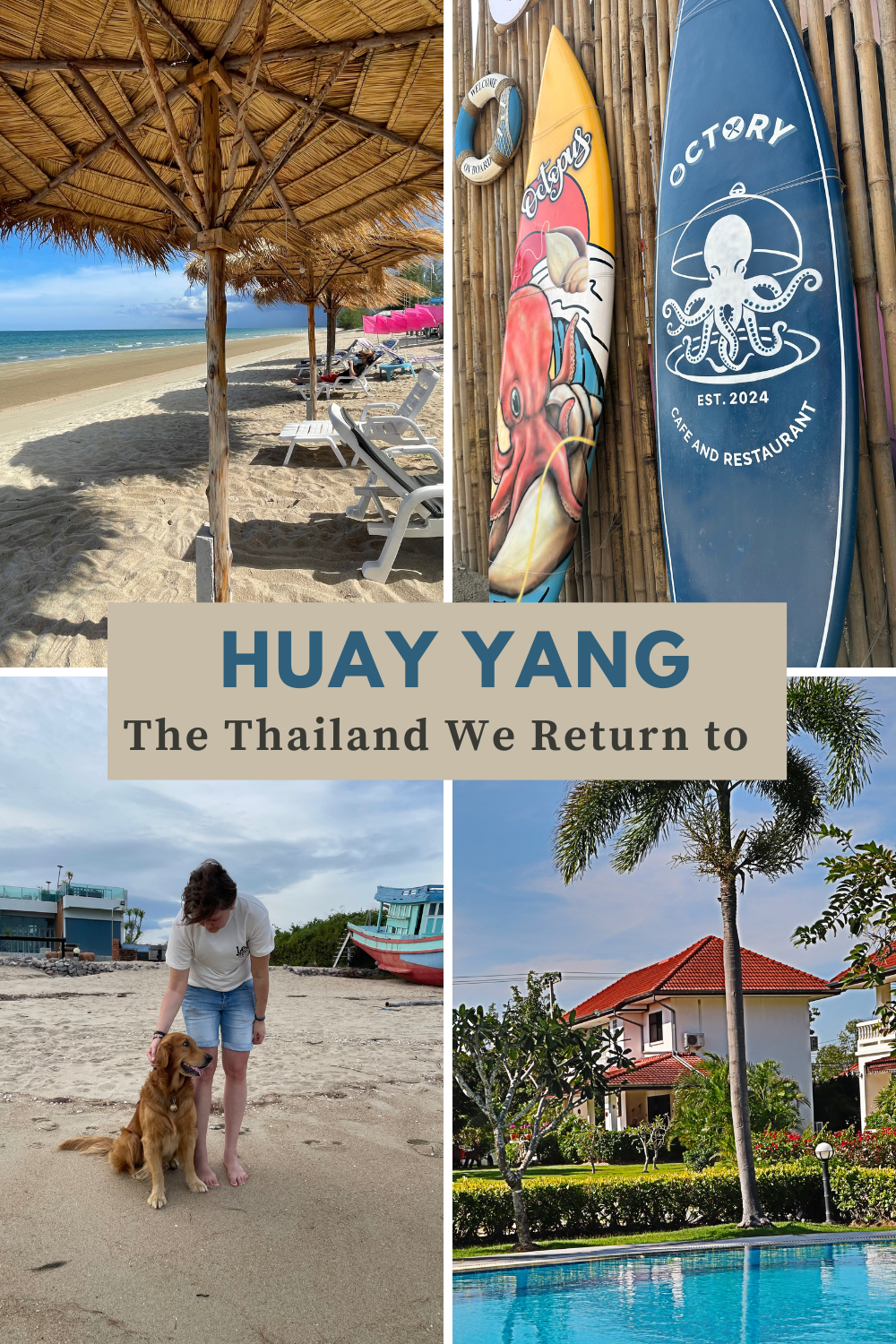
Huay Yang, the village in Thailand that stole our hearts…
The first sign that we are almost there is not a sign at all.
It is the feeling in the car when the road begins to soften into recognition. Bangkok is behind us. The hours on the highway have passed through petrol stations, roadside stops, palm trees, heat, and the quiet rhythm that comes after a long flight. Somewhere along the way, we may have stopped with our taxi friend to buy a box of mangoes. Not because we need mangoes immediately, but because that is what we do on the way to Huay Yang.
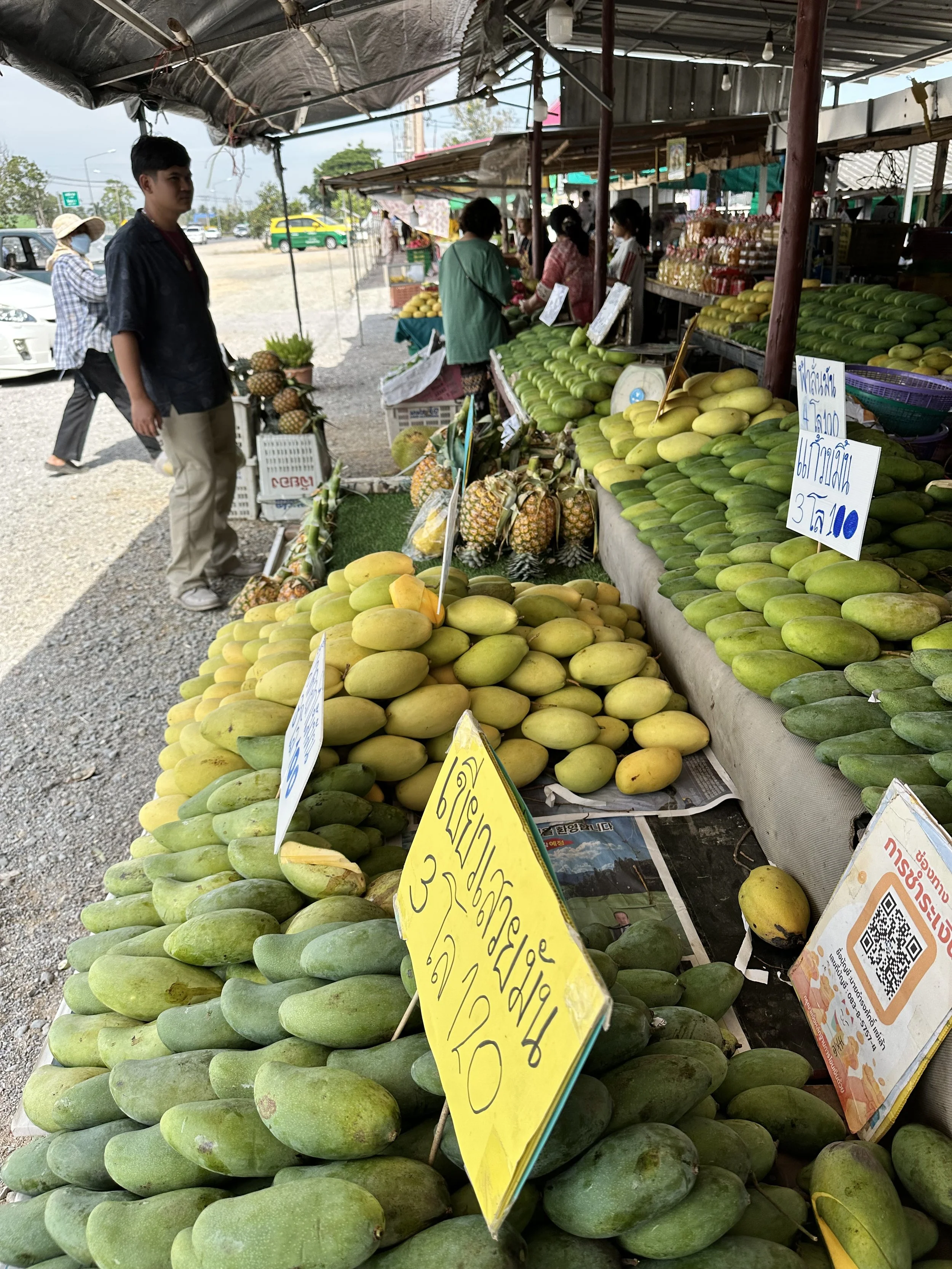
All kinds of fruit at the market stalls on the roadside. One of the first highlights of being back in Thailand.
The mangoes sit in the car like a promise.
Outside the window, Thailand begins to look familiar again. The turns, the small shops, the roadside stalls, the colours, the dogs sleeping too close to the road, the first glimpse of places we have passed so many times before. We start looking for changes before we have even arrived. A new house. A building that was not there last time. A small shop that has changed colour. A familiar curve in the road.
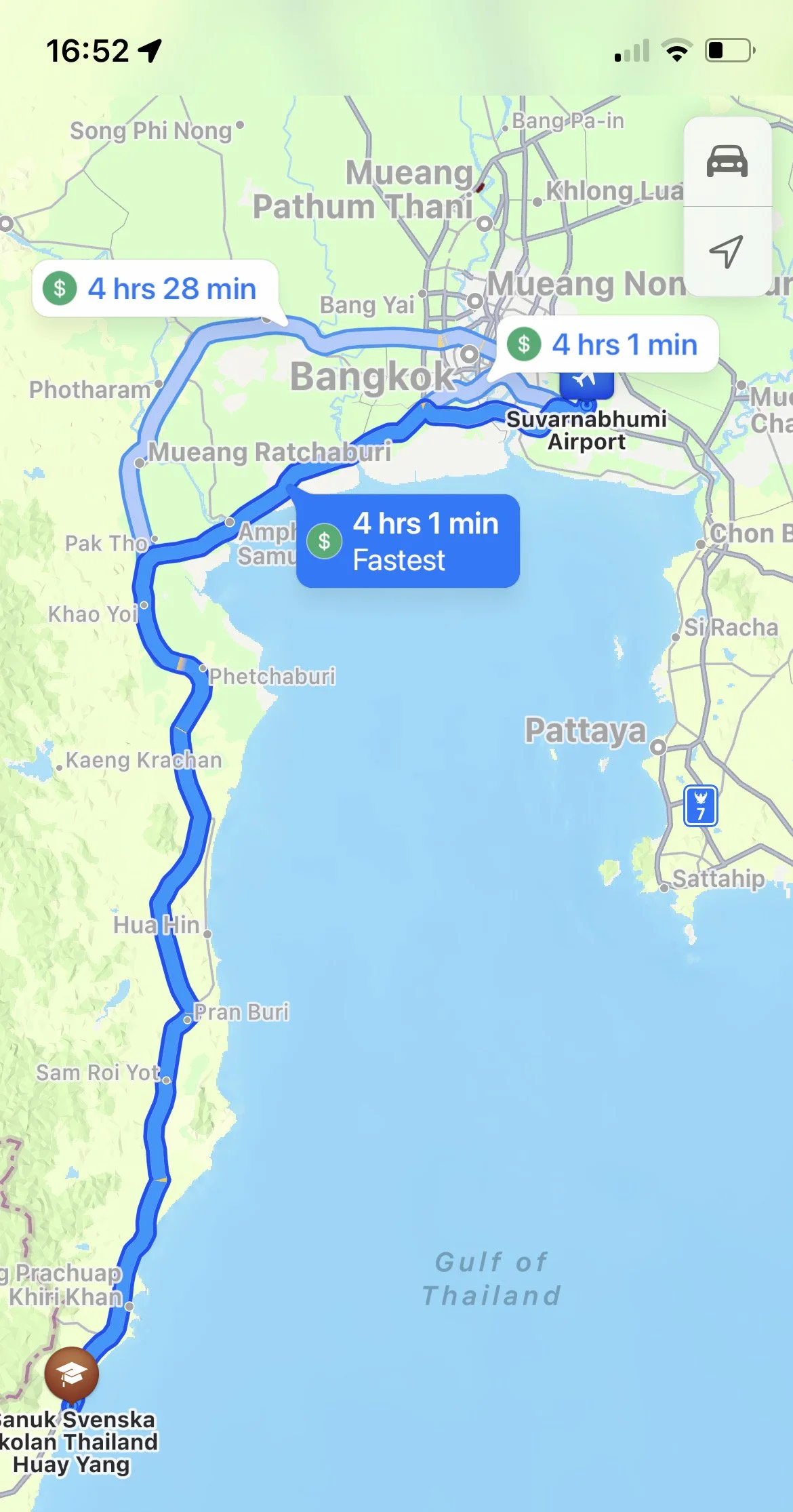
Map Bangkok to Huay Yang.
A taxi ride from Bangkok to Huay Yang takes about 4.5 hours depending on traffic. Passing by Hua Hin, Pran Buri, Sam Roi Yot National Park and Prachuap Khiri Khan on the way.
Then we drive into Huay Yang.
Nothing announces itself loudly. There is no grand entrance, no dramatic arrival, no sense that the village has been waiting to perform. It simply continues being itself. Scooters move through the warm air. Dogs rest in the shade. People sit outside shops. A few signs appear, some known, some new. The road carries us in, and something in the body lets go.
We have arrived.
Not only in Thailand.
In a life we know.
Huay Yang is a small coastal village in the province of Prachuap Khiri Khan, on the Gulf of Thailand. It is not the Thailand that usually appears first in travel dreams. It is not the bright intensity of Bangkok, not the famous islands, not the mountain temples of the north, not the polished beach destinations people compare in lists.
It is quieter than that.
You do not come here to be entertained every minute. You come here, or at least we do, because after a while the small things become the reason.
A road to the beach. A bowl of curry. A scooter key in your hand. A dog you recognize. A morning swim. A market where no one is trying to sell you an experience. A temple with no one else there. A terrace in the evening. A long pool. Mangoes in the kitchen. Warm wind on bare skin.
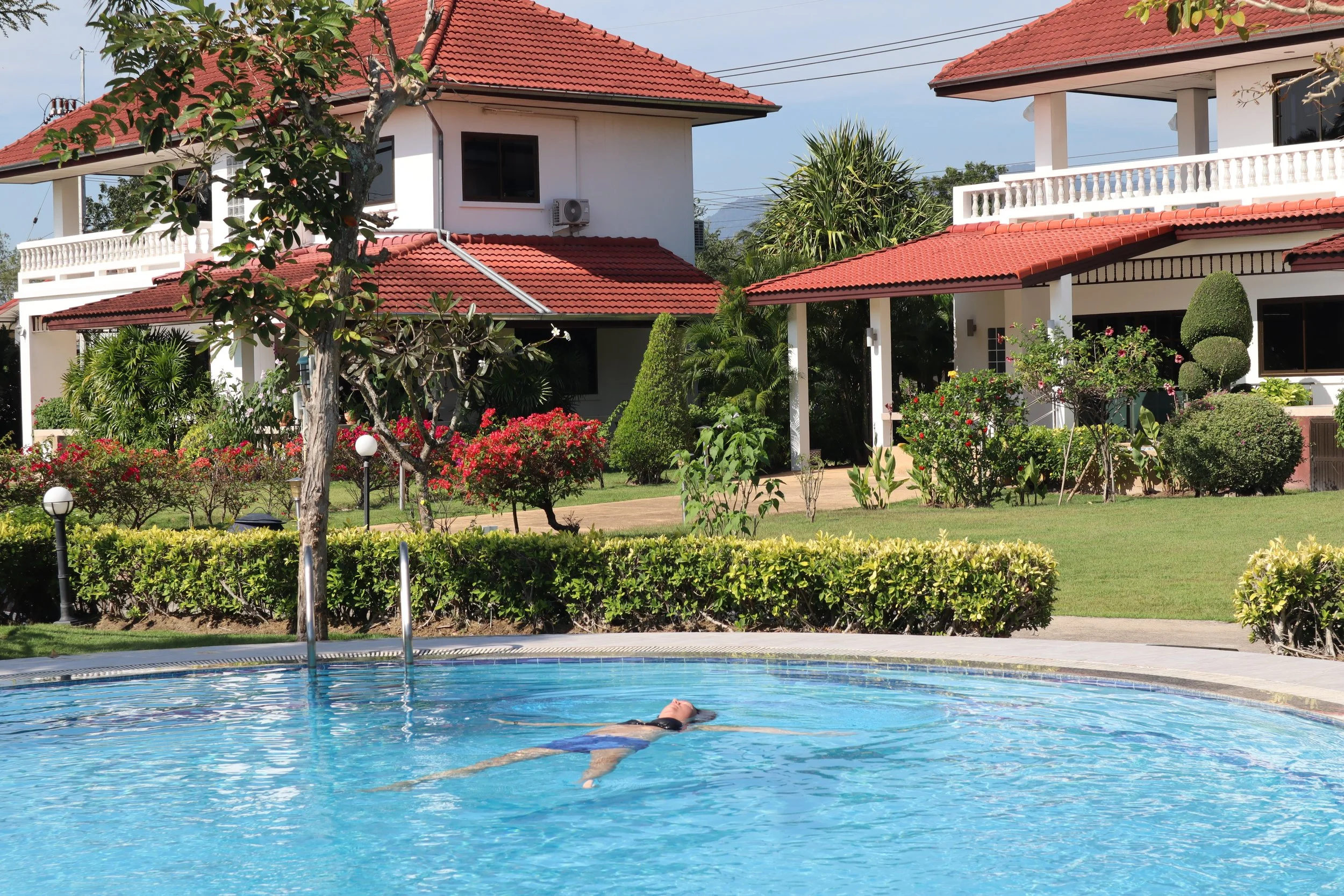
The first time of being back in the pool under a blue sky is amazing.
Huay Yang does not ask much of you.
That is part of what makes it difficult to leave.
Bangkok first
For us, the feeling of Huay Yang starts in Bangkok.
It starts when the airport doors open and the heat meets us. It comes with the first taxi ride, the first street food smell, the first tuk tuk passing too close, the first river boat, the first flower market, the first sense that the rules of the day have changed.
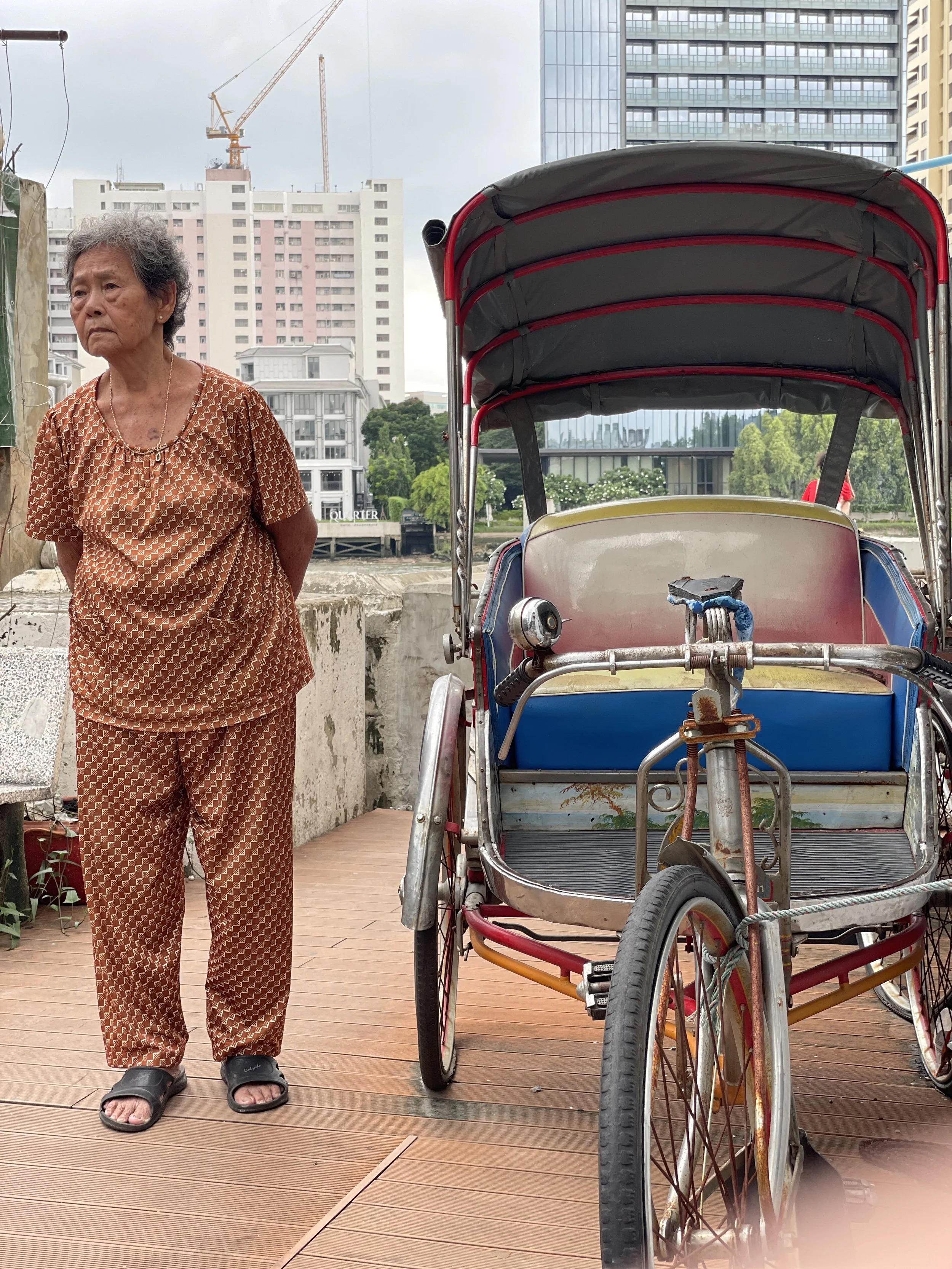
A lady and an old TukTuk in Talat Noi, next to Chinatown, Bangkok. A unique area to explore life when in Bangkok.
Bangkok is never only a stopover. Even when we are tired, even when we know we are heading south, the city pulls us into Thailand with all its noise and colour. We can honestly say that we LOVE Bangkok. But to get to know this place you need time. This post is not about Bangkok but we will come back to it in a longer post. And still give you a glimpse of what you can experience if you give it a fair chance.
There are markets where flowers are stacked in colours that seem too vivid after a Scandinavian winter. There are food stalls with steam rising from pots. There are river boats cutting through brown water under a hot sky. There are temples, traffic, neon signs, plastic stools, gold, concrete, fruit, exhaust fumes, incense, and the strange comfort of chaos you know you have chosen.
👉 Click and hover over the images below for descriptions.
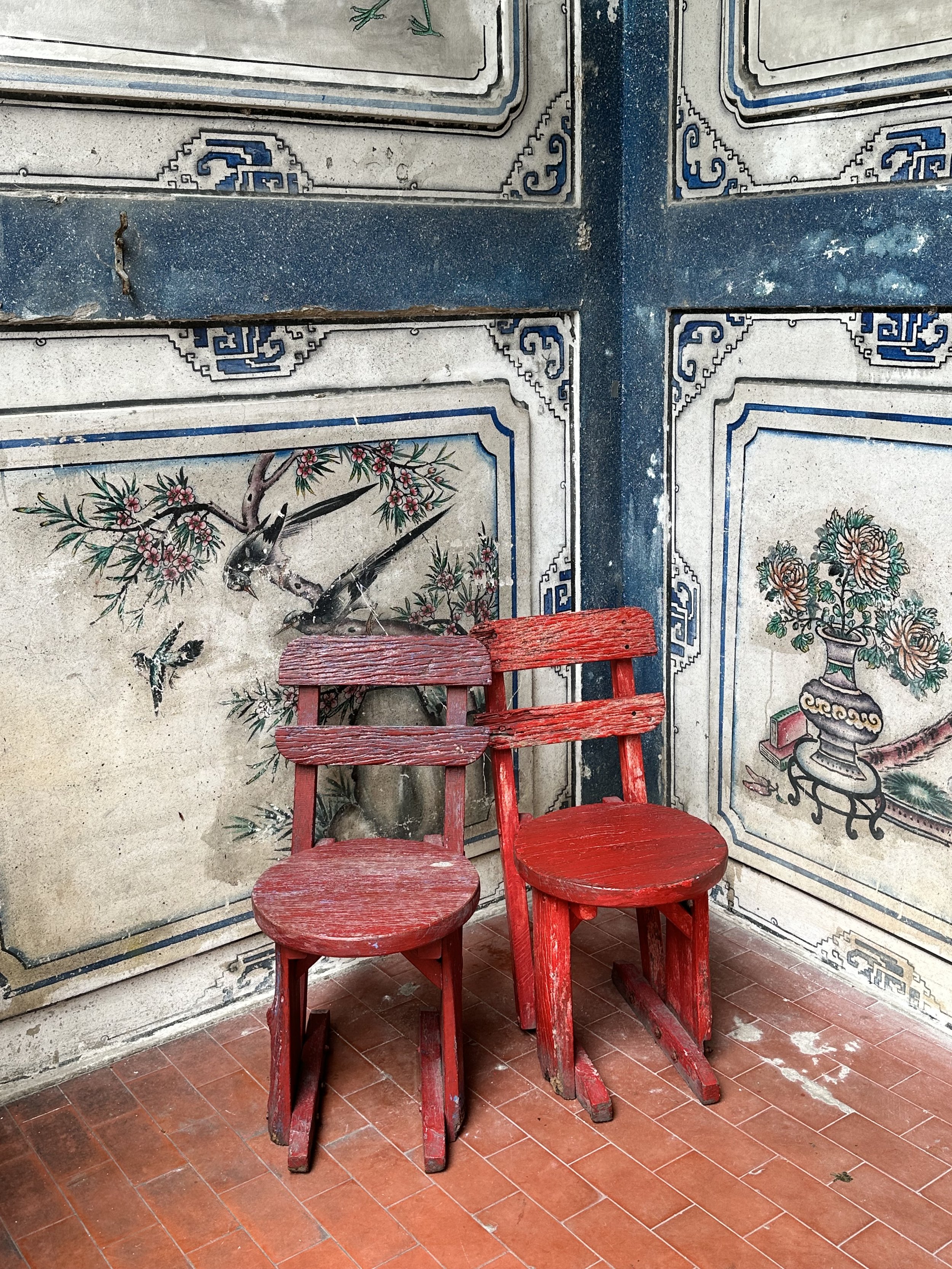
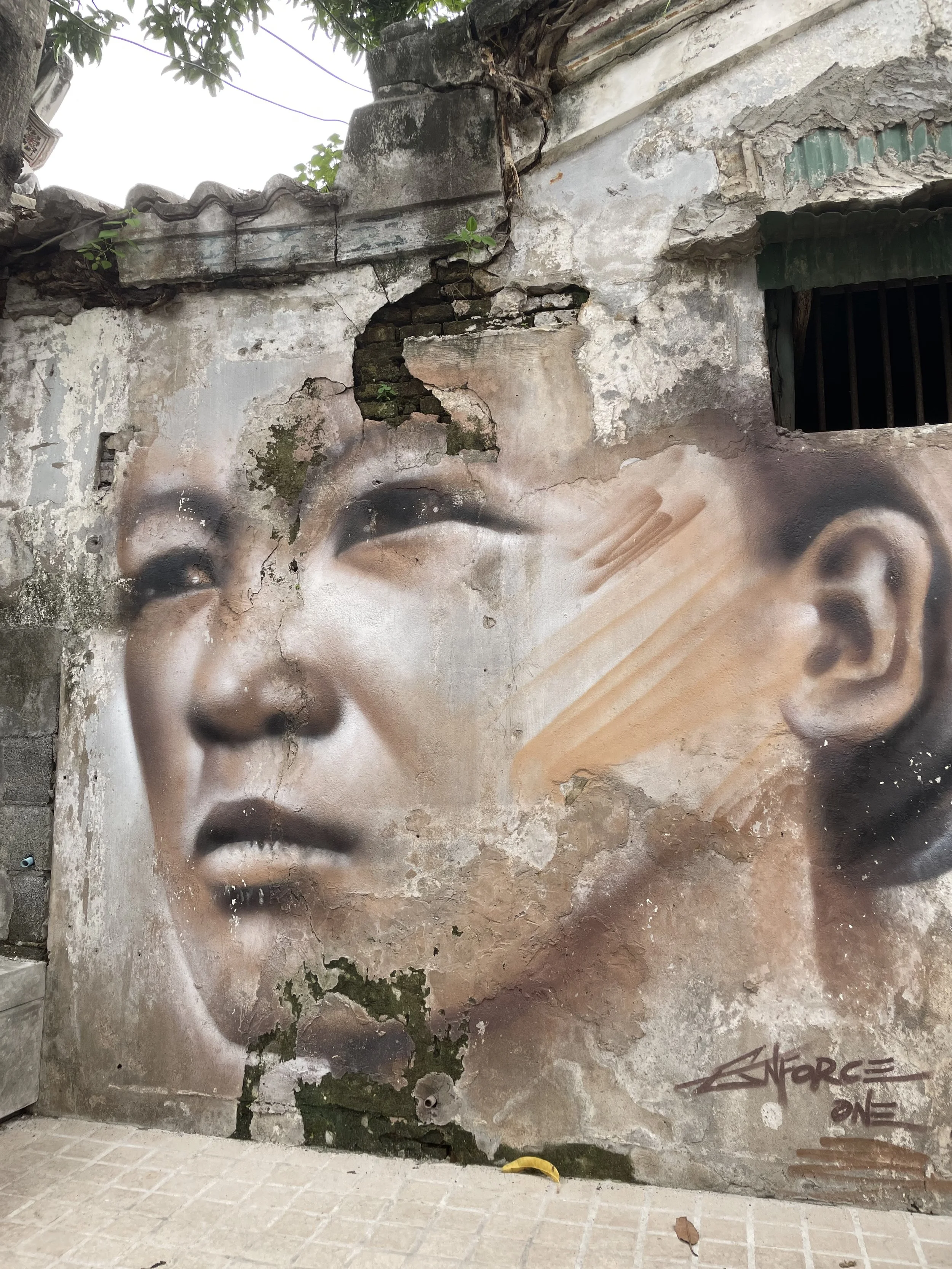
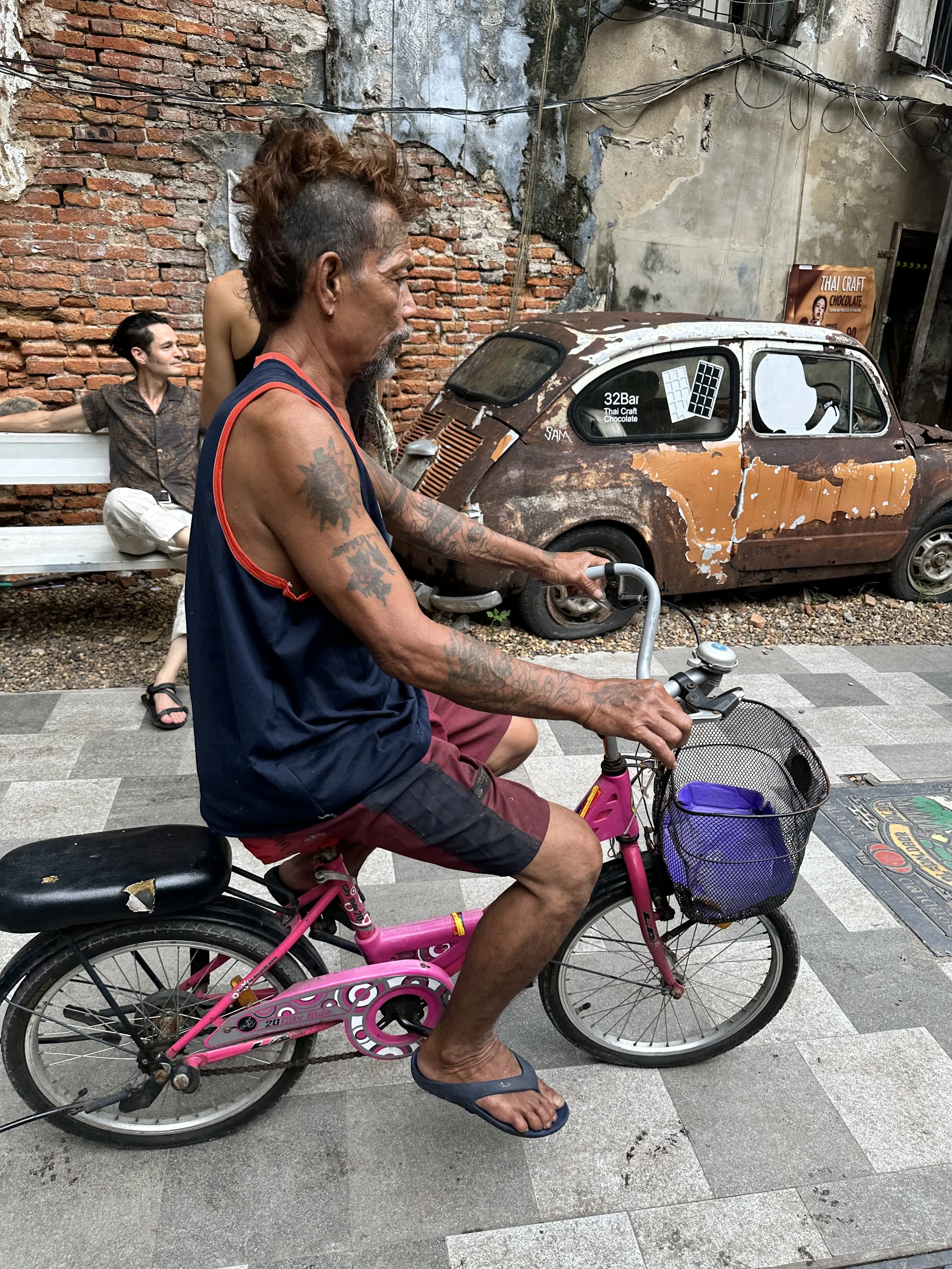
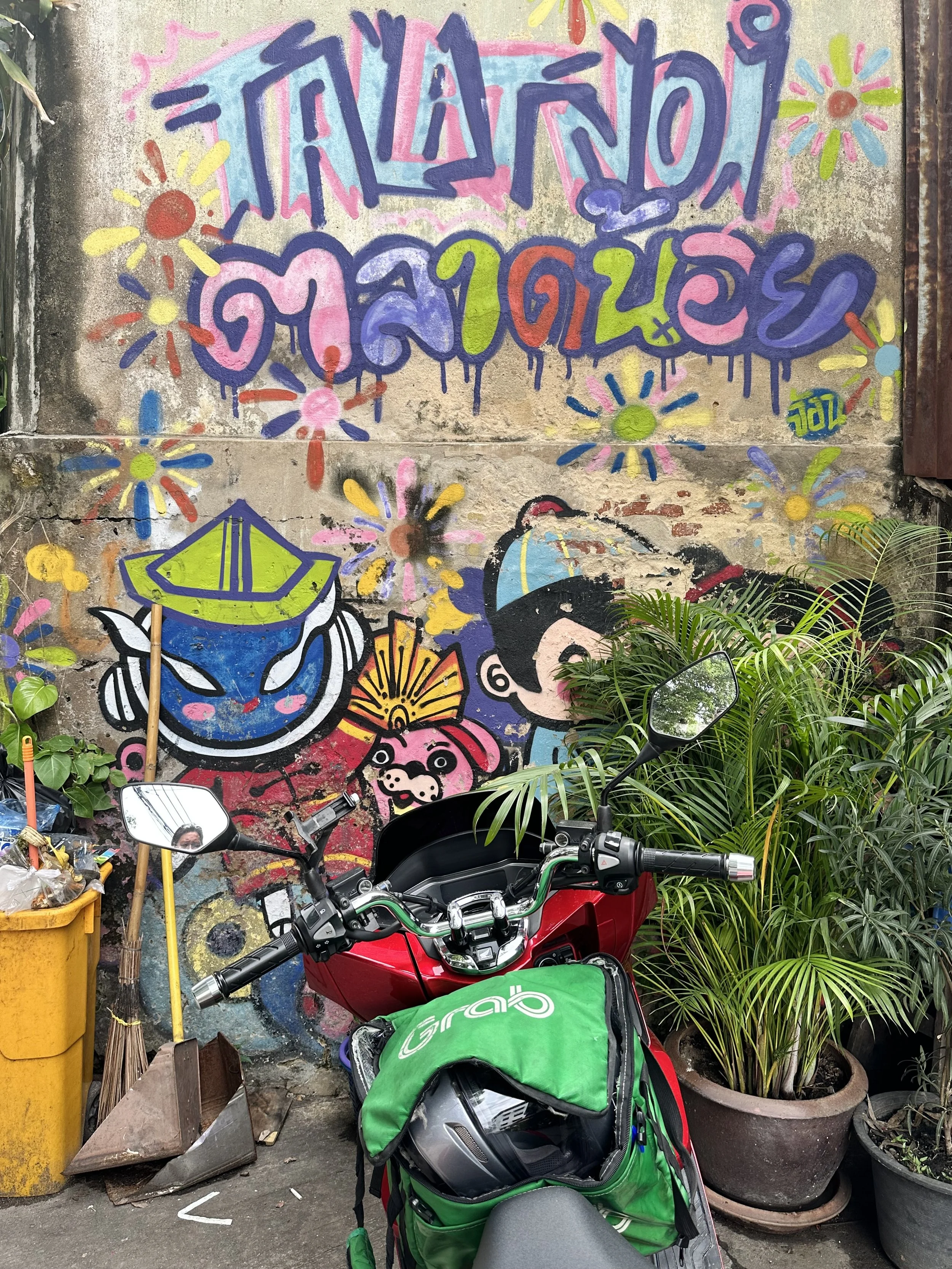
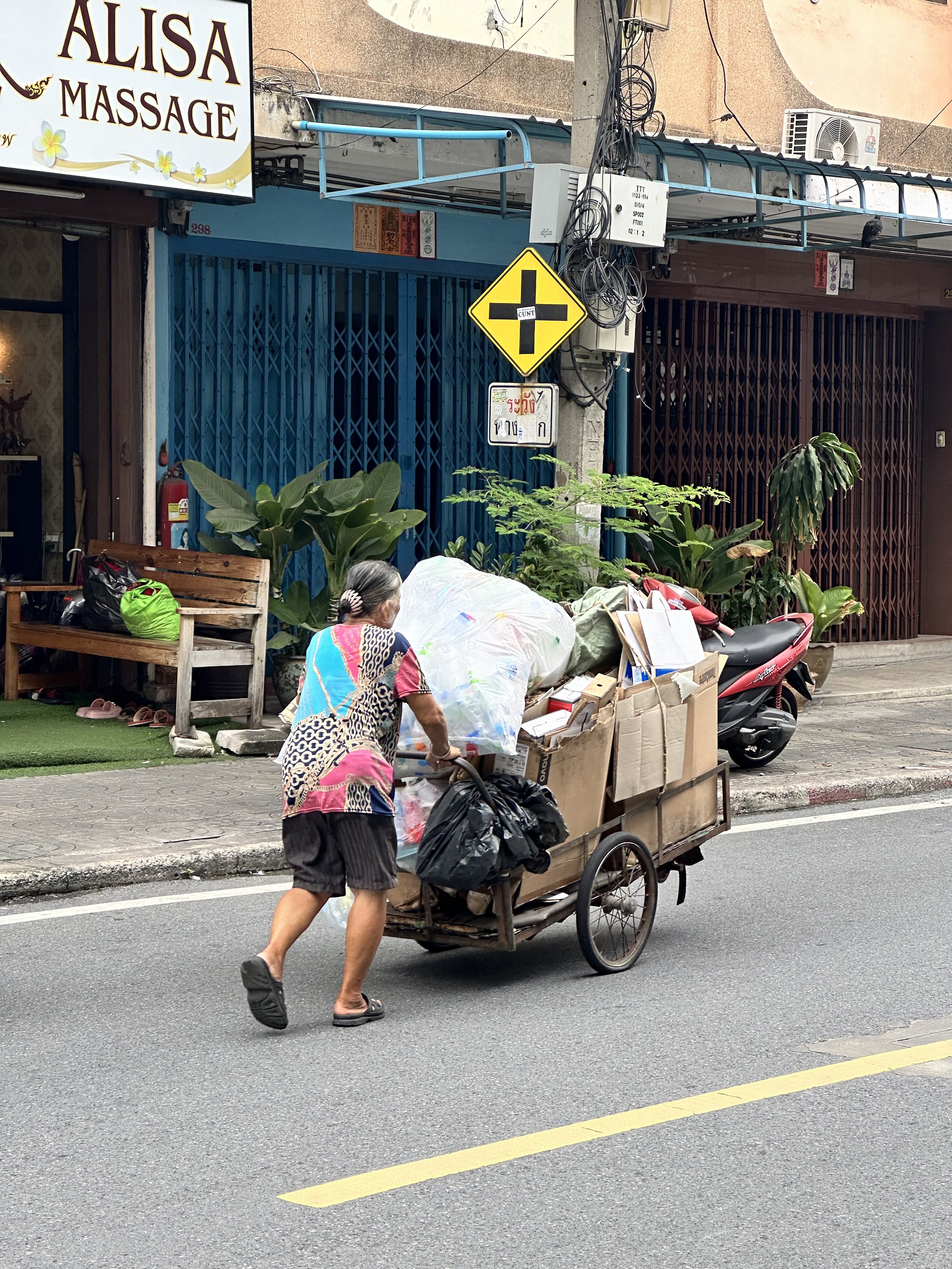
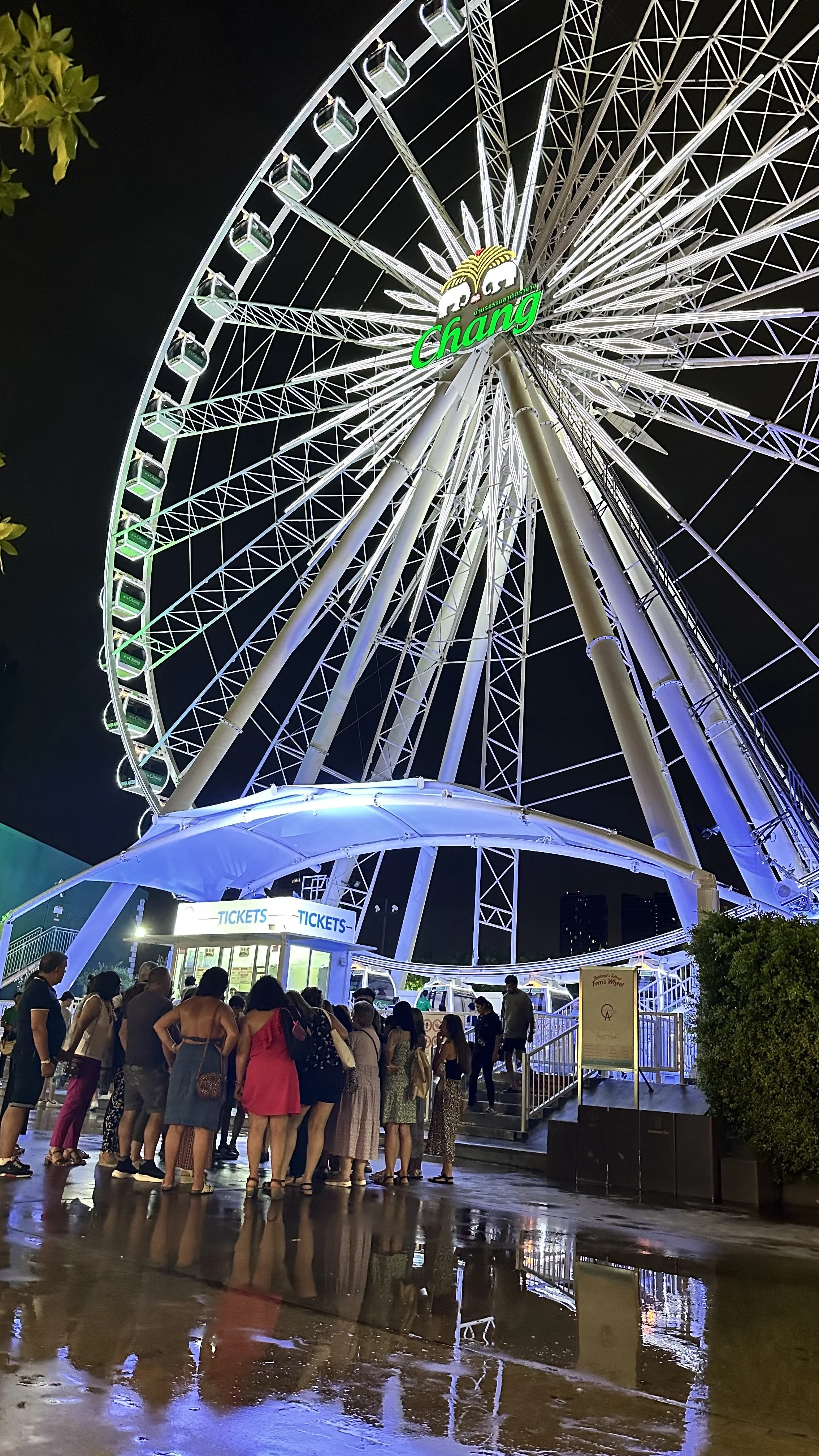
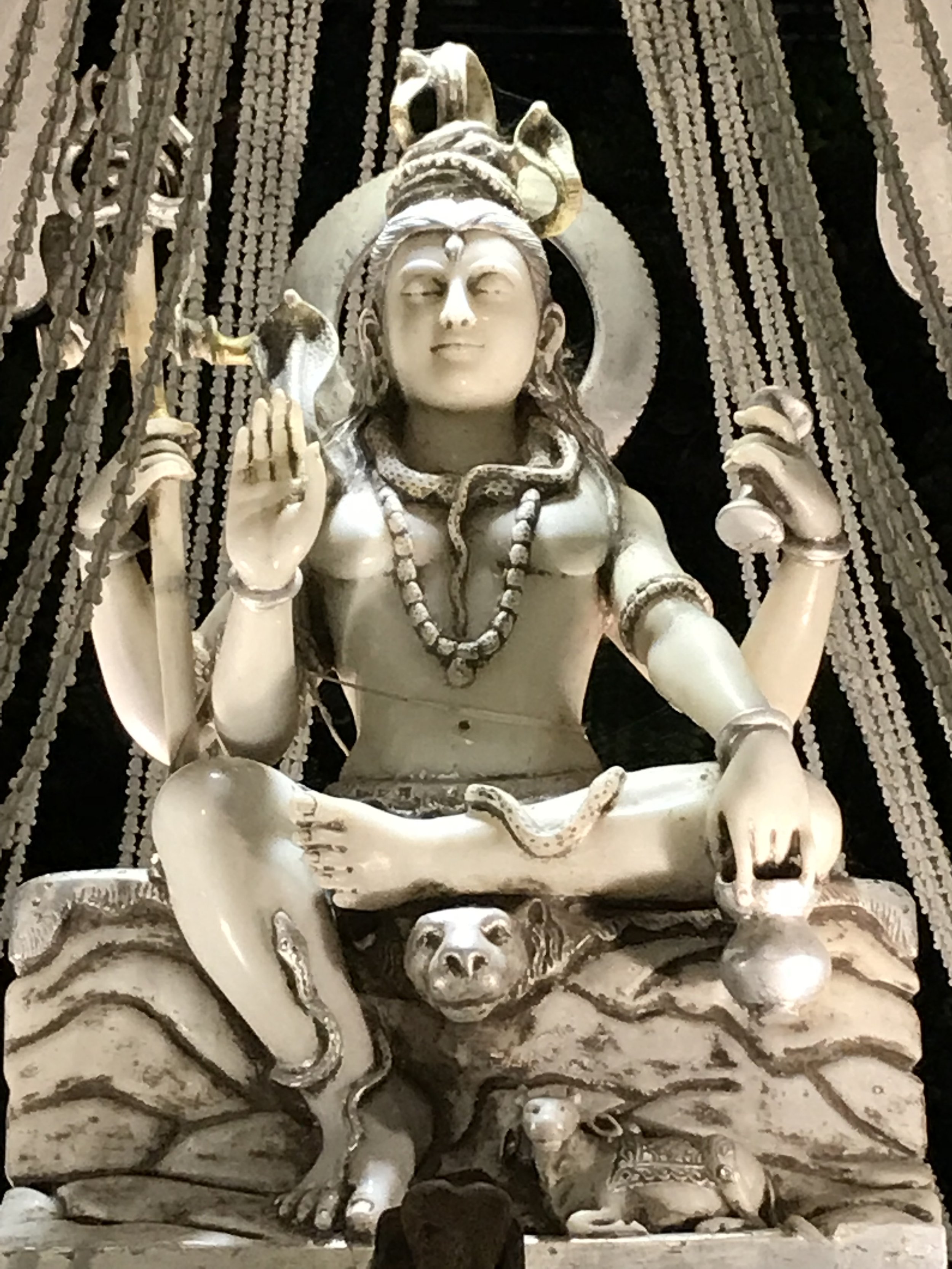
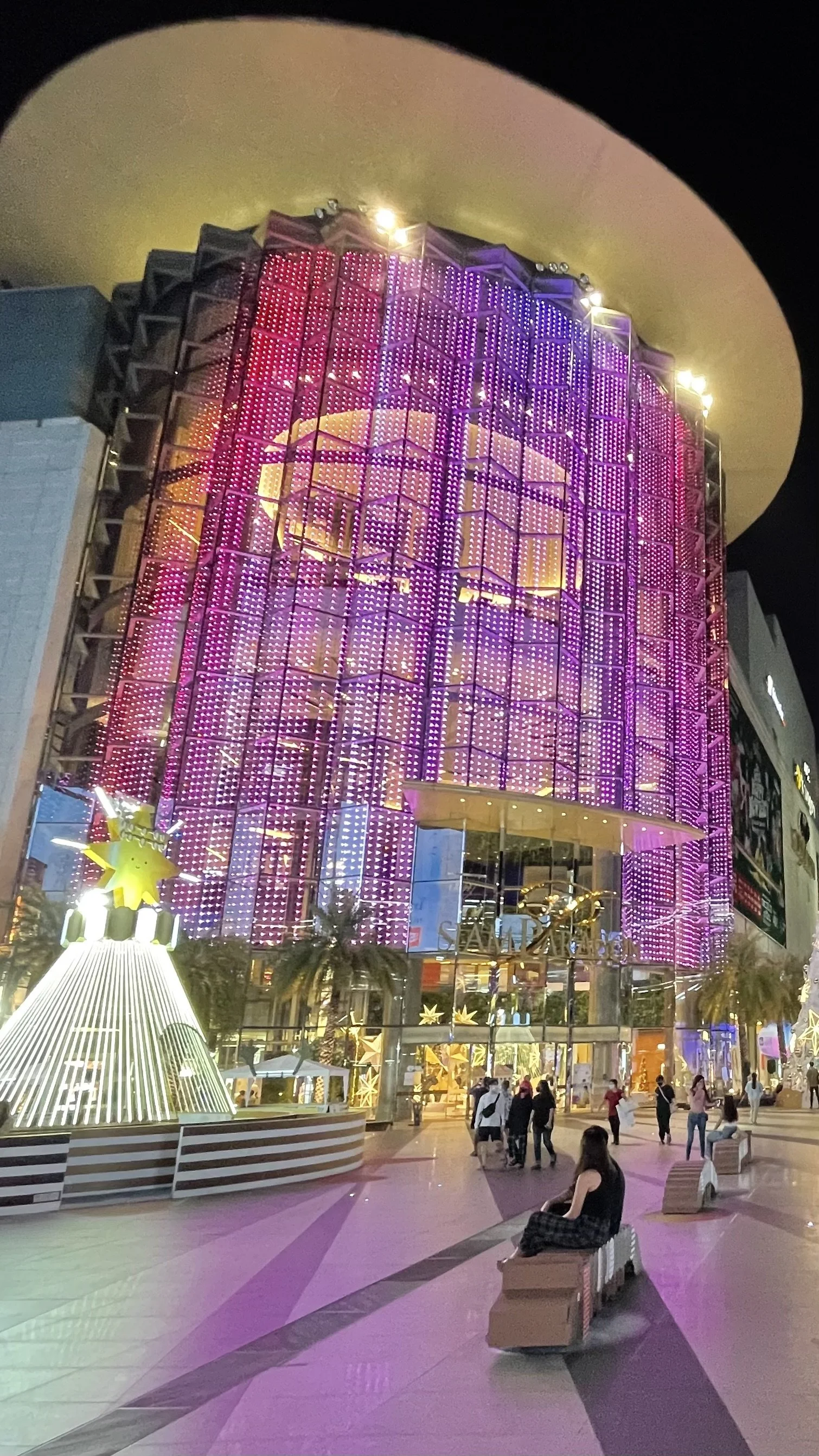
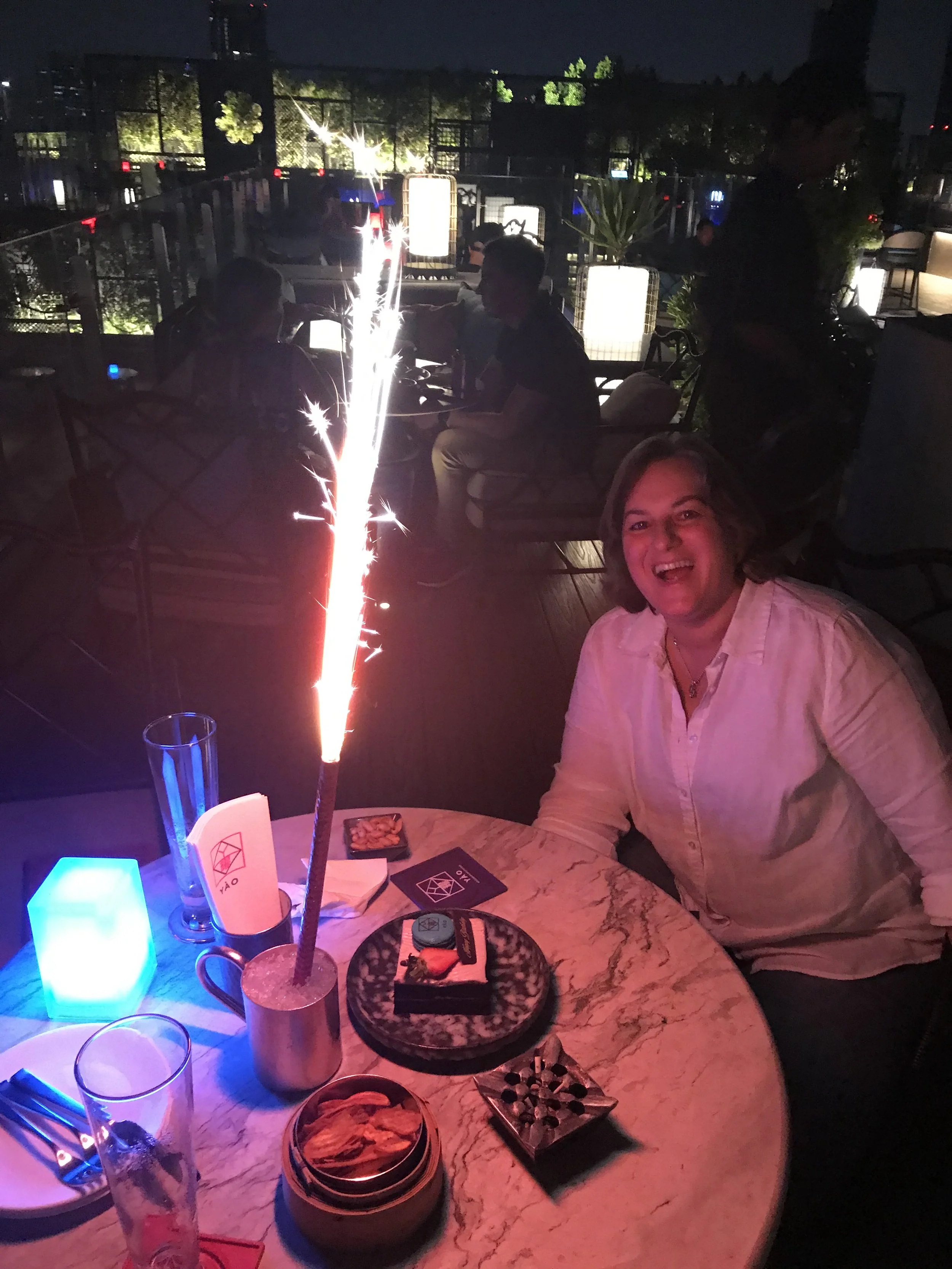
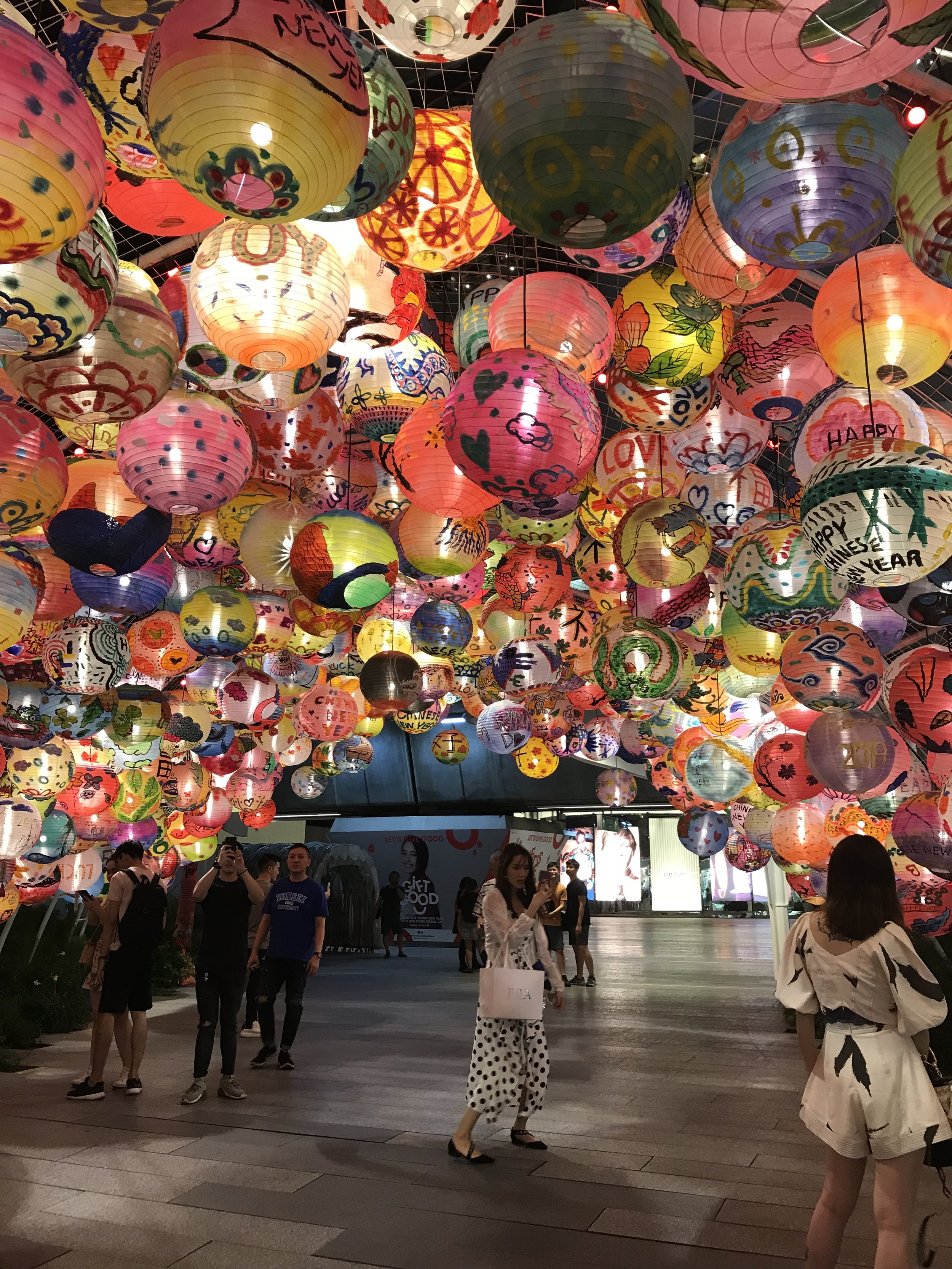
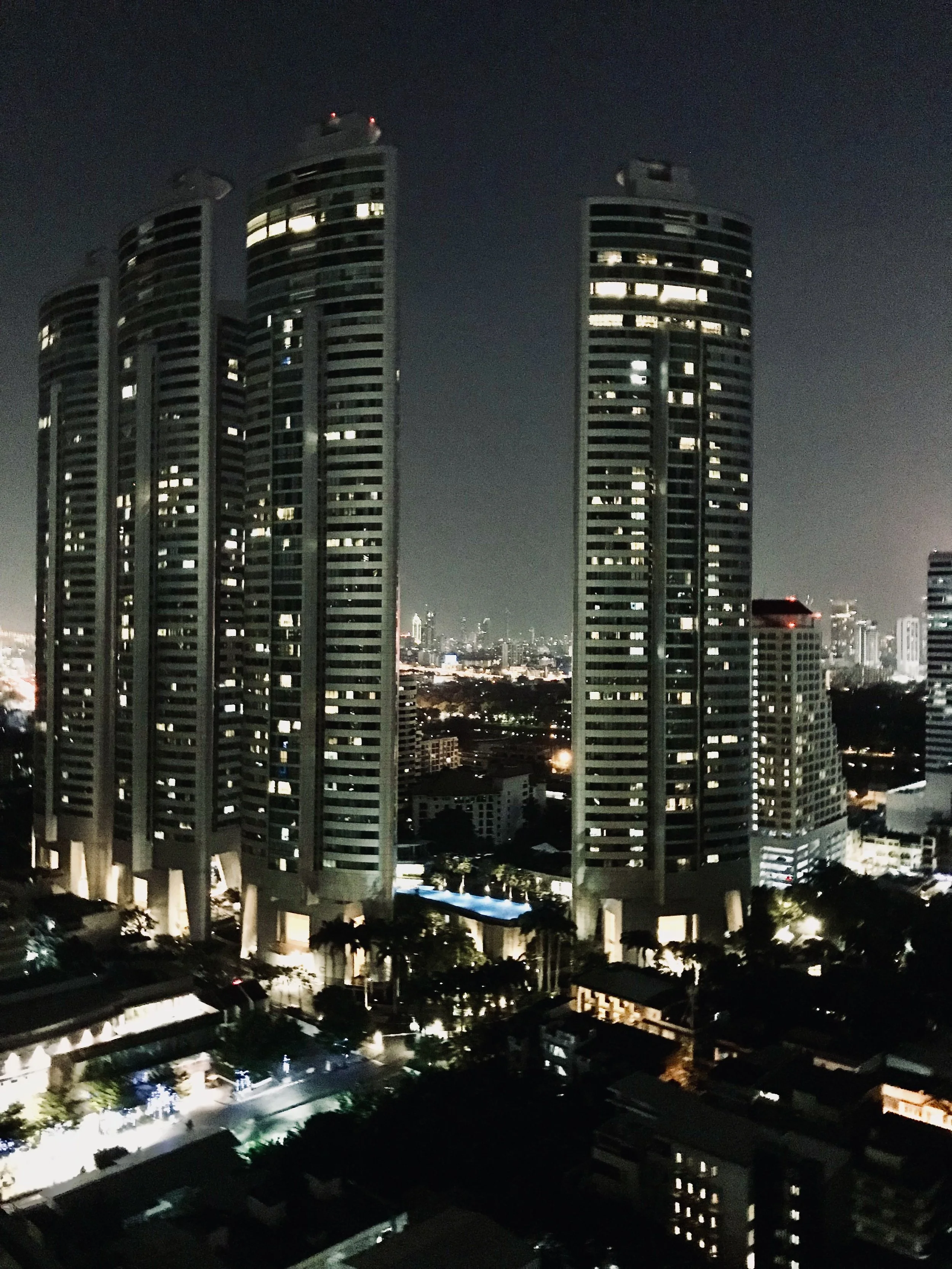
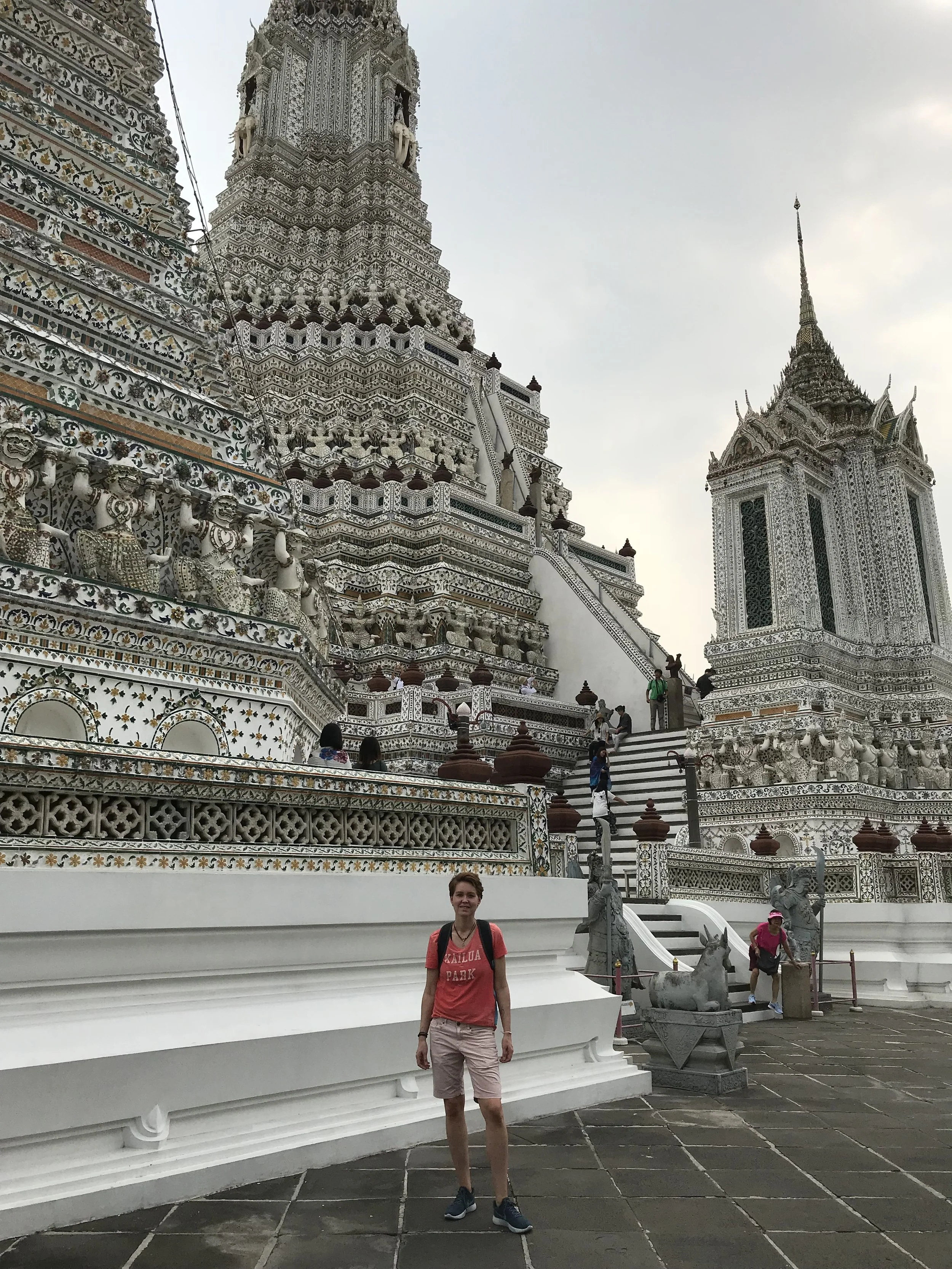
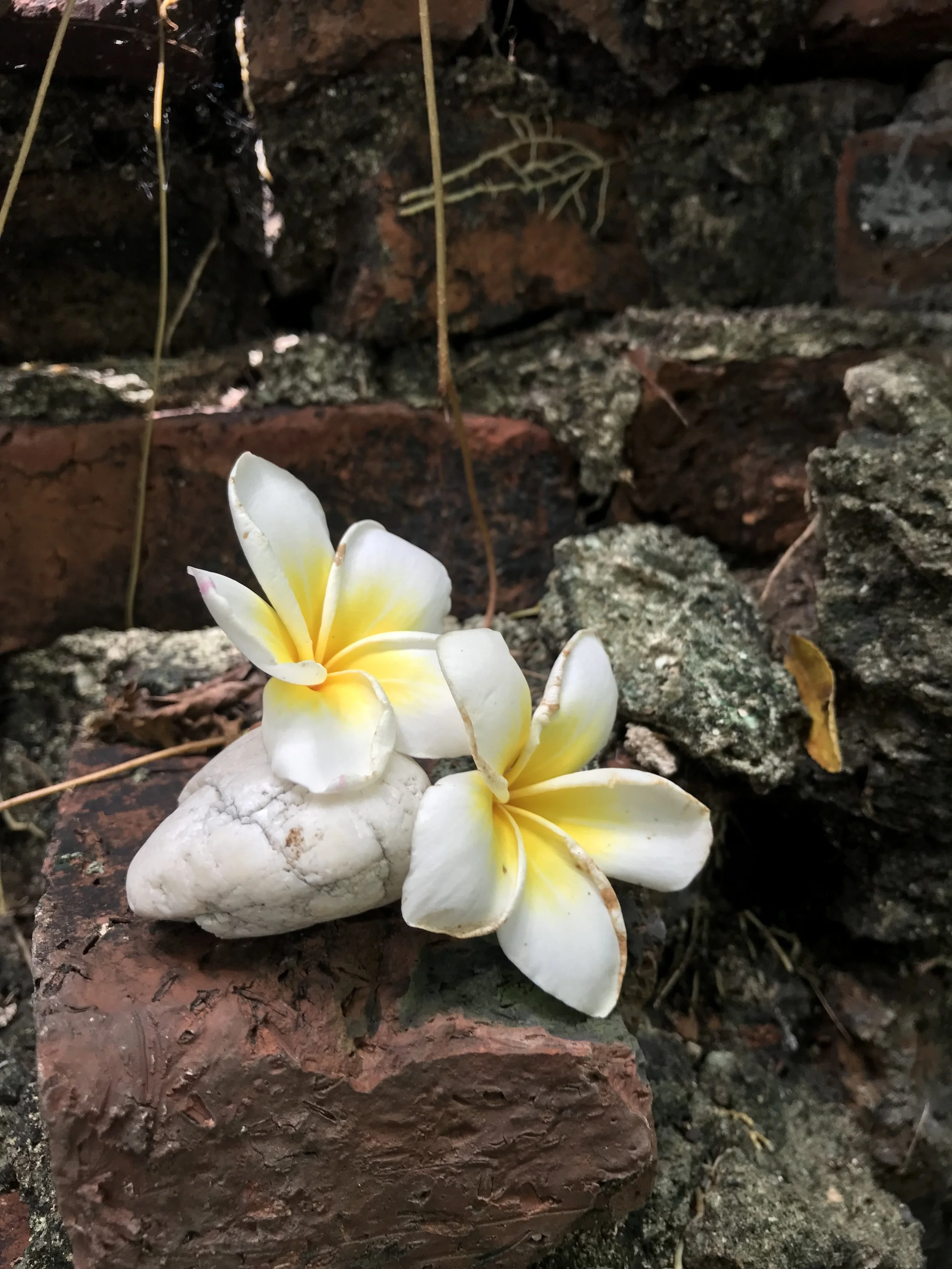
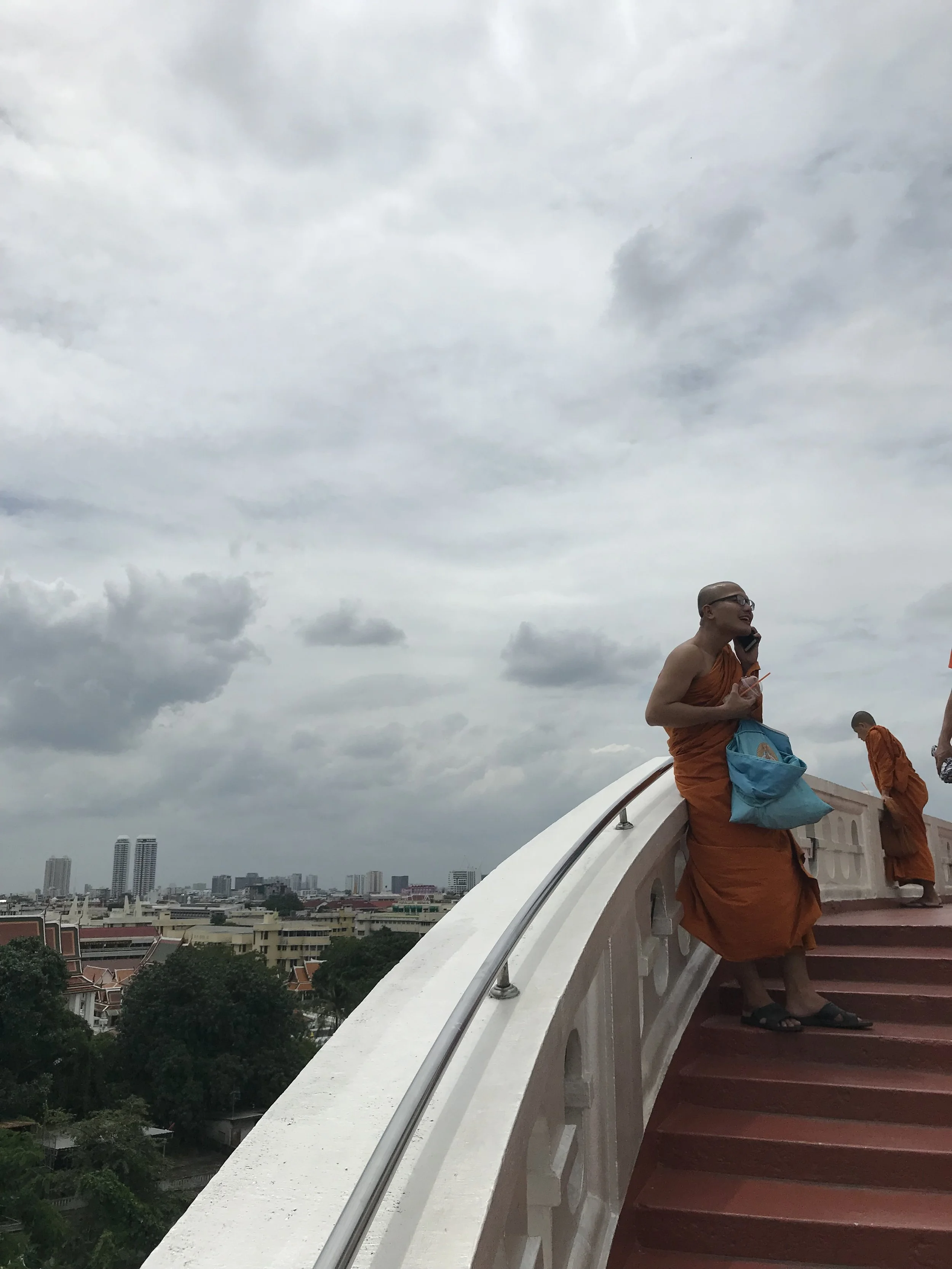

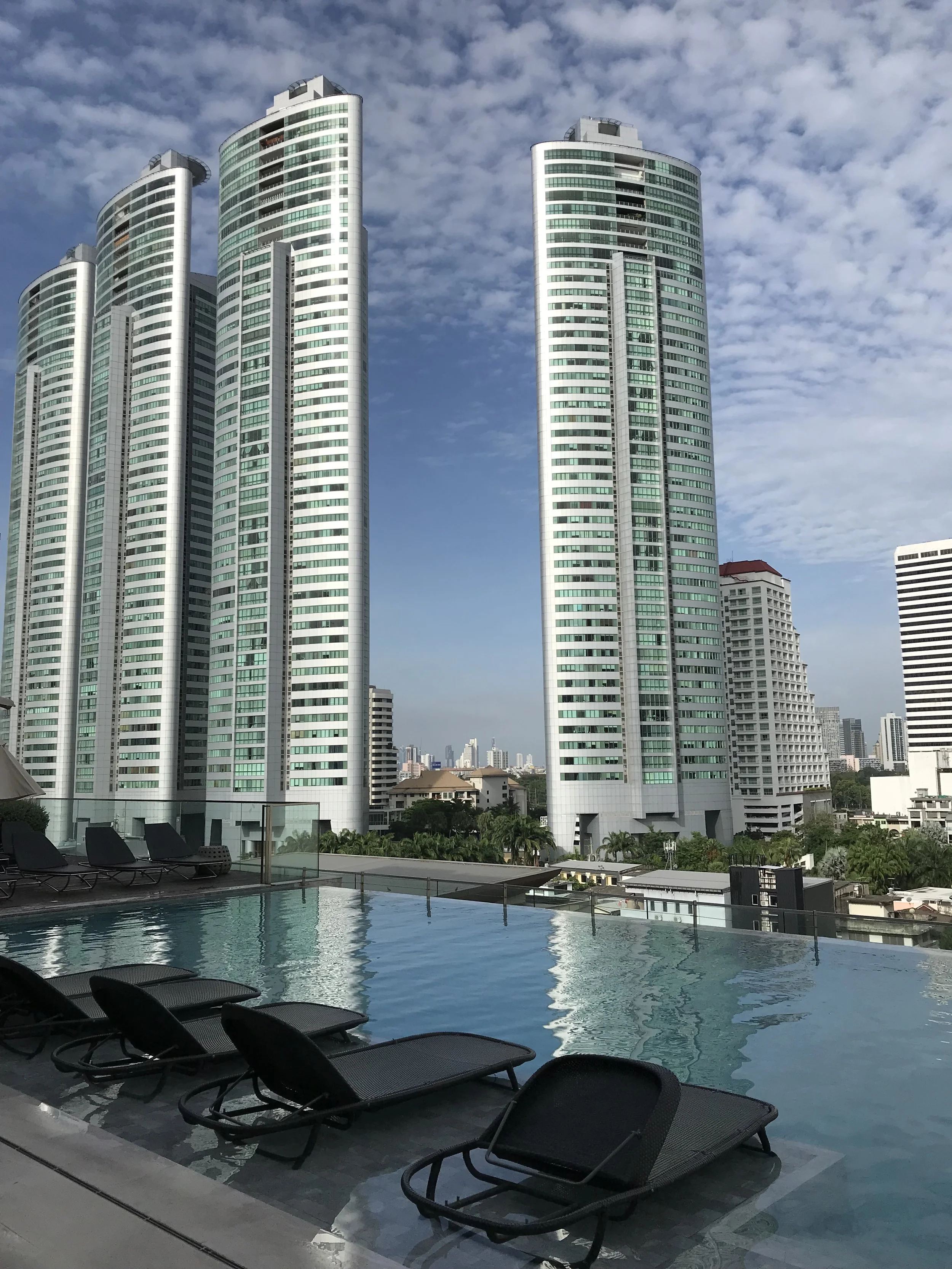
Even Khaosan Road (←— great info here) has its place in the ritual. Not because it is calm. It is not. But because Bangkok contains everything, including the absurd, the loud, the funny, the beautiful and the slightly overwhelming.
After Bangkok comes the road south.
The city loosens its grip. The highway opens. The mango stop happens if it happens. The conversation in the car comes and goes. Outside the window, the country shifts into something slower.
By the time we reach Huay Yang, the trip has already begun to change us.
The house, the terrace, the pool
The first morning is always its own kind of ceremony.
The body wakes before the mind is ready. There is warmth in the room already. Somewhere outside, a bird makes the kind of sound we always remember but never manage to describe properly. The day is bright early. The air is soft in the way tropical mornings are soft before the heat gathers.
There is fruit on the table. Mango. Pineapple. Sometimes more than two people could reasonably eat, and still it disappears.
The terrace waits outside.
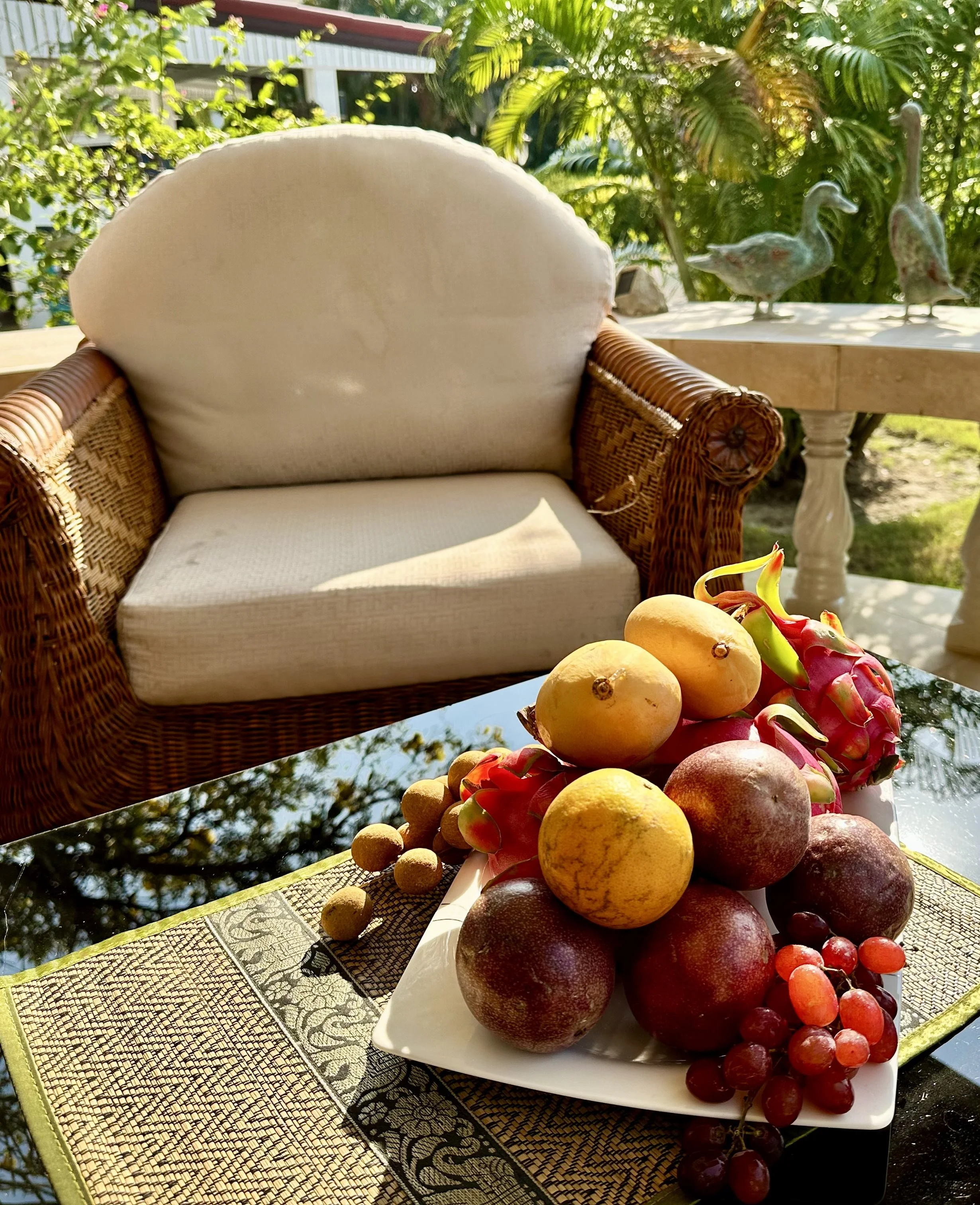
Delicious fruit from the market is one of the daily highlights.
The pool is only a few steps away.
That pool has become part of the reason we return. Not because it is the biggest luxury in the world, but because it changes the day from the beginning. We can walk there barefoot. Often we are alone. No music. No crowd. No need to arrange ourselves around anyone else. Just warm tiles, water, light, and the quiet feeling of having nowhere urgent to be.
A long swim in the morning can do something that sleep has not managed to do.
It resets the pace.
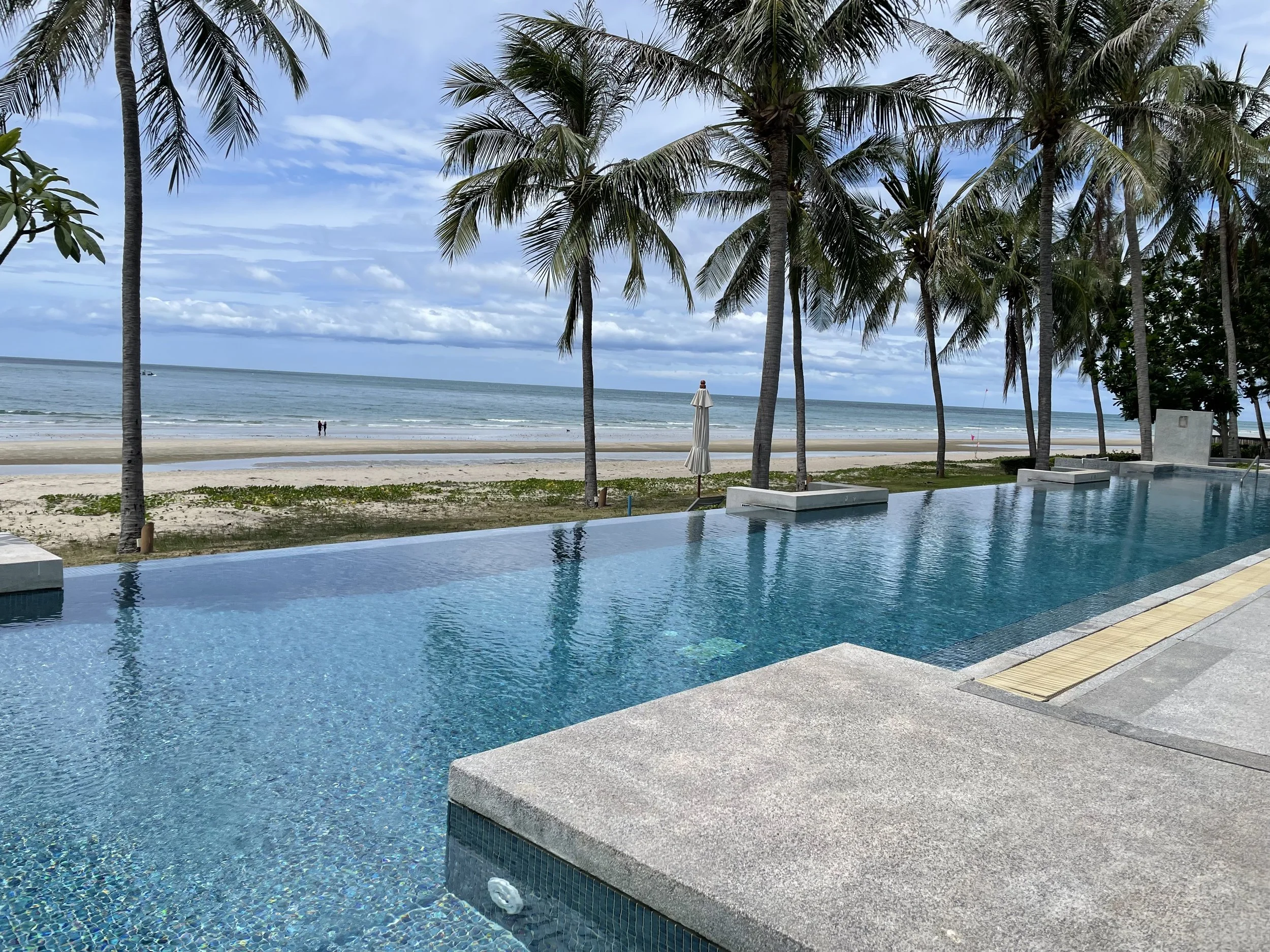
The pool at Nishaville, Huay Yang.
In Huay Yang, days are not built around performance. We do not dress for them as if they are expecting something from us. Shorts, t shirts, flip flops. Wet hair. Sun on the skin. A towel on the terrace. Coffee. Fruit. The question of where to go later, not because we must go anywhere, but because it is pleasant to choose.
Should we drive to the beach now or after lunch?
Should we stay by the pool?
Should we go to Thap Sakae for coffee?
Should we ride toward Ban Krut?
Should we do nothing until we feel like doing something?
❤️ That kind of freedom is easy to underestimate until you do not have it.
The scooter map
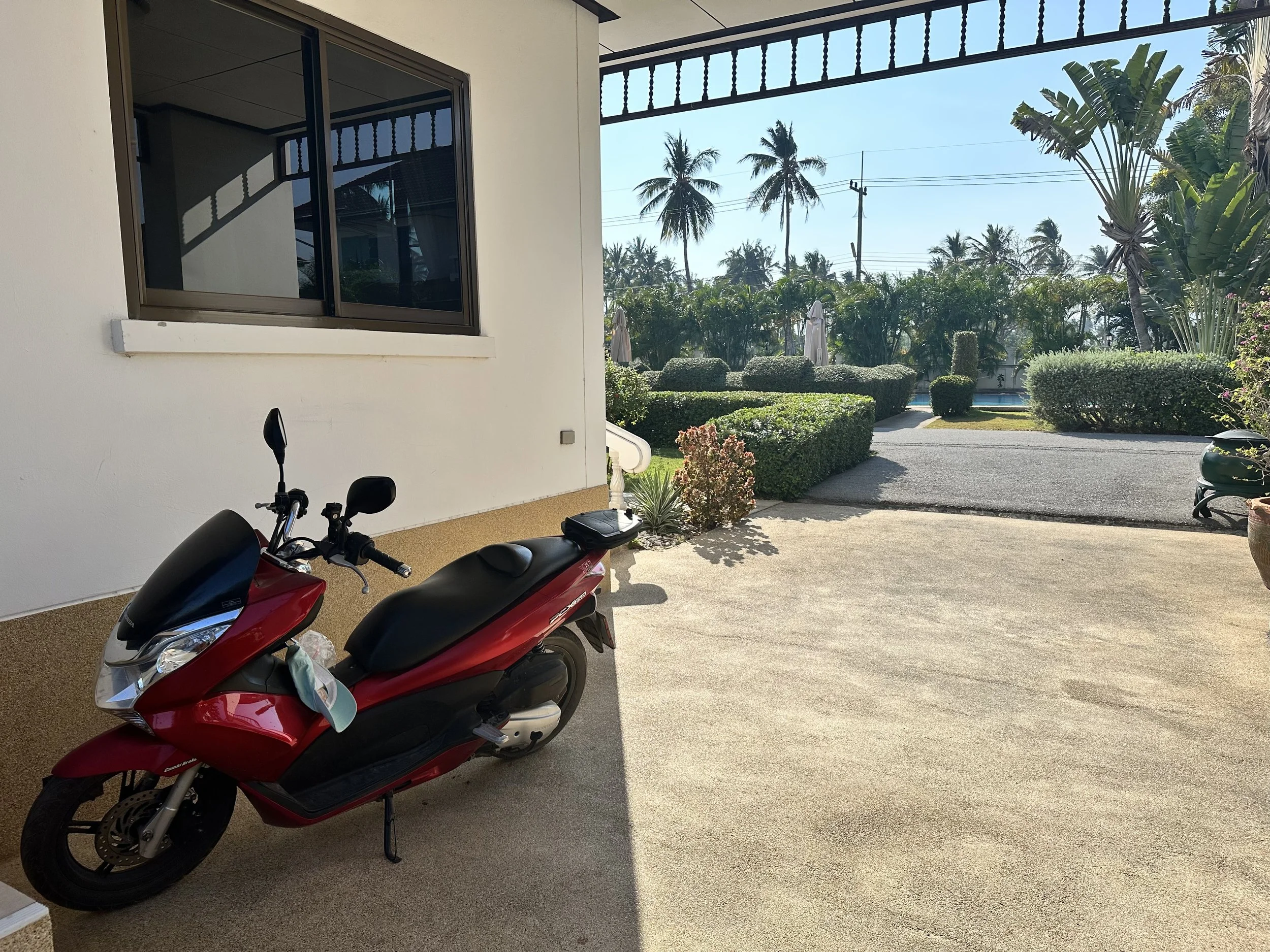
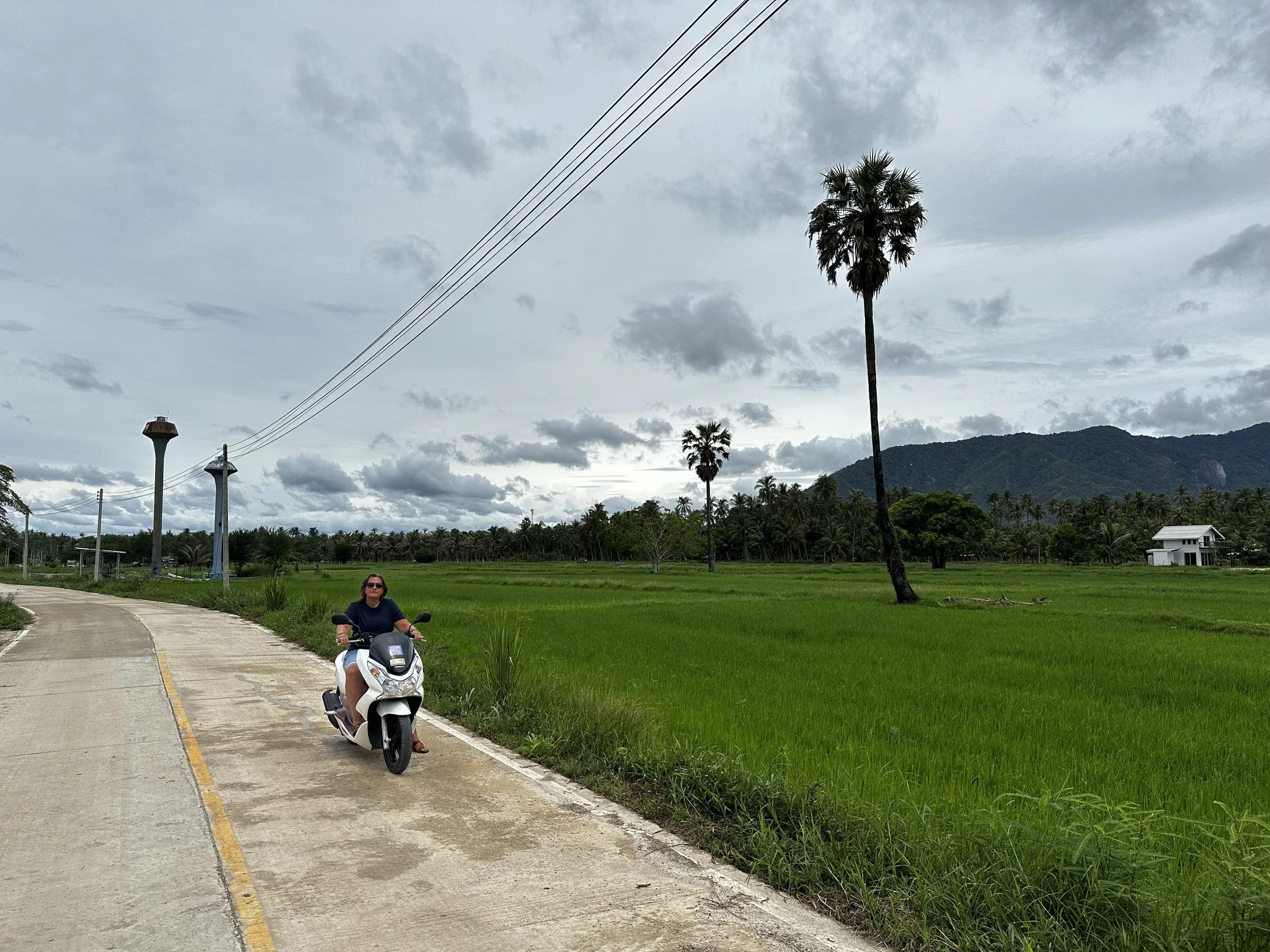
The scooter is how Huay Yang opens.
We collect it from our friend, and everything about that moment has the ease of repetition. No long discussion. No suspicion. No formality that makes the simple complicated. We know each other enough. We pay later. We ride away.
The village becomes a map of small memories.
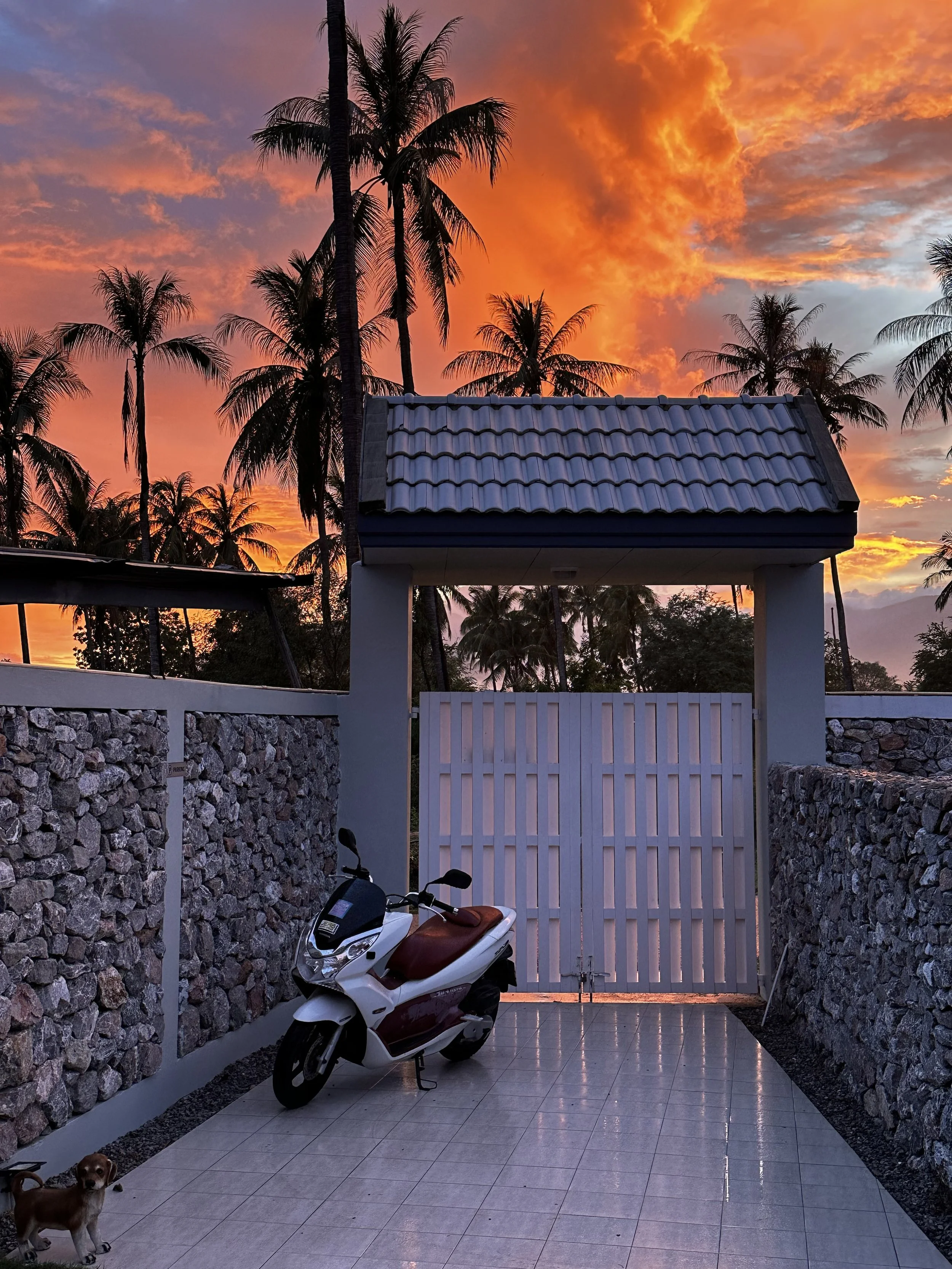
Dramatic views of the sky as we arrive home after a day of adventures.
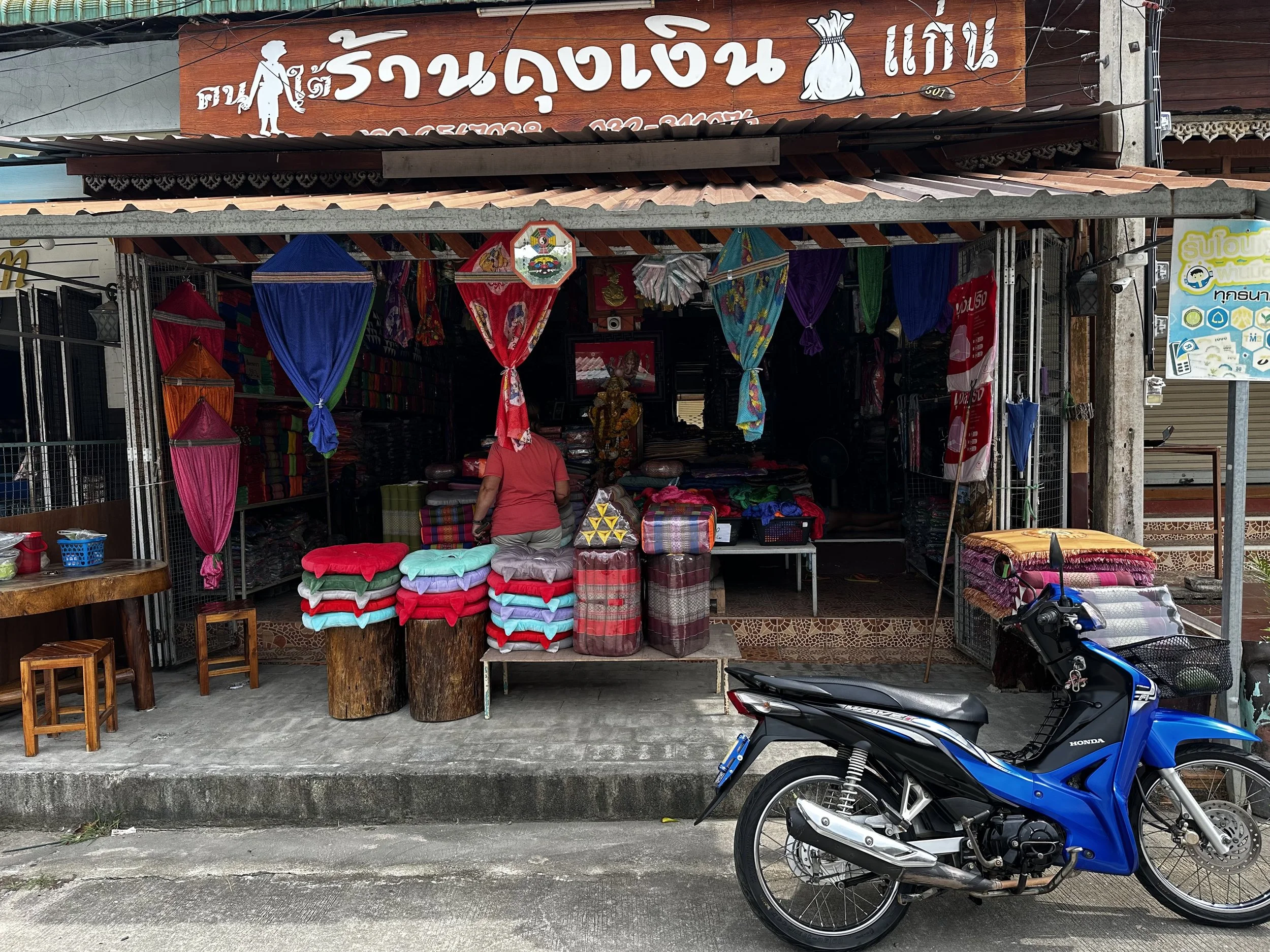
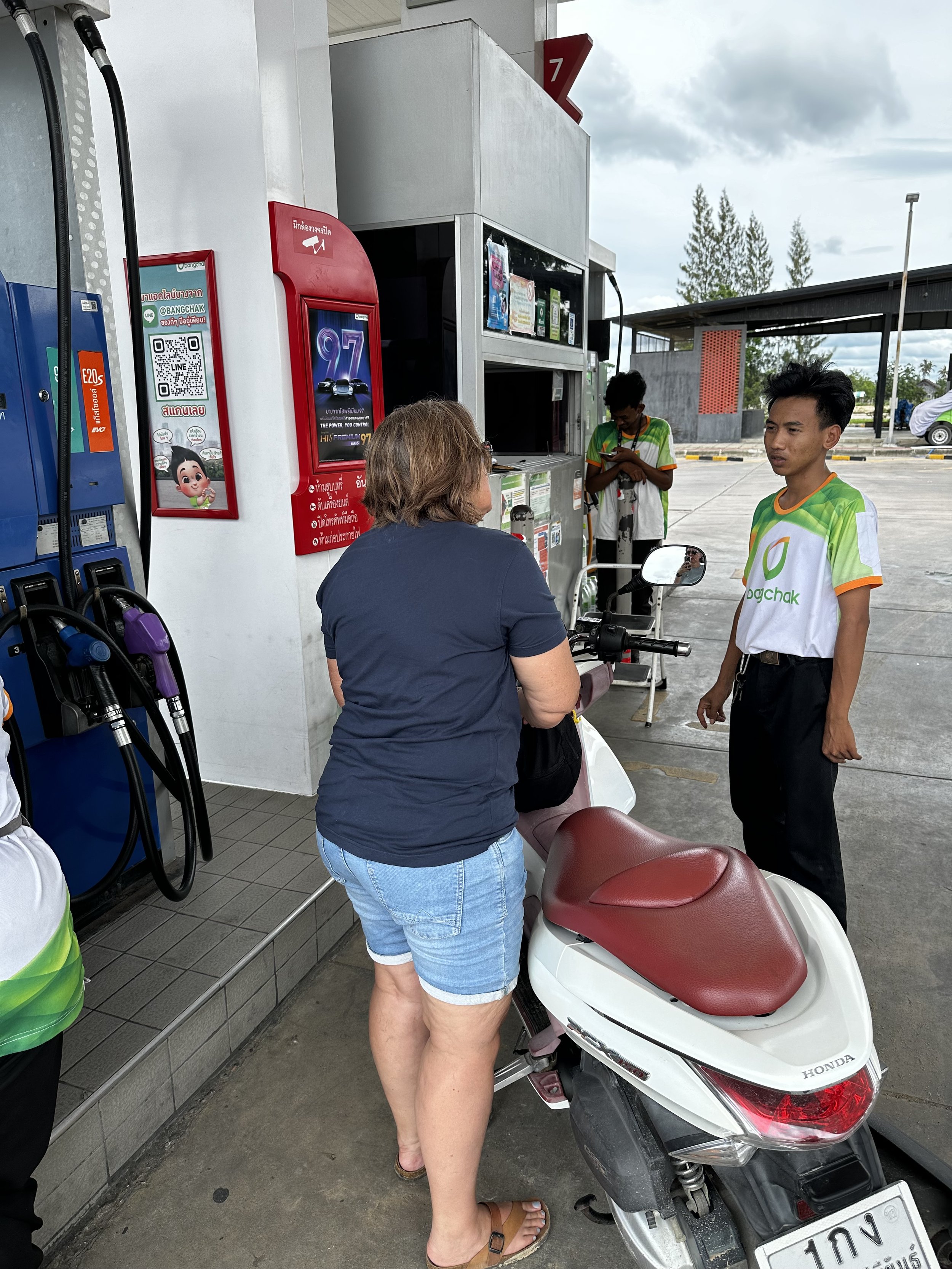
There is the road through the palms and through the village. The way to the beach. The way to Seven Eleven. The way to the small stall where curry comes in bags and rice is carried home like treasure. The way to the China store, where we look at rows and rows of things we do not need but somehow enjoy considering. The place where we can stop for air in the scooter tire and leave without paying anything, because that is how it is there.
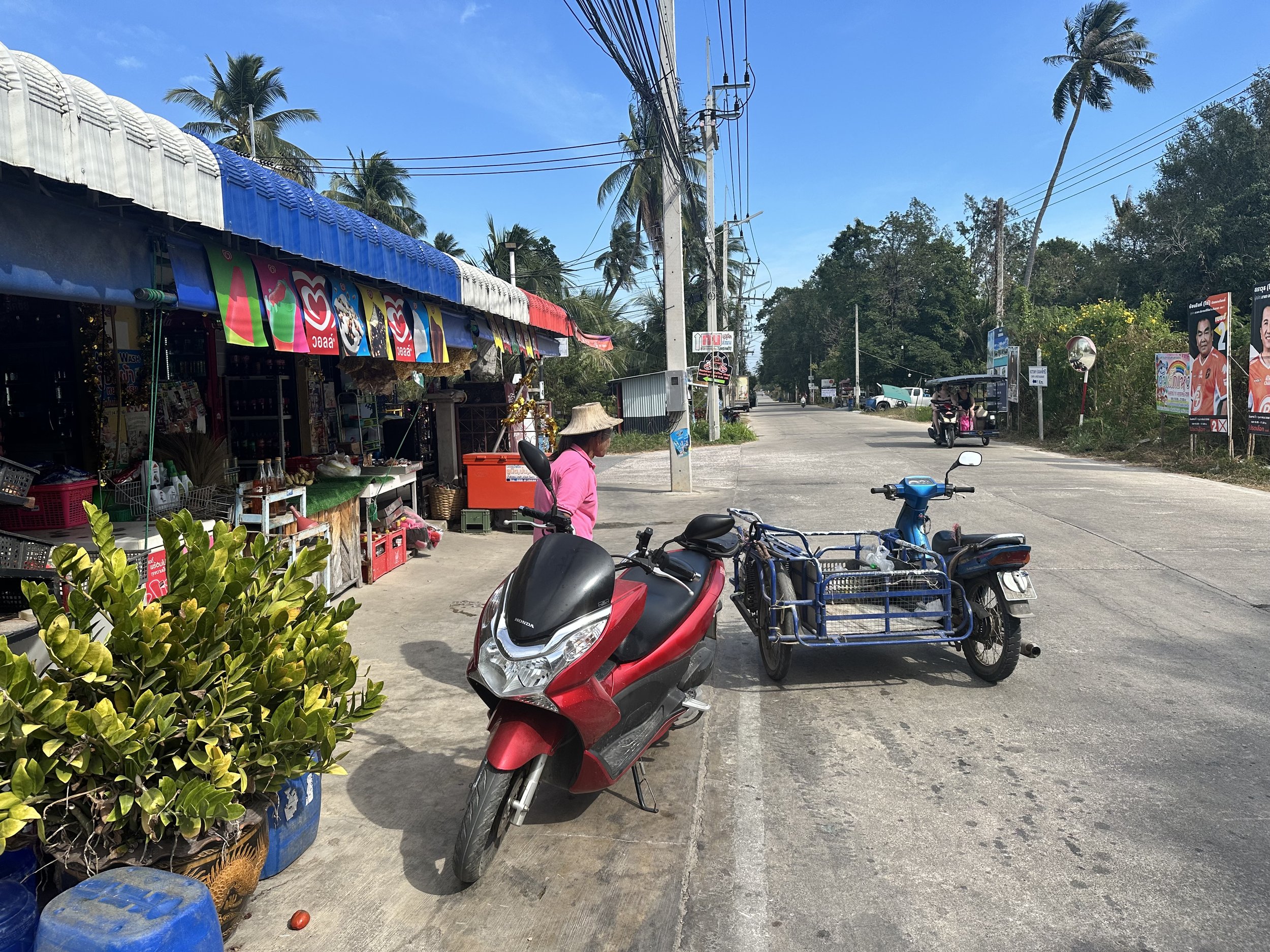
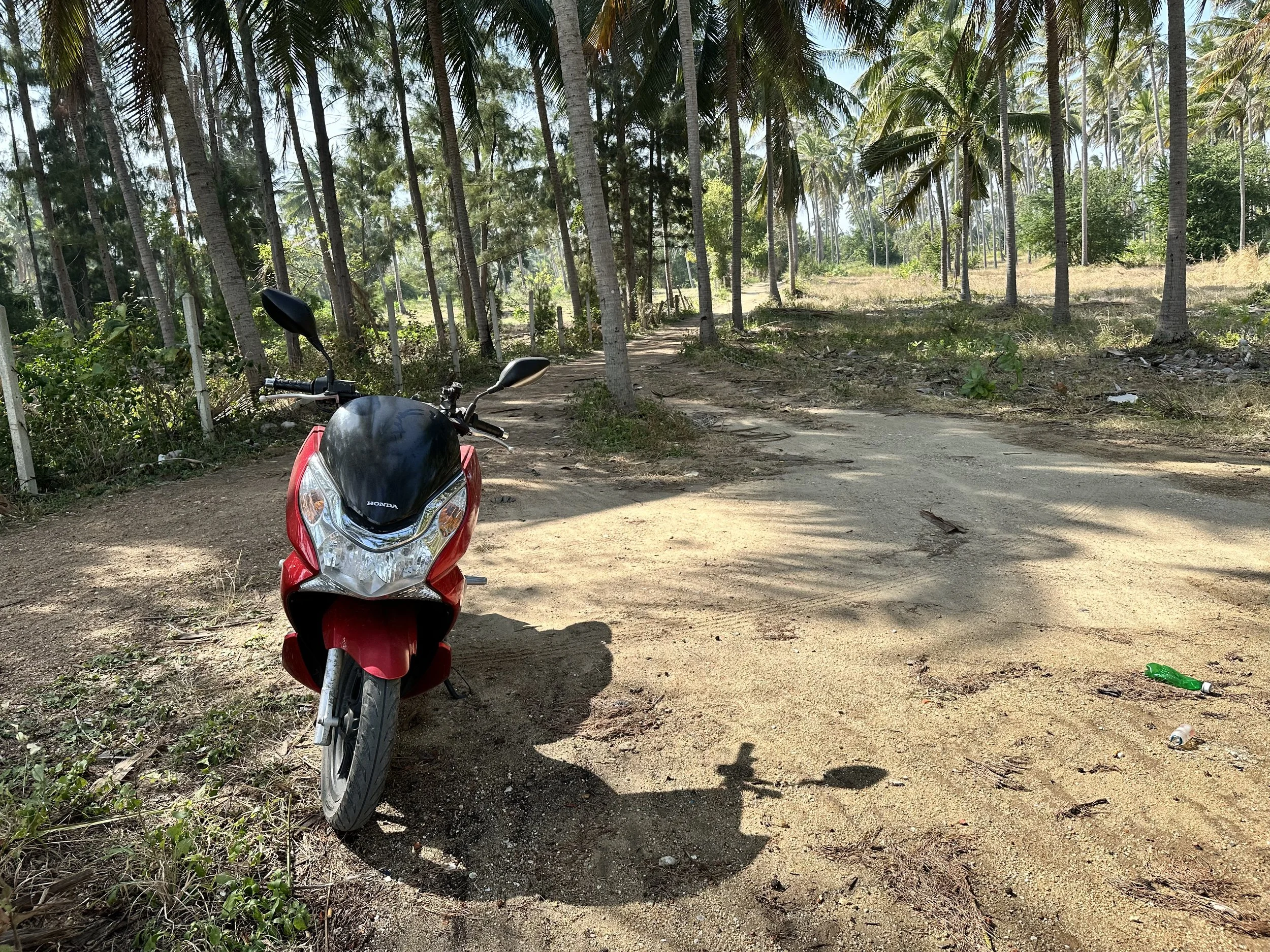
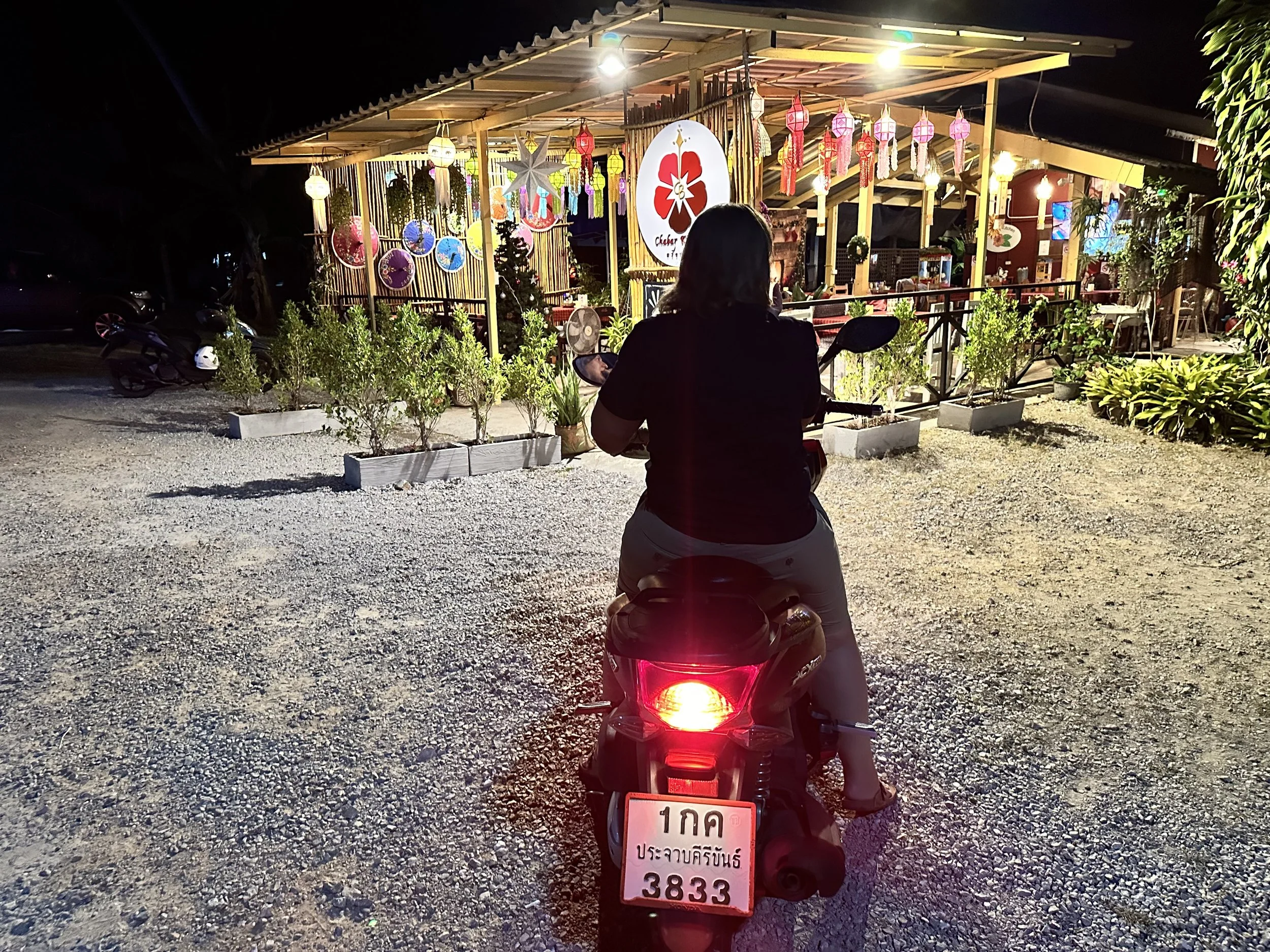
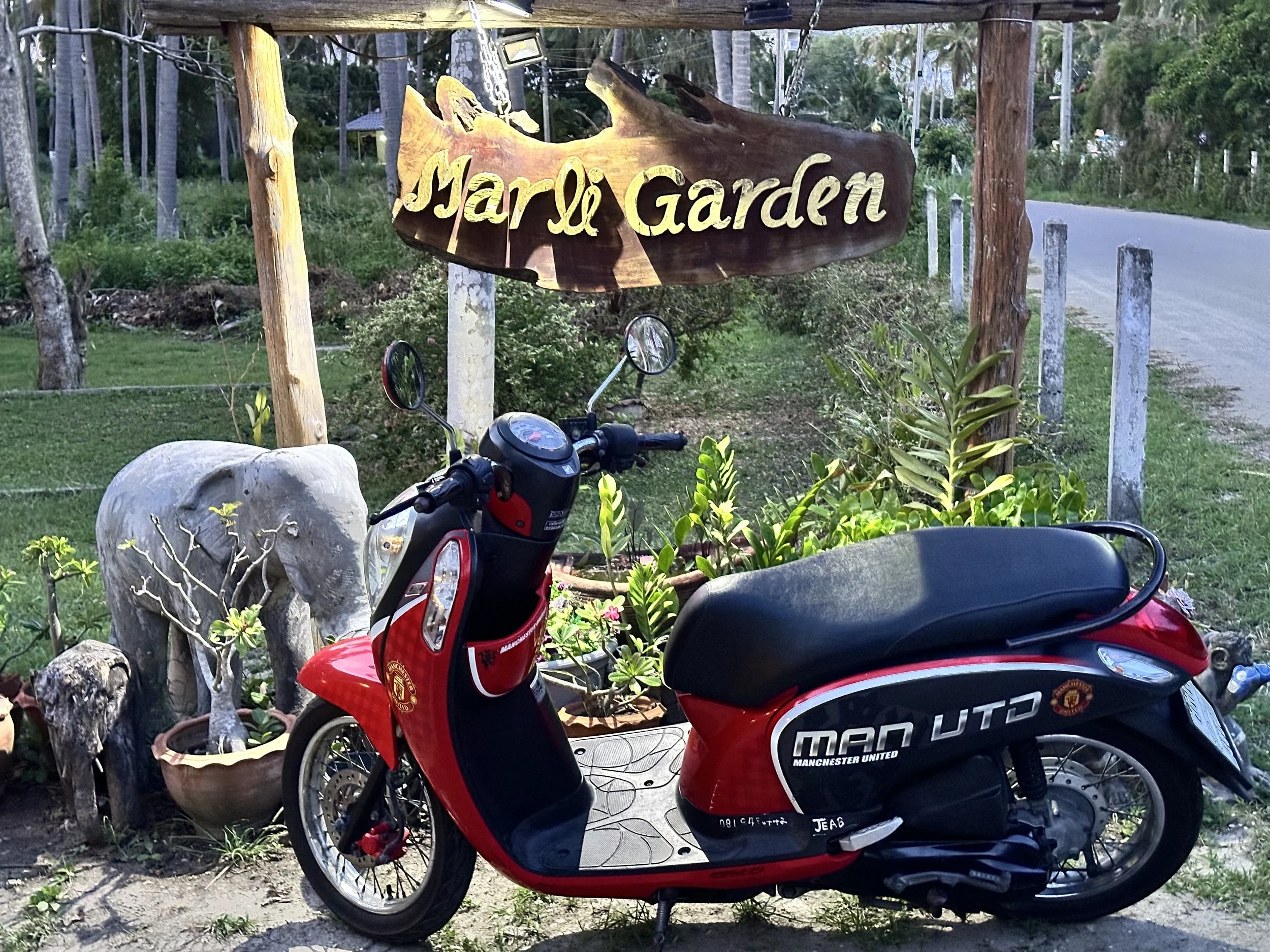
We ride past dogs that barely lift their heads. Chickens and roosters move as if the road belongs to them. Lizards appear and disappear. Now and then, a snake reminds us that this is not a version of Thailand polished clean for visitors.
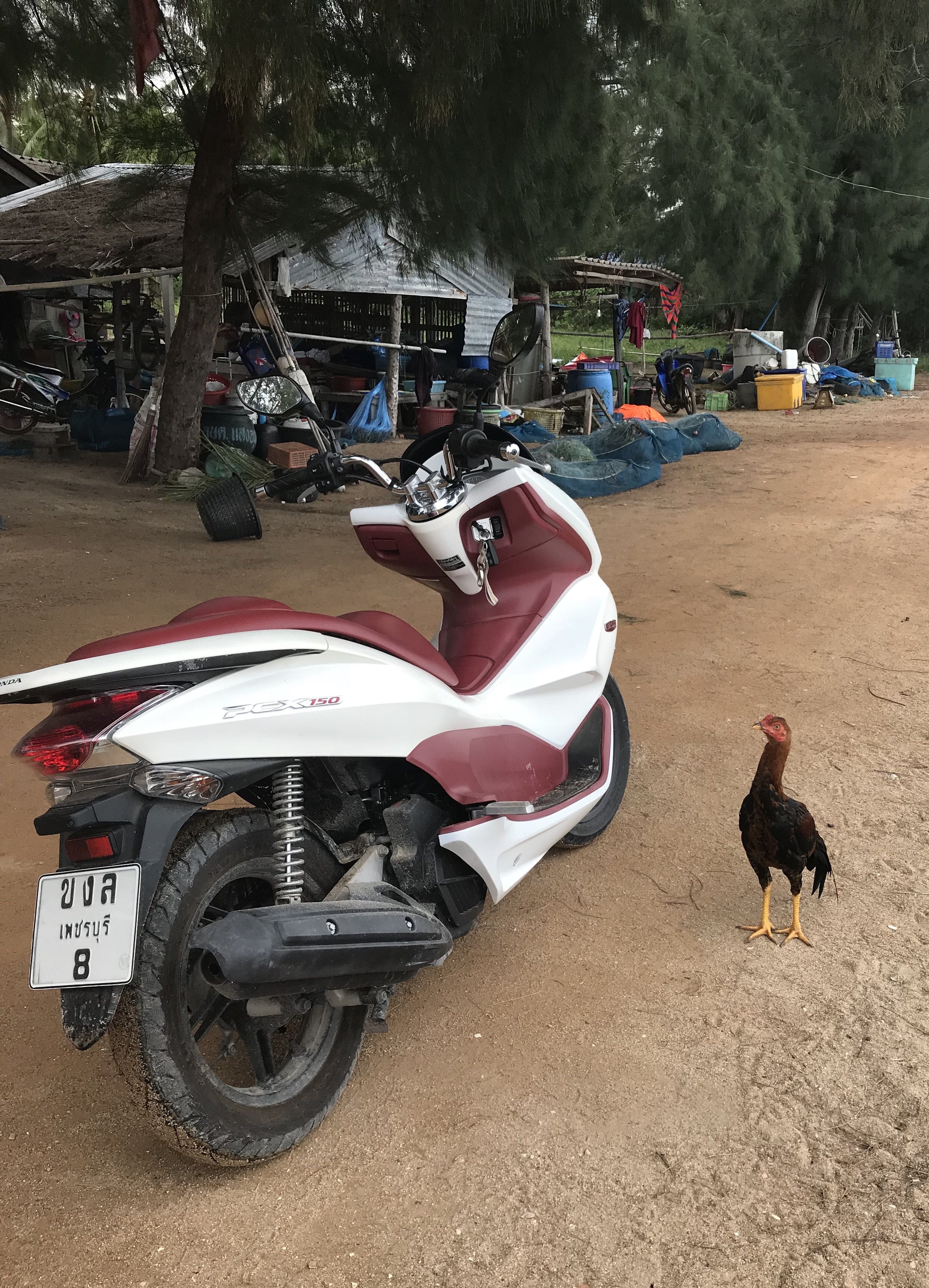
A stop at the local fishermen’s area. Watching slow, daily life and getting a quiet curious greeting.
The wind on the scooter is part of the memory.
Warm air against arms and legs. The smell of food from somewhere nearby. Laundry drying. Flowers. Dust. Palm trees. The occasional smell no one needs to identify. It all arrives at once and then disappears behind us.
Some travel memories are made from big views. Some are made from the exact feeling of turning left at the usual place with a plastic bag of curry hanging from the handlebar.
Huay Yang has taught us that both can matter.
Food as a geography
In Huay Yang, food is a map.
There is the stall by Seven Eleven where a simple curry can become the best answer to the day. We get the curry in a plastic bag, a rubber band wrapped around it. We stop to eat it fresh by our scooter if we are on our way. Finishing it off with refreshing coconut water. The banana cake from Seven Eleven we save for later.
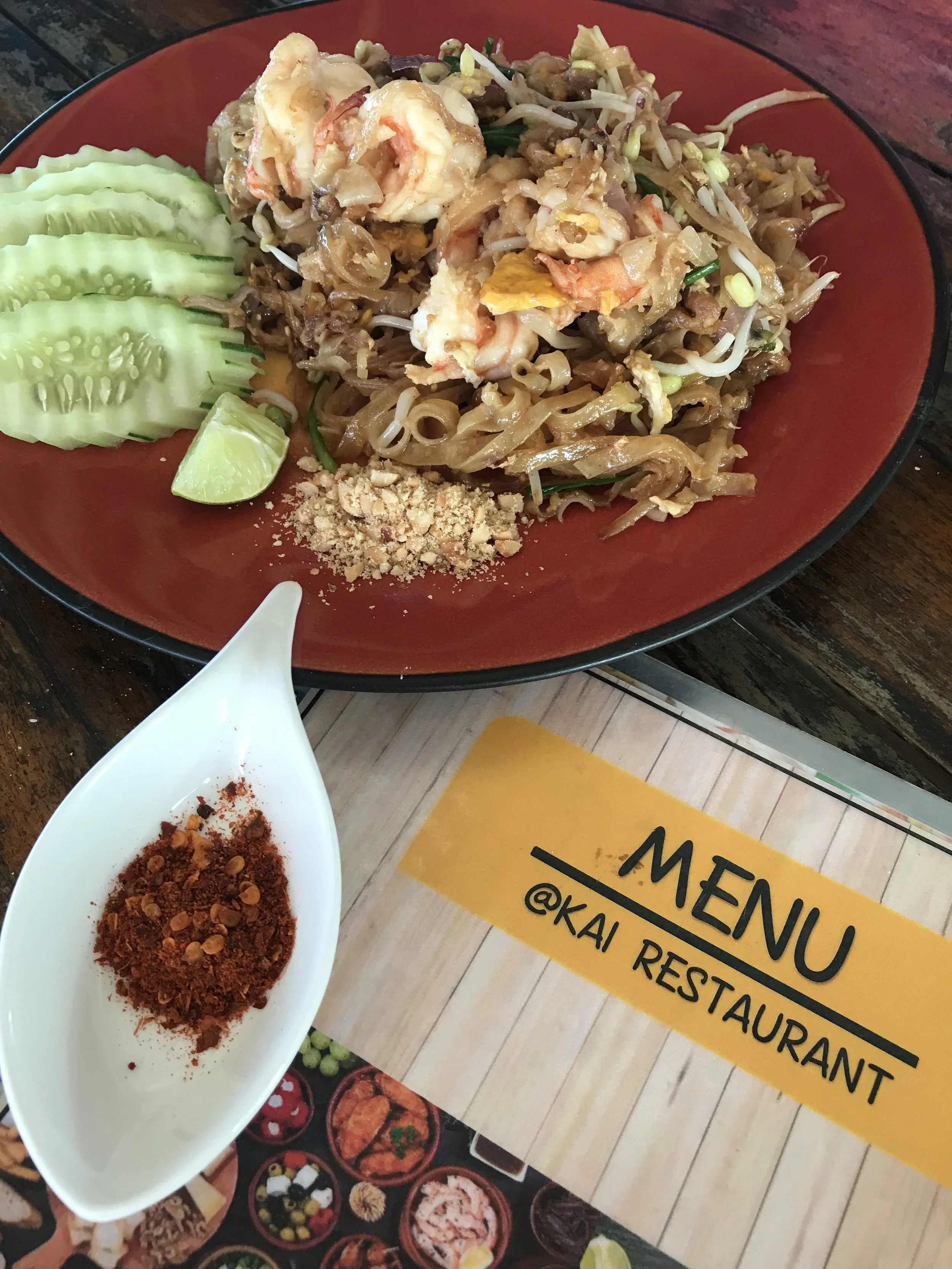
There is Kai and her fried shrimp.
There is red curry at Cha Bar.
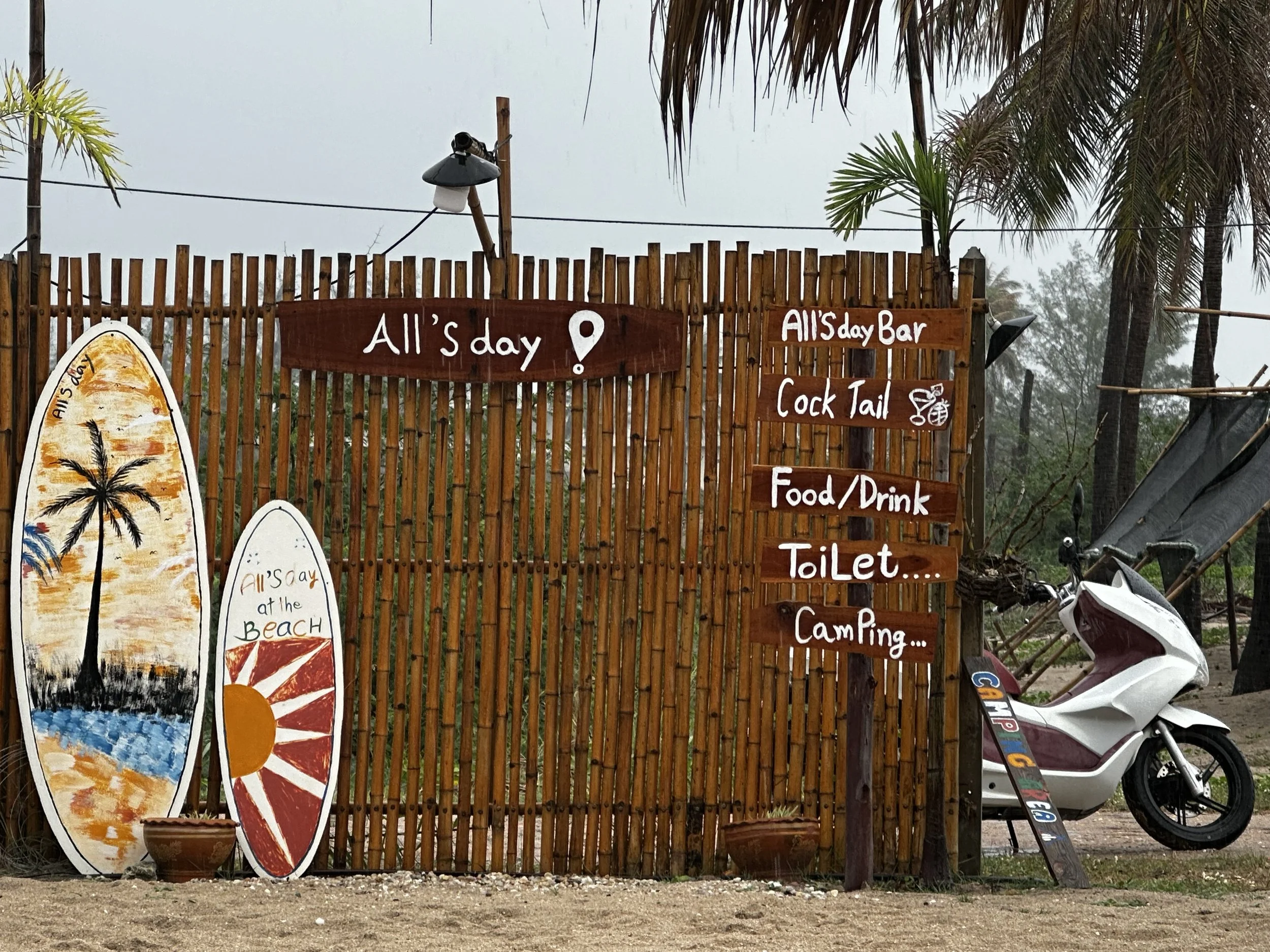
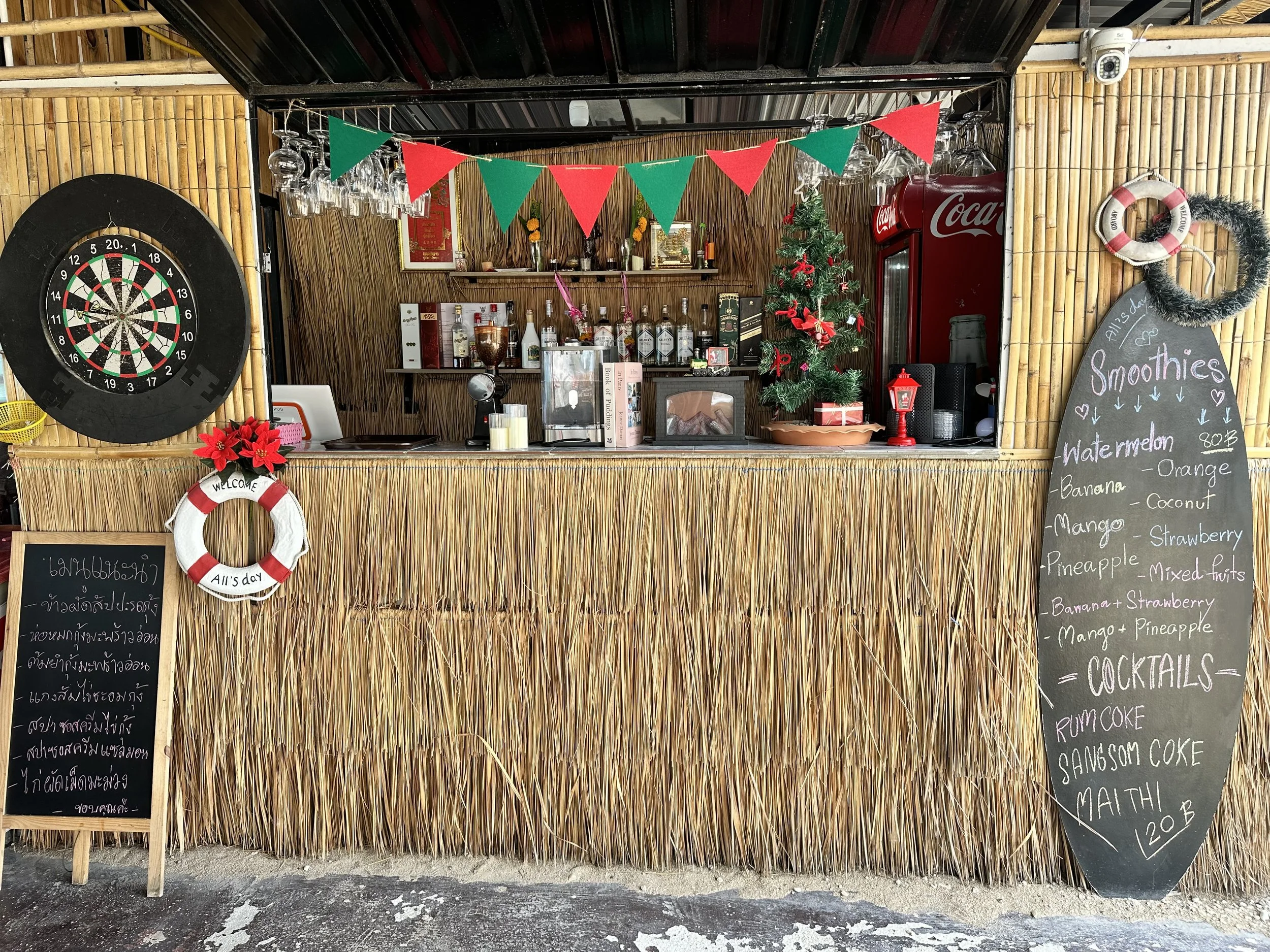
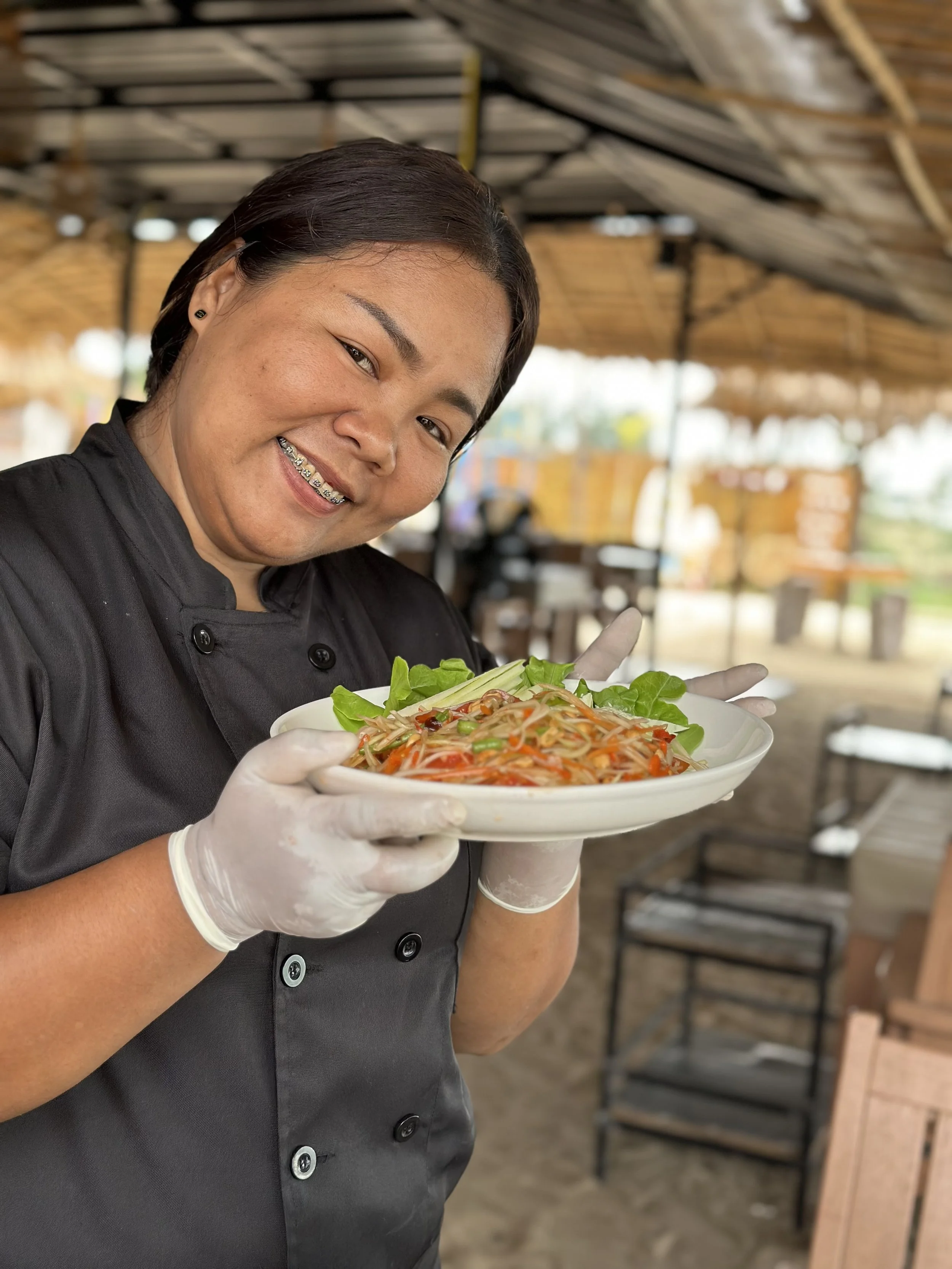
There is All Days by the beach, where food comes with conversation, where we once learned to make papaya salad, and where the taste of lime, chili, fish sauce and green papaya carries more memory than any formal meal could.
There is Ranchen’s bread in the morning, and cinnamon rolls that somehow belong in Thailand because they belong to our version of Thailand.
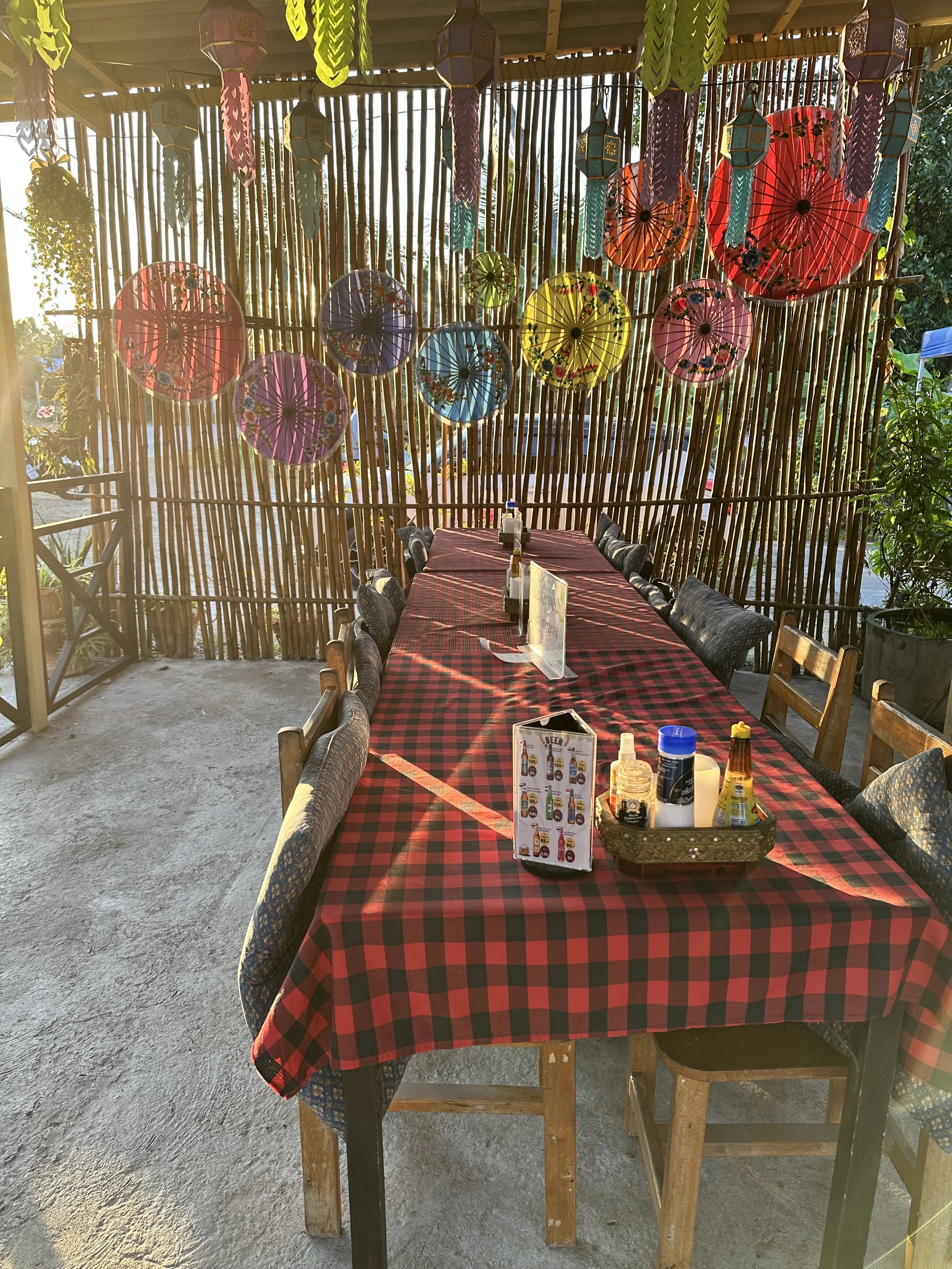
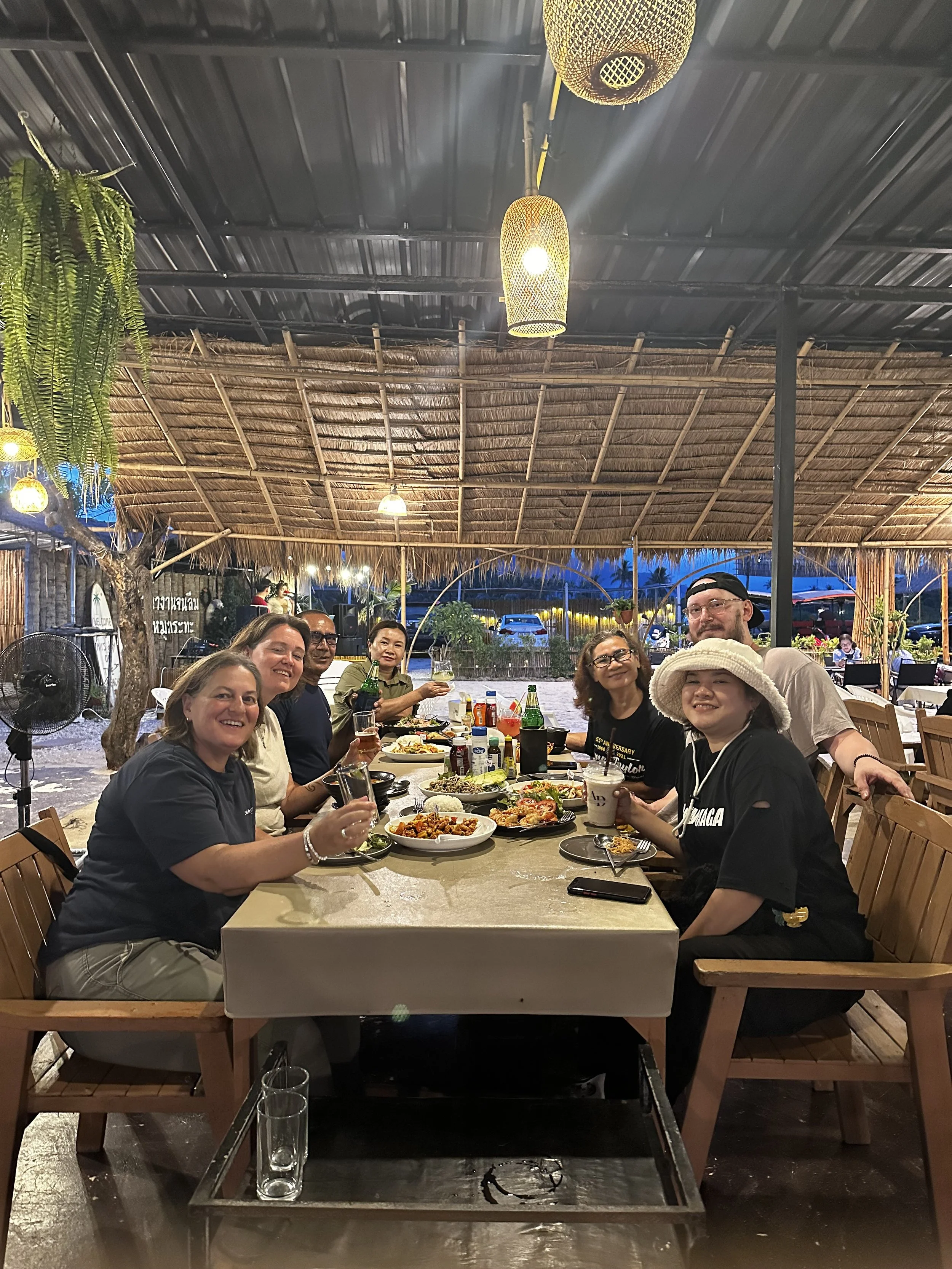
There is chocolate cake at Octory Cafe and Restaurant by the sea. The creamy coffee from Surin Beach. Fresh coconuts. Mangoes and pineapple in the morning. Fruit so ripe and easy that it makes fruit in Sweden feel like an idea of fruit. It’s having lunch at the beach at Mali’s, Palm Beach, Aunchan beach bar & Restaurant or Infinity Beach. The food is what calls us back to Thailand, together with the smiles and welcoming familiar faces. The popular “Pancake man” where children are waiting for their highlight of the day, if you can find him. Of course there are so many more places to mention and worthy of their own story. Some places disappear and others arrive. A blend of authentic thai food and western choices.
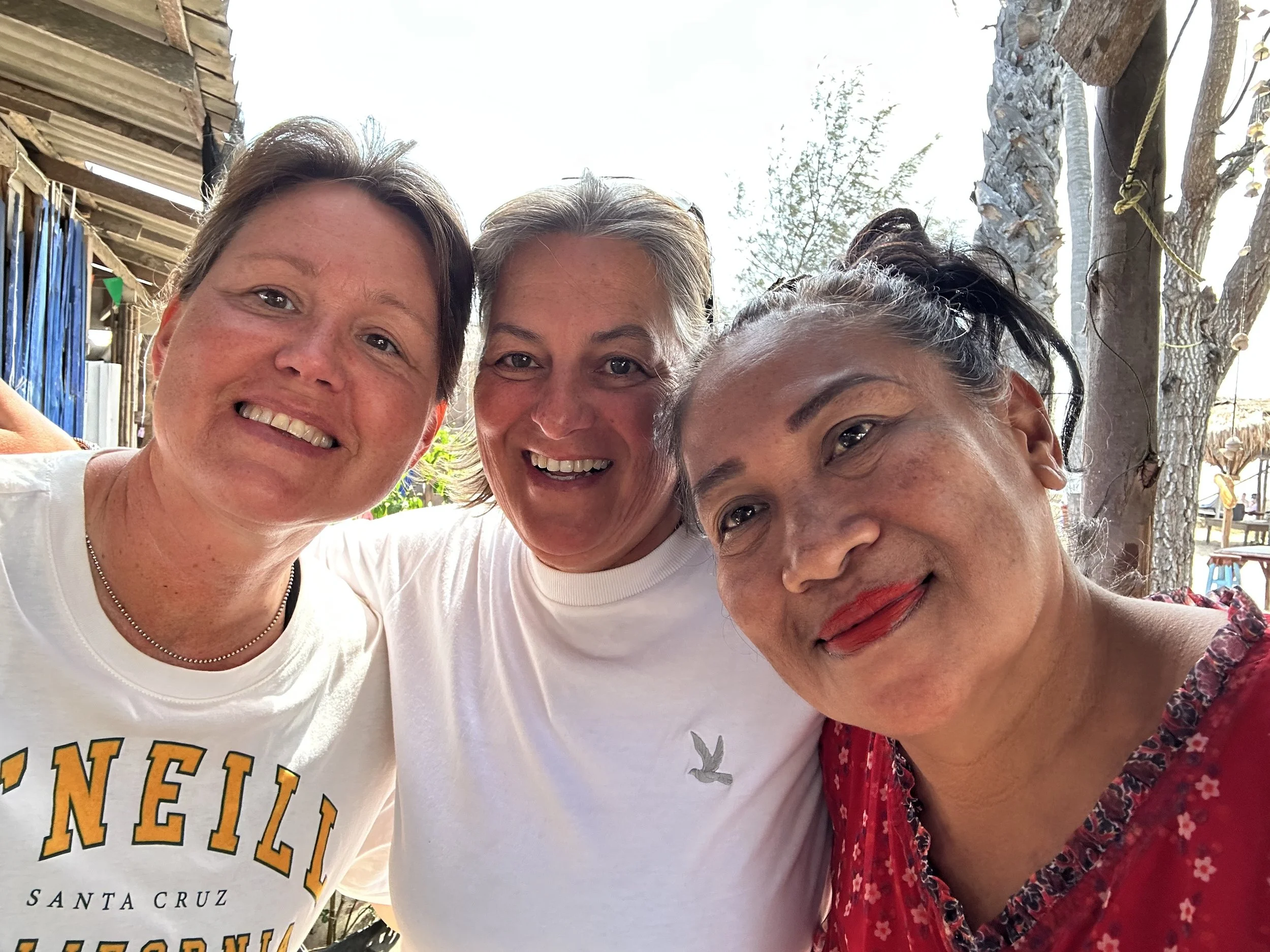
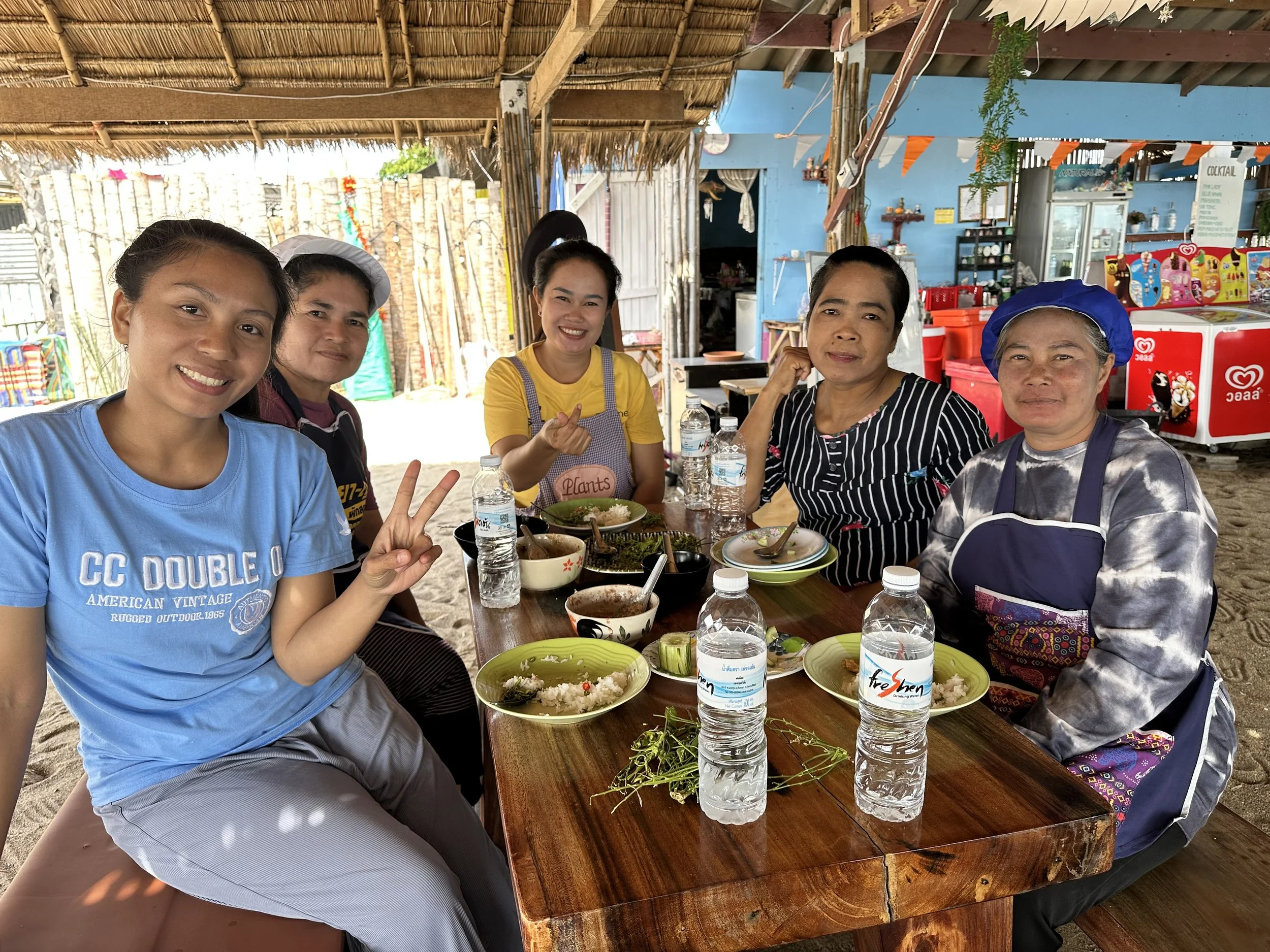
With a special Thank You to everyone who has provided and served us such delicous food and drinks during our years in Thailand ❤️ We love you!
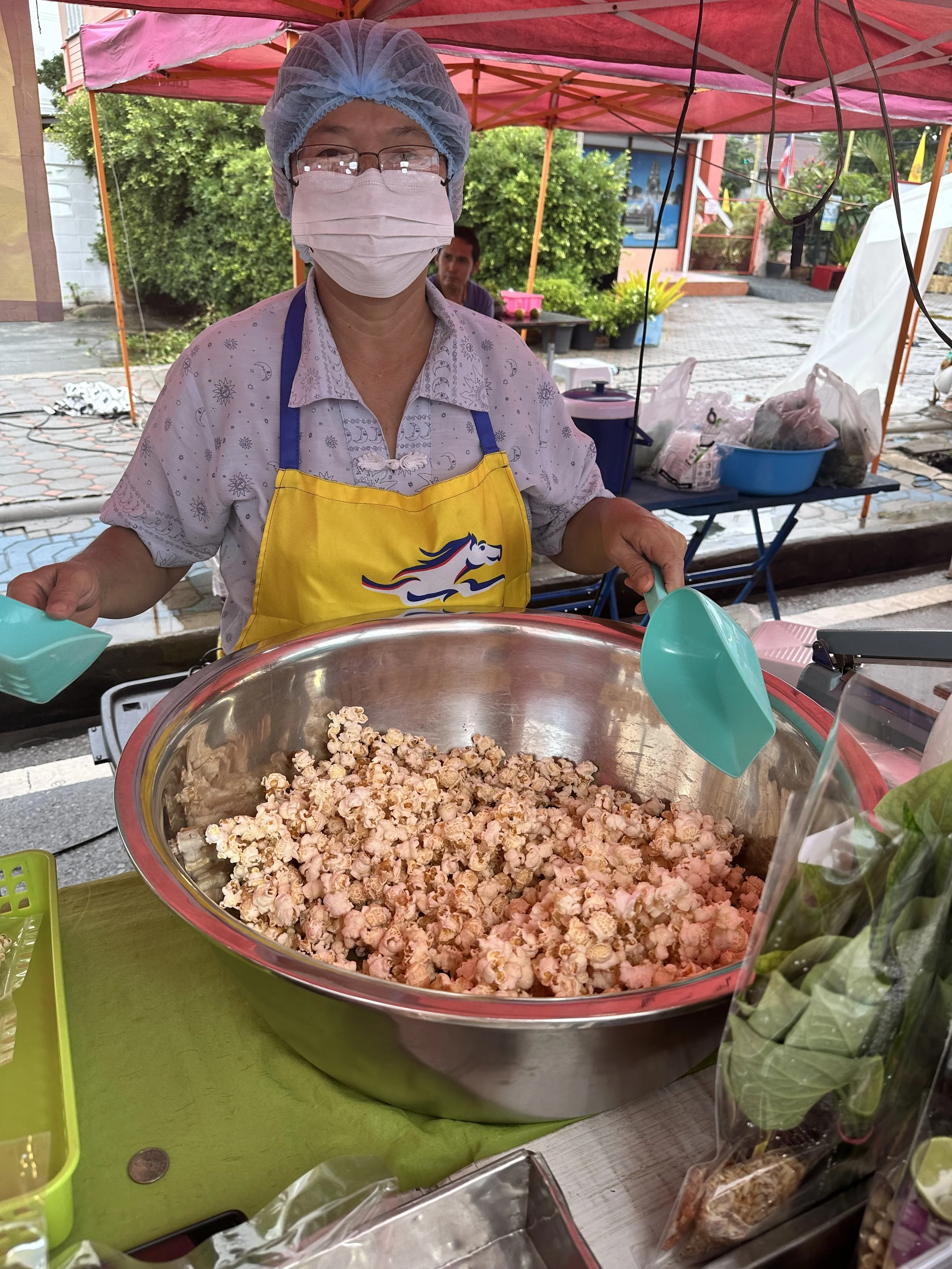
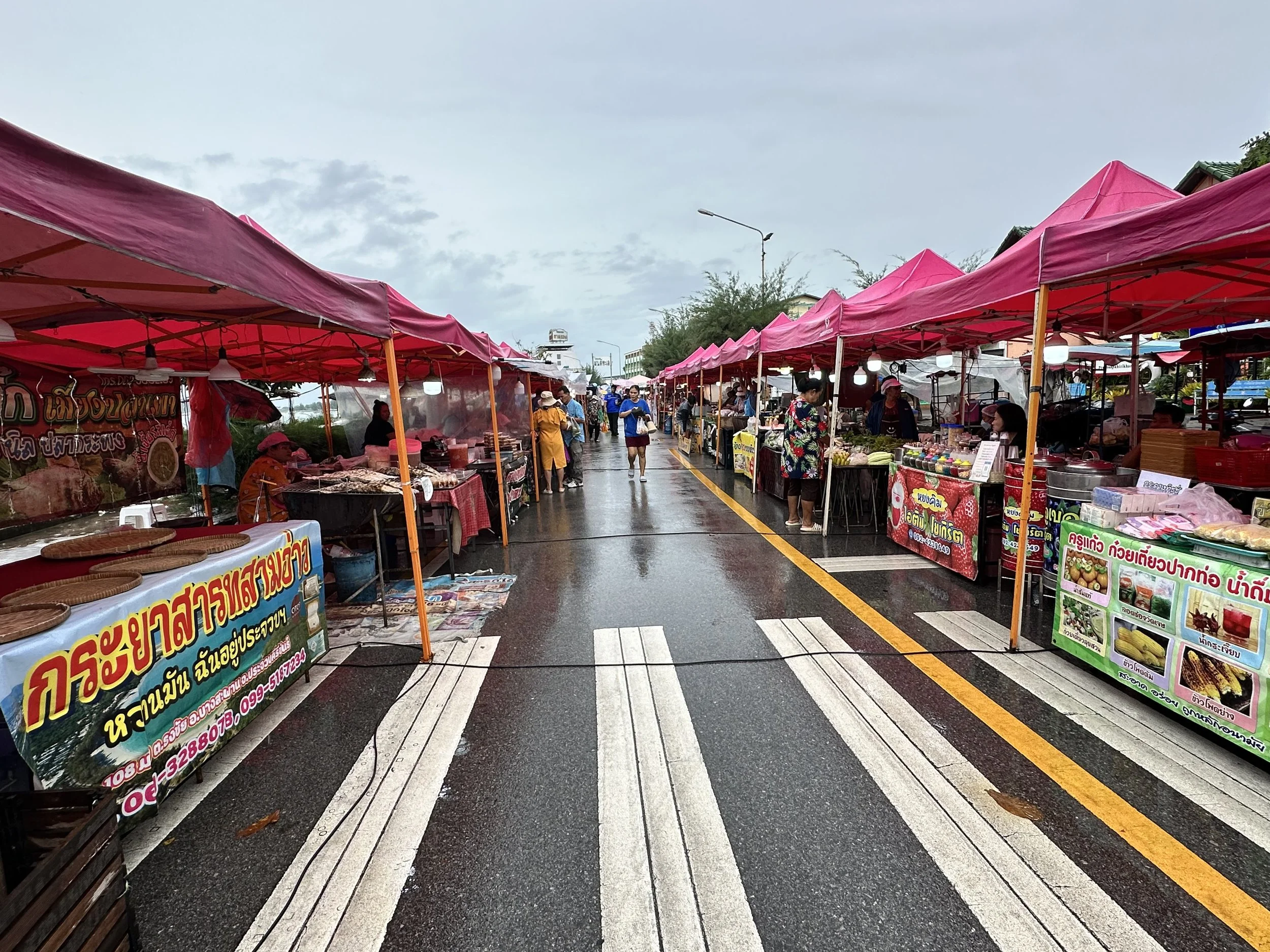
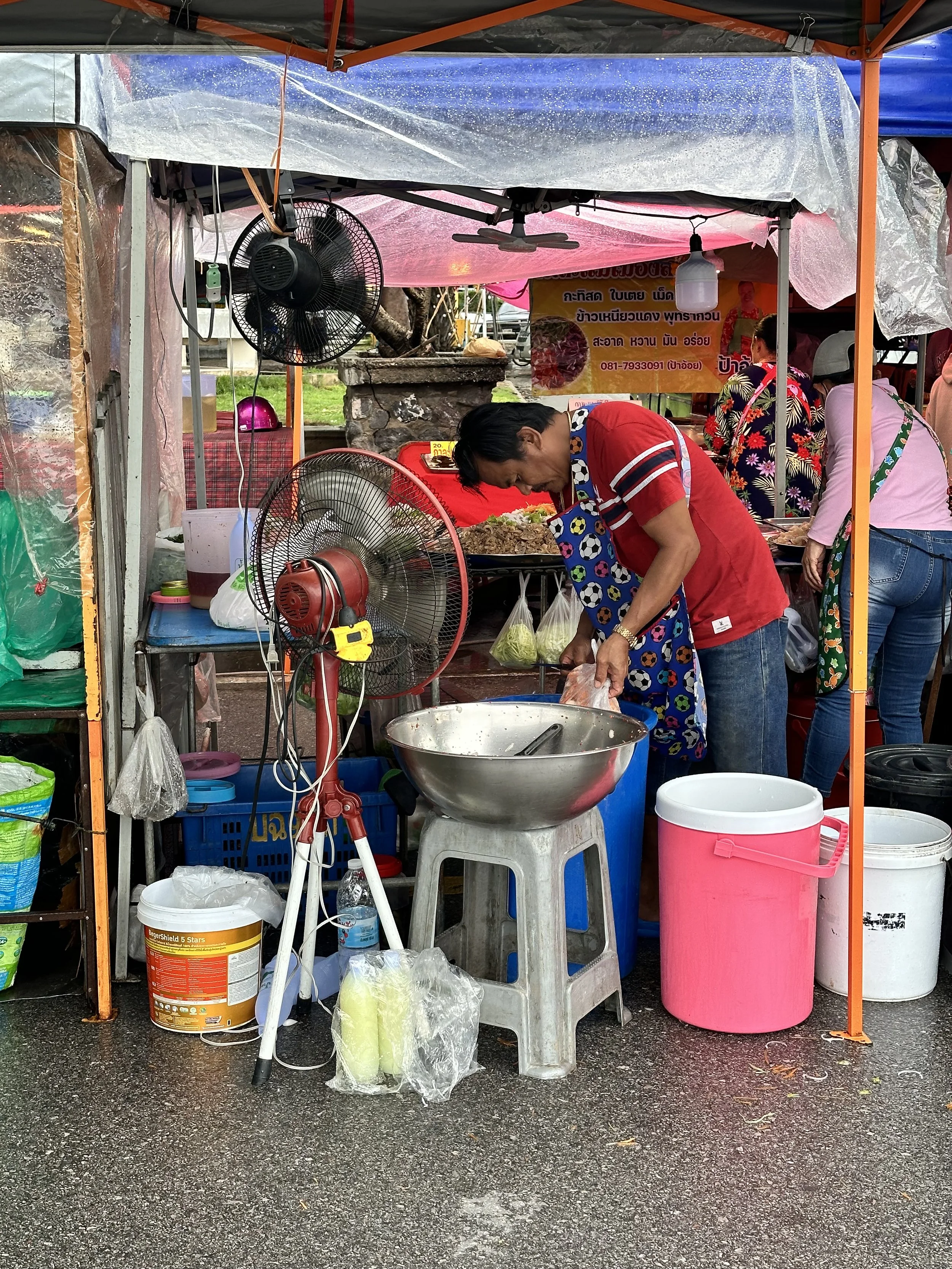
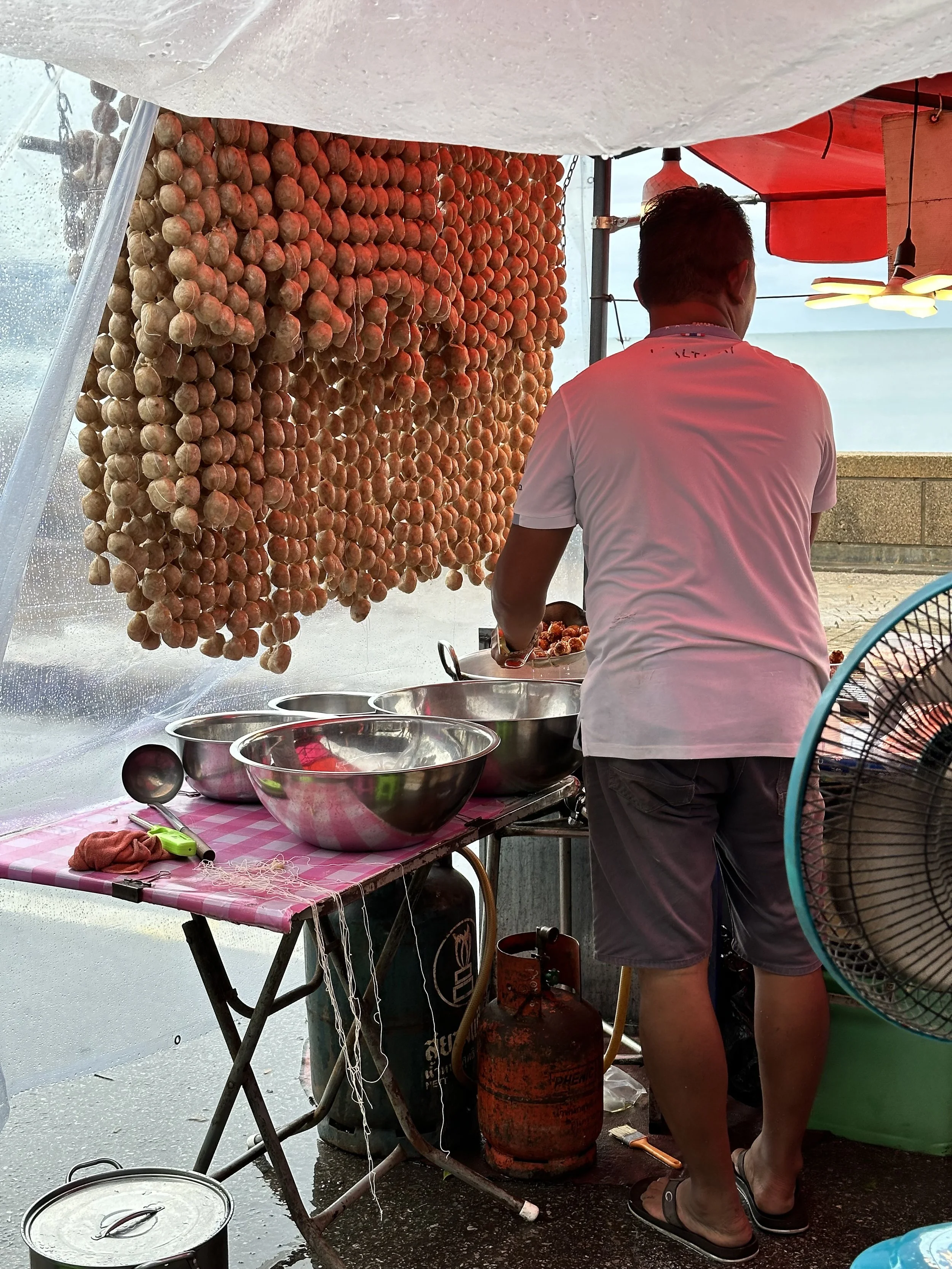
A Gallery of Memories (click for caption and information).
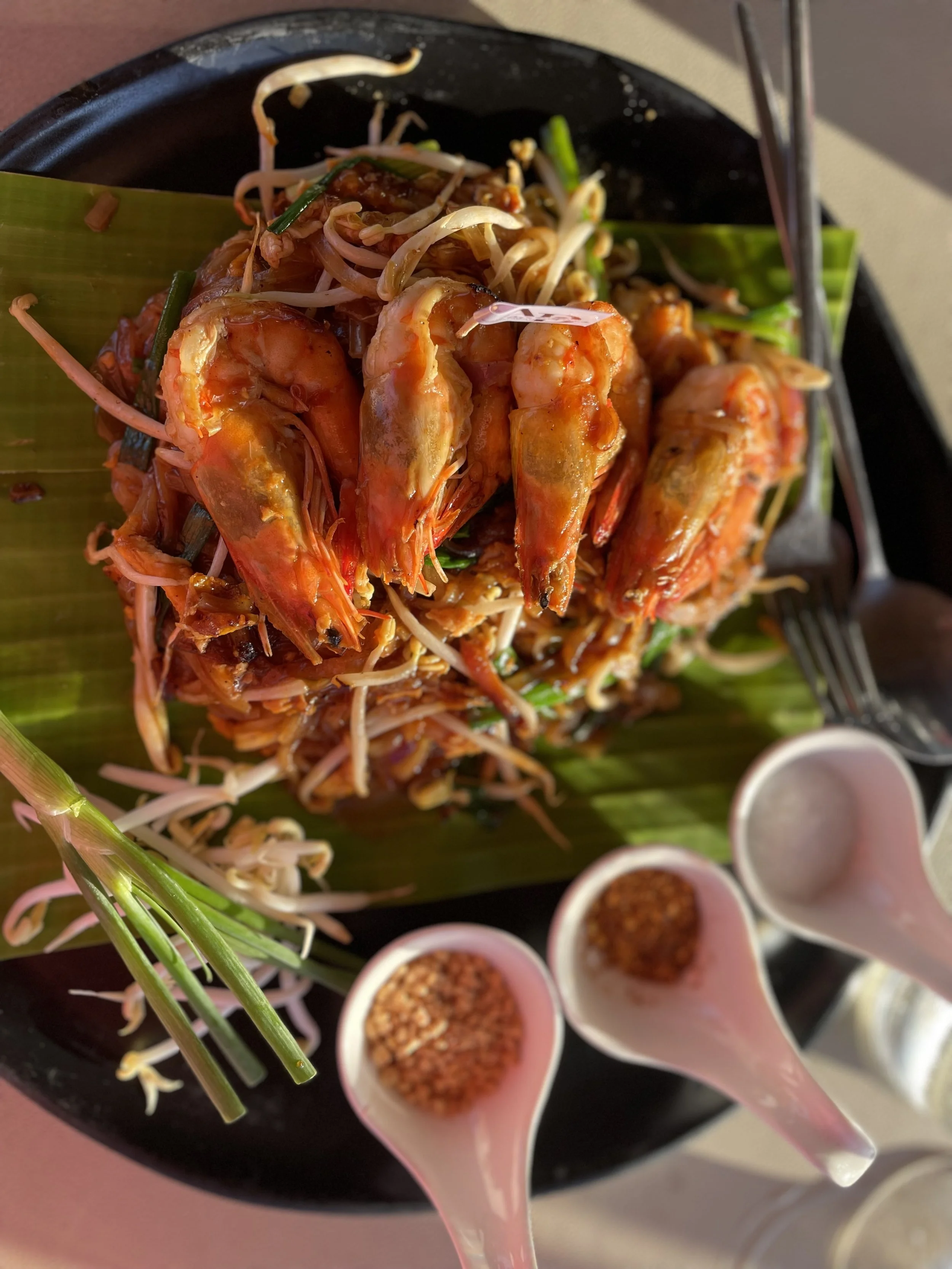
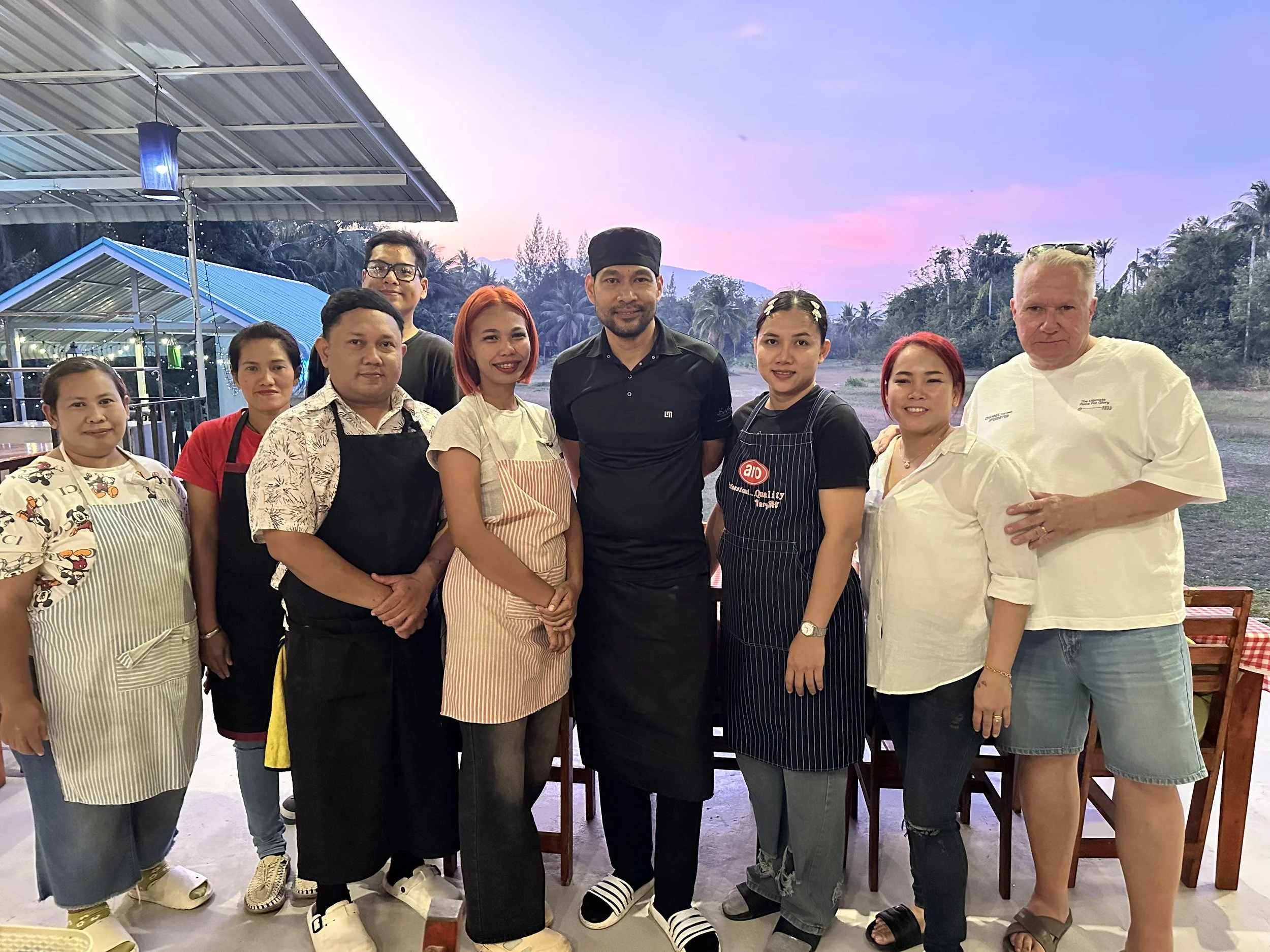
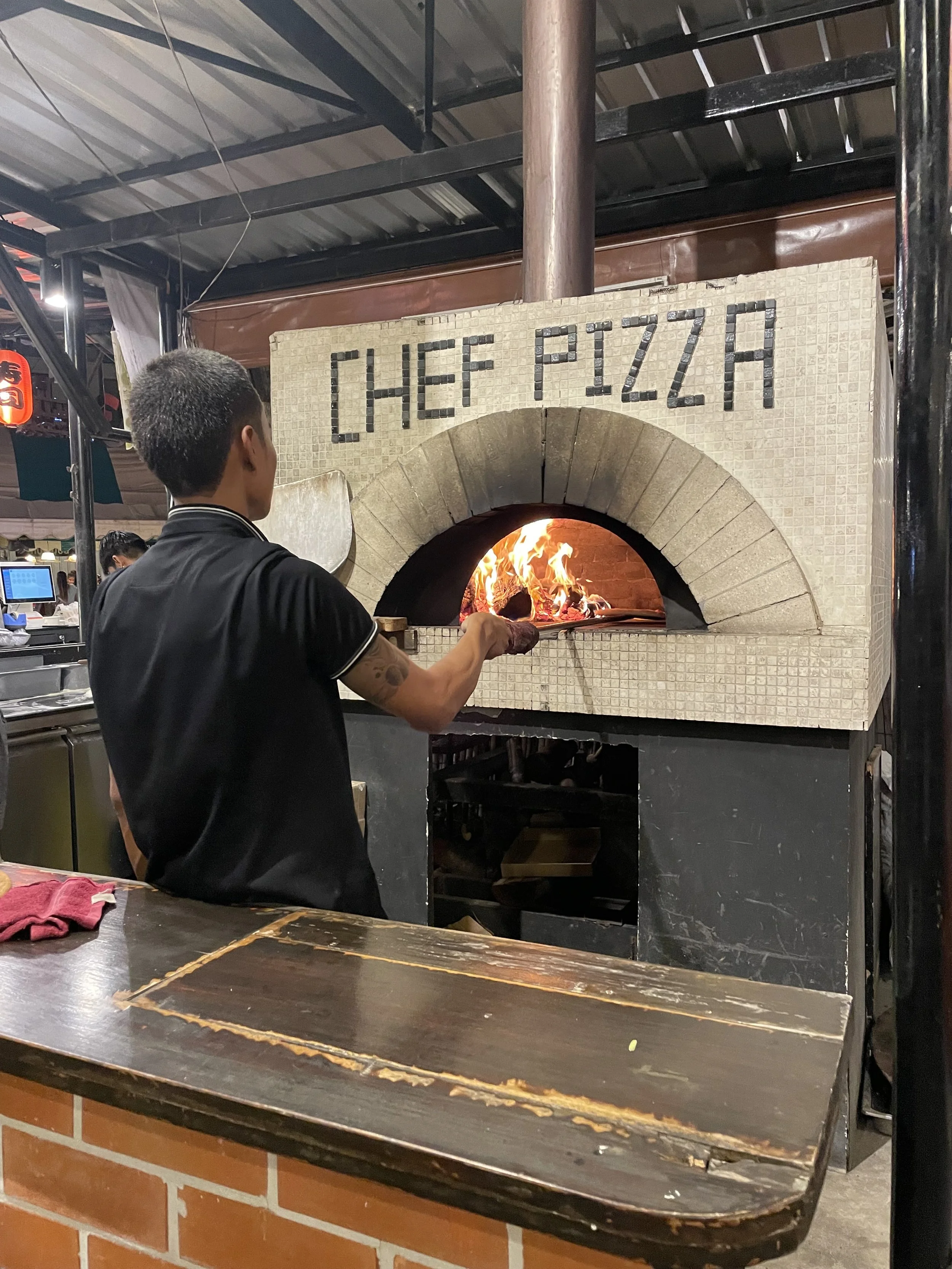
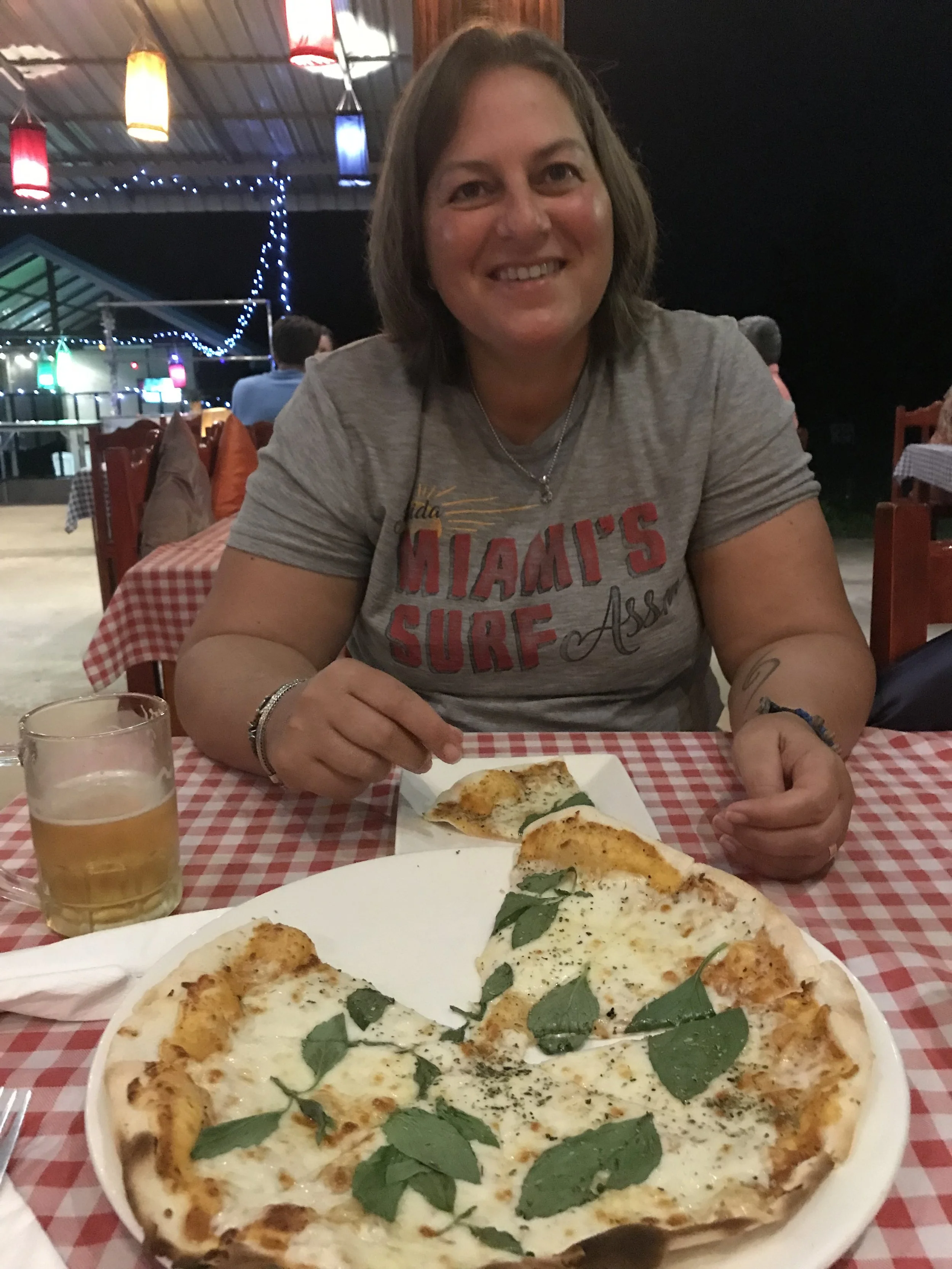
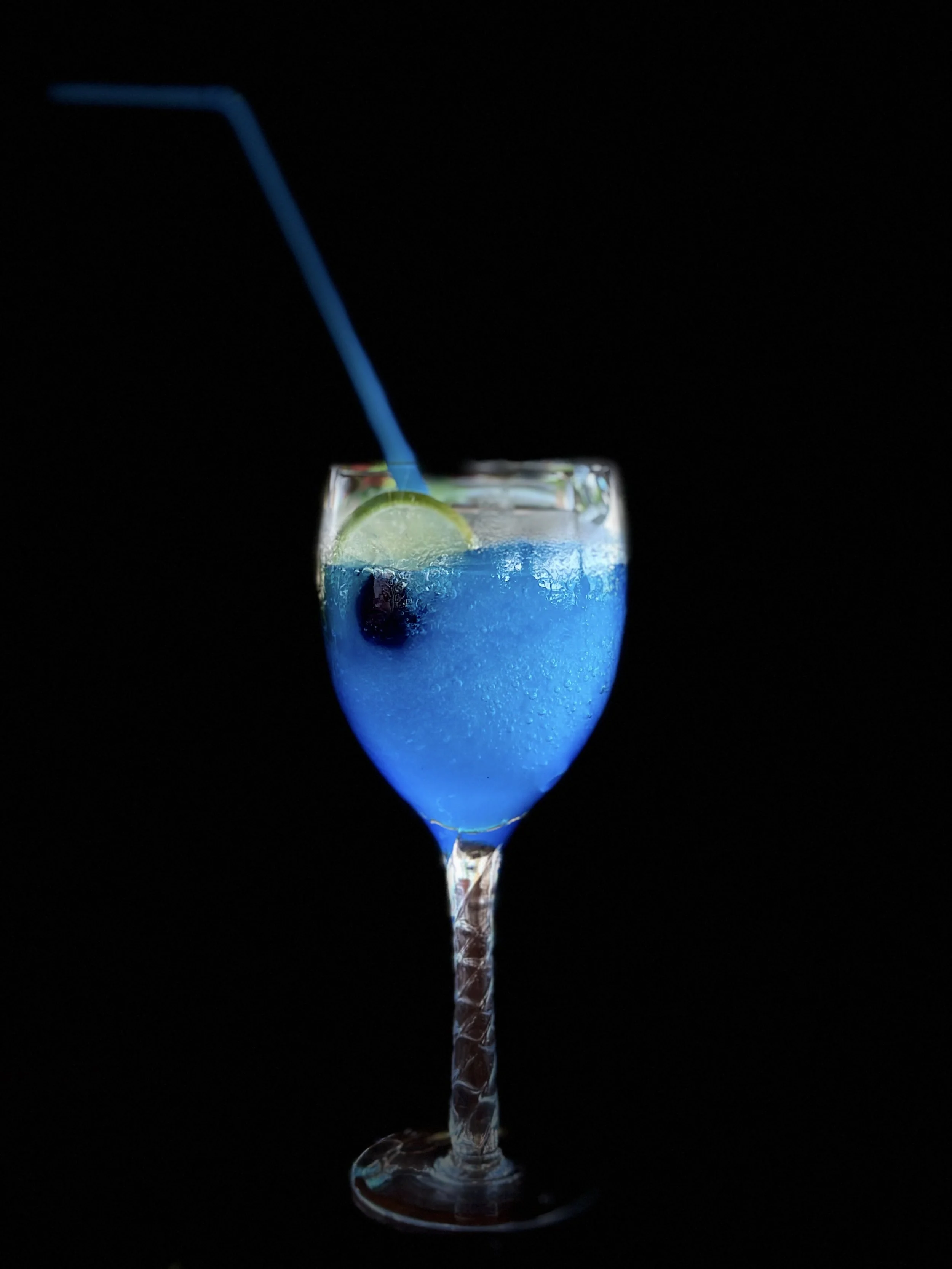
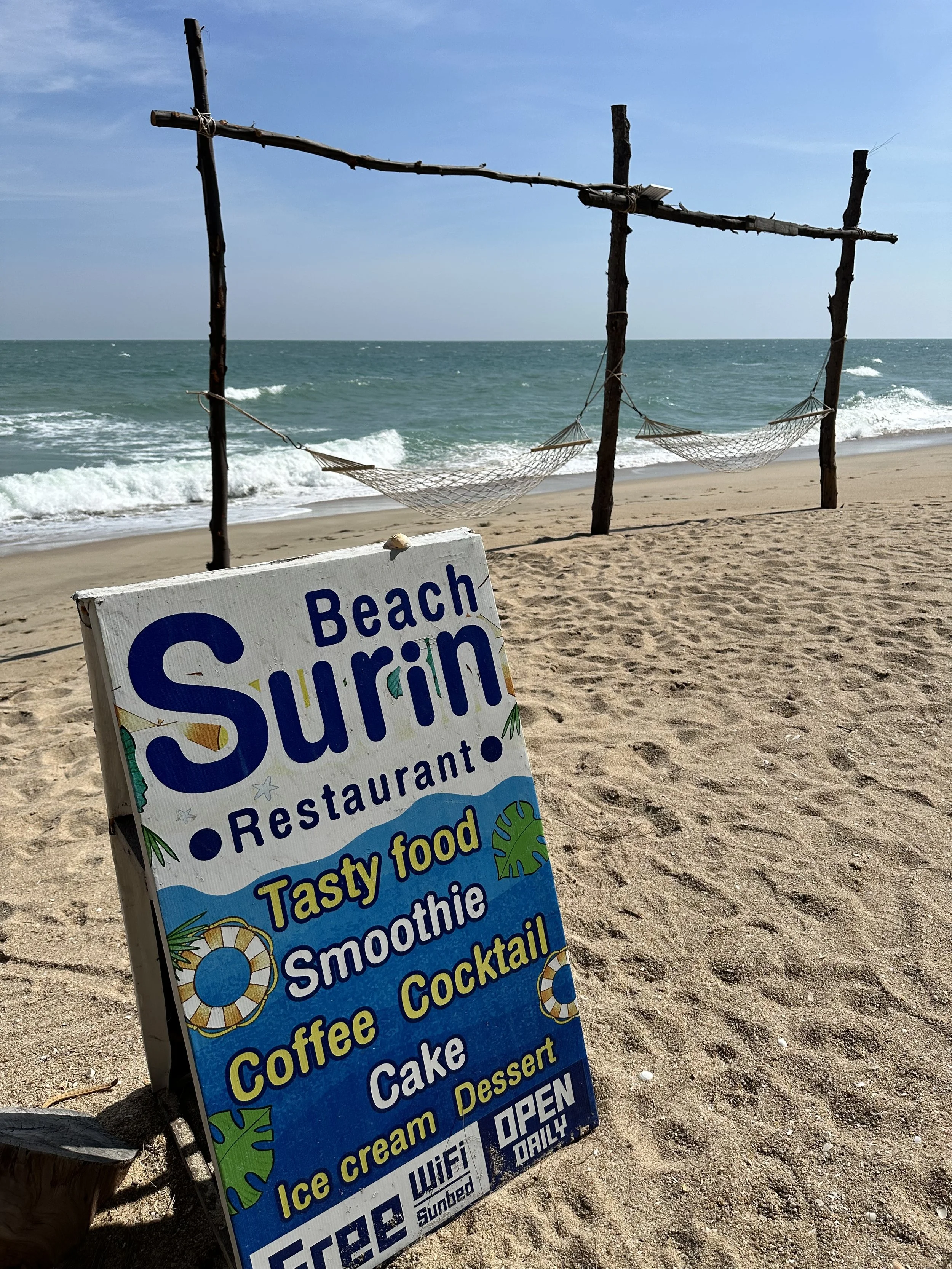
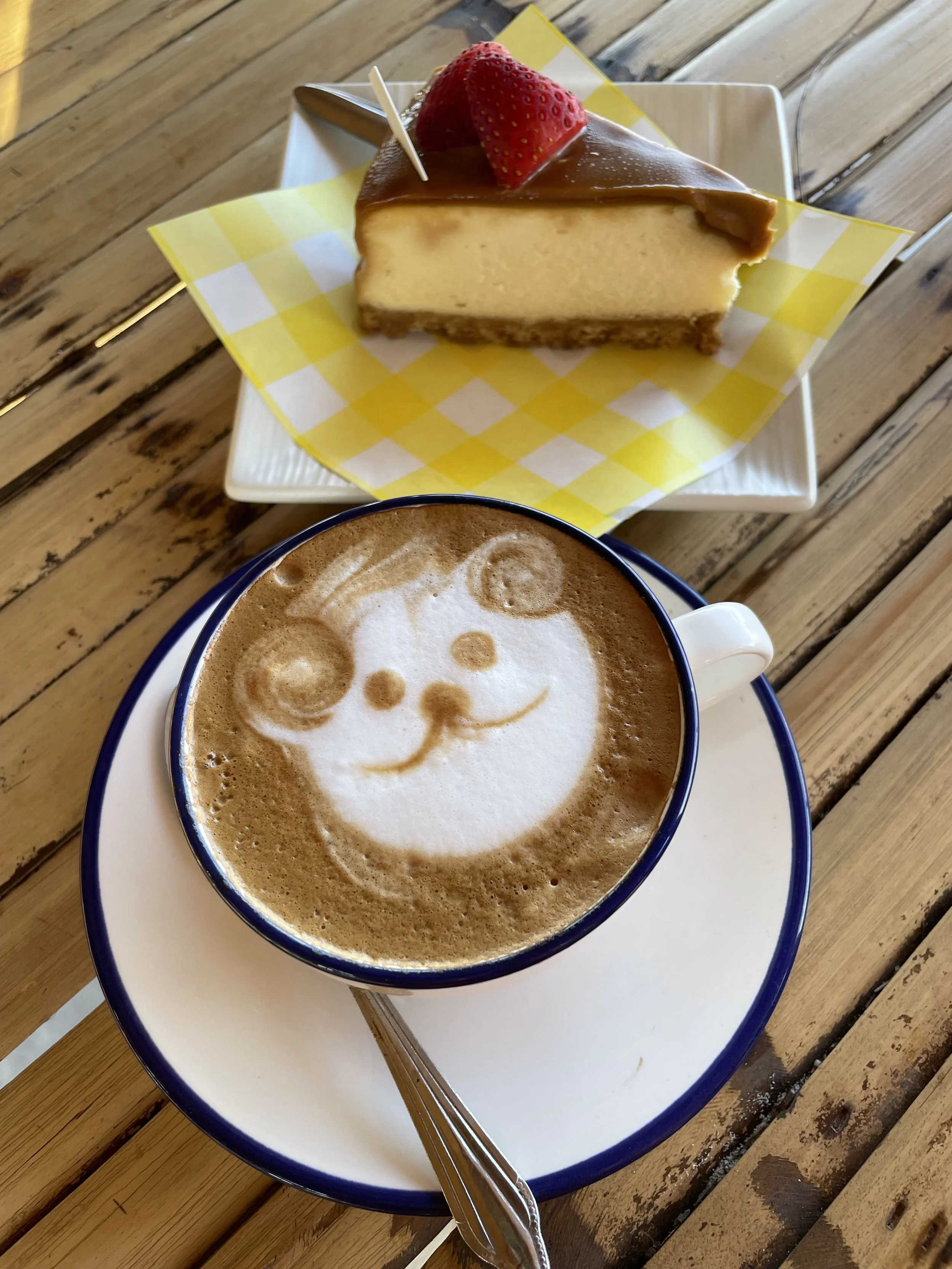
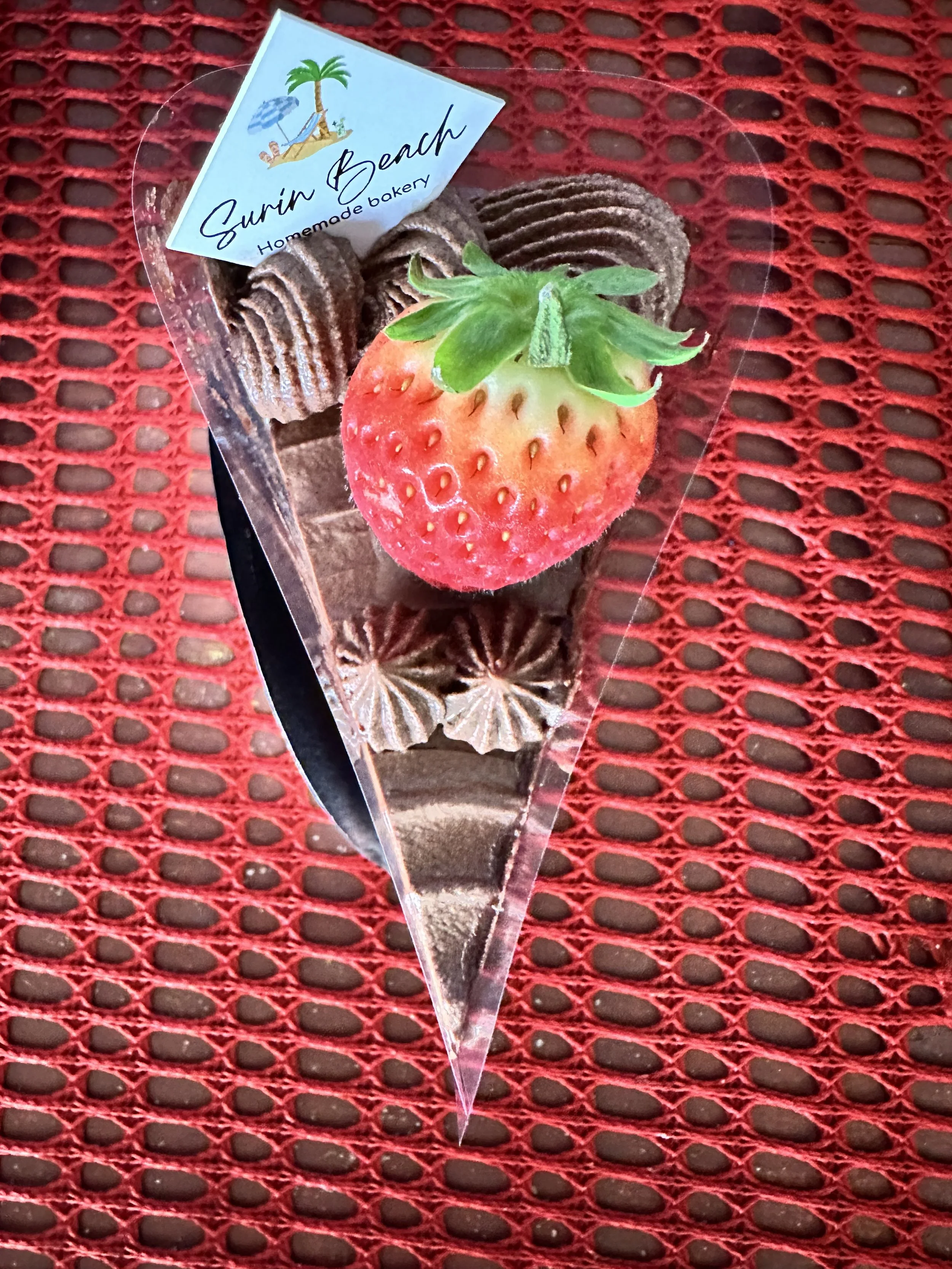
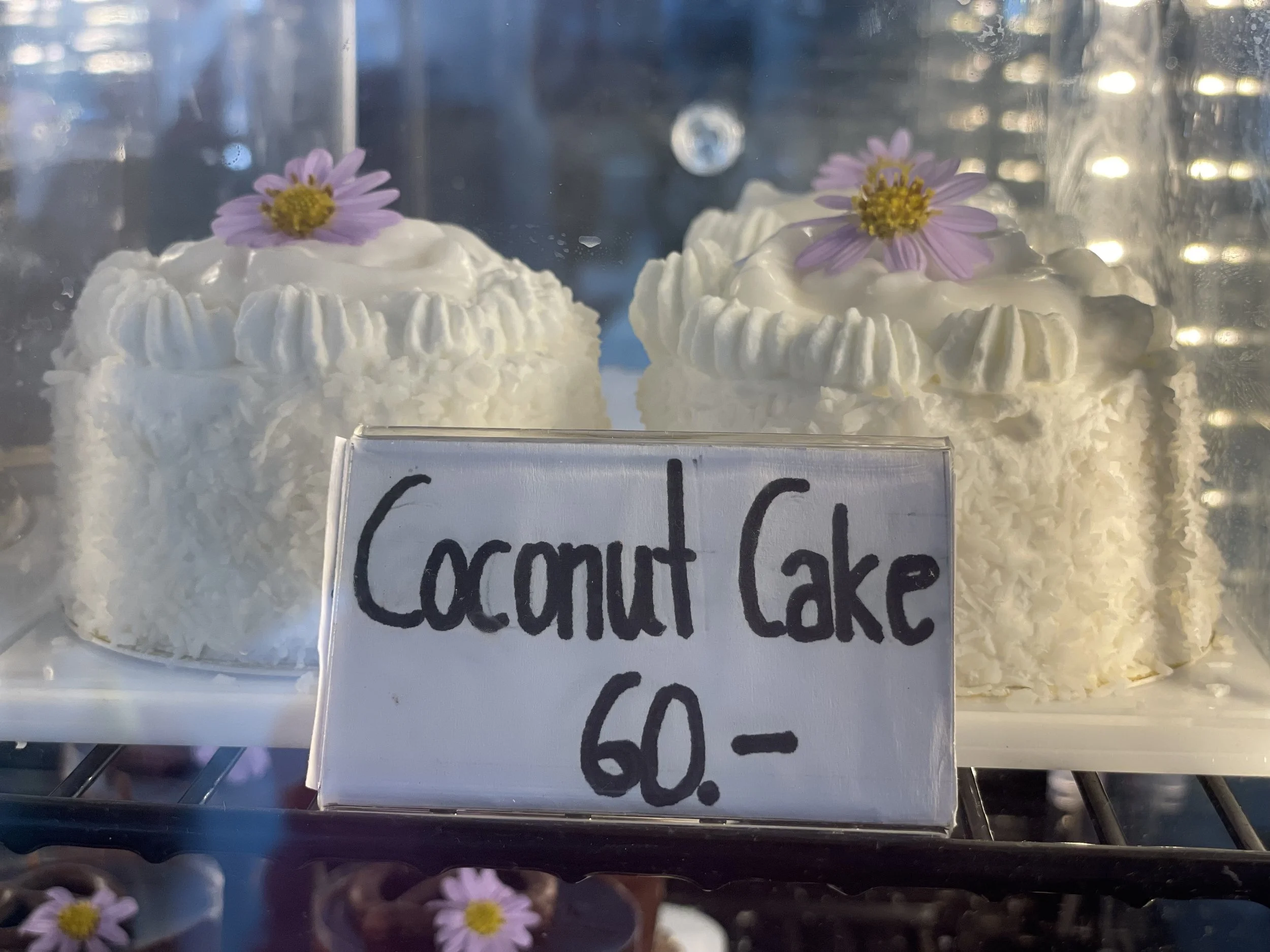
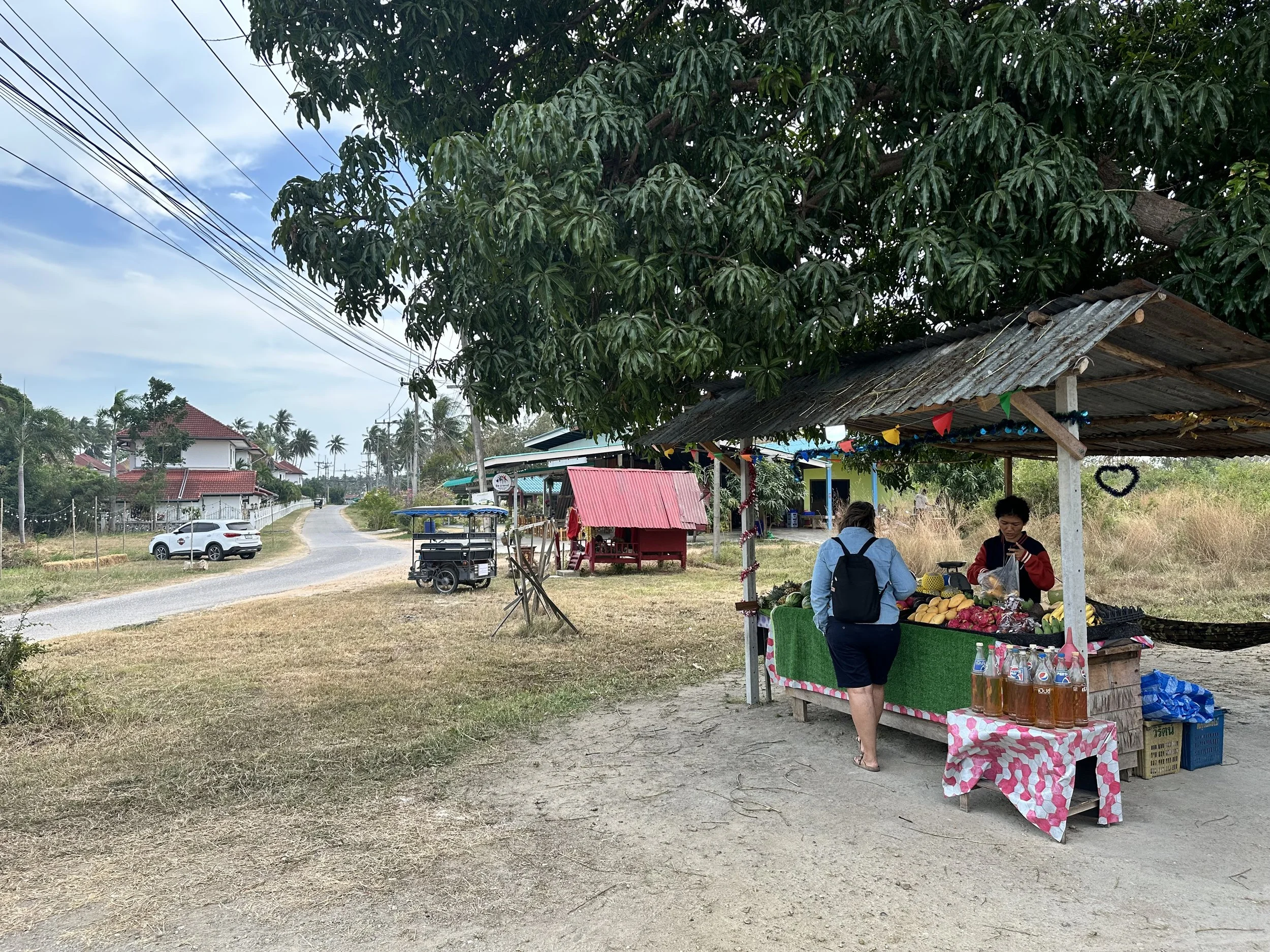
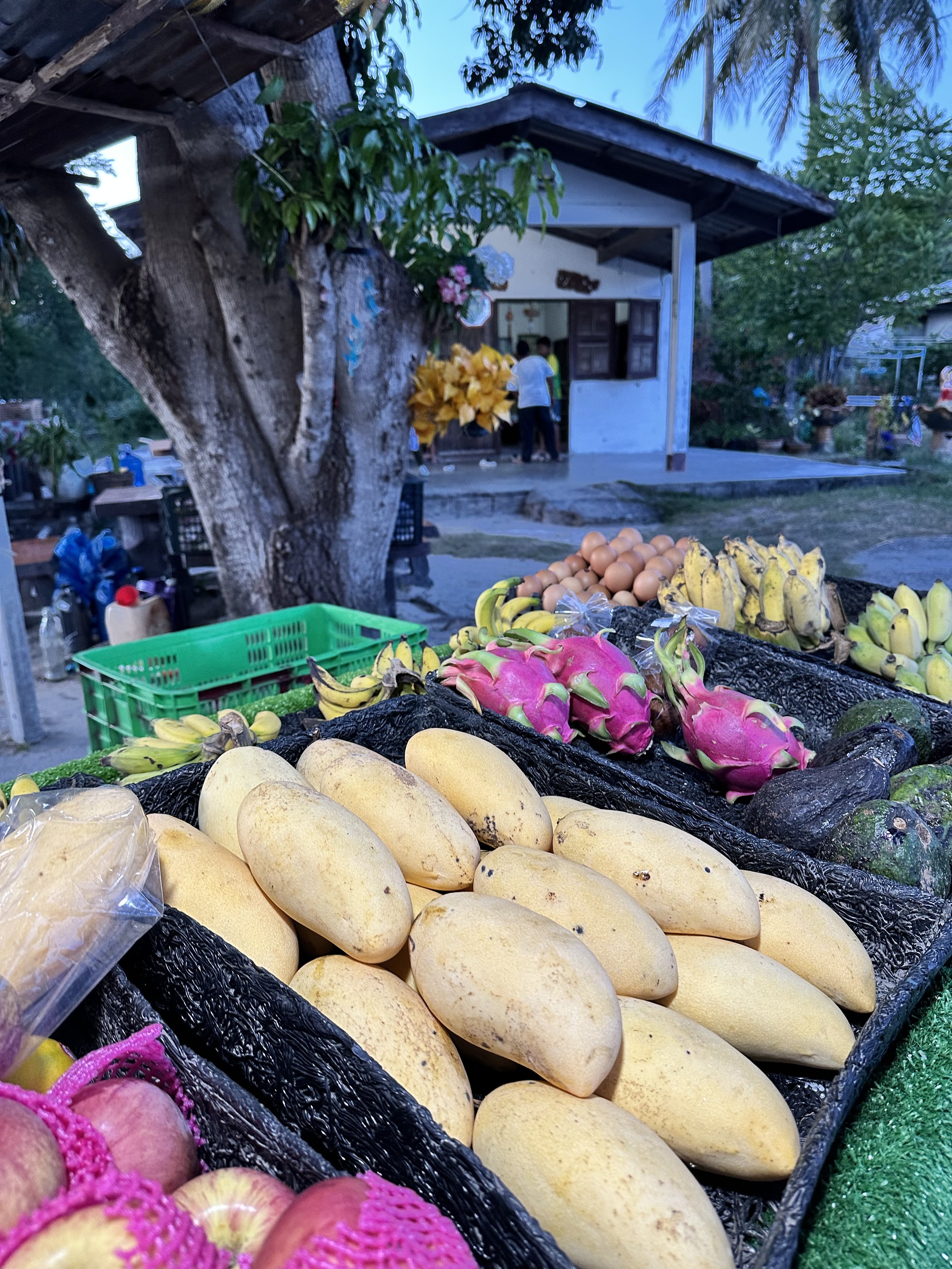
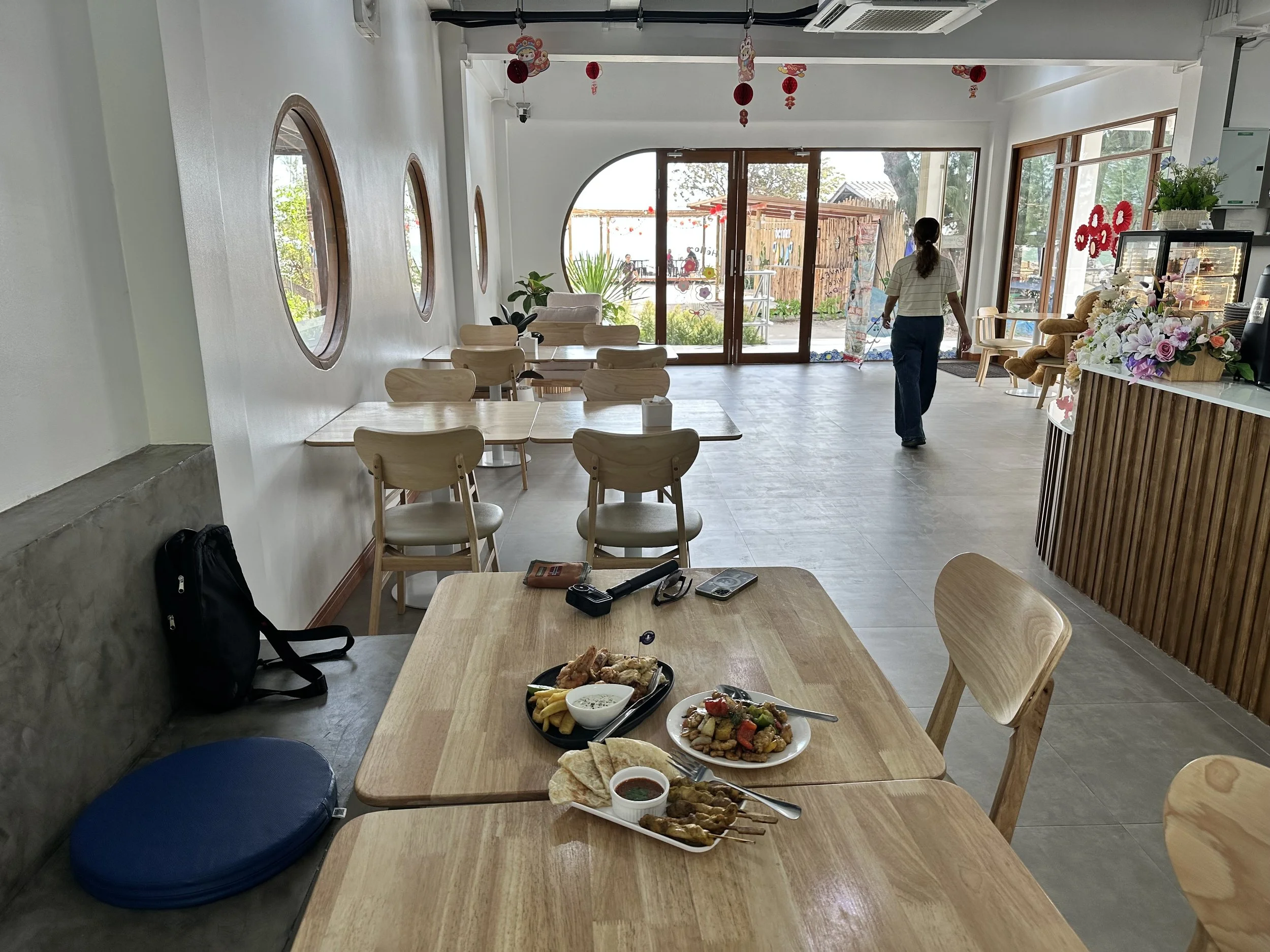
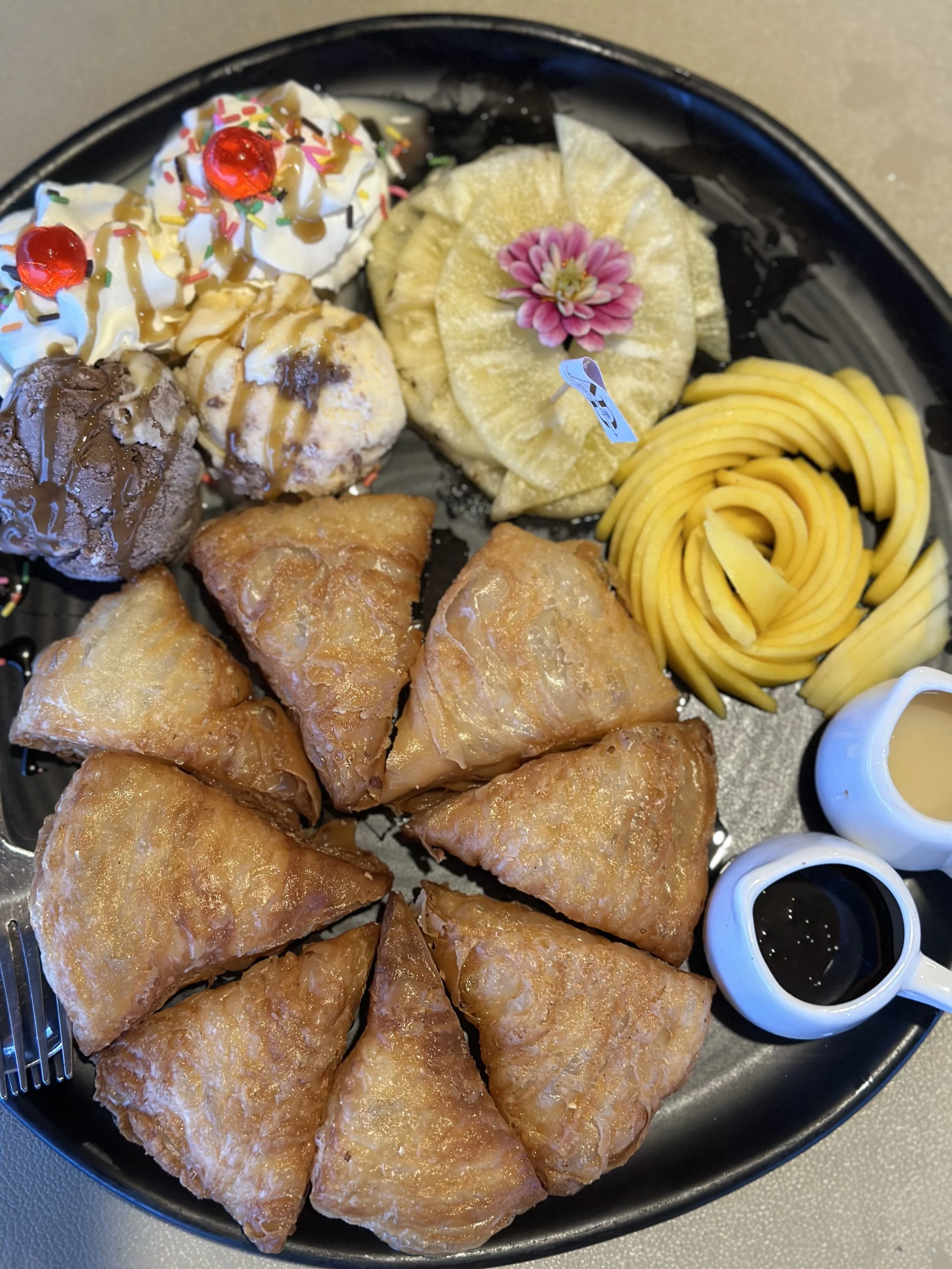
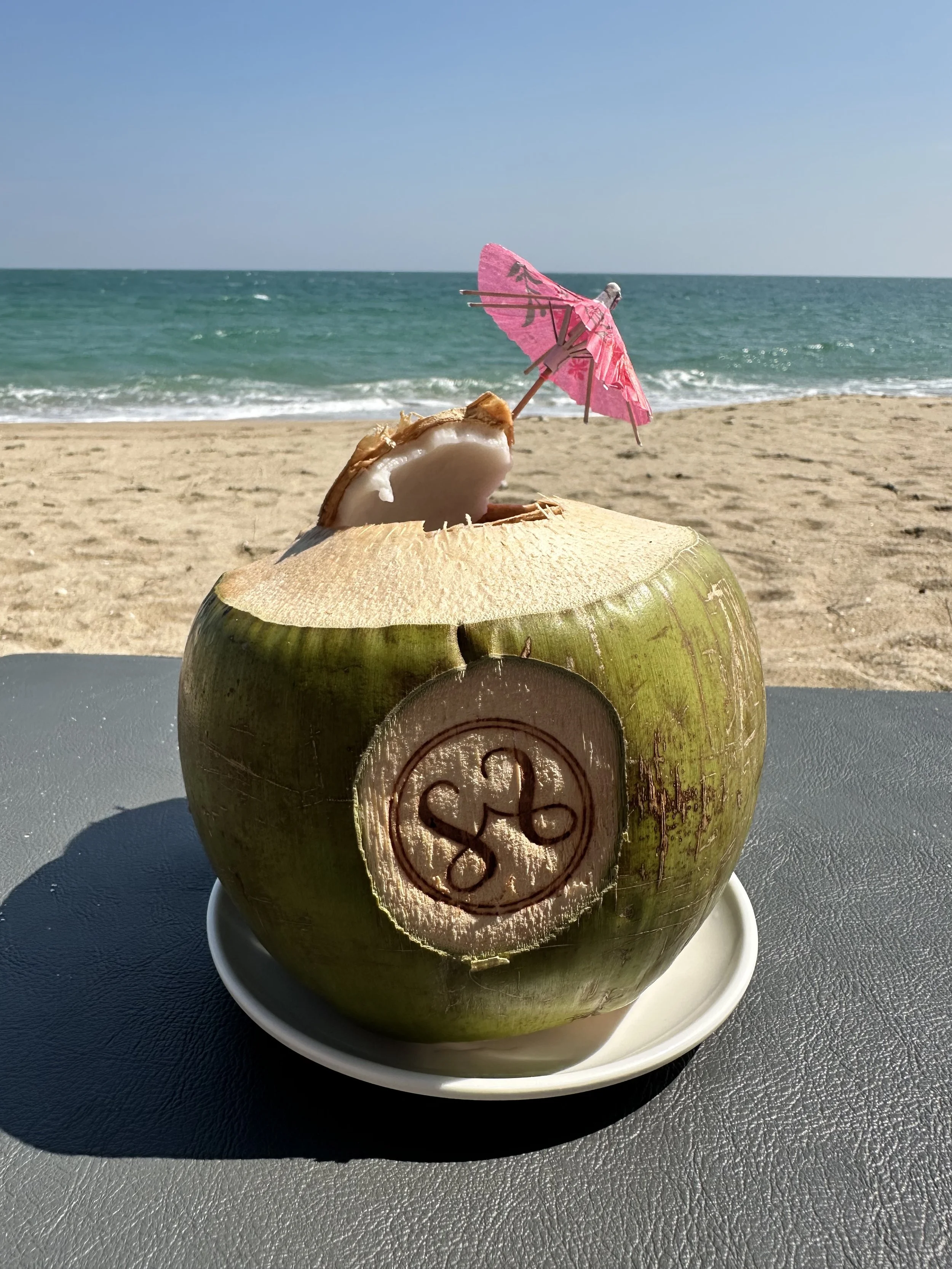
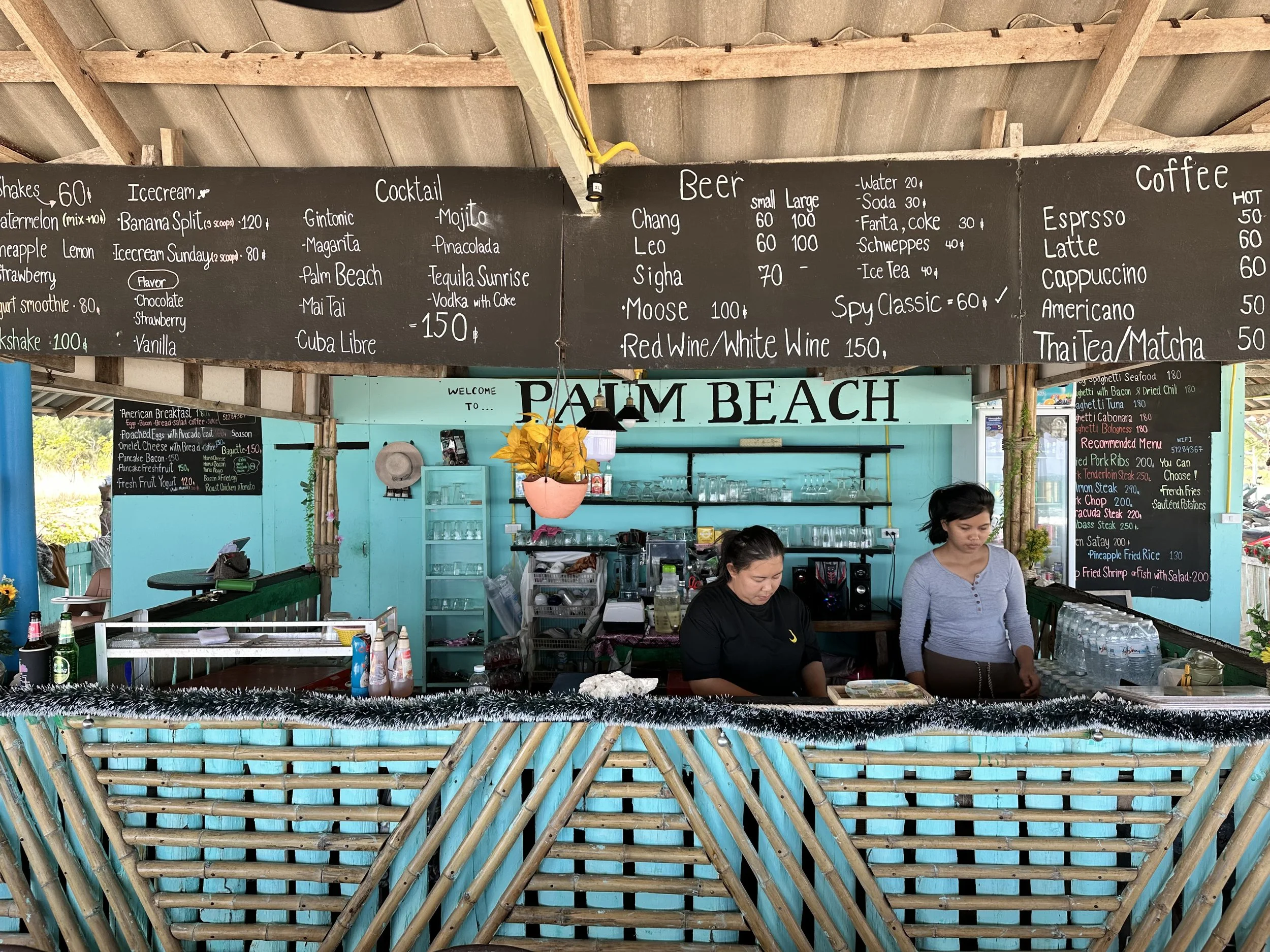
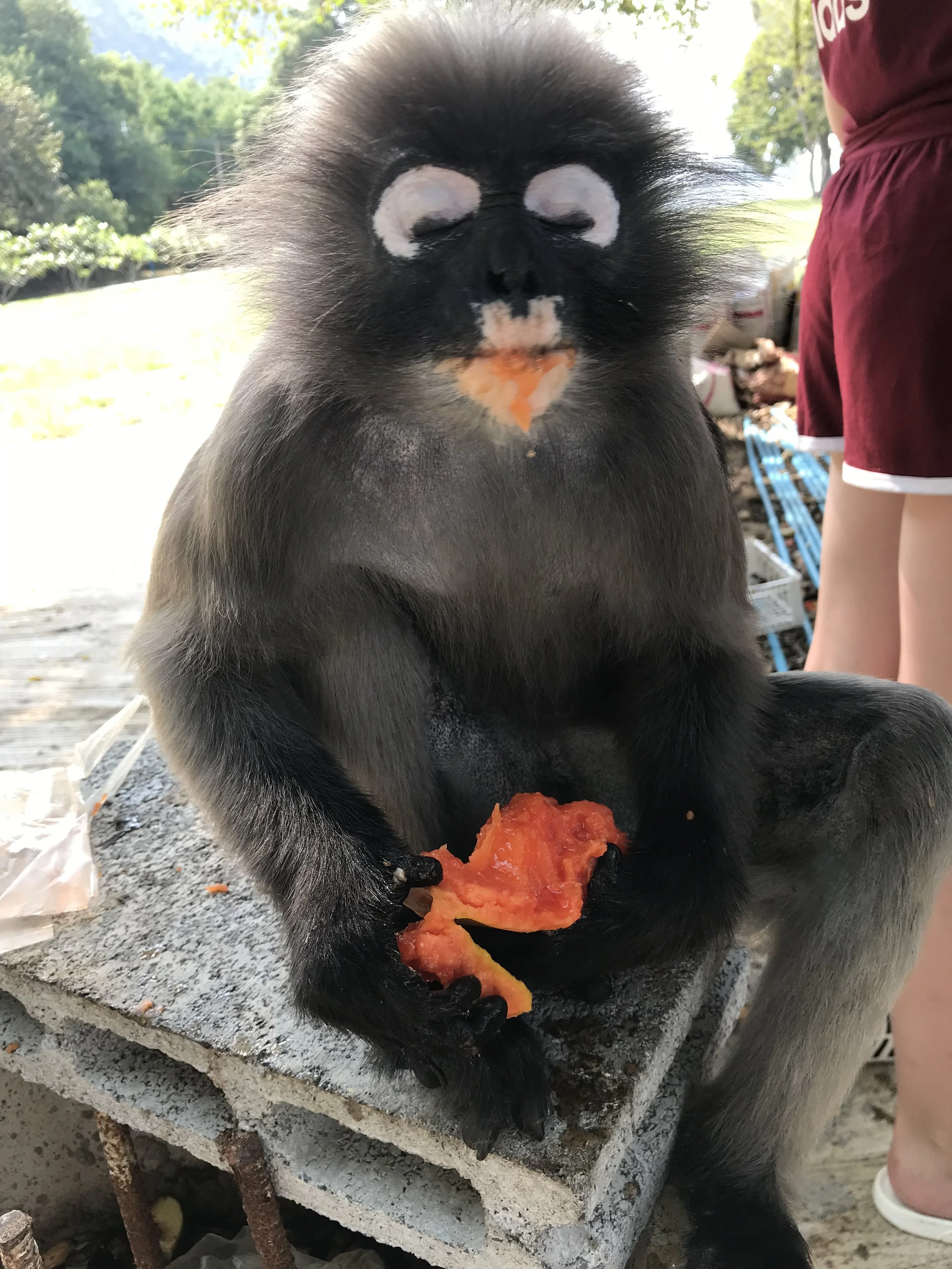
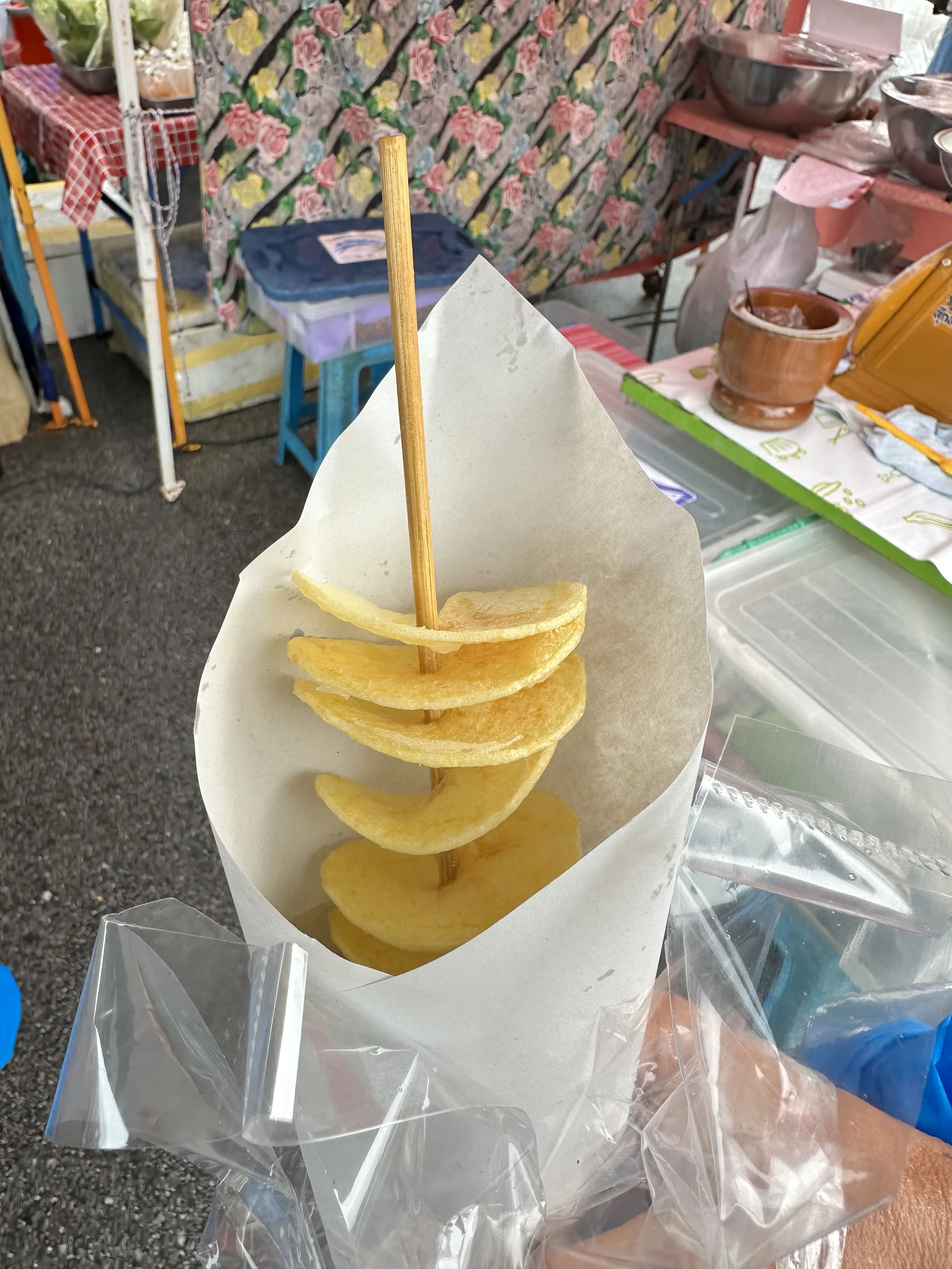
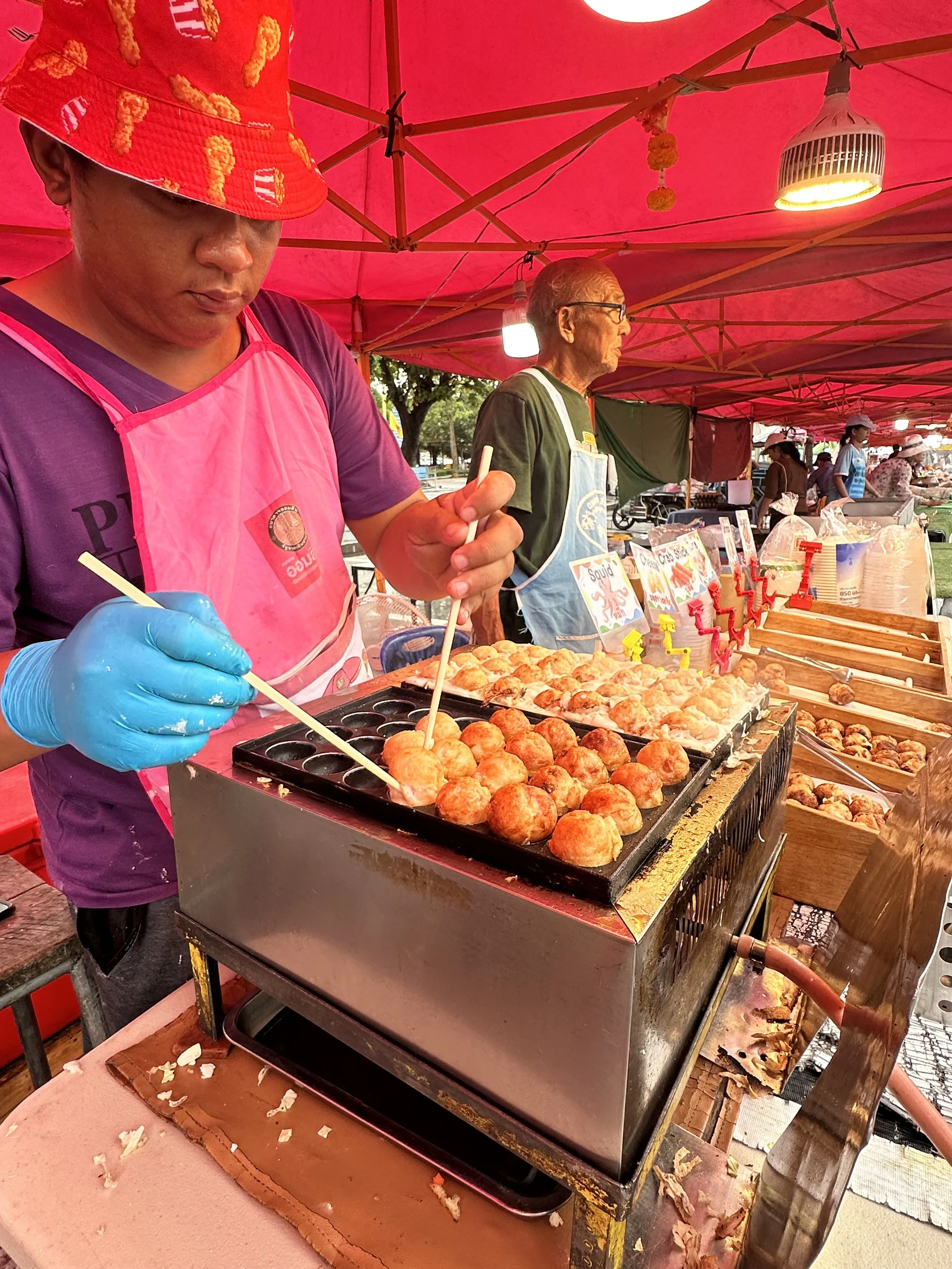
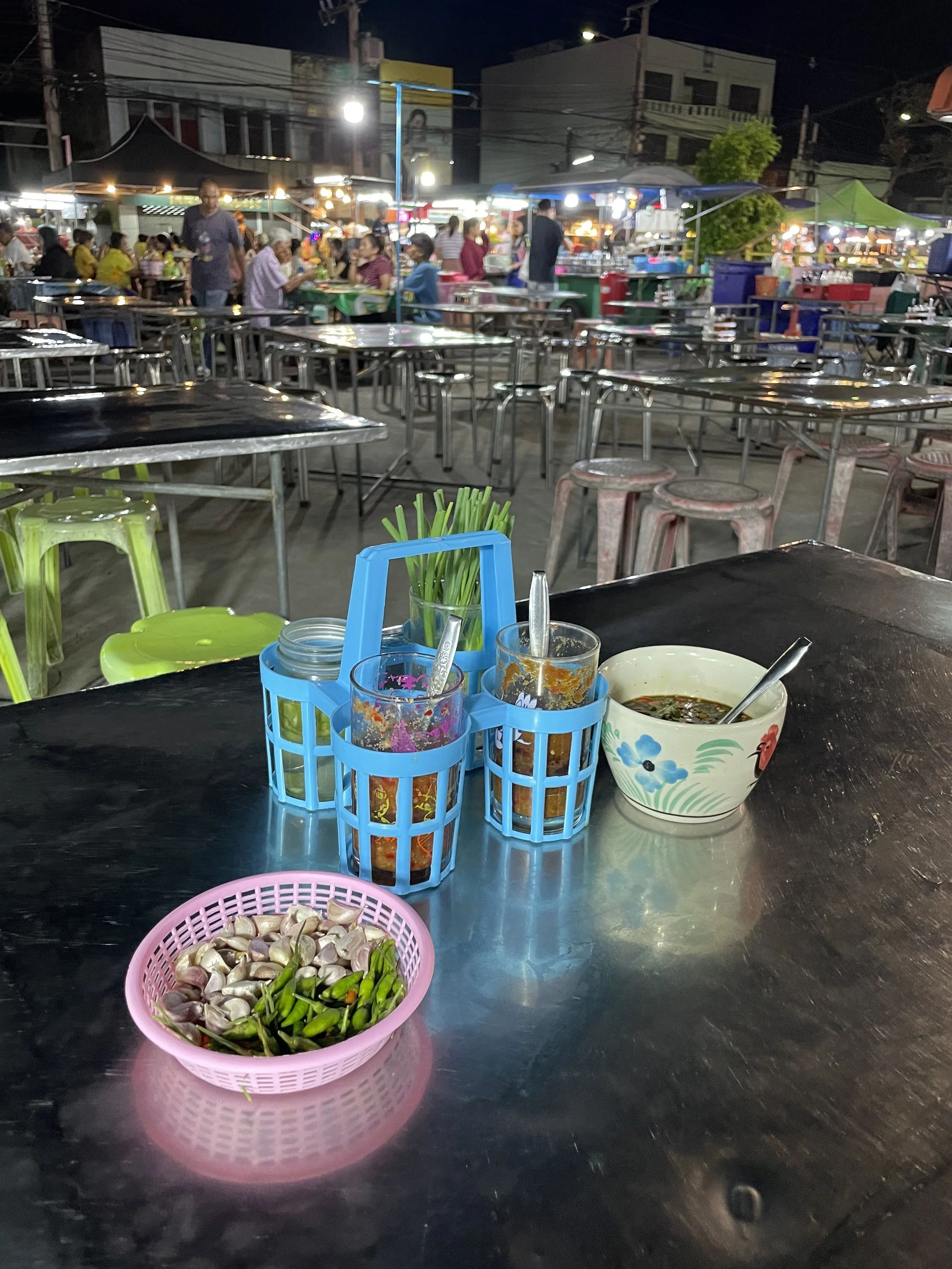
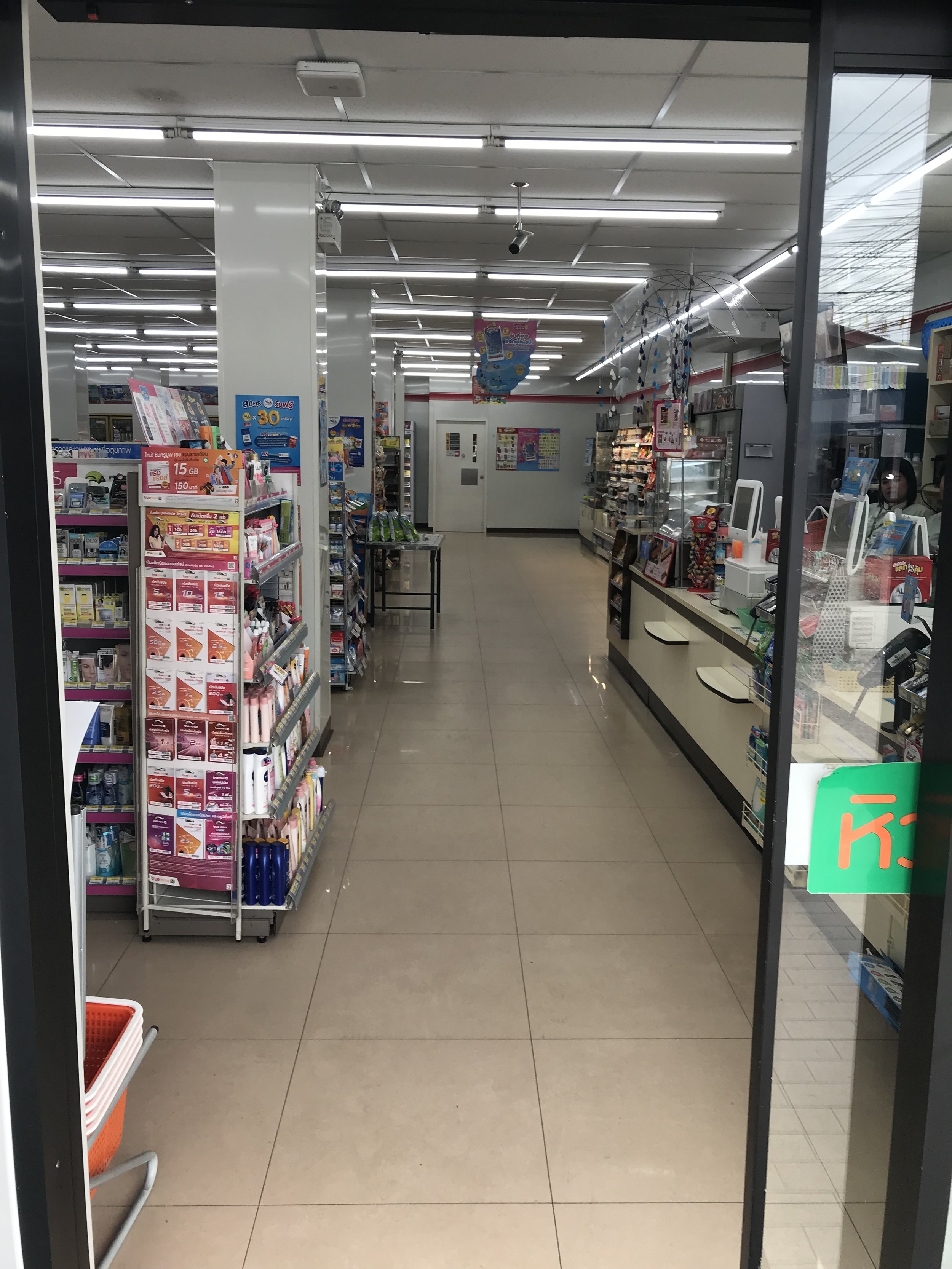
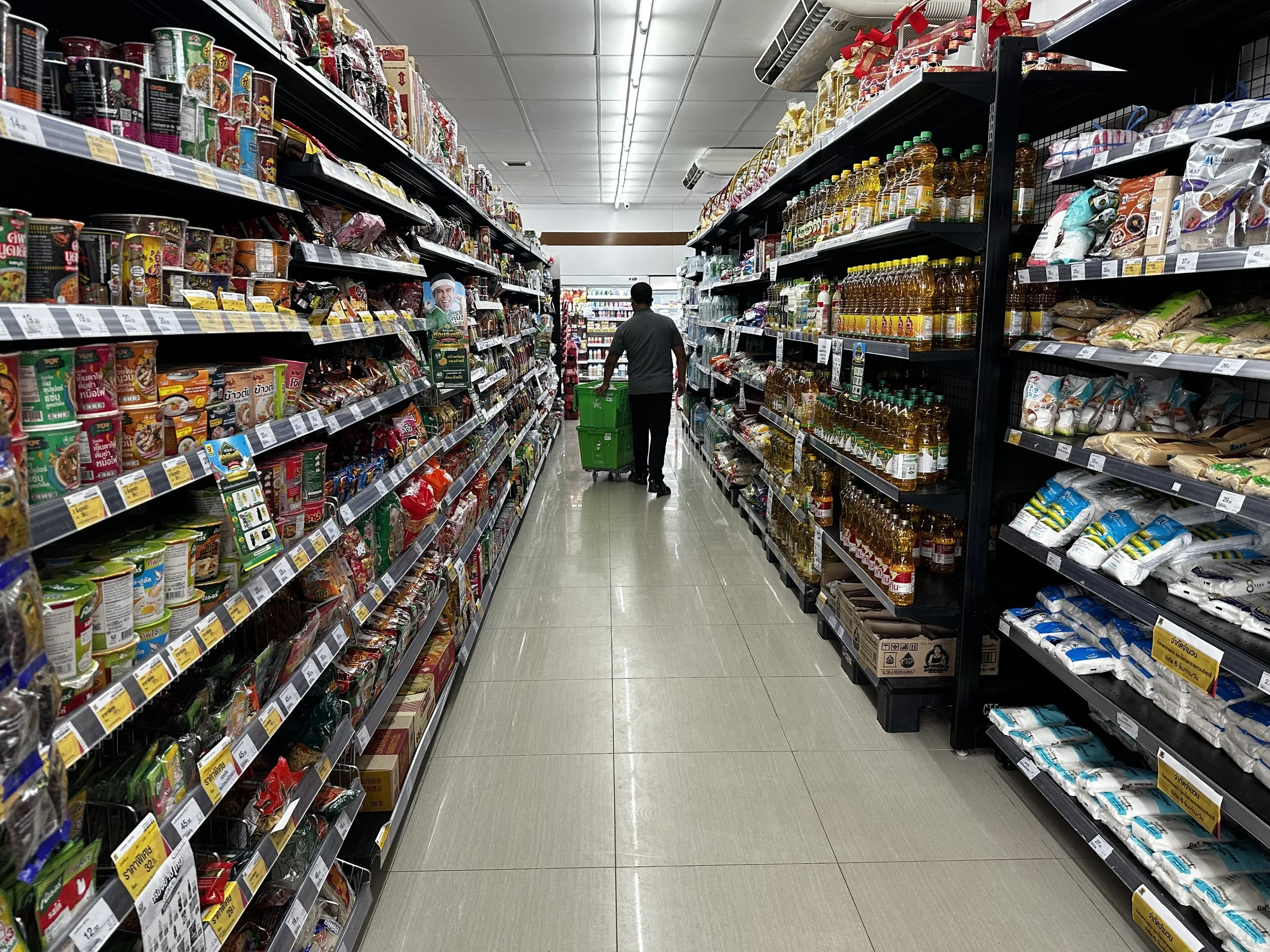
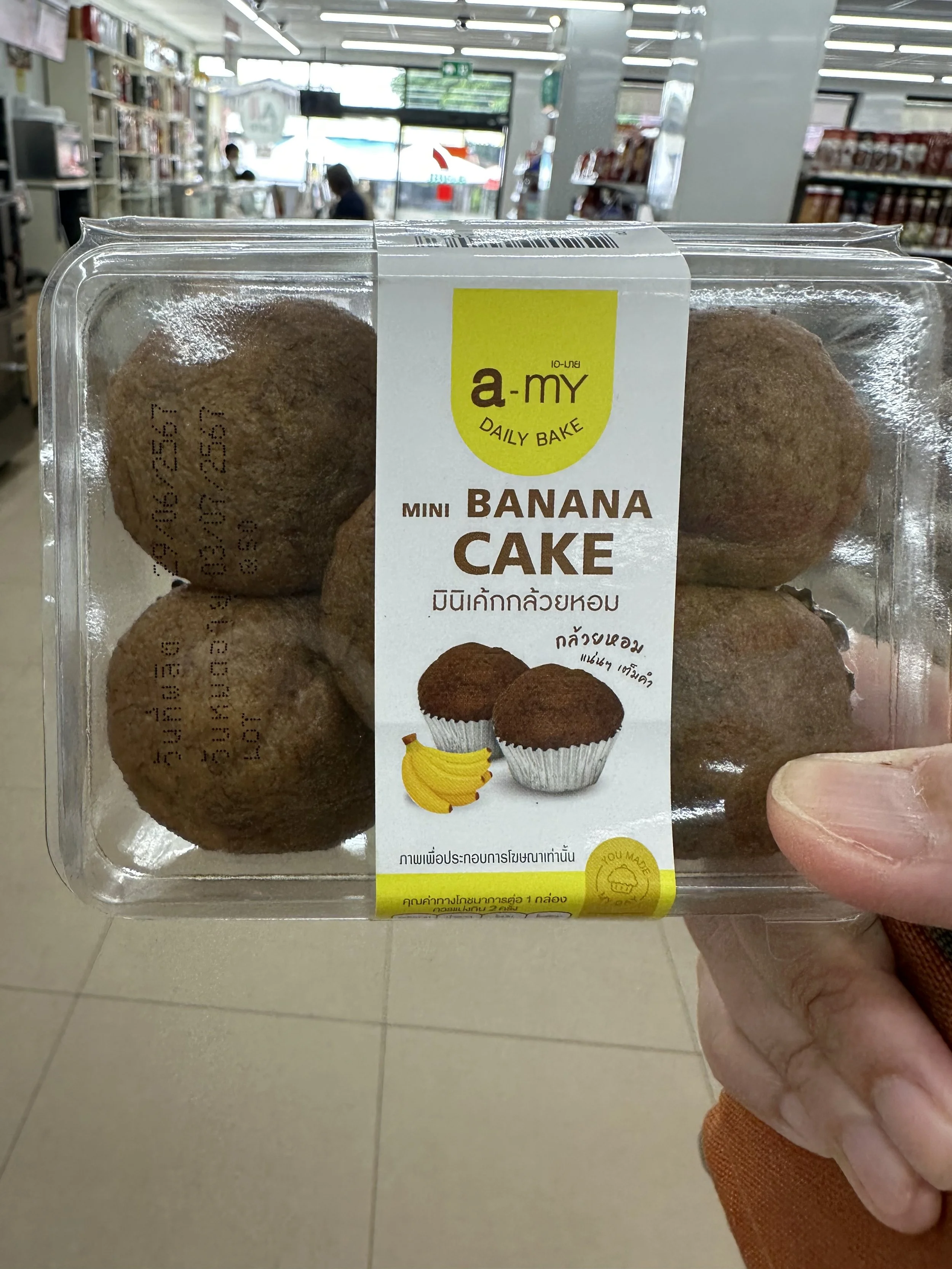
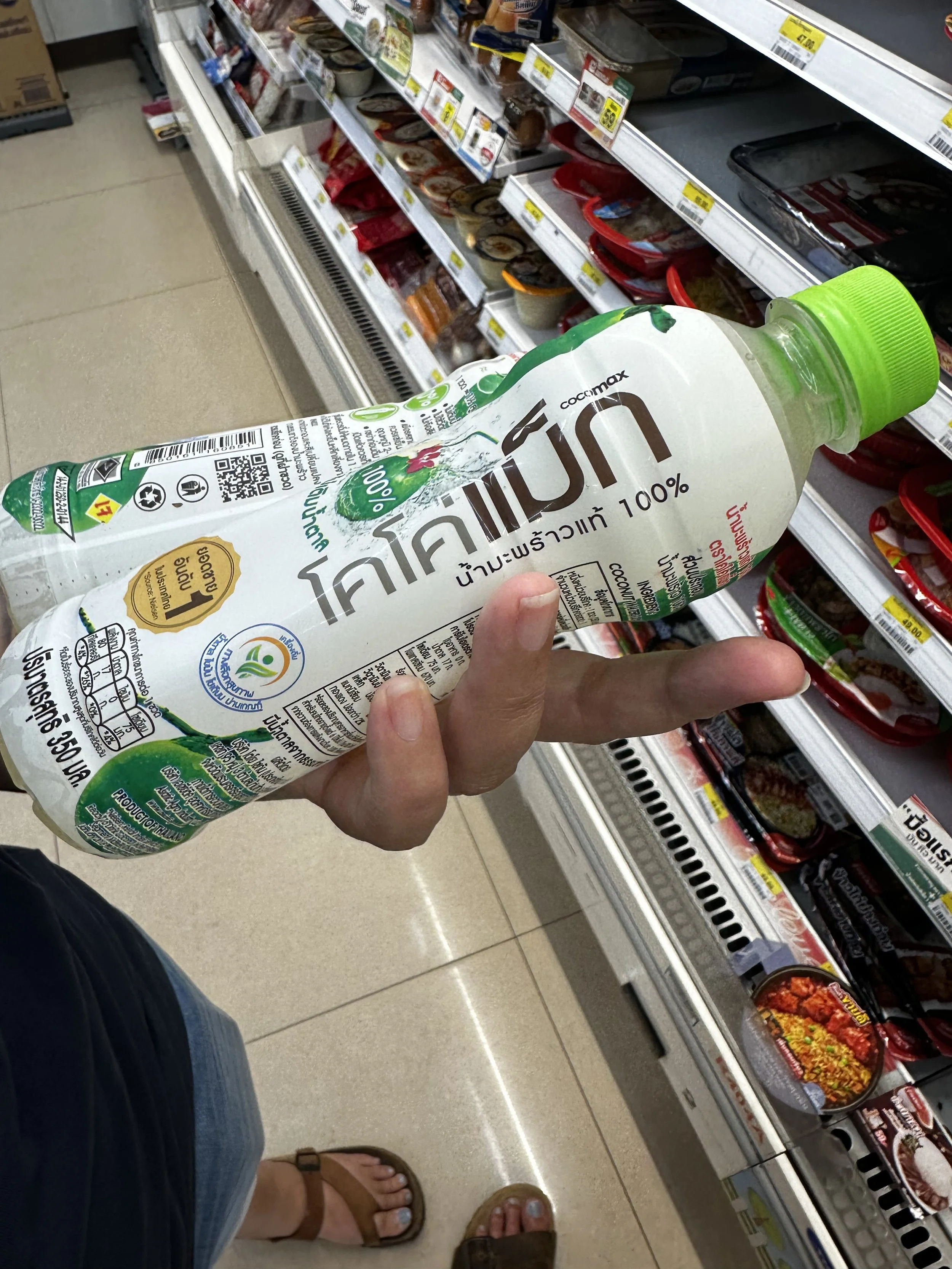
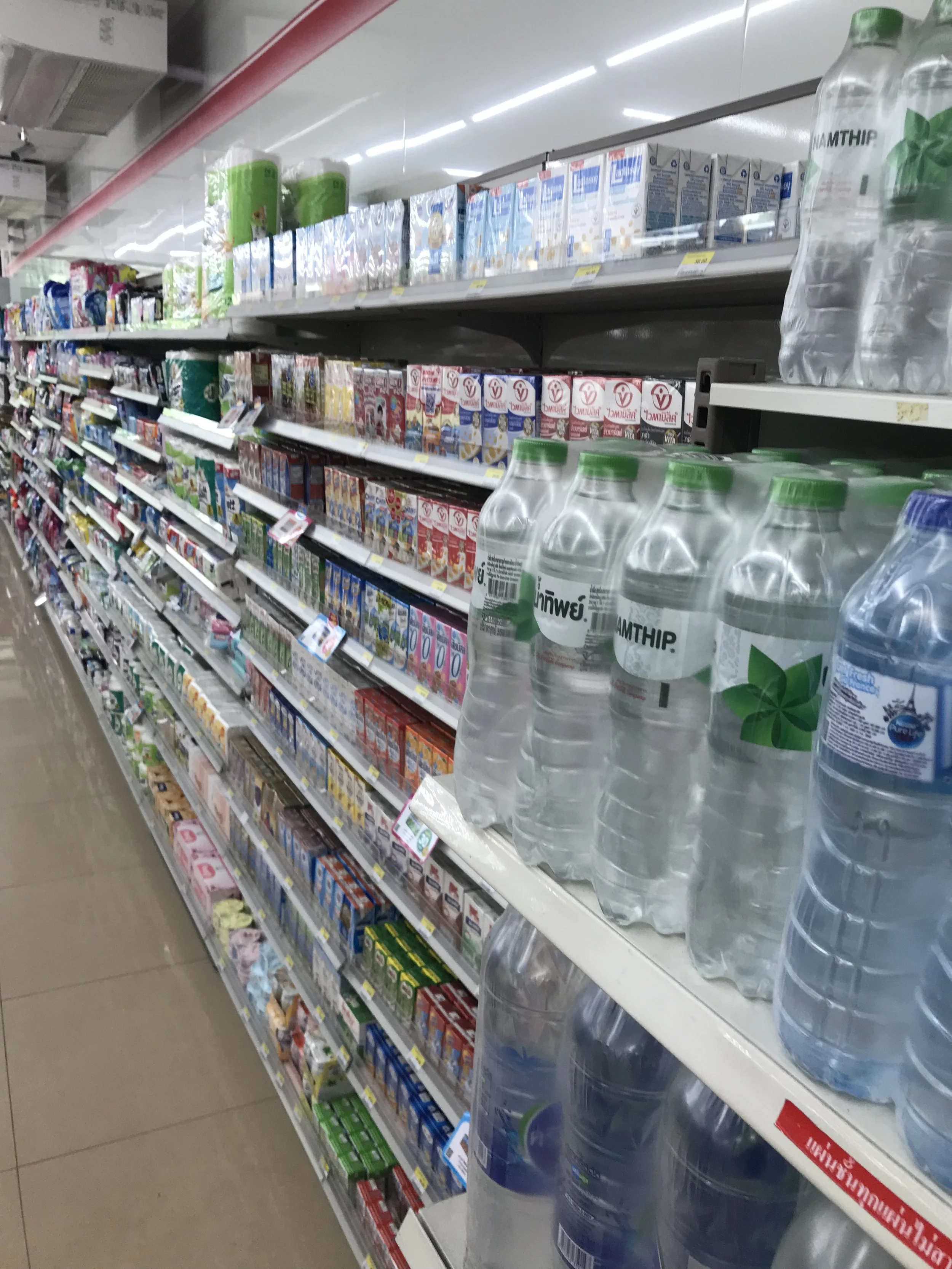
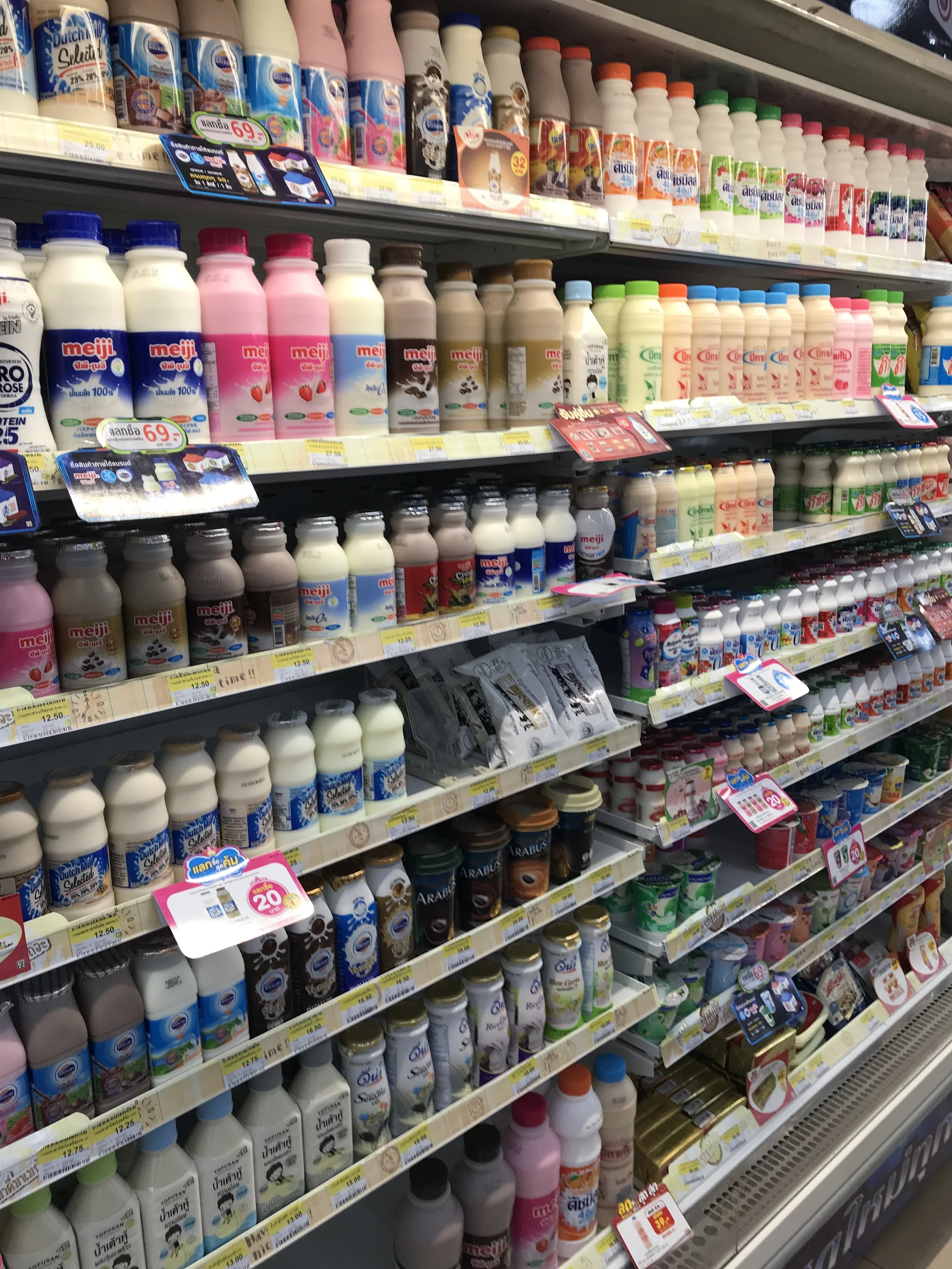
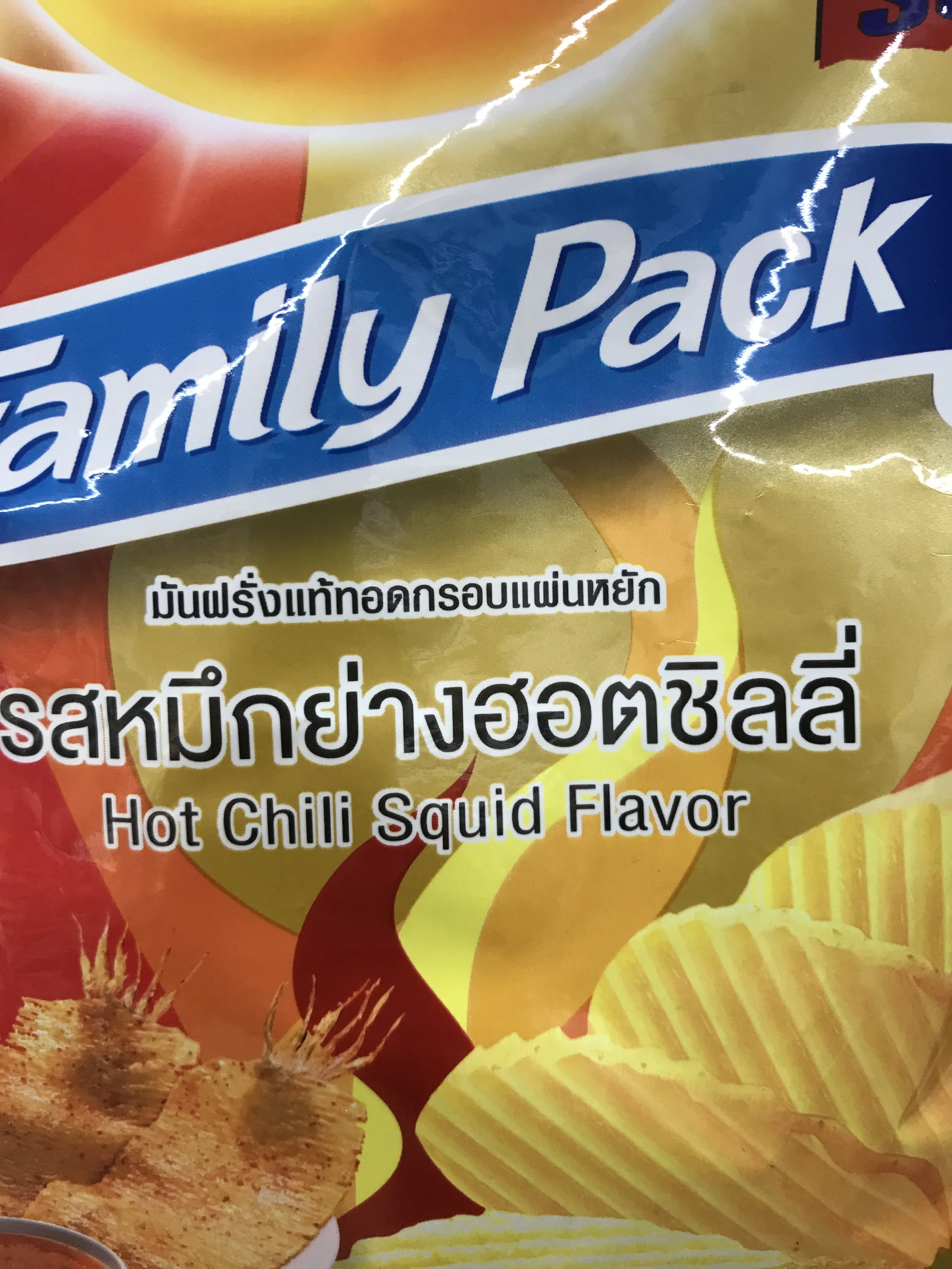
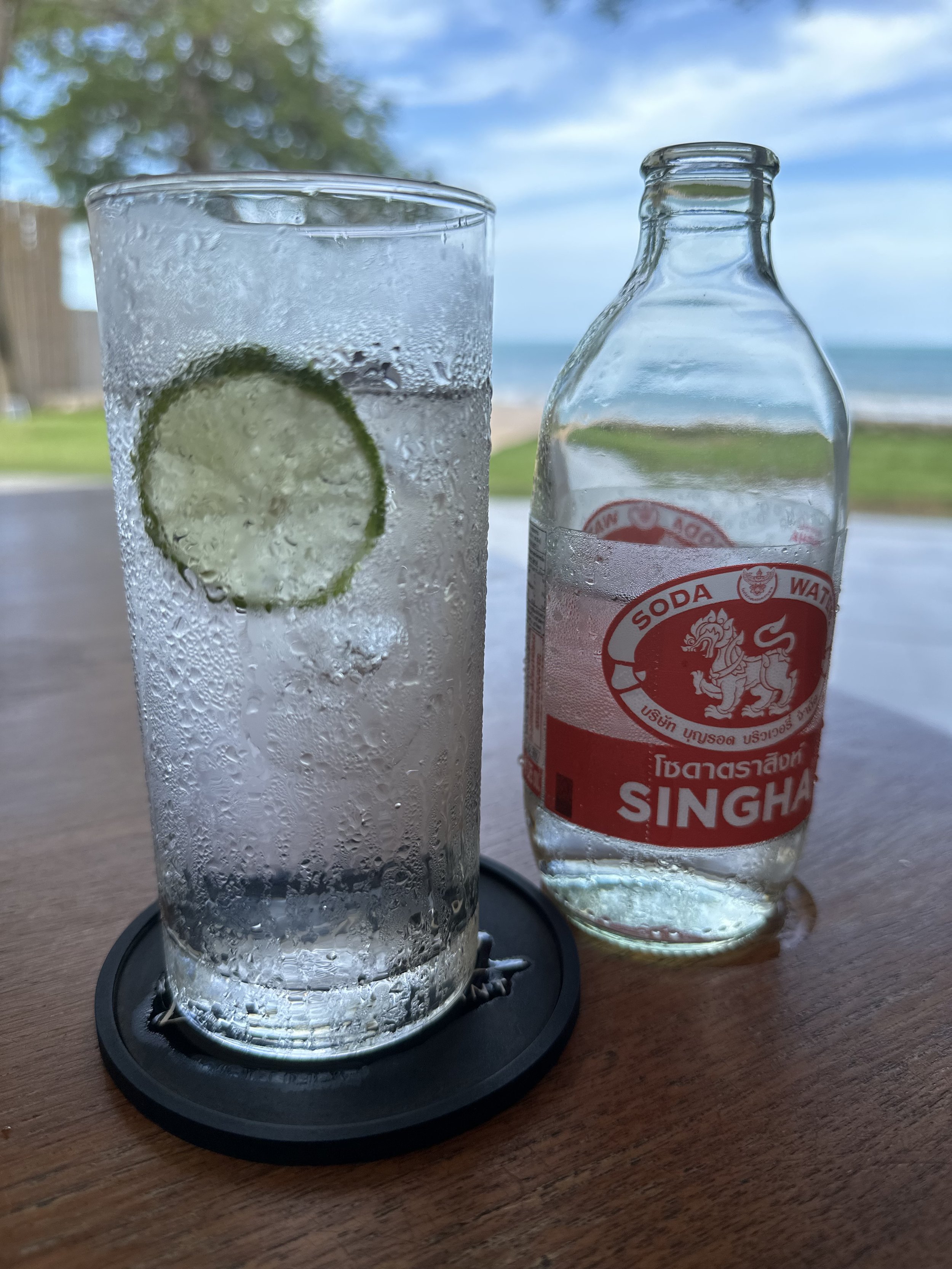
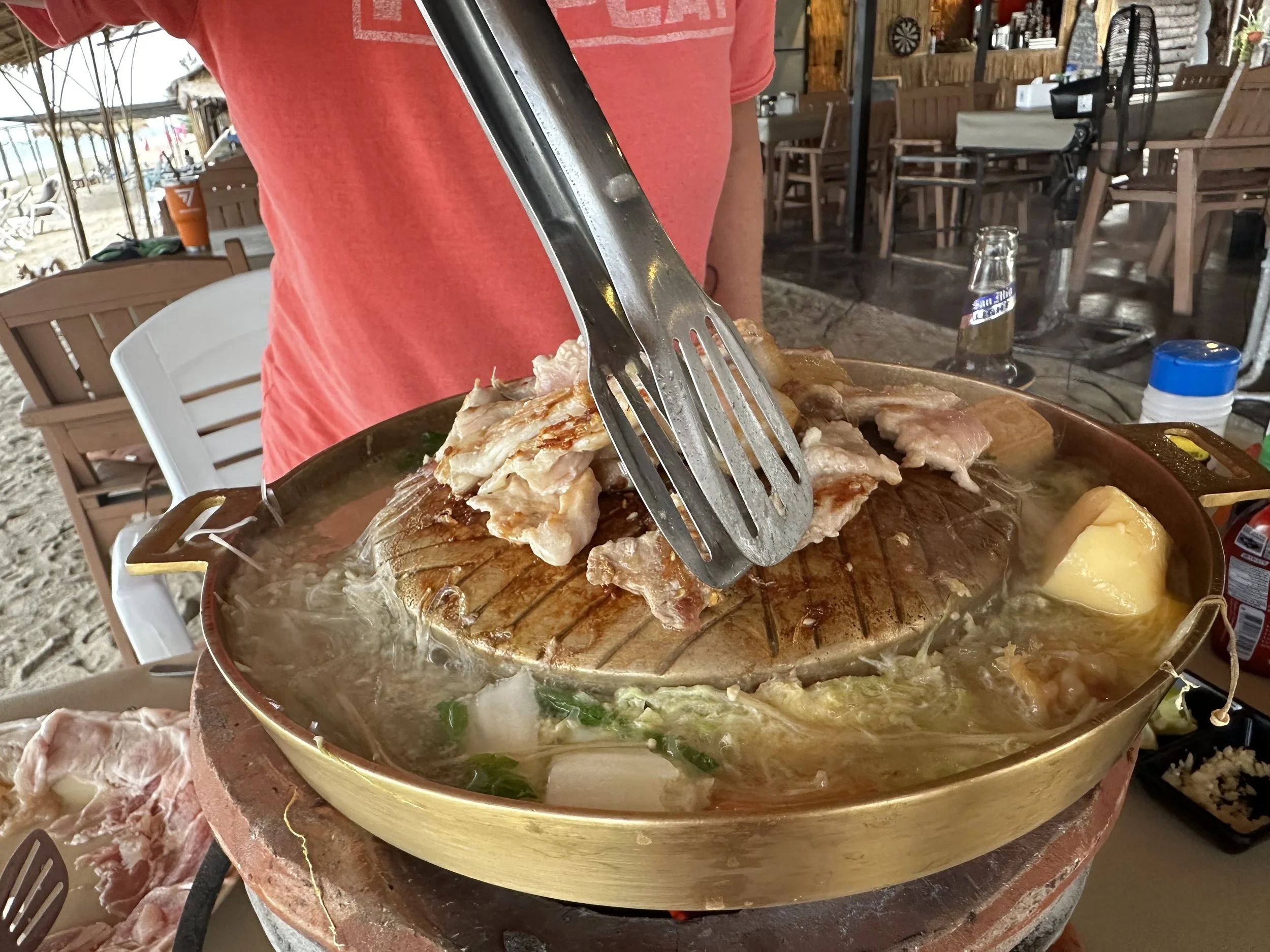
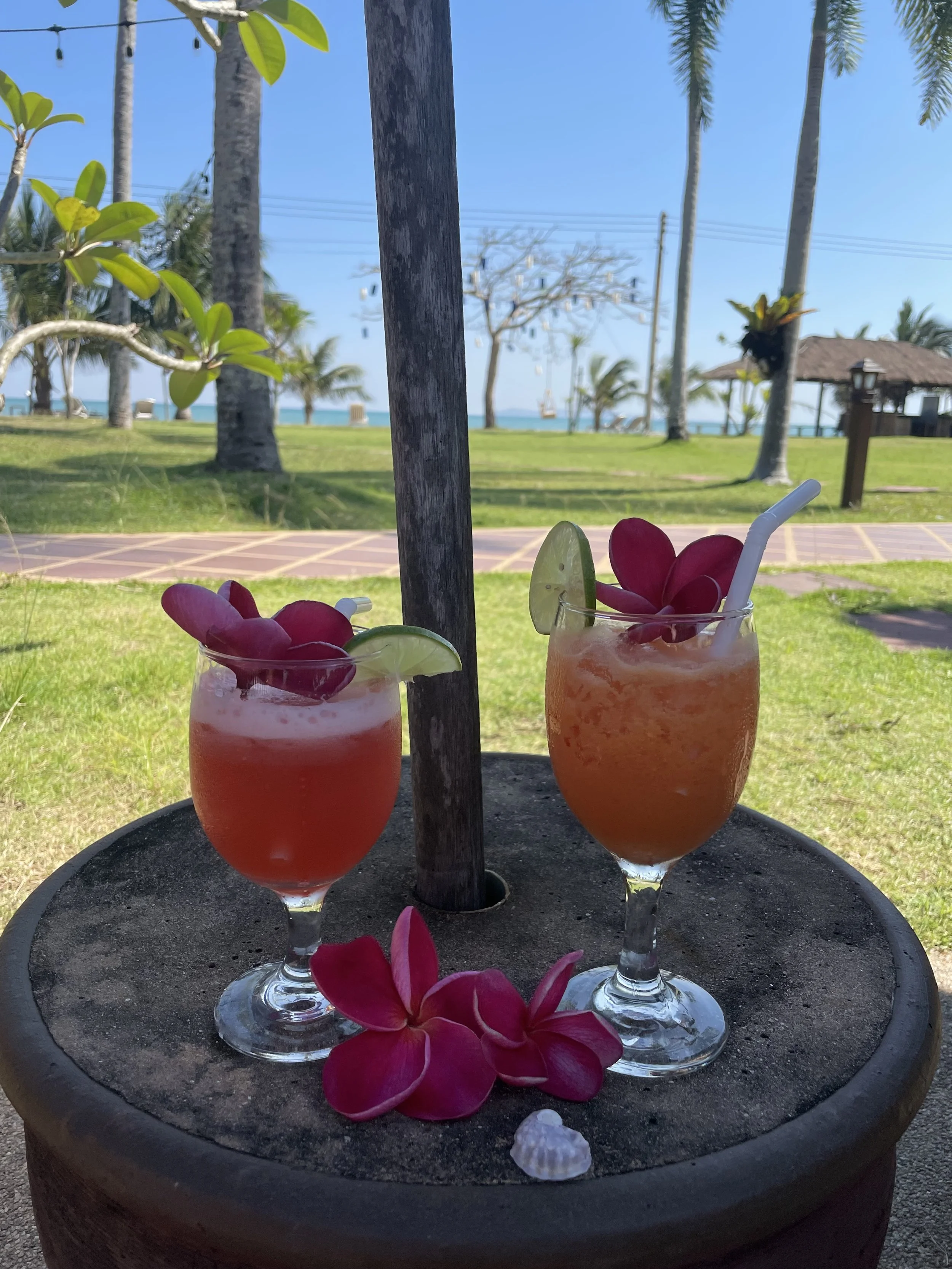
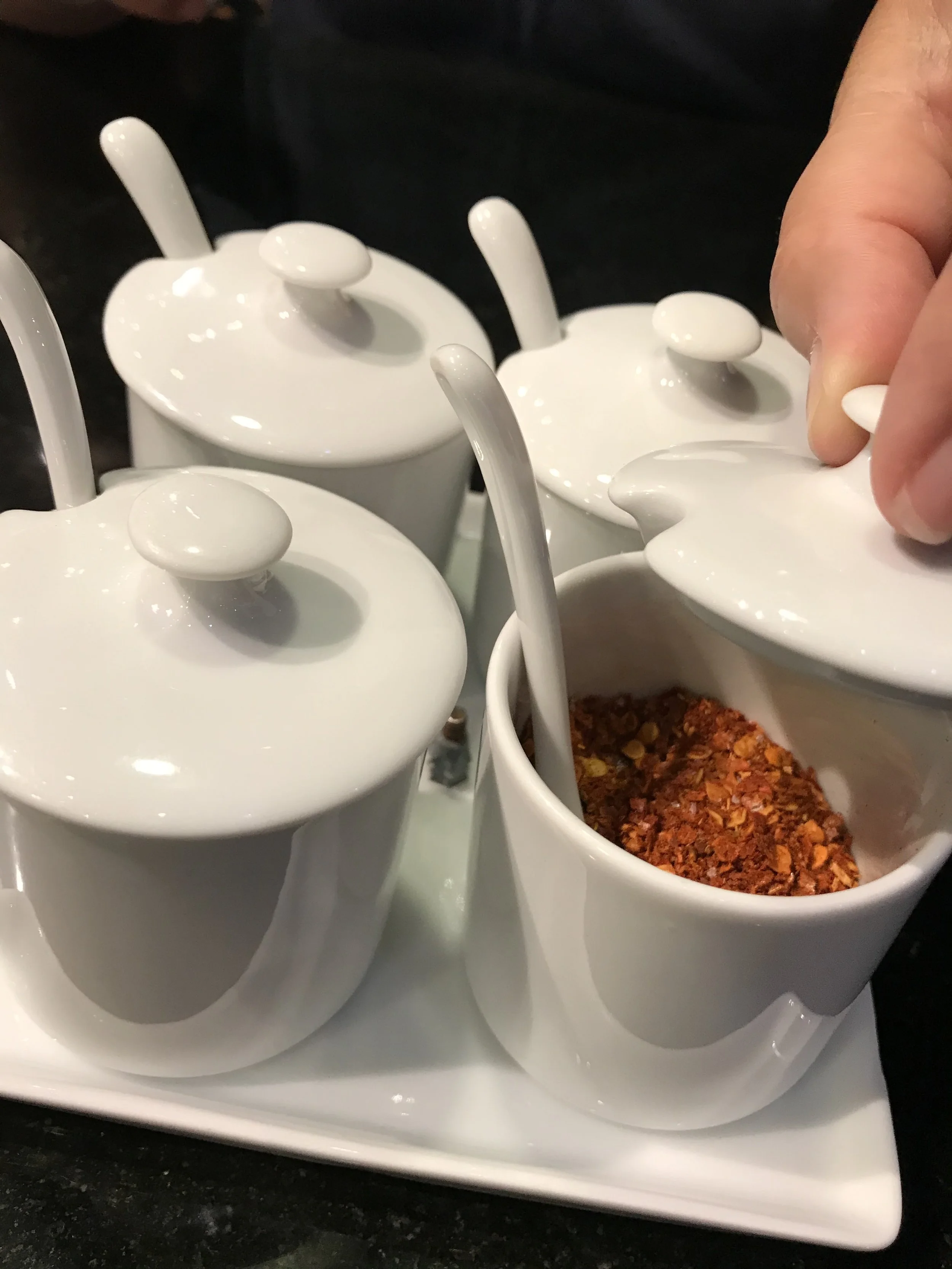
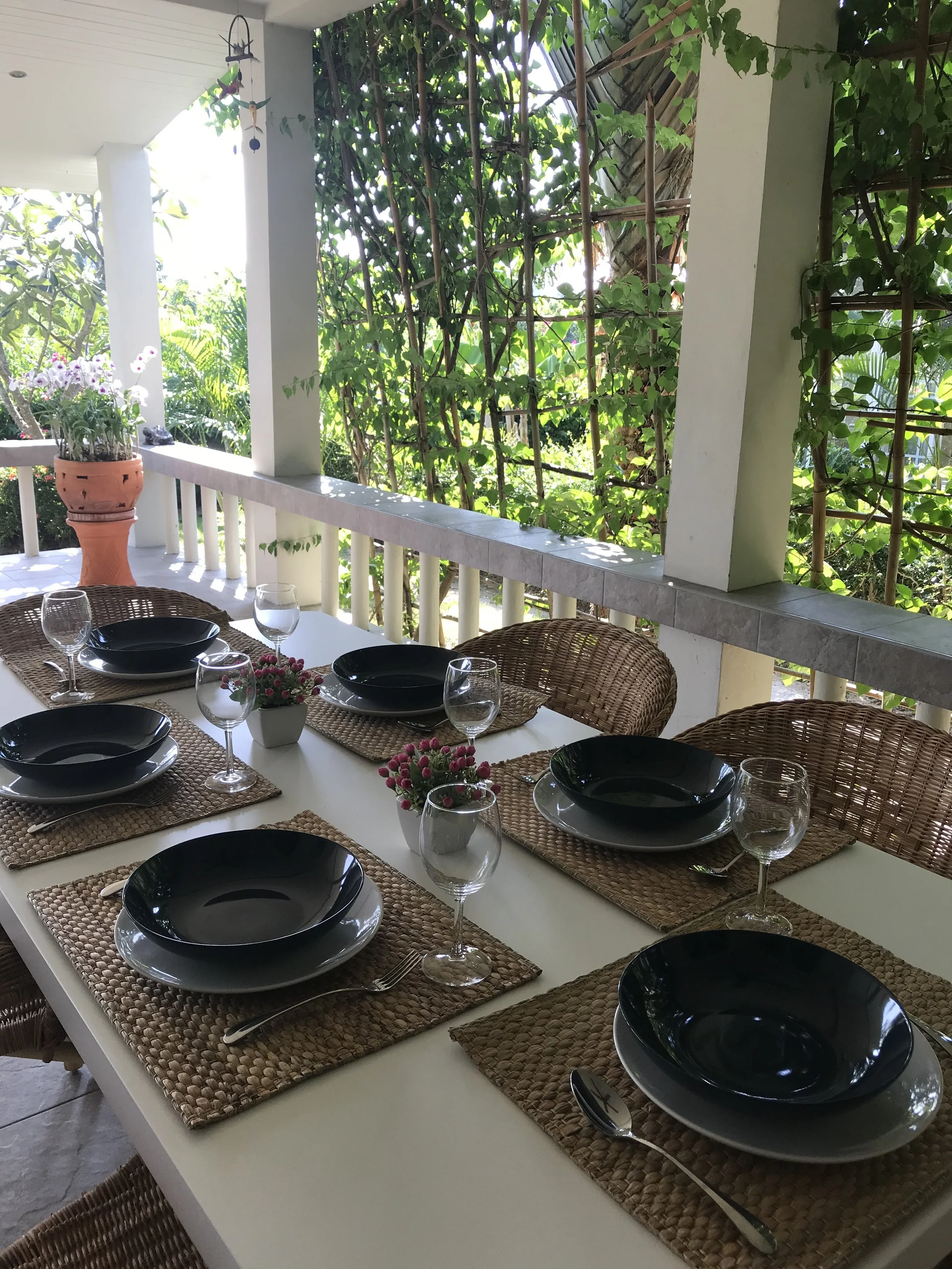
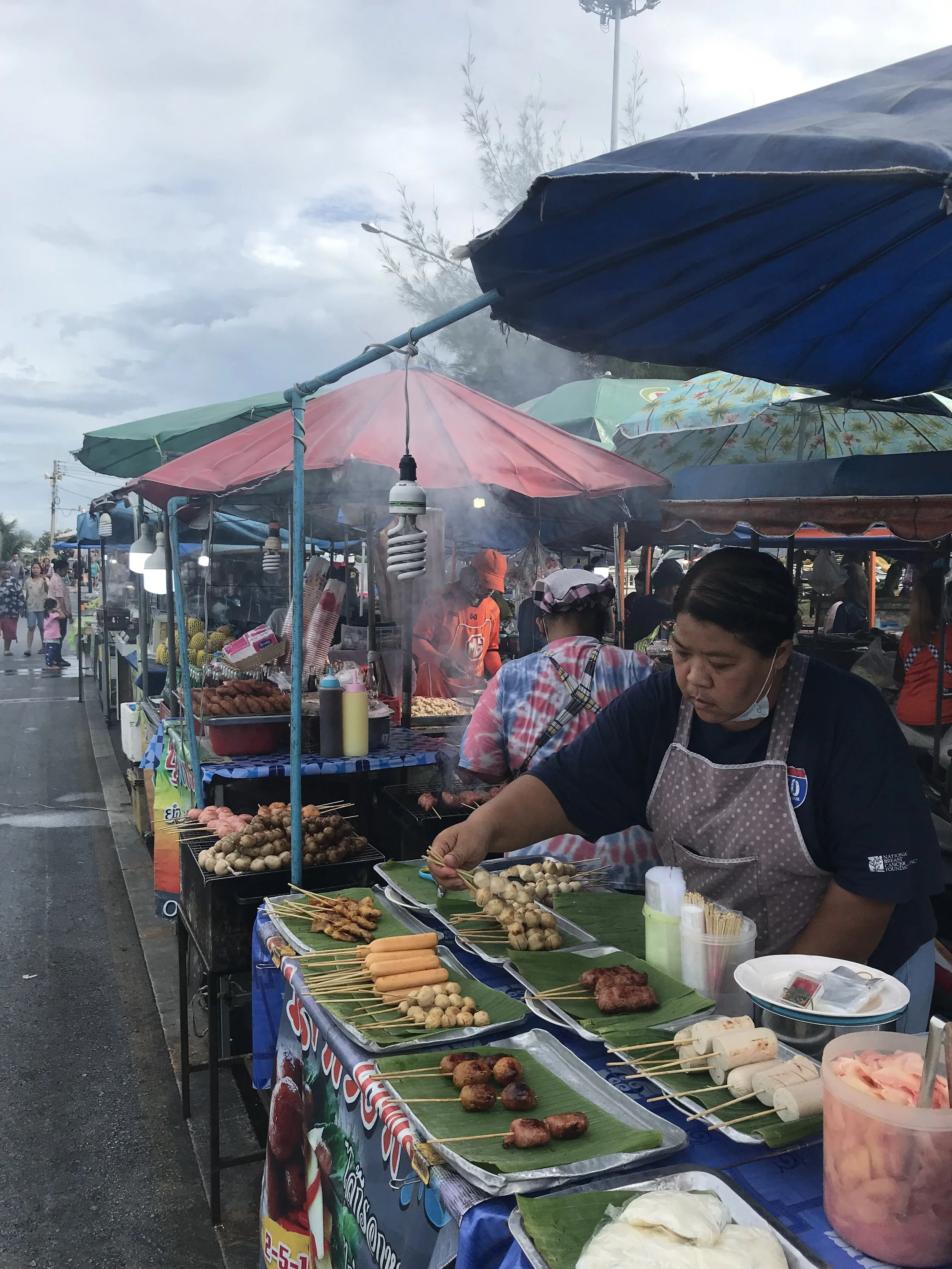
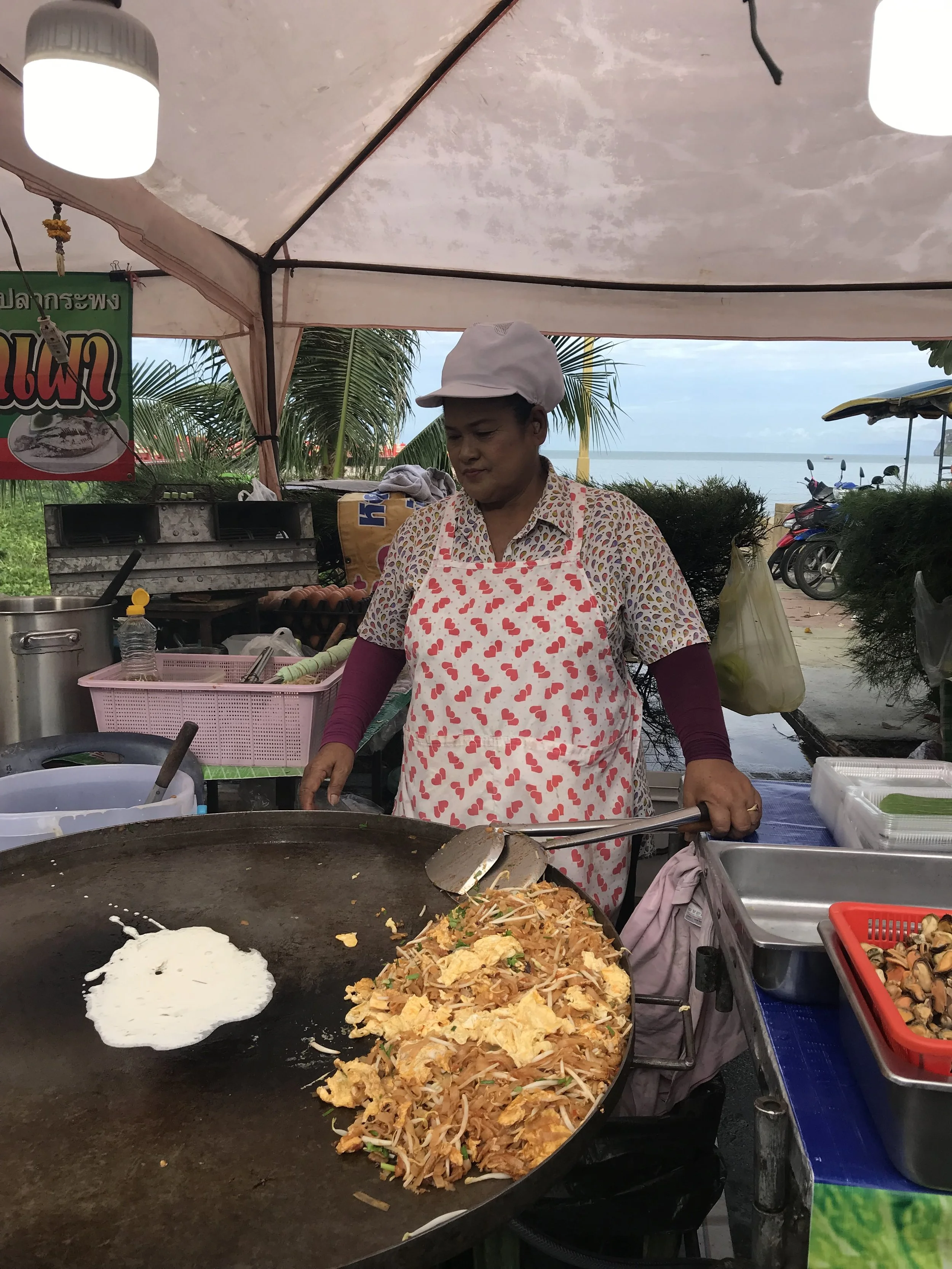
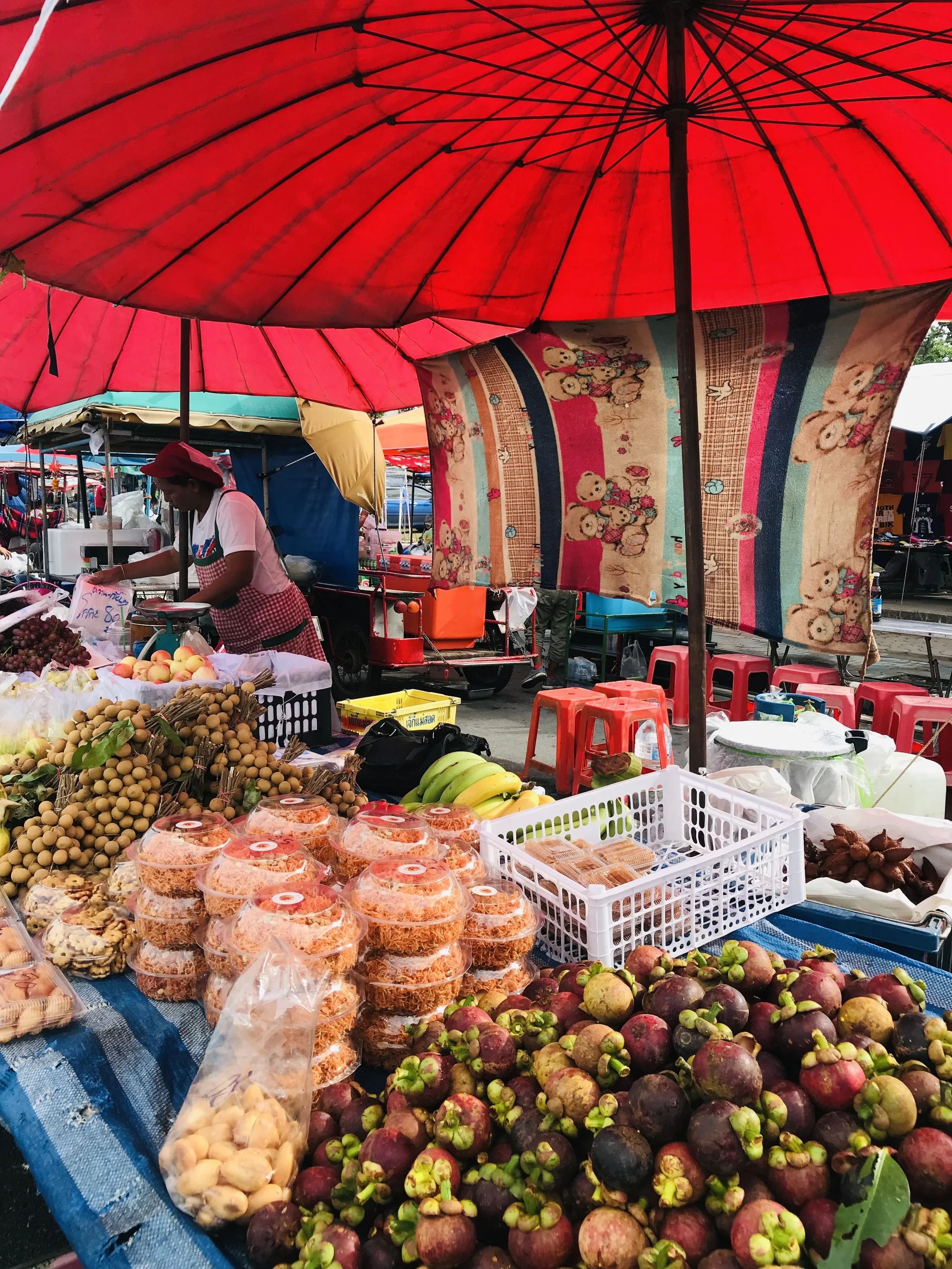
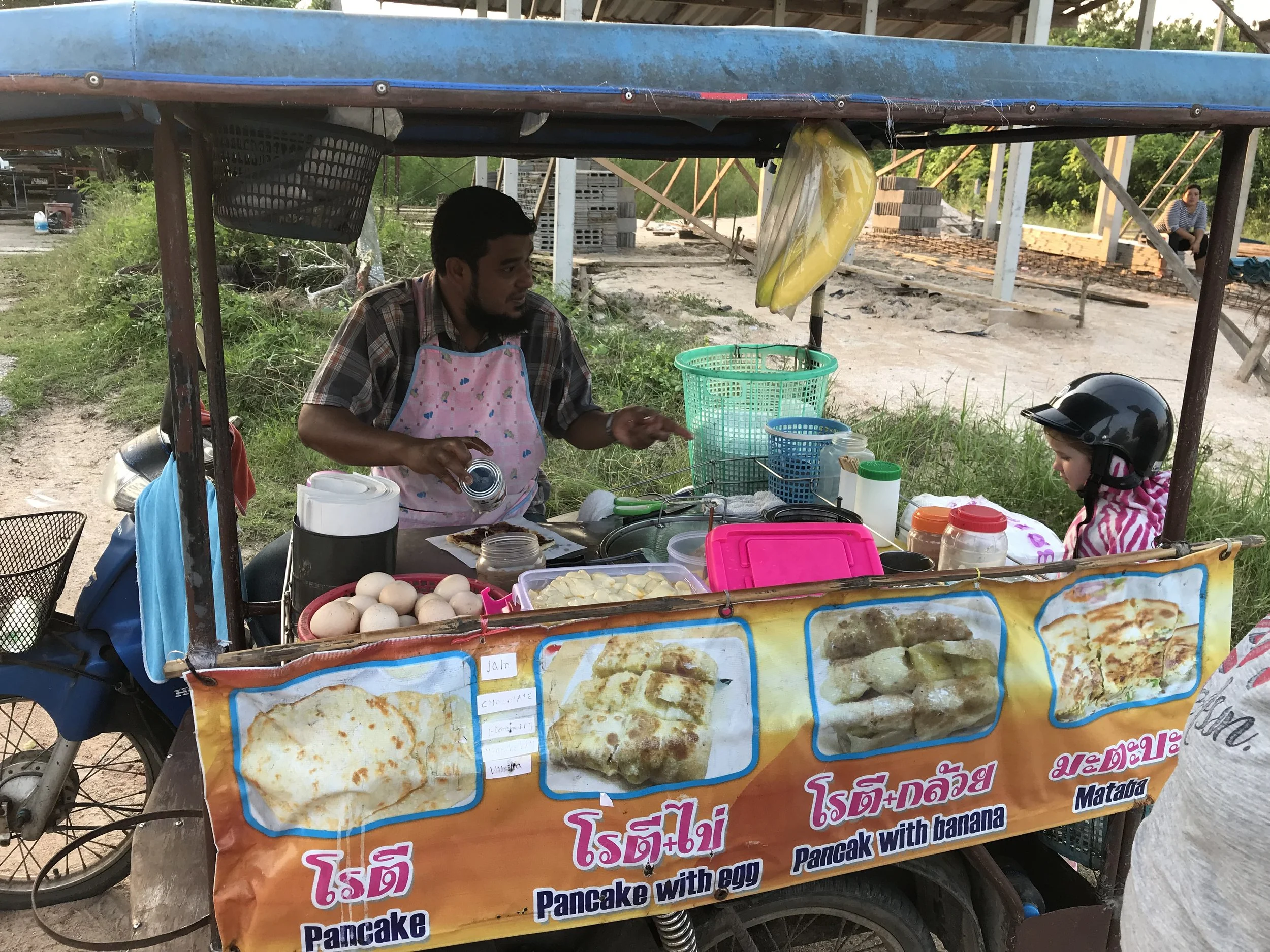
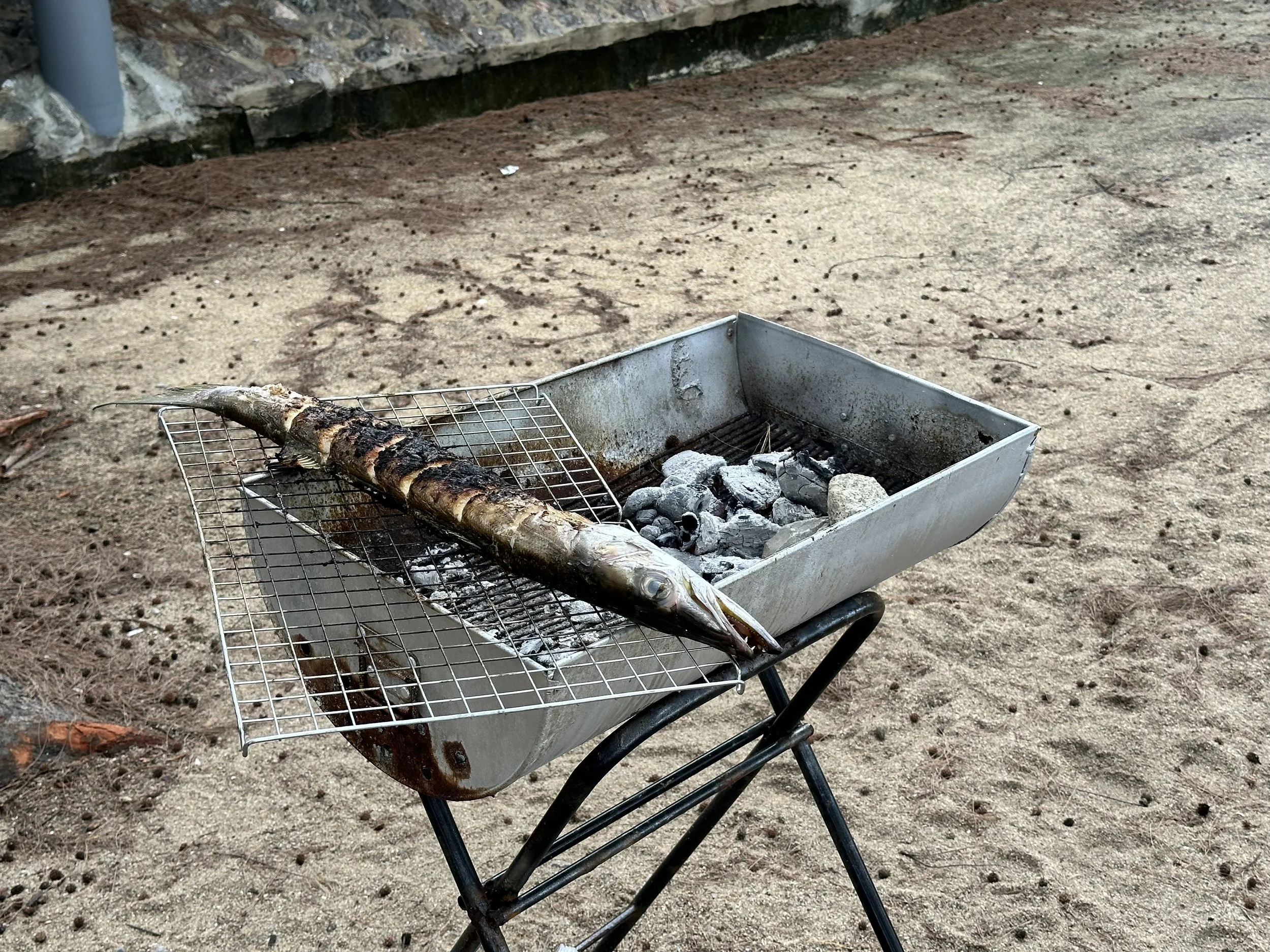
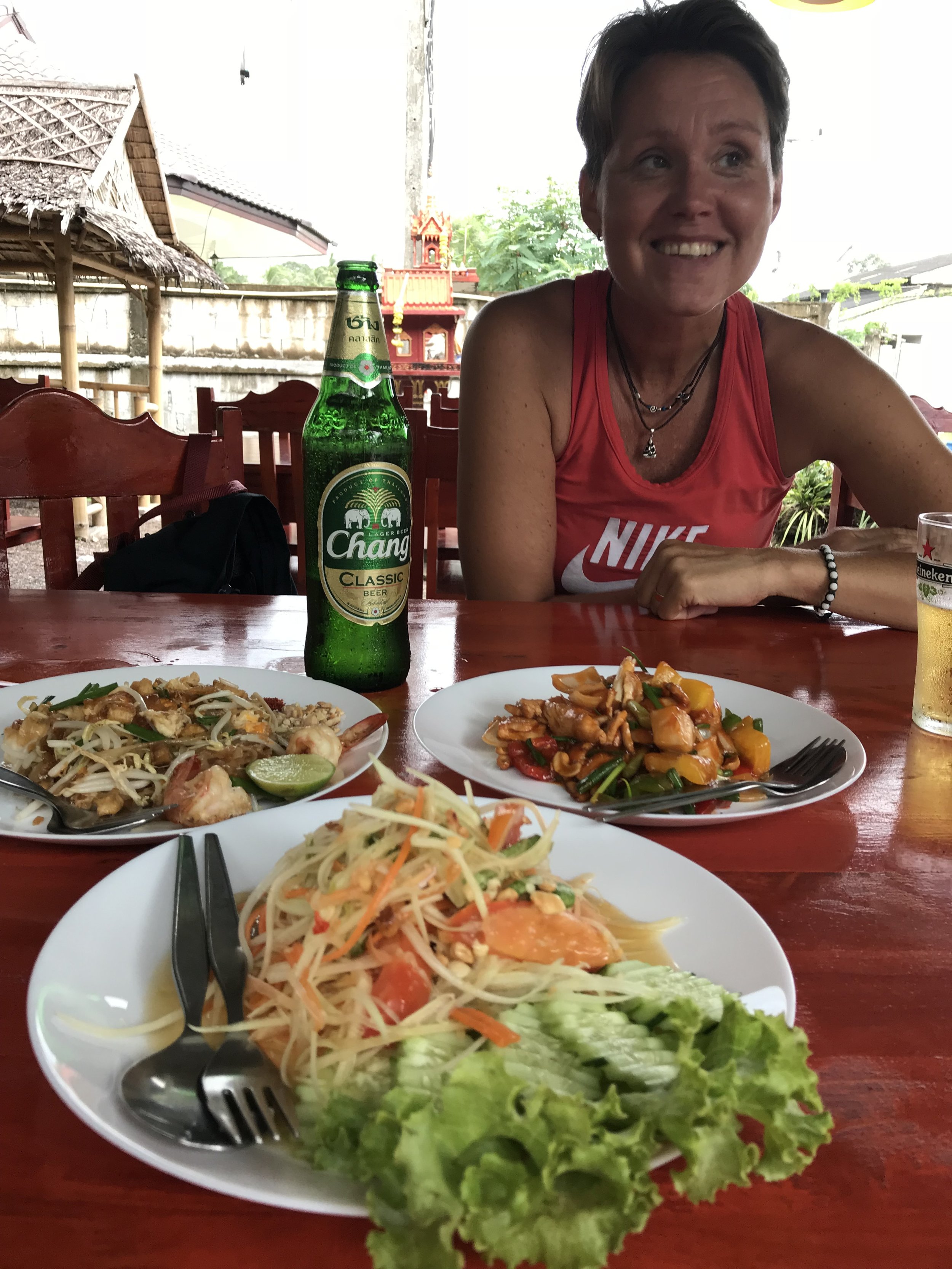
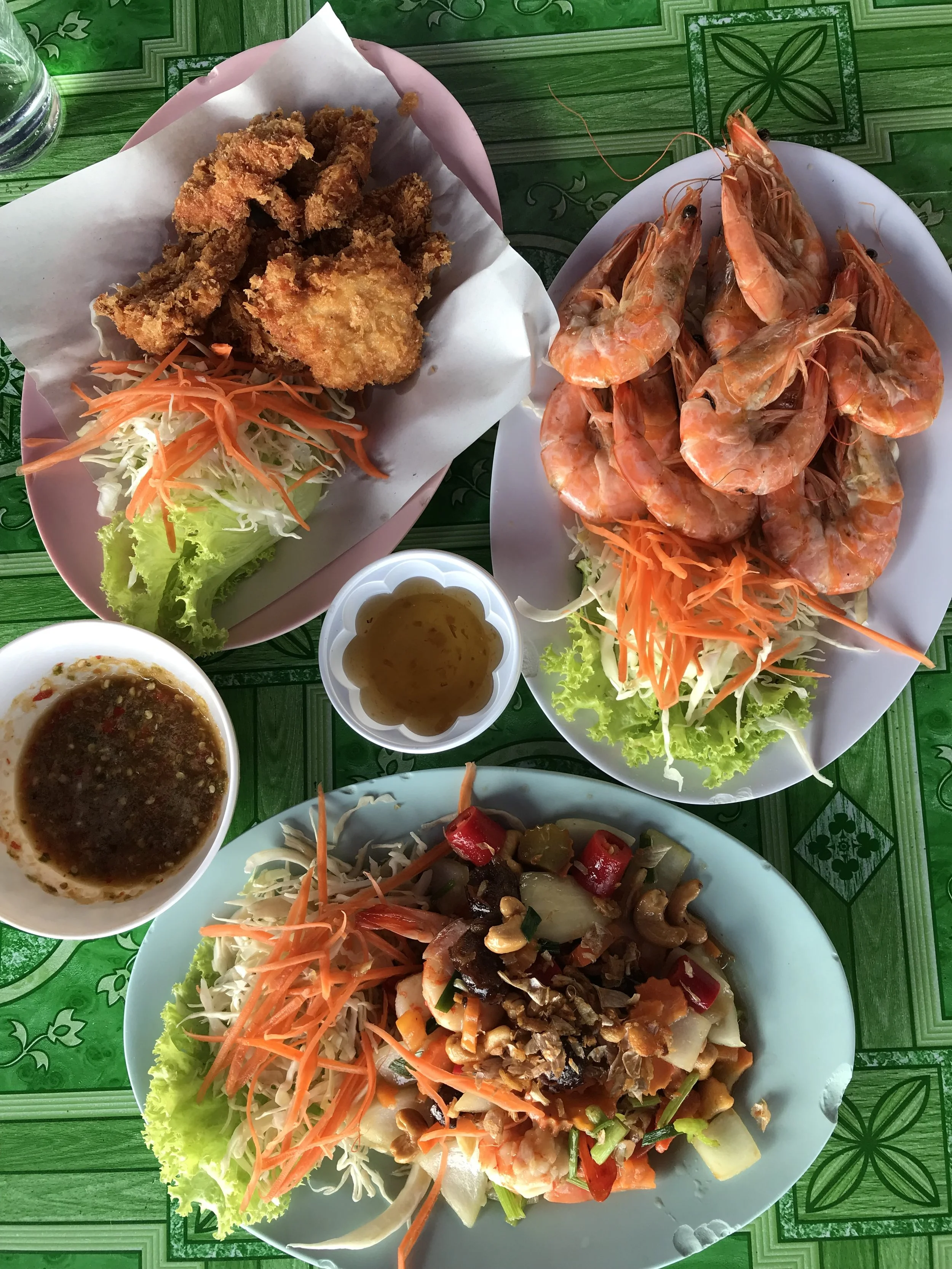
The daily question becomes almost ridiculous.
Where should we eat Thai food today?
As if that was ever a problem.
Sometimes we want something else. A burger. Pizza. Wine and cheese in Hua Hin. A modern shopping mall, cold air conditioning, familiar brands and the feeling of stepping briefly into another world.
But after a while, the same tastes call us back. Rice. Curry. Chili. Fried seafood. Papaya salad. Coconut. Lime. Garlic. Fruit eaten with fingers.
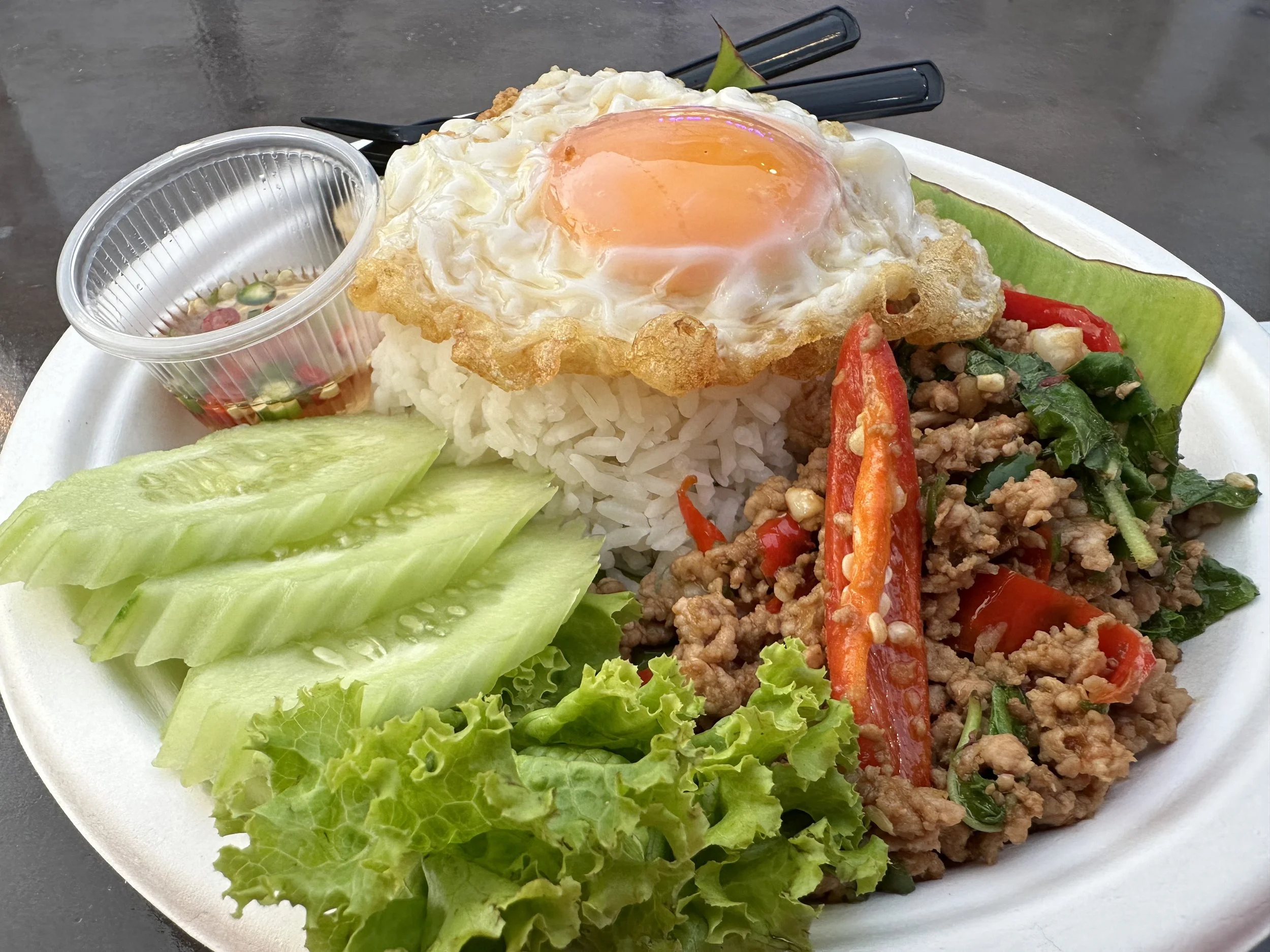
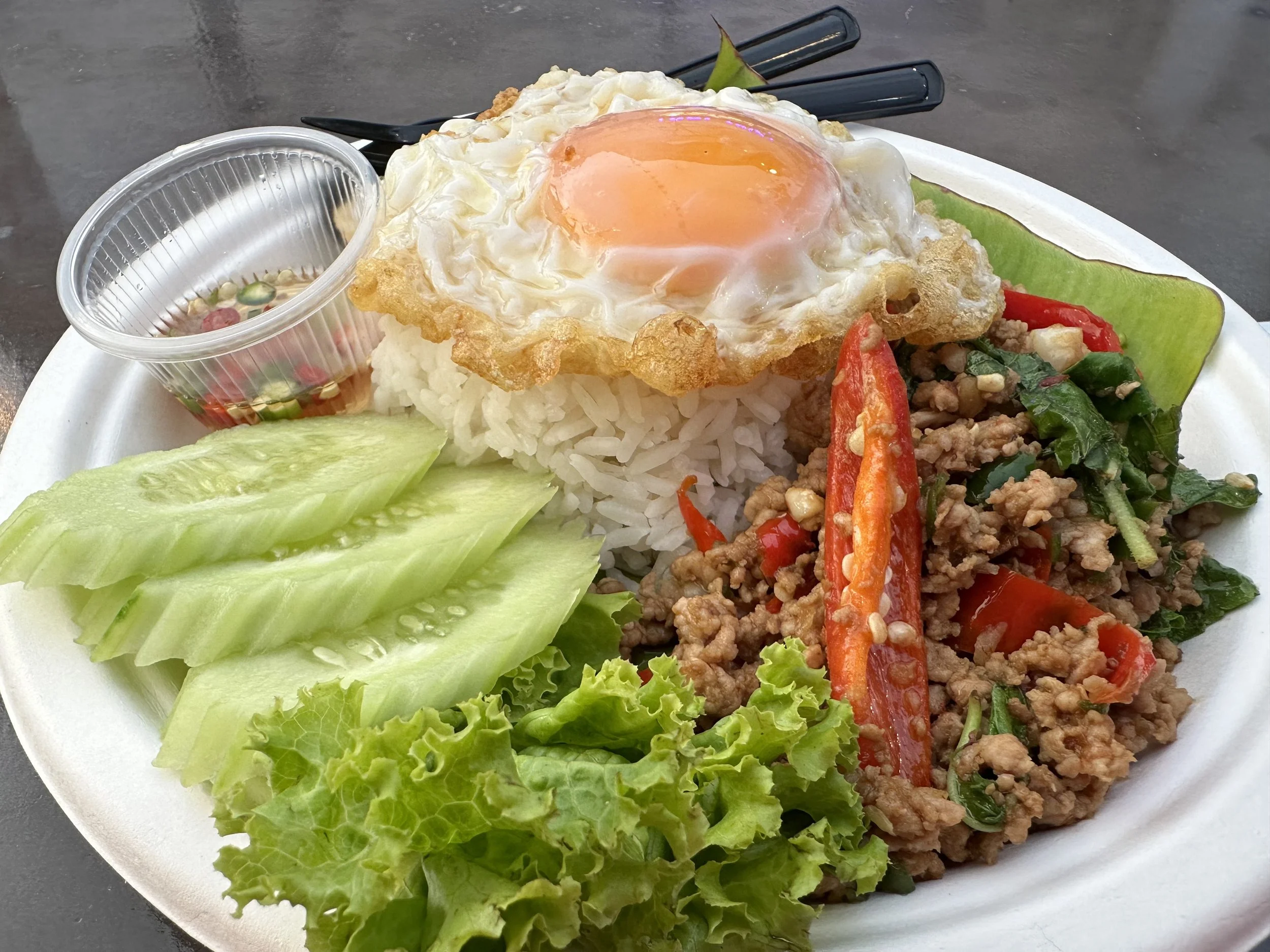
One of our favourite dishes. Pad Kaphrao.
The food is not only good because it is affordable, although that is part of the ease. It is good because it belongs to place, to people, to repetition, to the comfort of knowing exactly where to go and still looking forward to it. Or to experience something new.
Beaches without ceremony
The beaches around Huay Yang do not need to be planned.
That may be their greatest luxury.
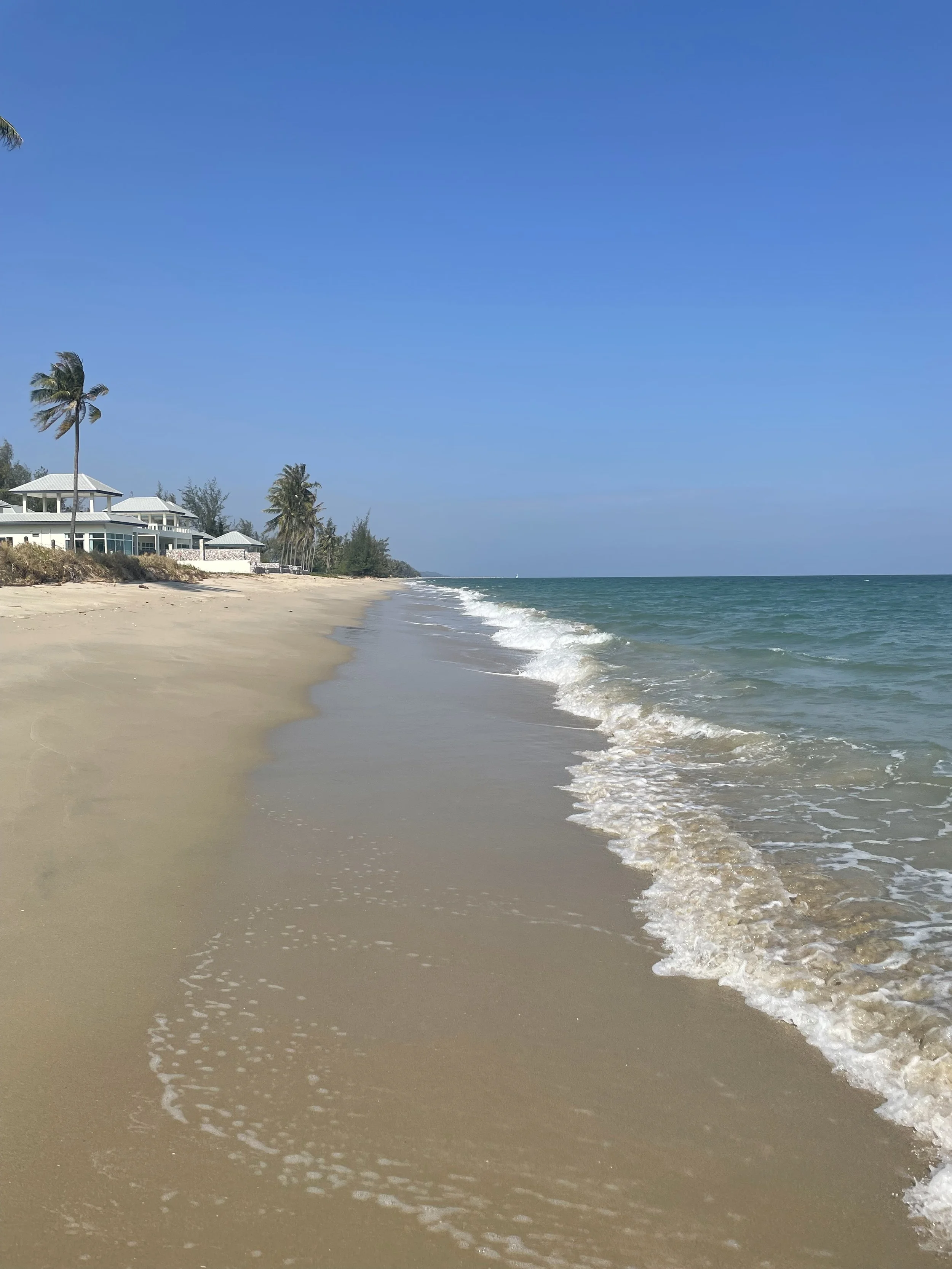
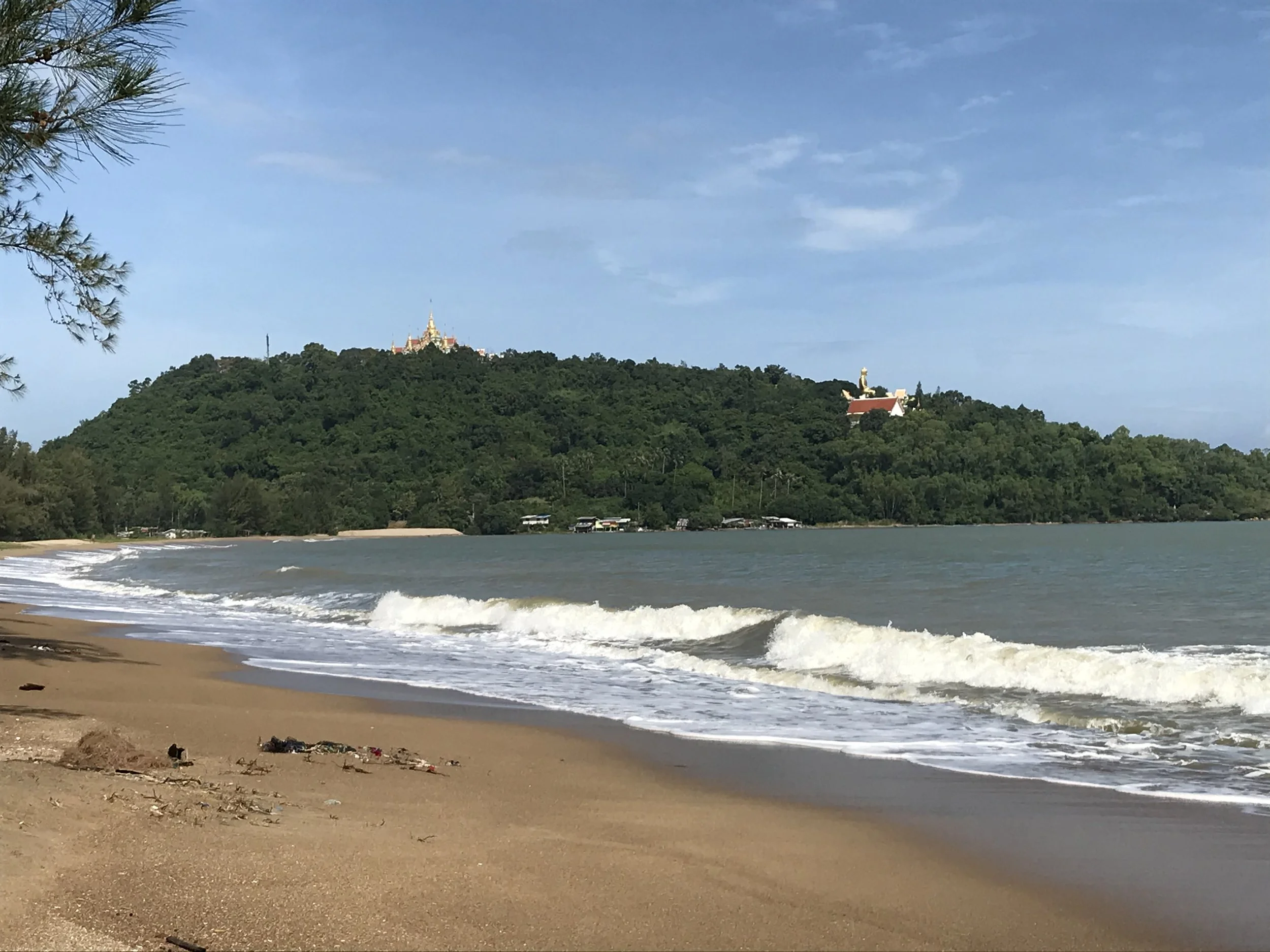
The village features approximately 7-10 km of continuous sandy coastline.
We can decide to go in a moment. Five minutes. Two minutes. A short scooter ride and the sea is there. No need to pack for a full beach day. No need to make the beach into an event.
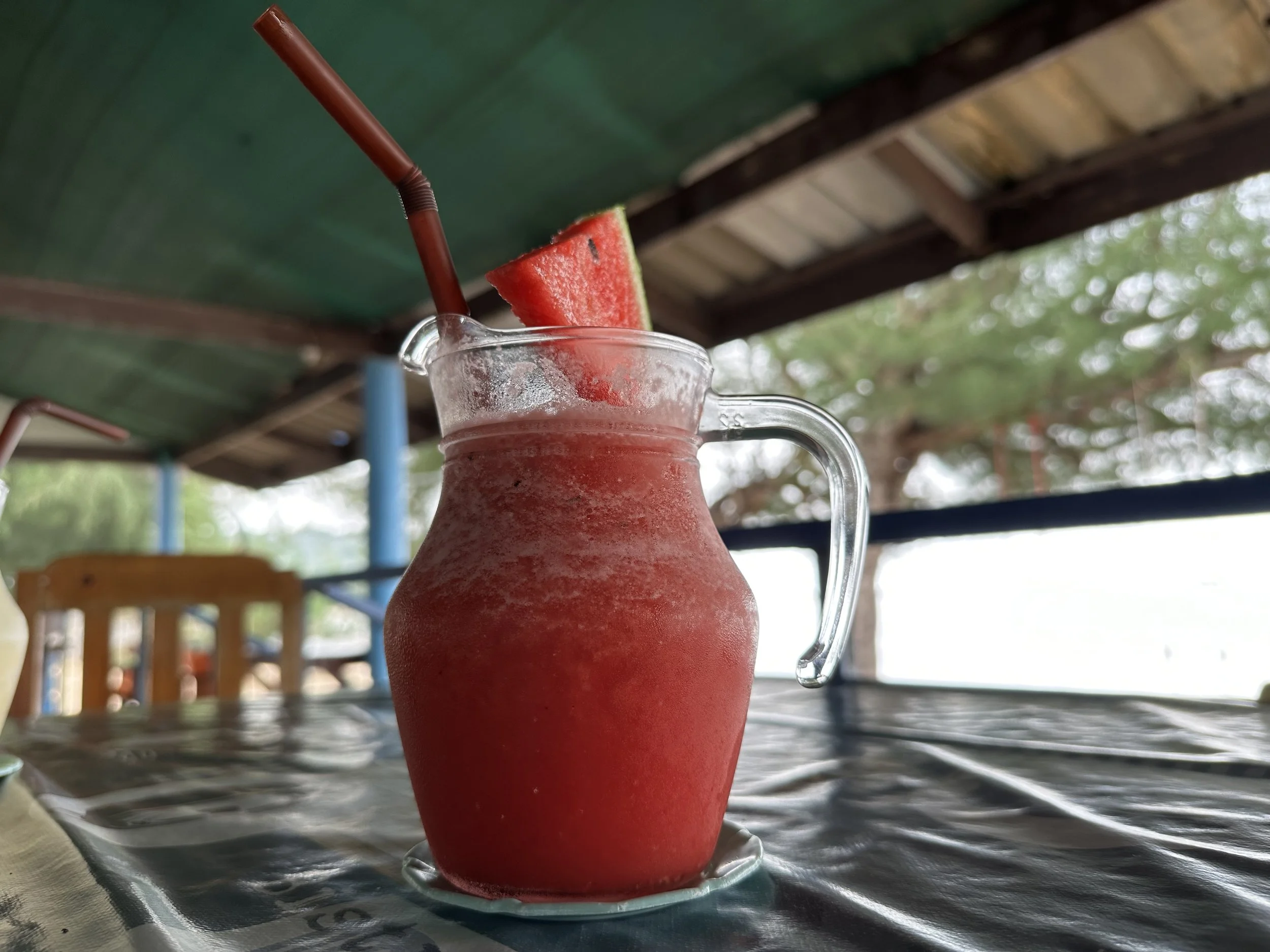
Sometimes we swim. Sometimes we walk. Sometimes we pick up shells, not because we need to keep them, but because looking at them is part of walking slowly. Sometimes we drive to the temple at the beach and watch the colours of the ocean while drinking our fresh smoothie from Hello Mango Café.
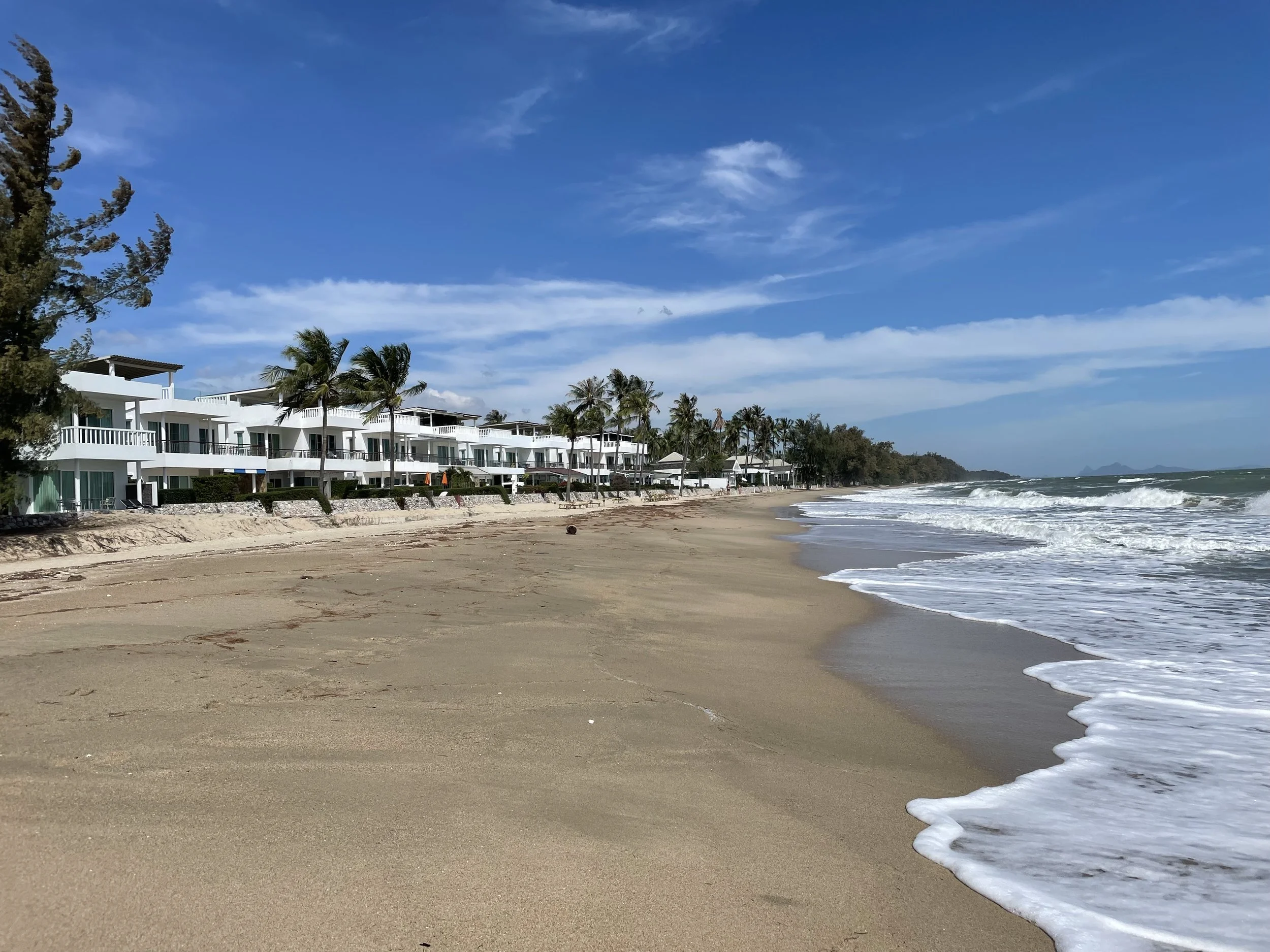
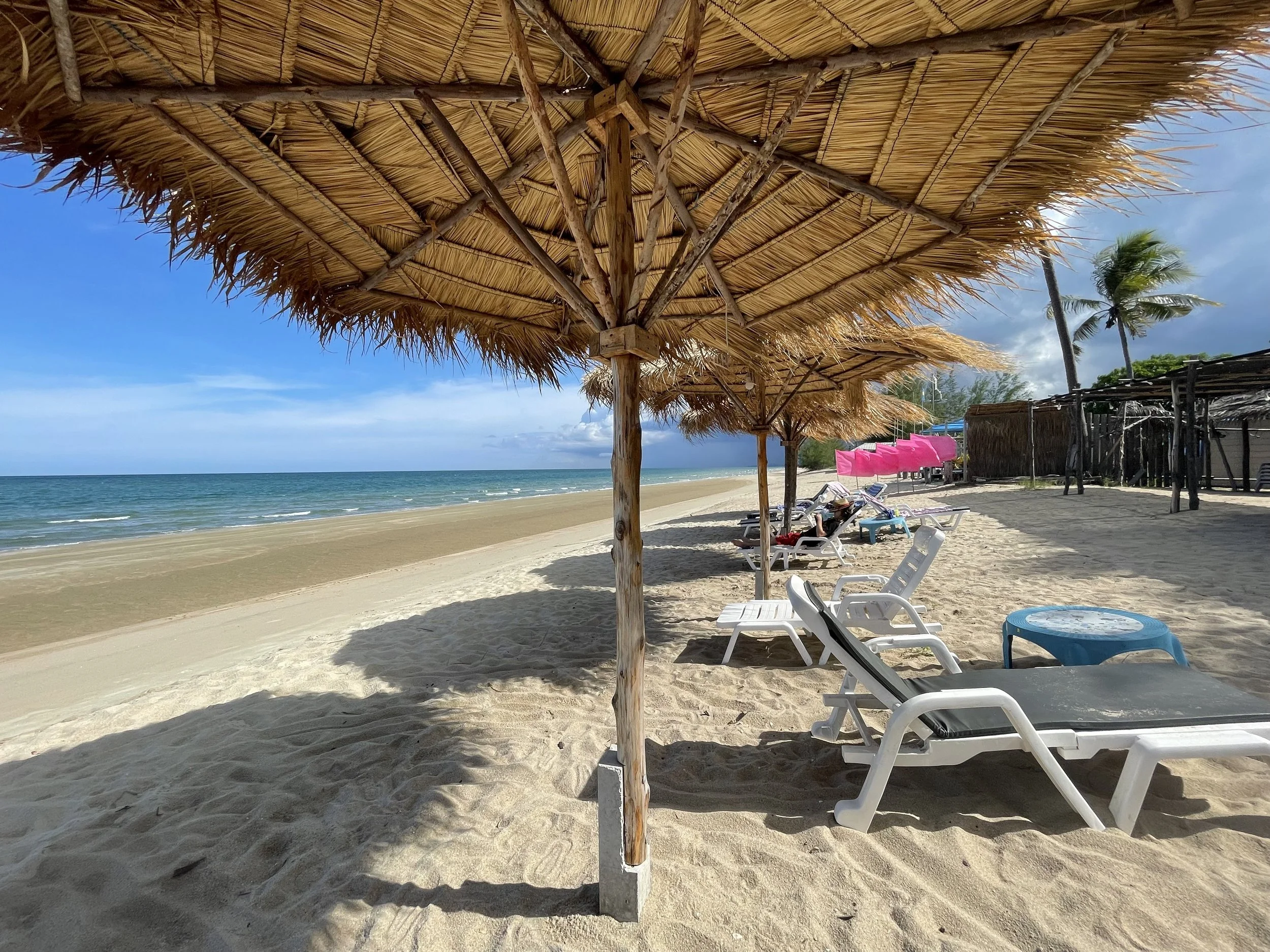
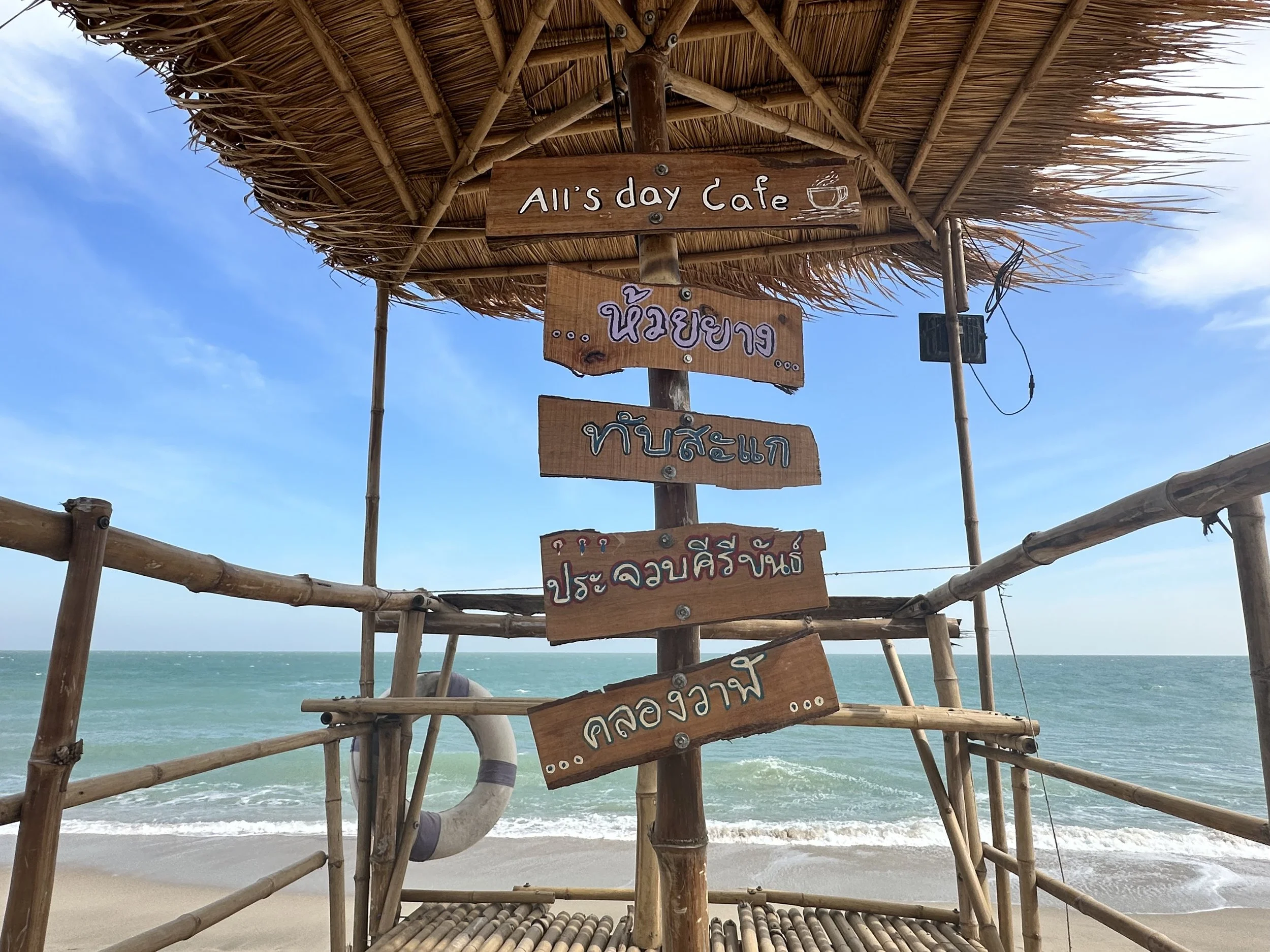
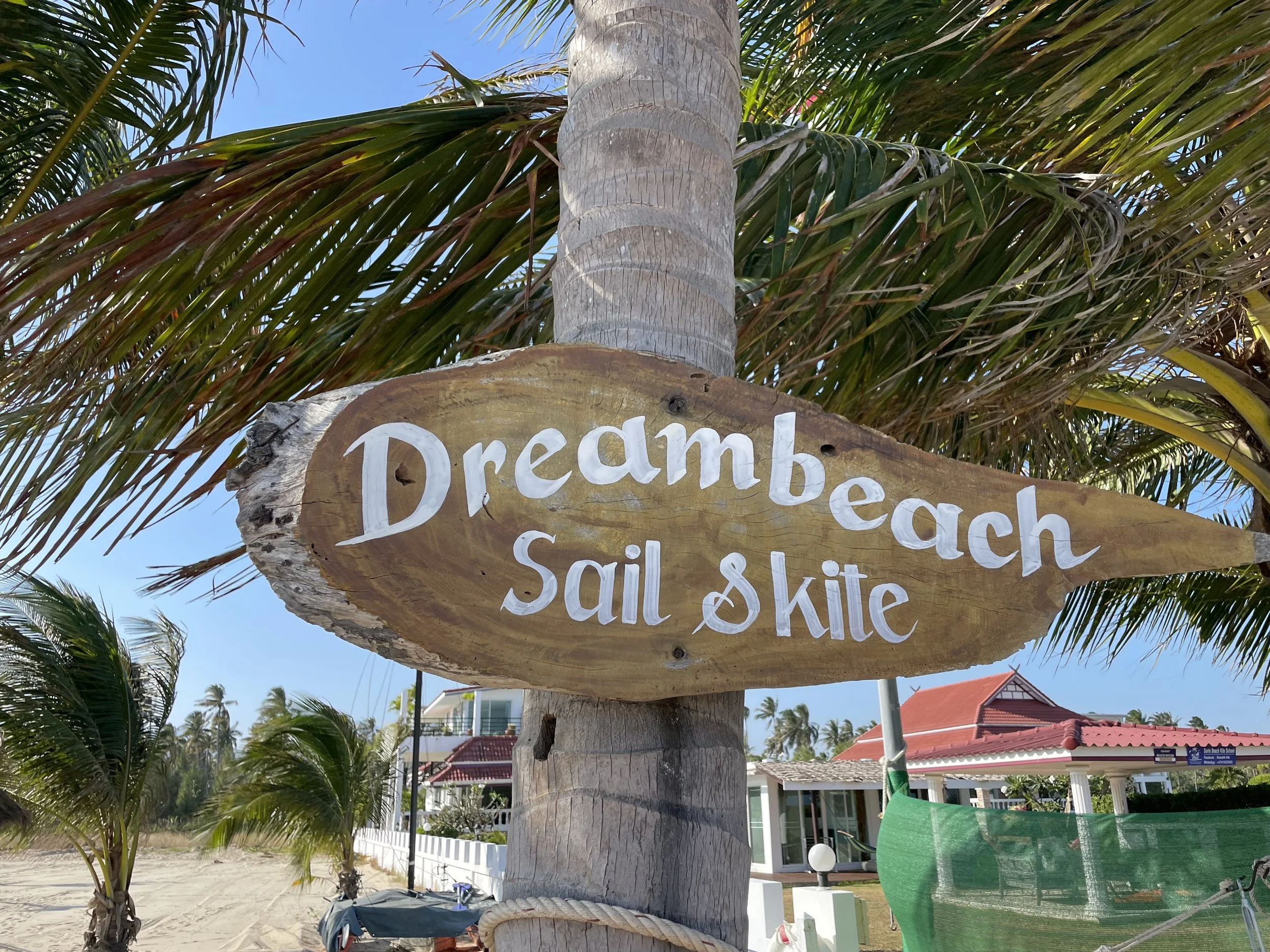
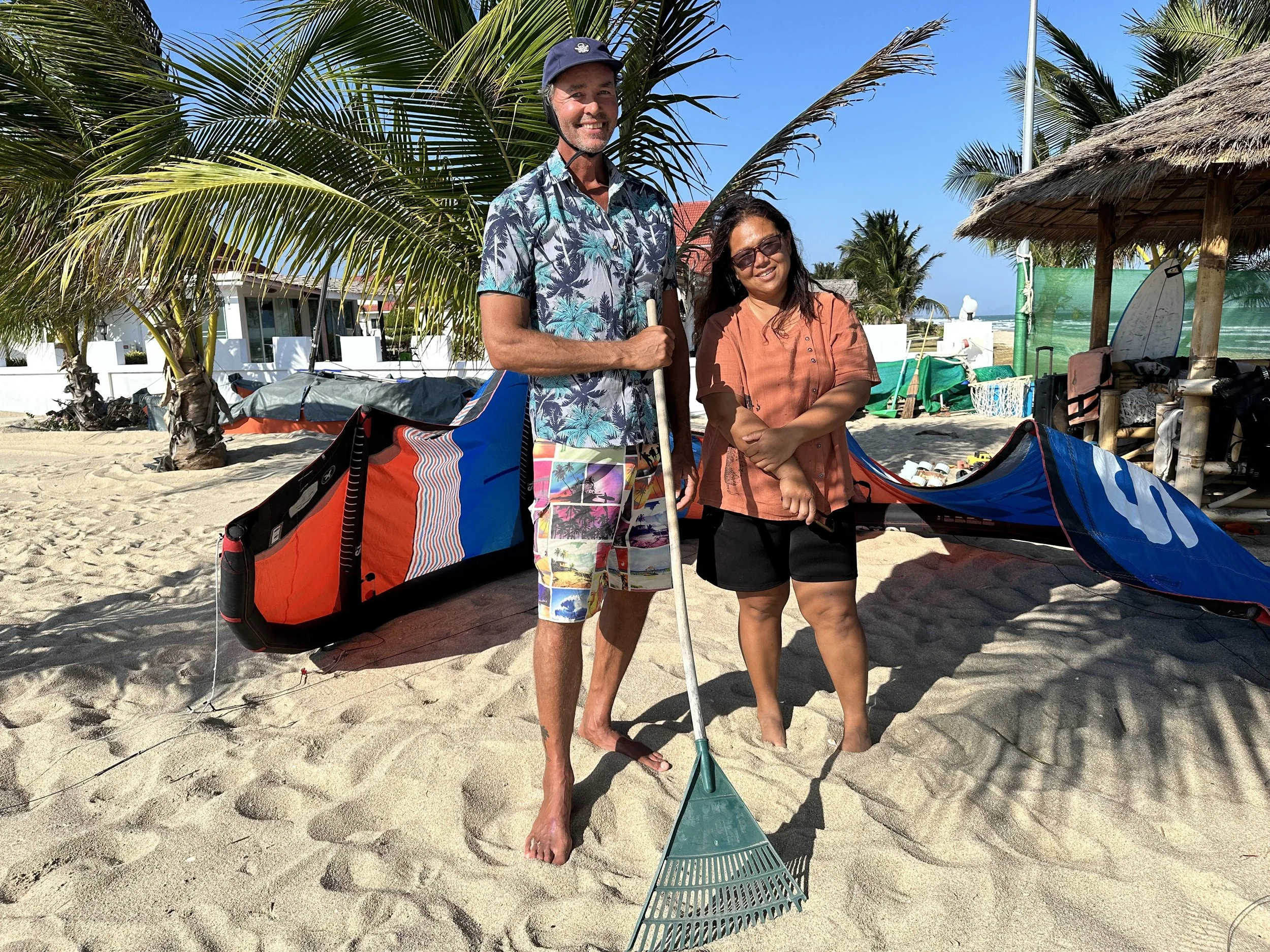
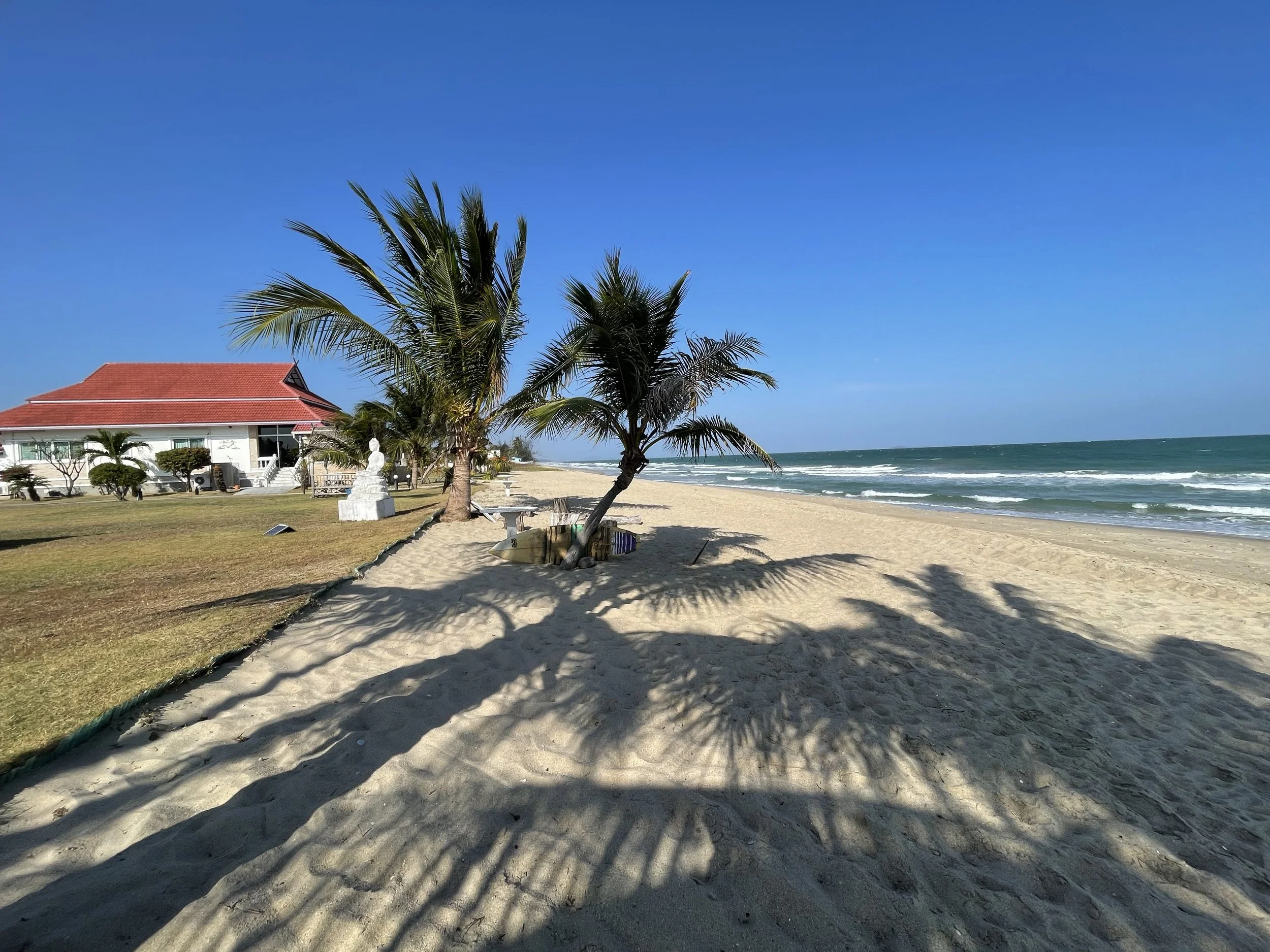
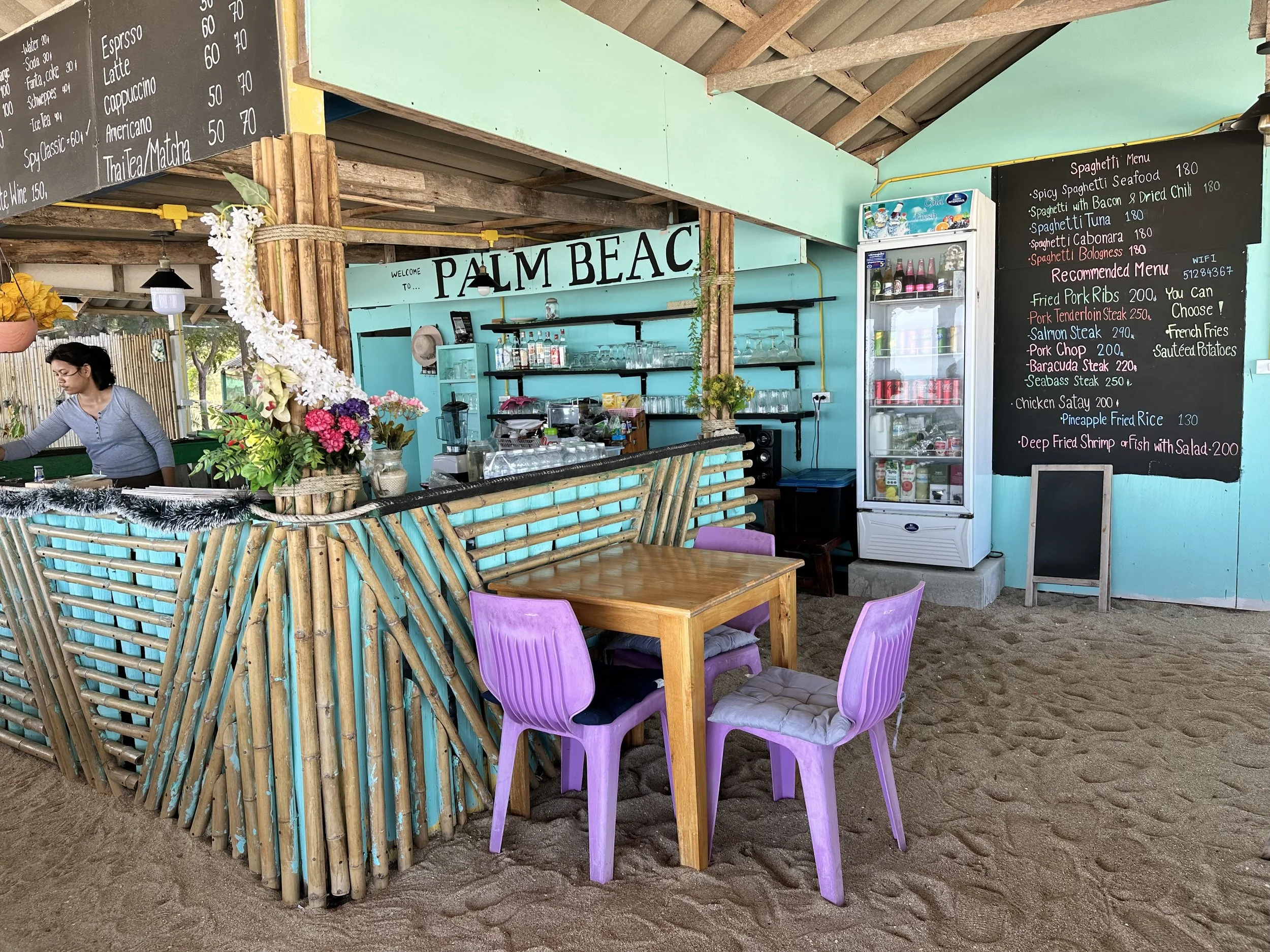
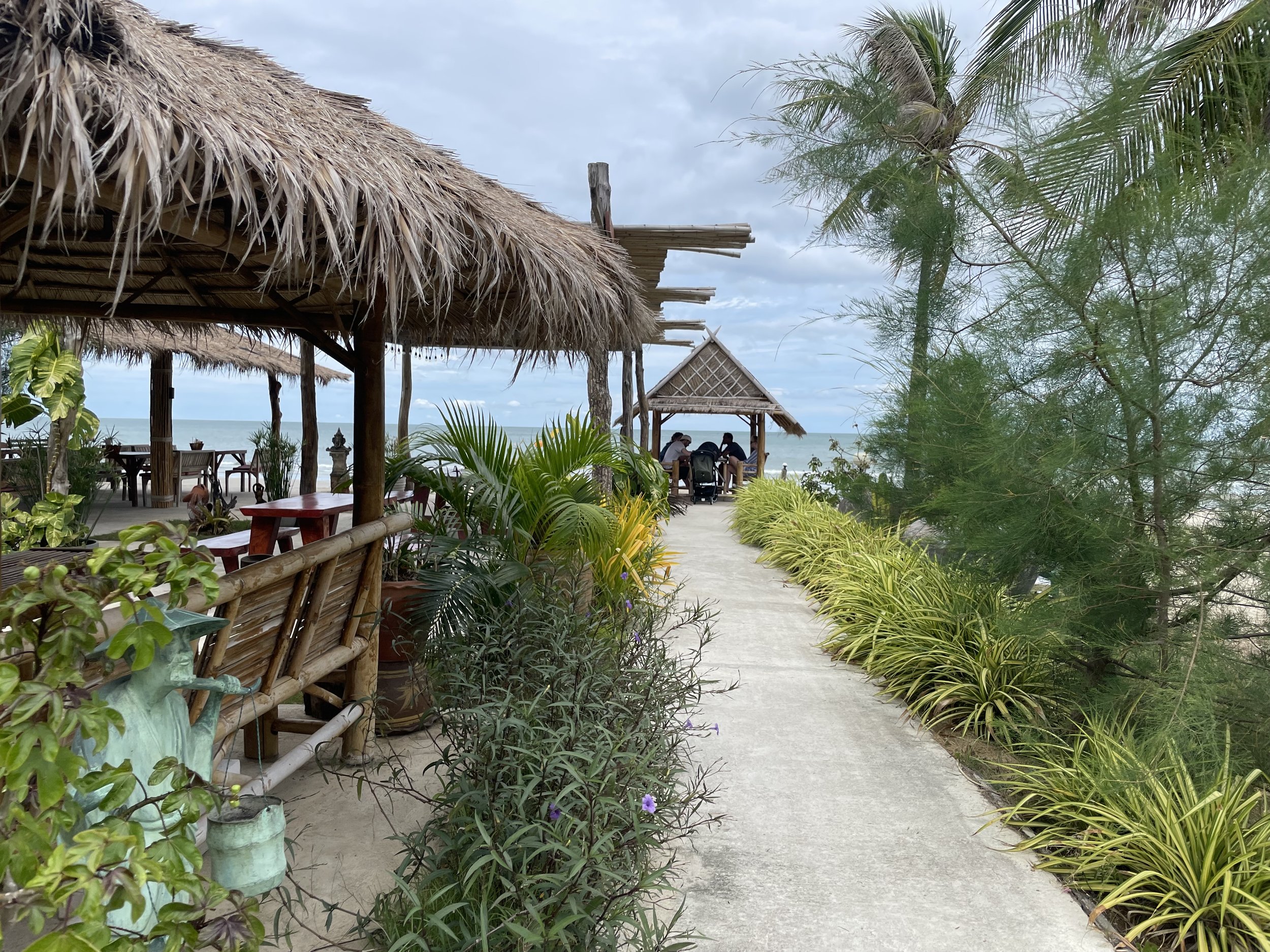
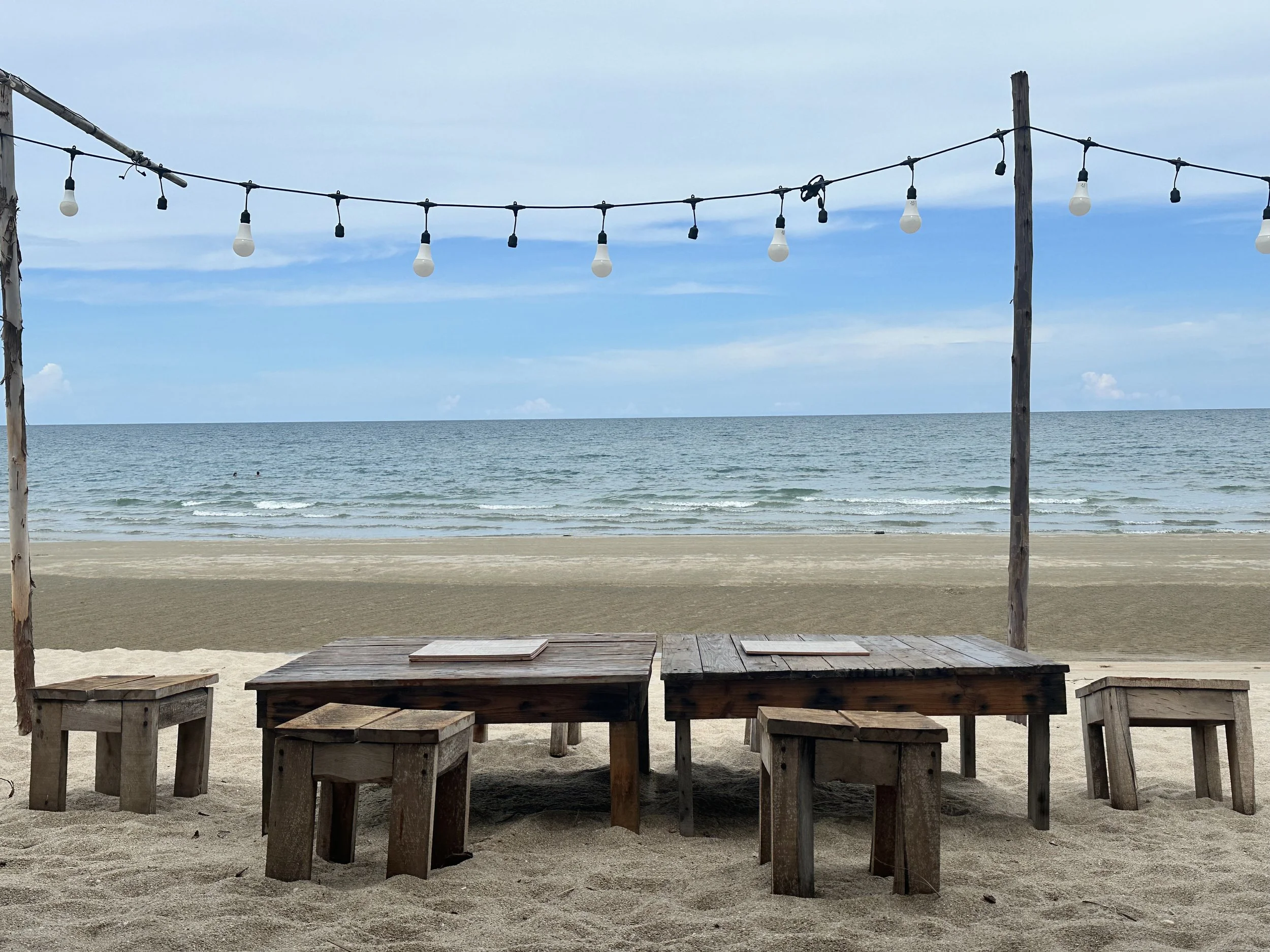
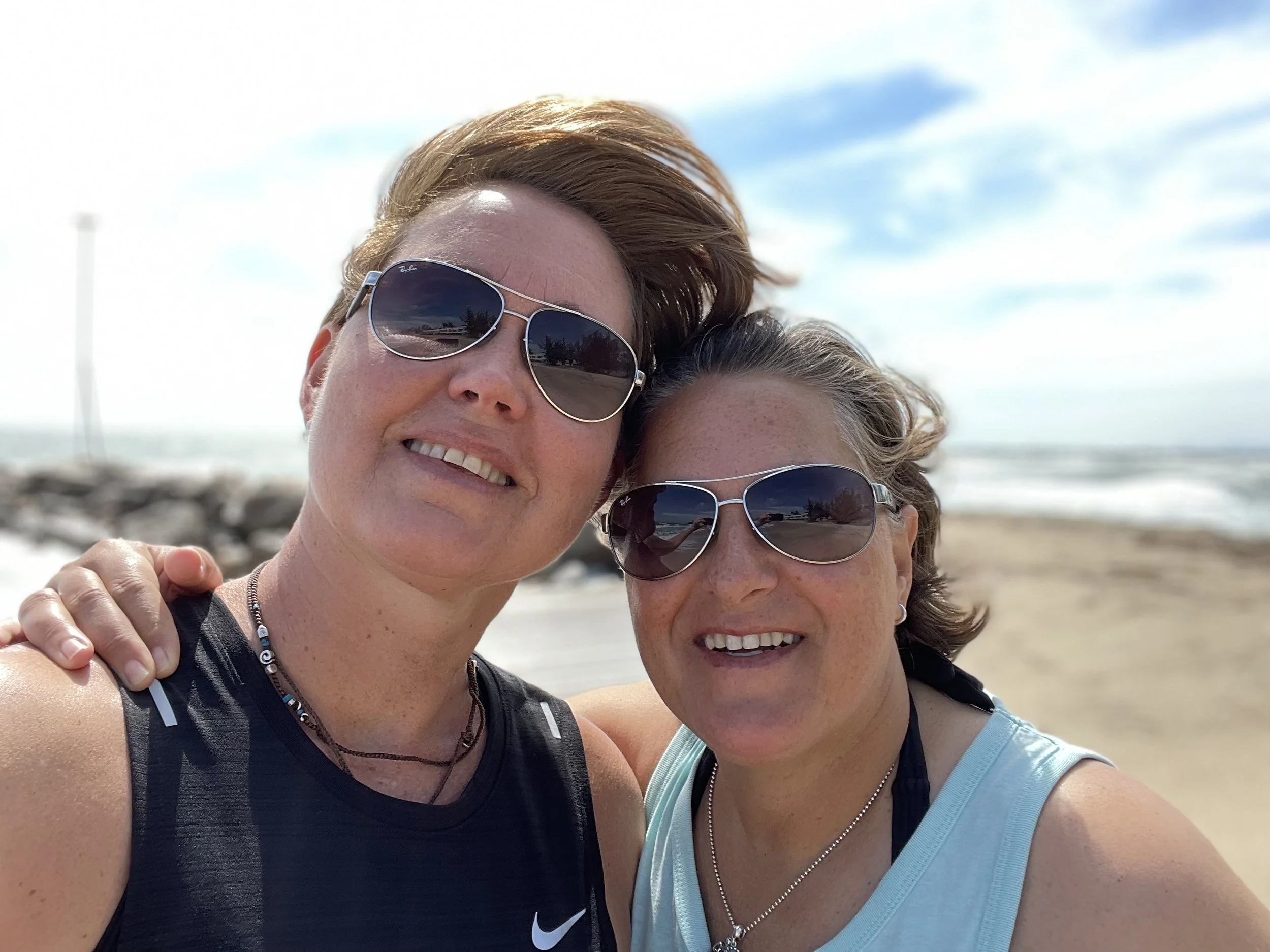
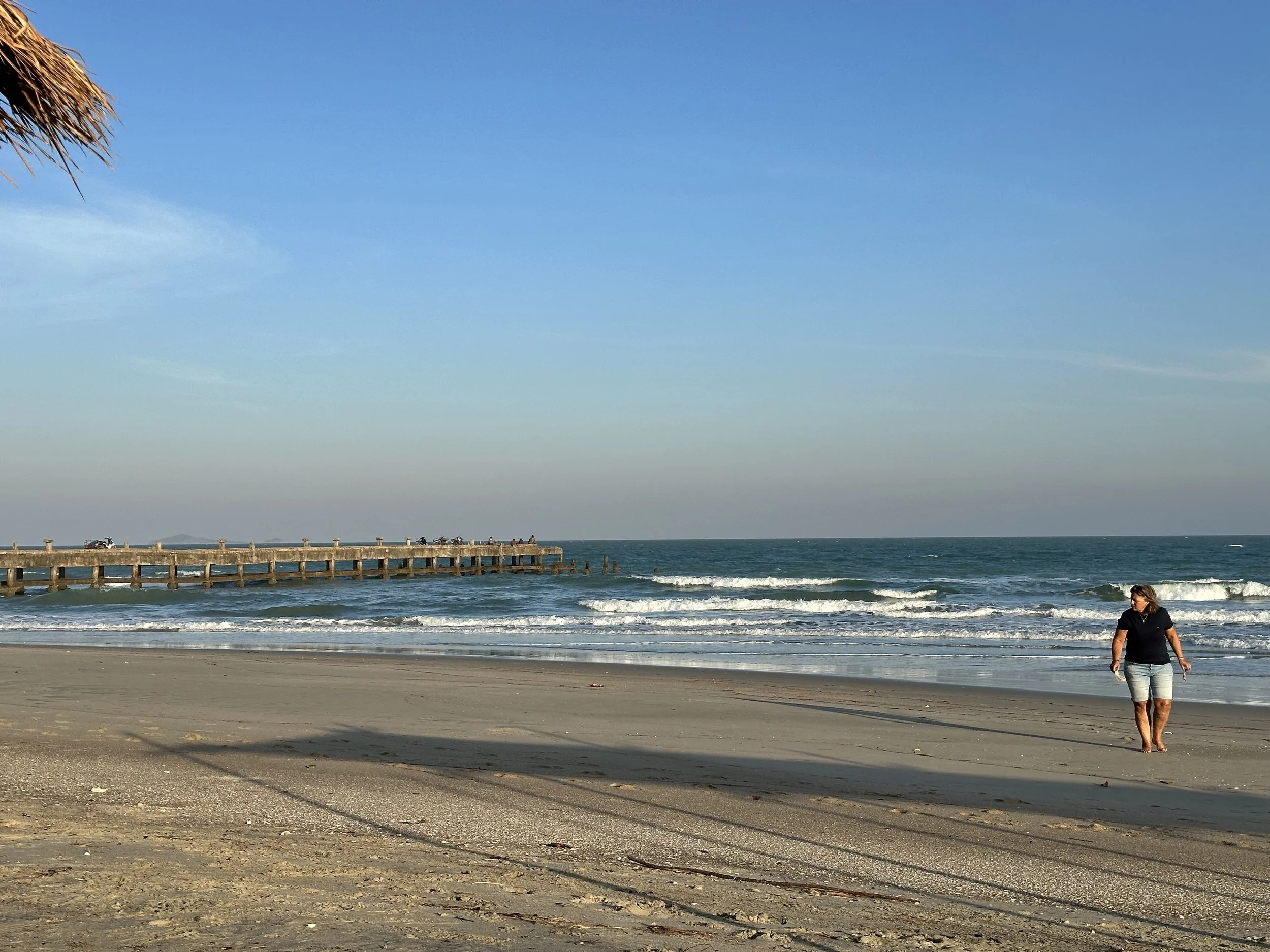
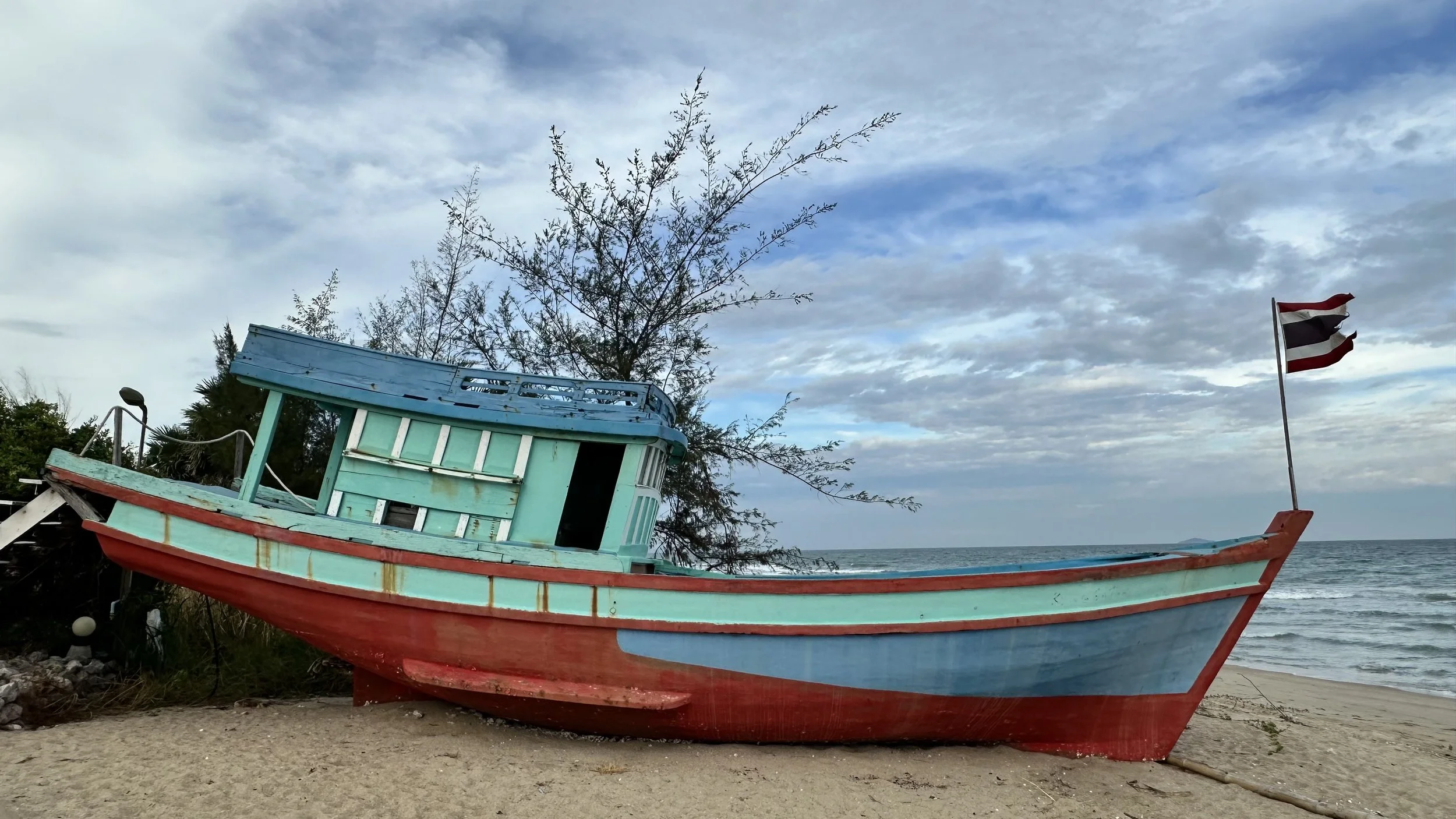
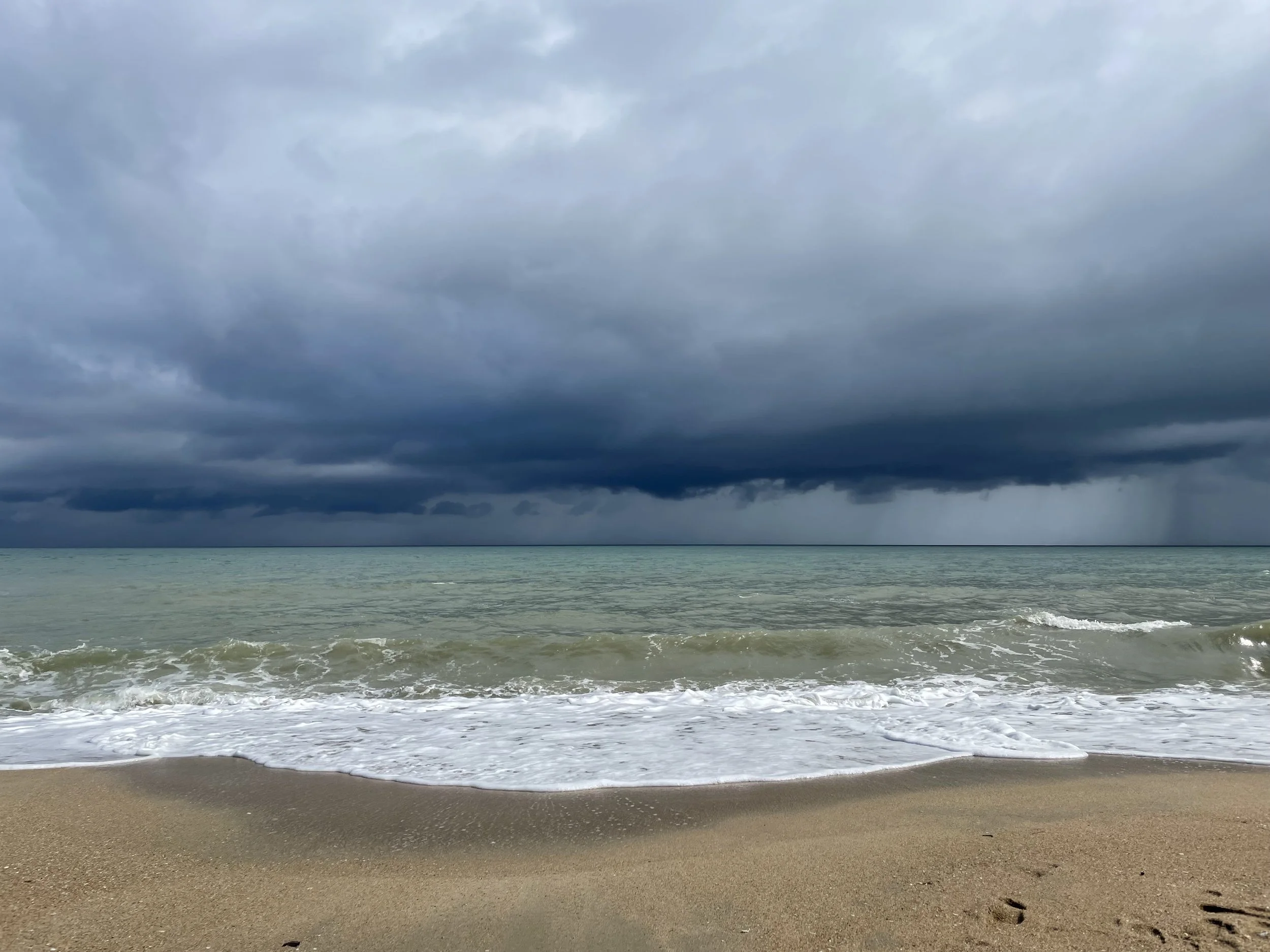
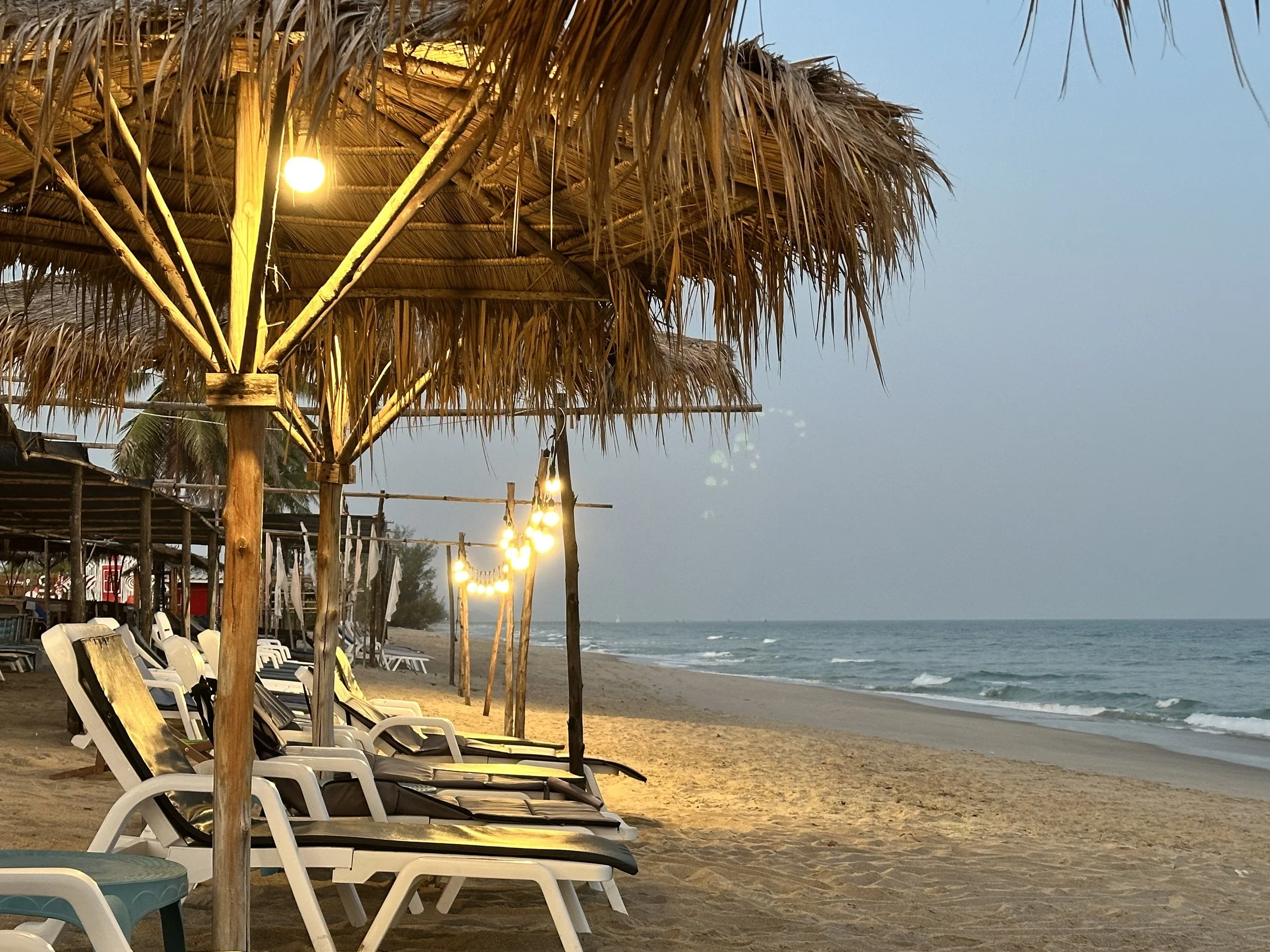
There are beaches in the world that are more famous, more photographed, more dramatic in colour. But a beach you can return to again and again becomes something else. It becomes part of your daily language.
At Dolphin Beach, the evenings belong to local life. Thai families gather with food, children, friends, scooters and plastic chairs. Stalls appear. Someone eats. Someone laughs. Someone waits. Children move between adults. The light changes. The day exhales.
We are not the centre of anything there.
That is one of the reasons we like it.
We can be nearby without the place being arranged around us.
The places that would never win a list
Namtok Huai Yang National Park, Huay Yang waterfall is not the kind of place people cross oceans for.
Still, we go.
We walk. We look at the trees. We listen to the water if there is water. We spend time observing in silence and taking photos. Short stops to rest and drink water to protect ourselves from the heat.
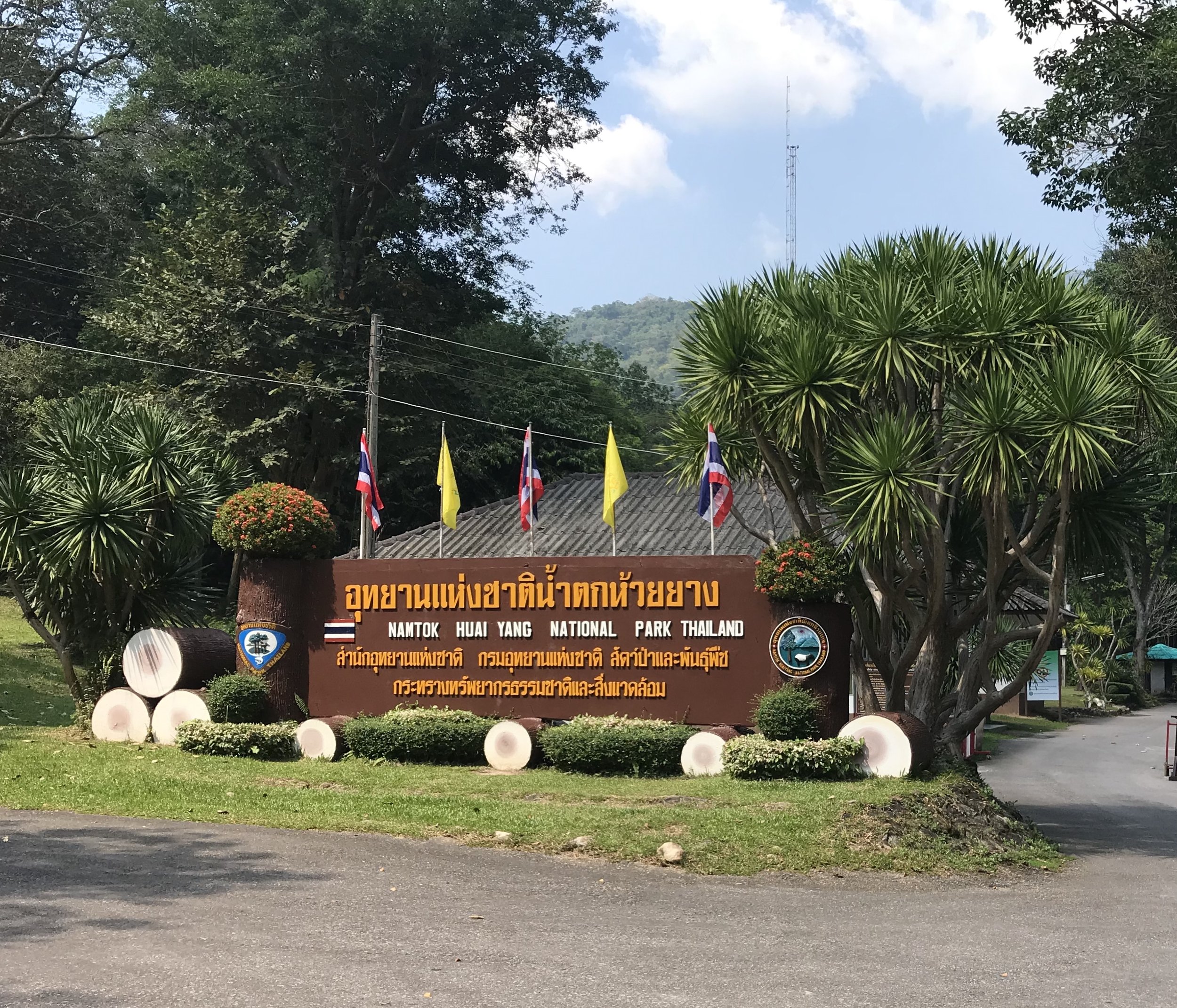
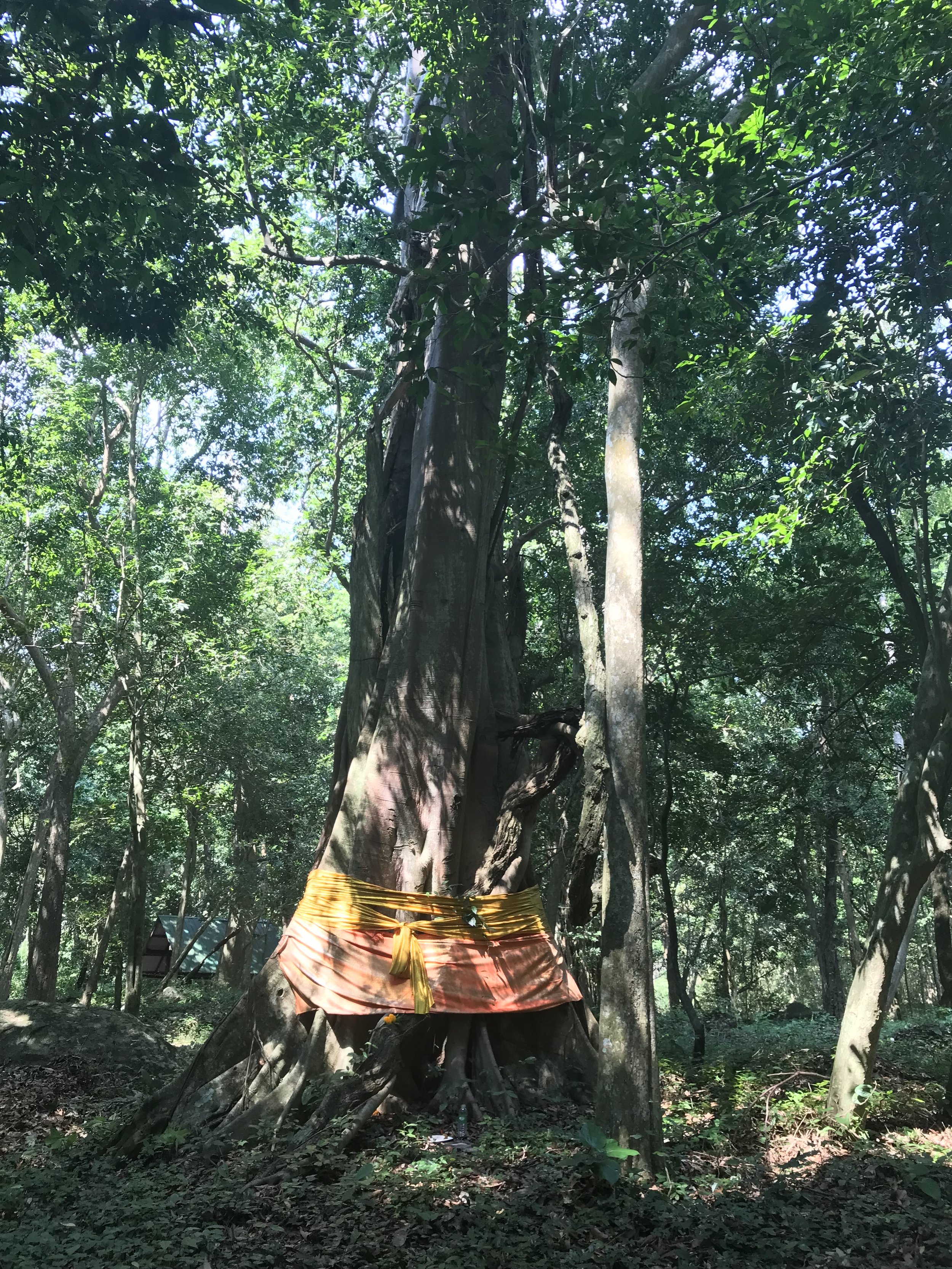
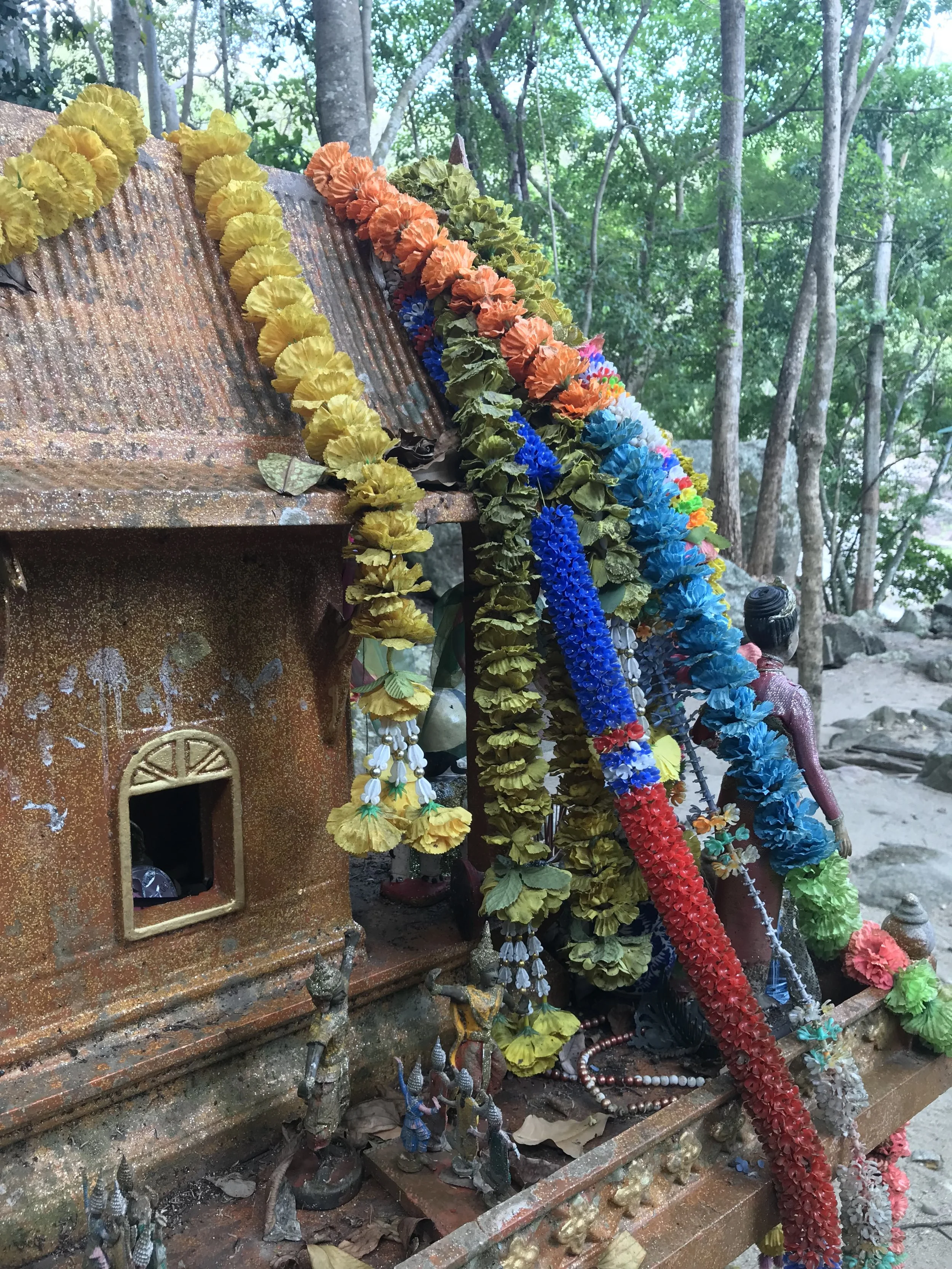
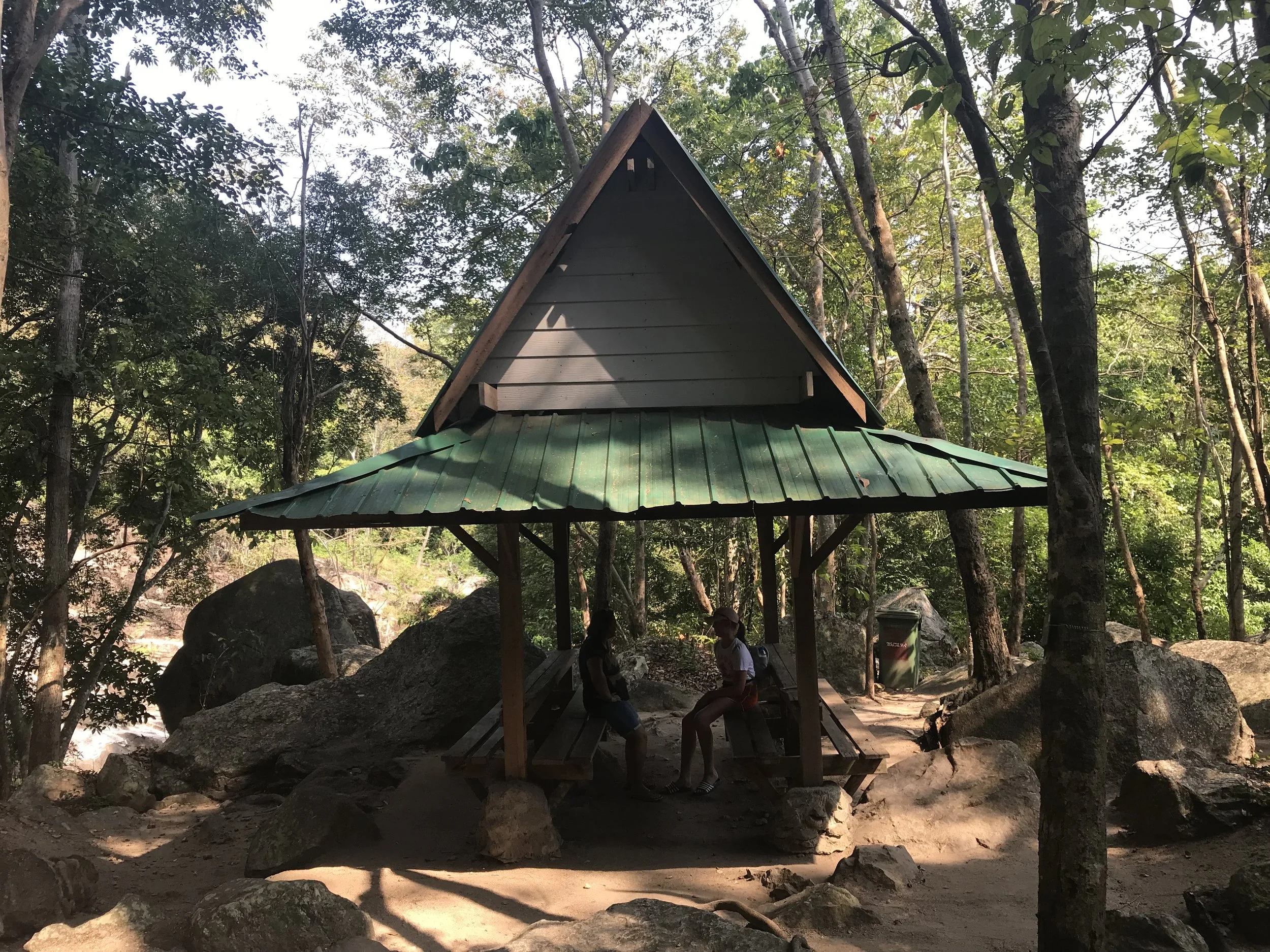
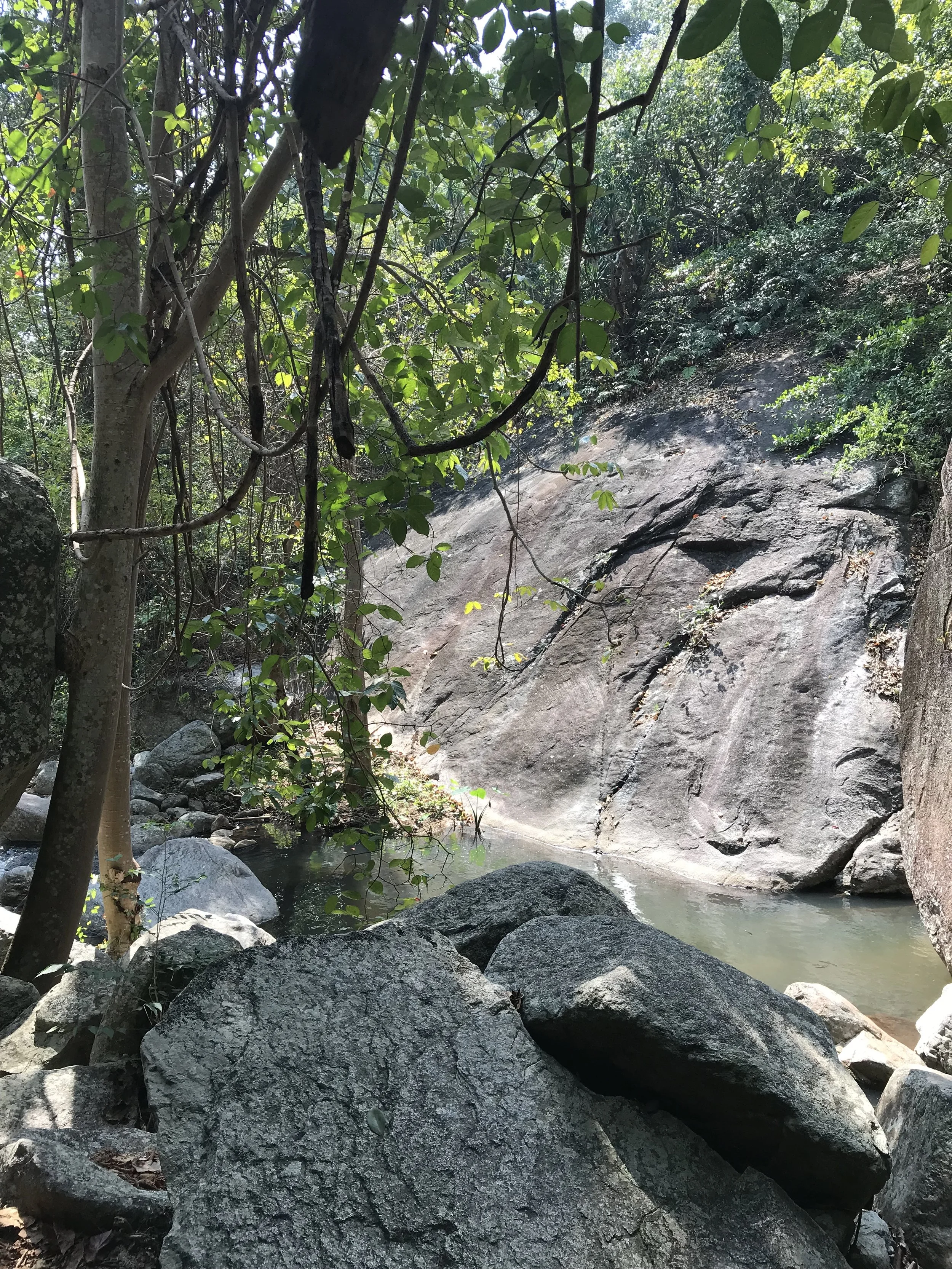
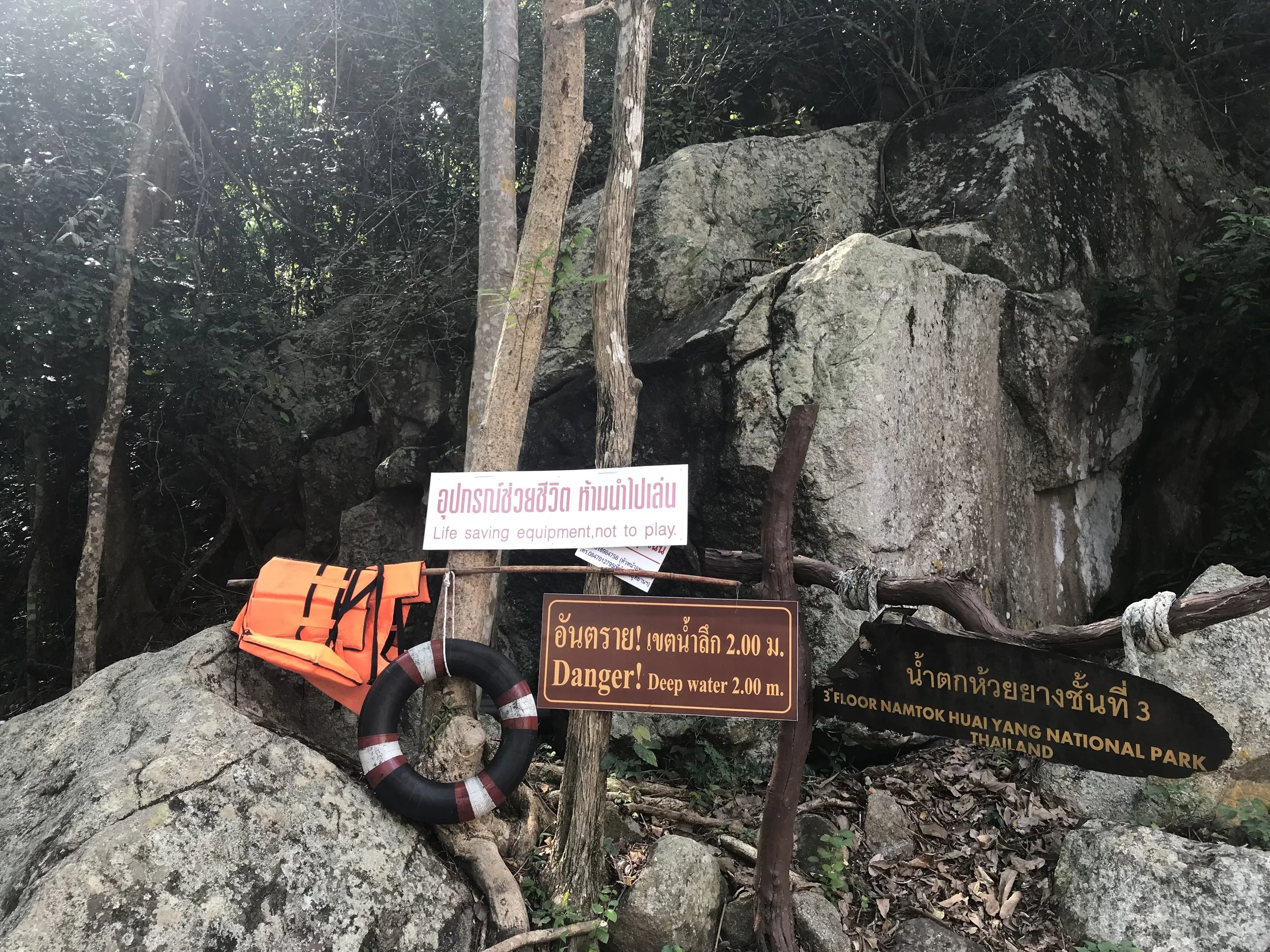
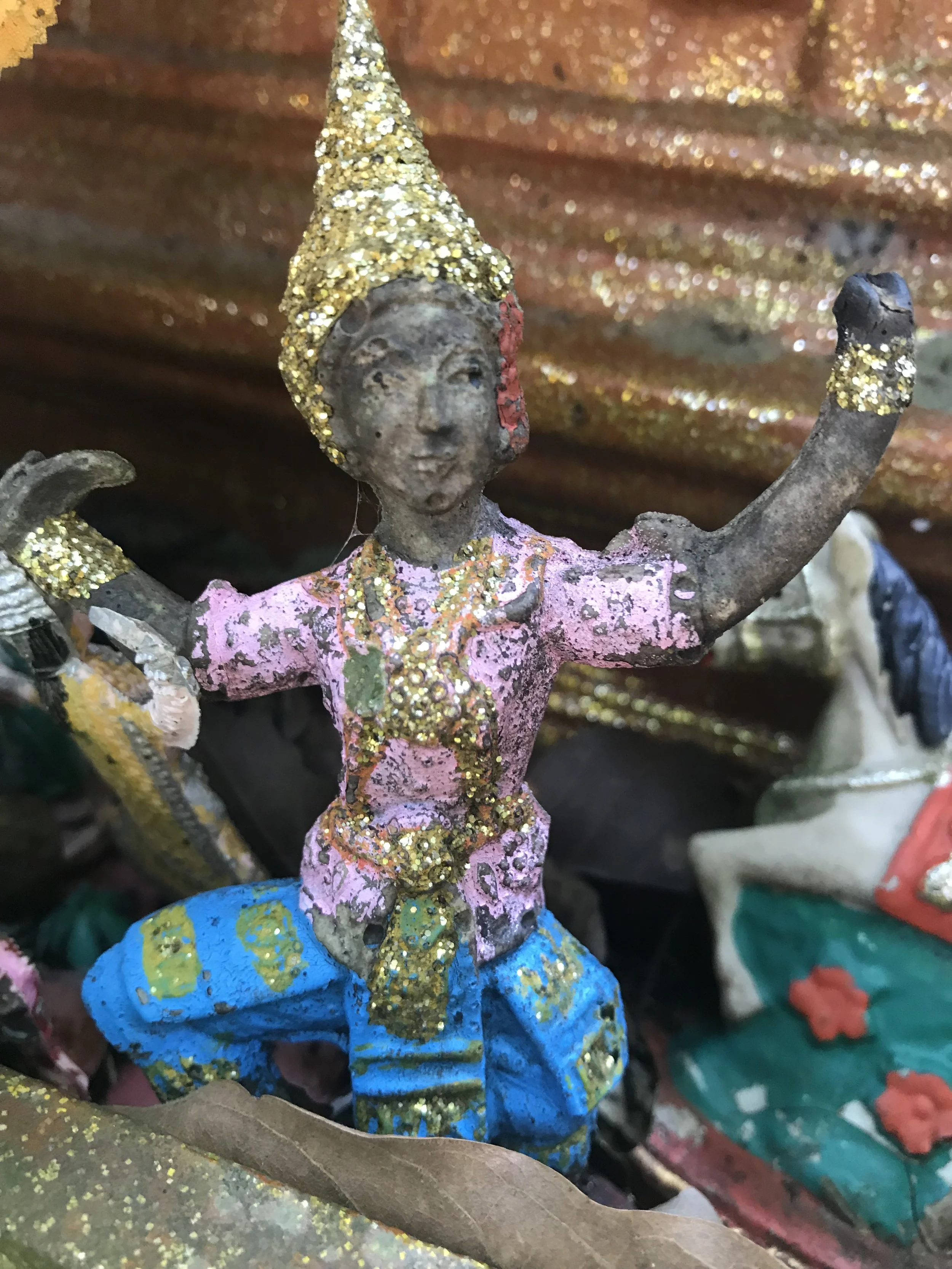
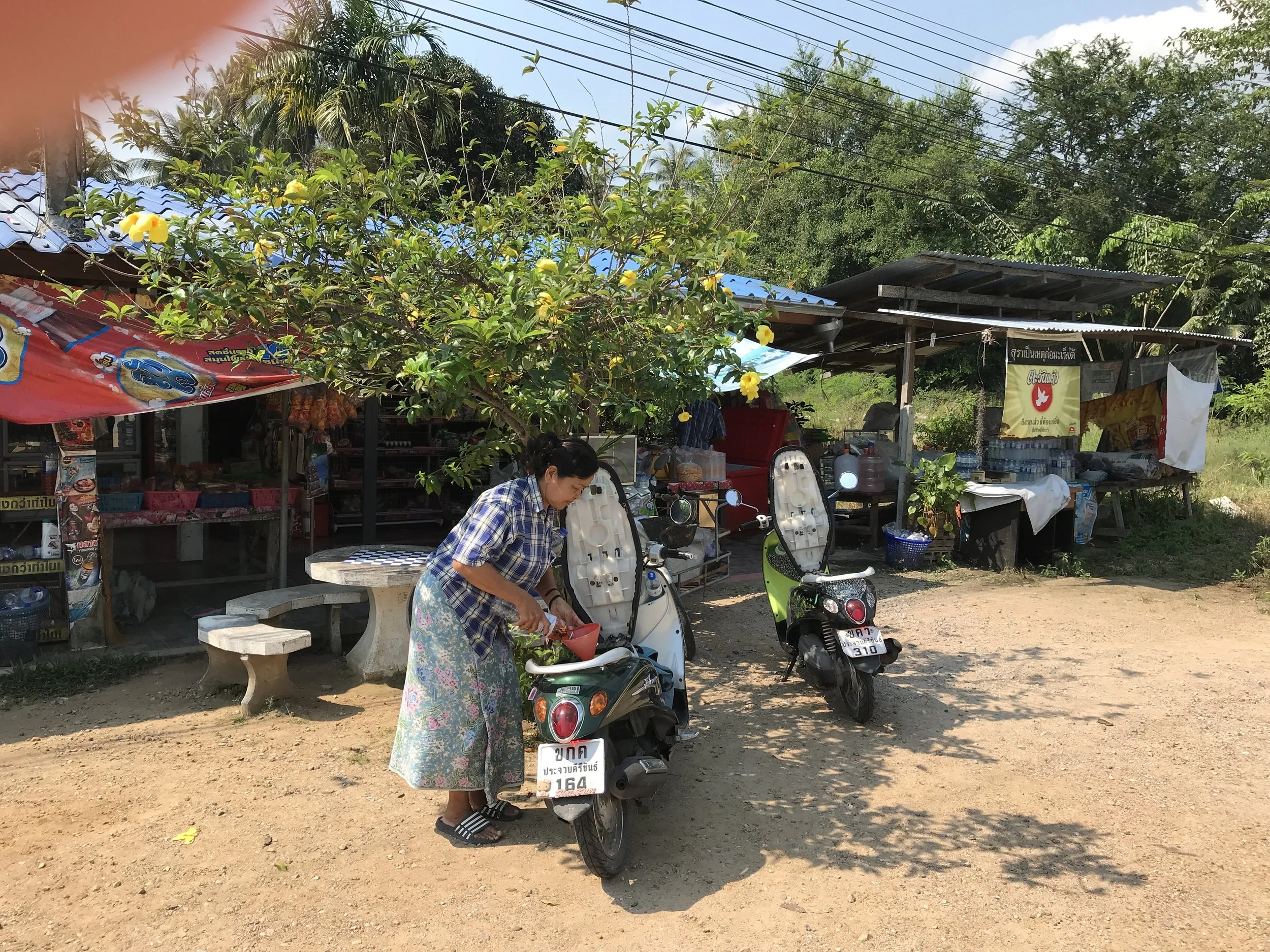
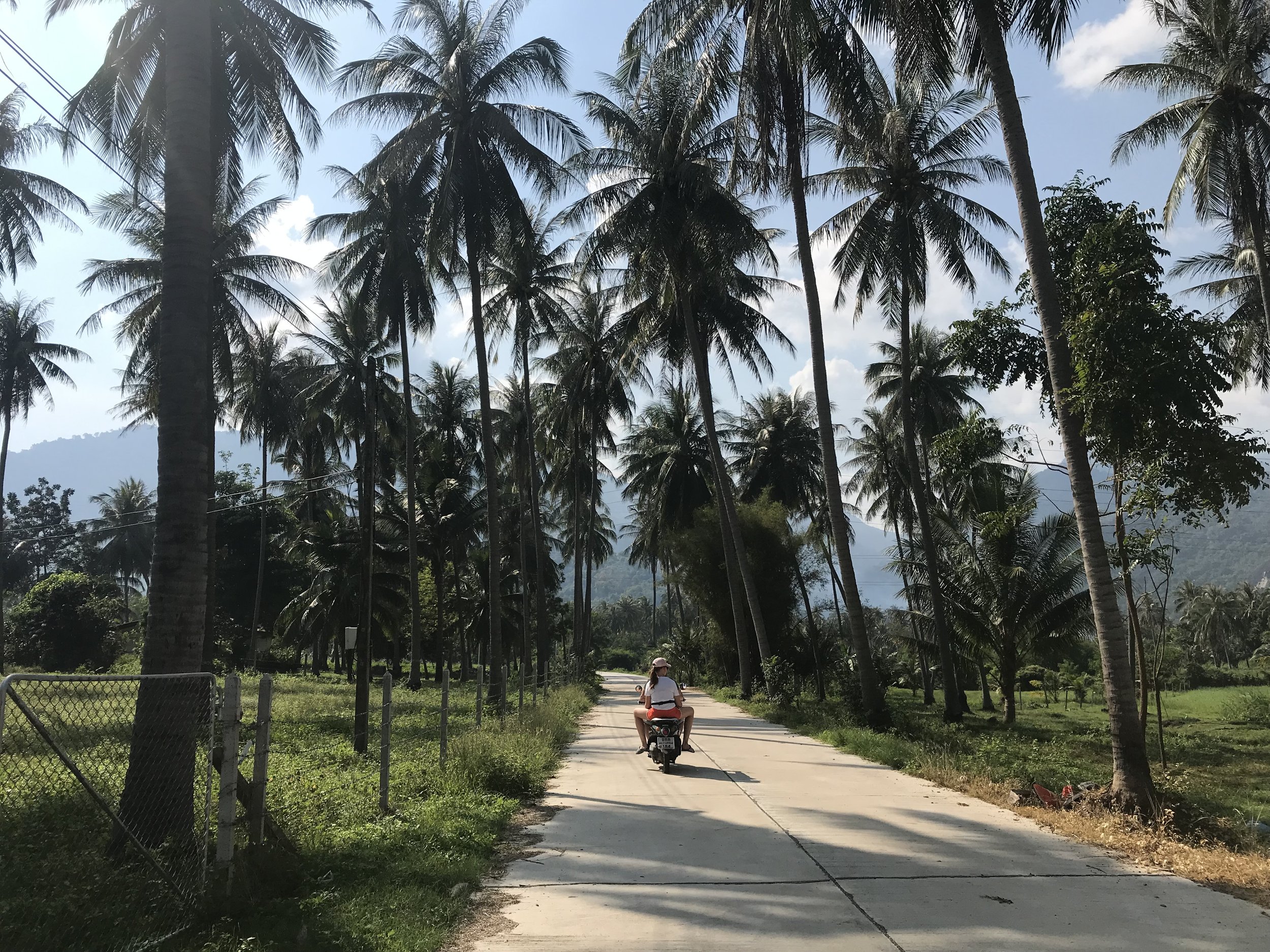
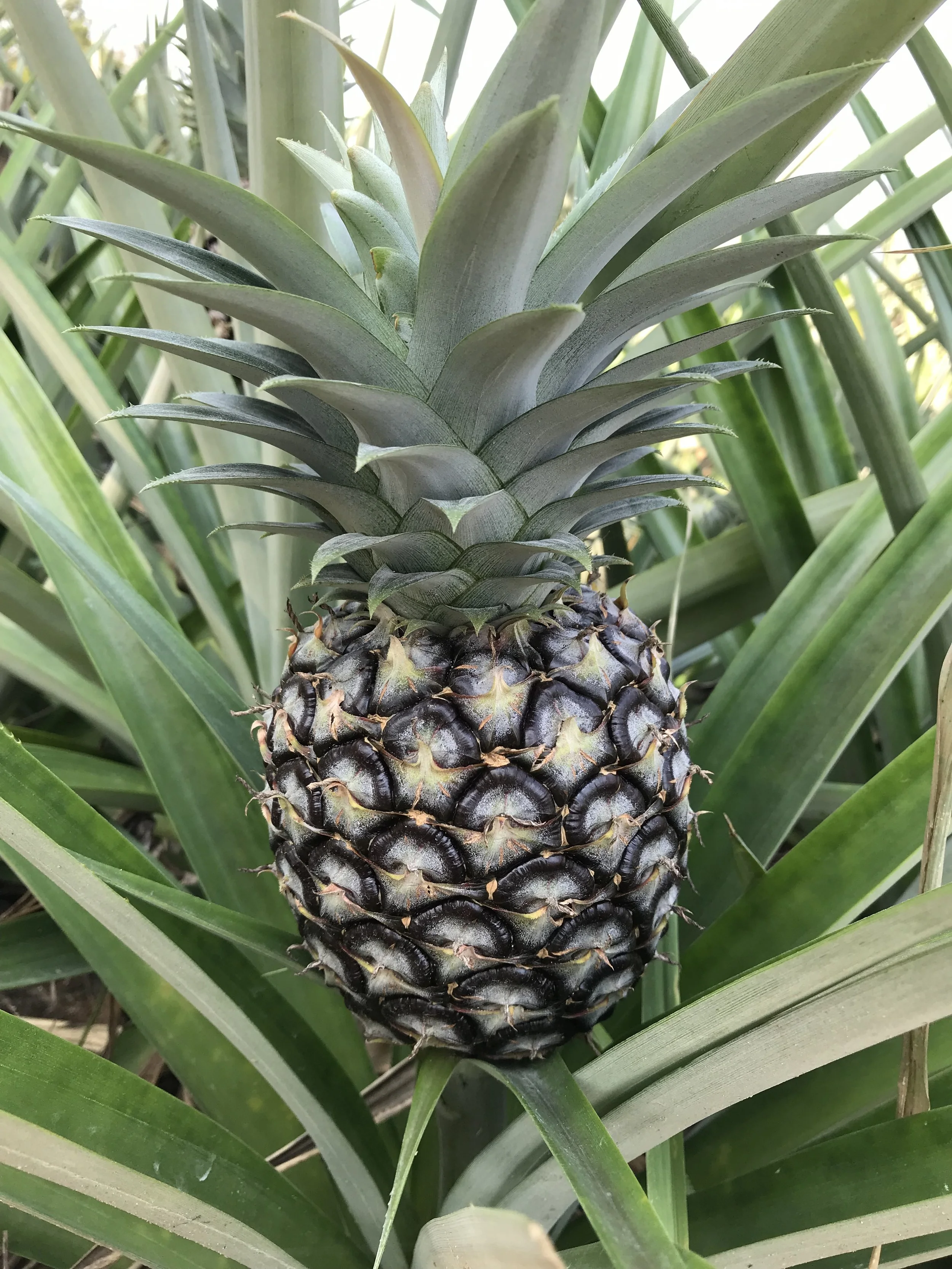
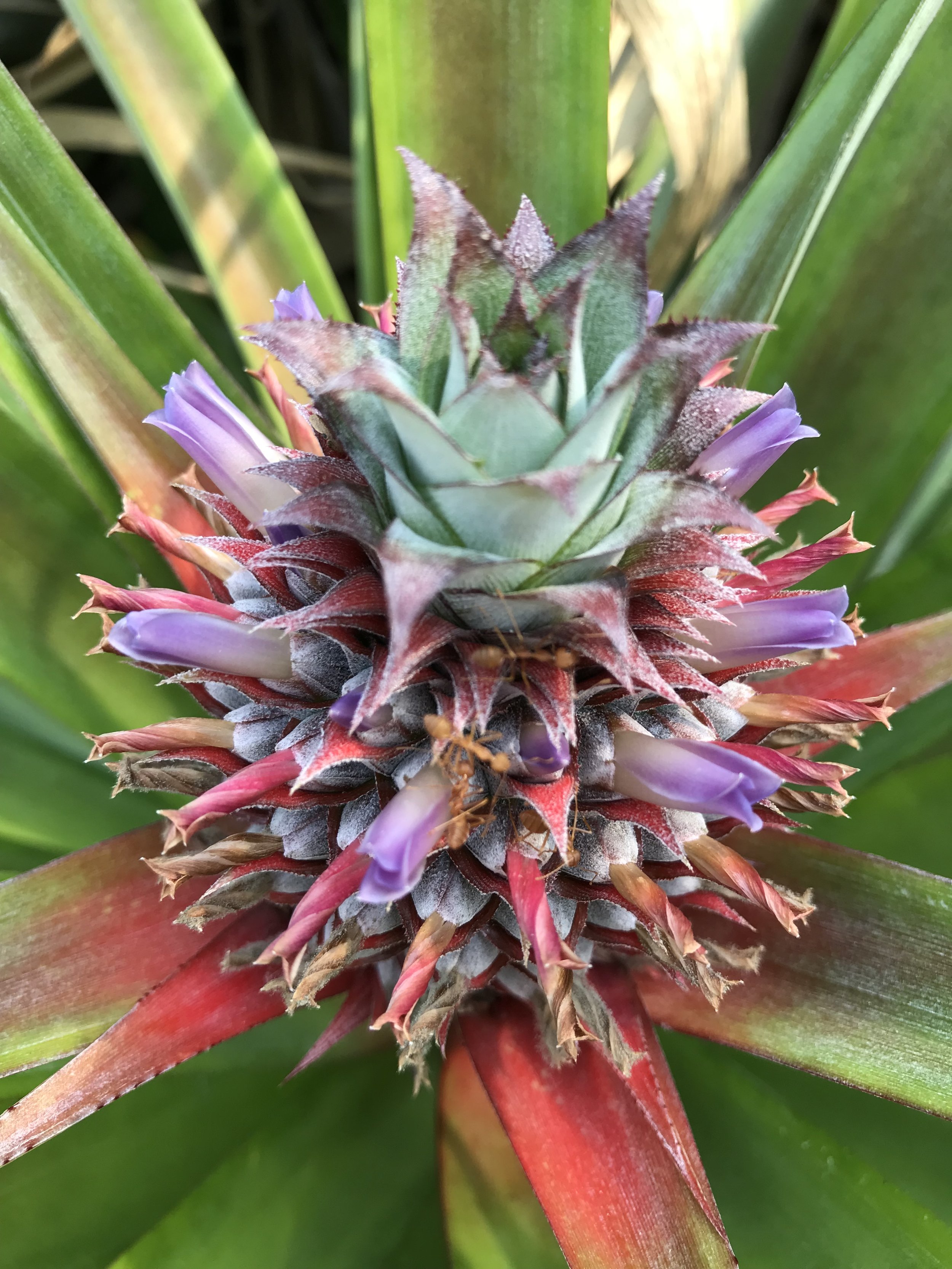
Some places become special because nothing about them is demanding.
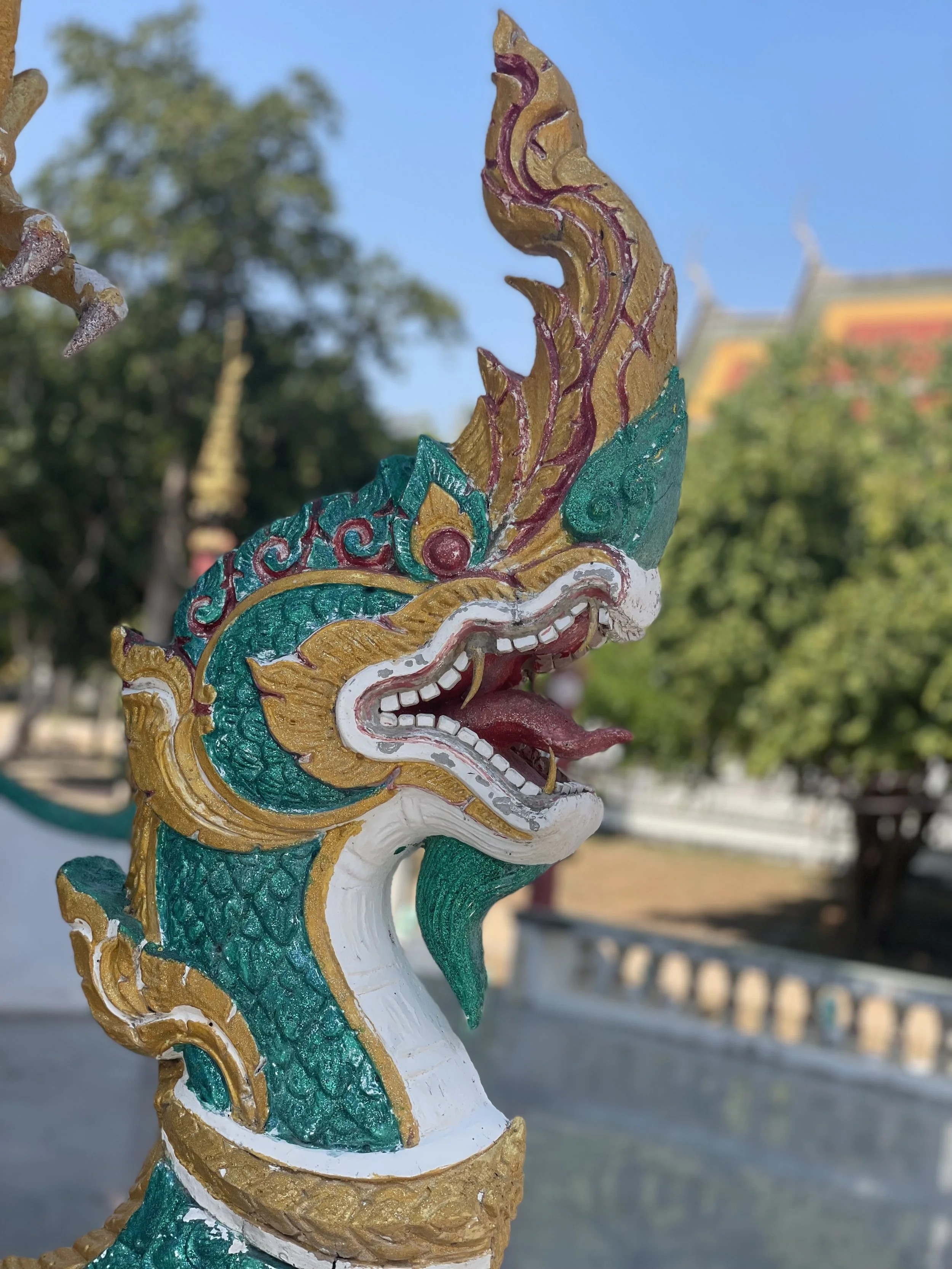
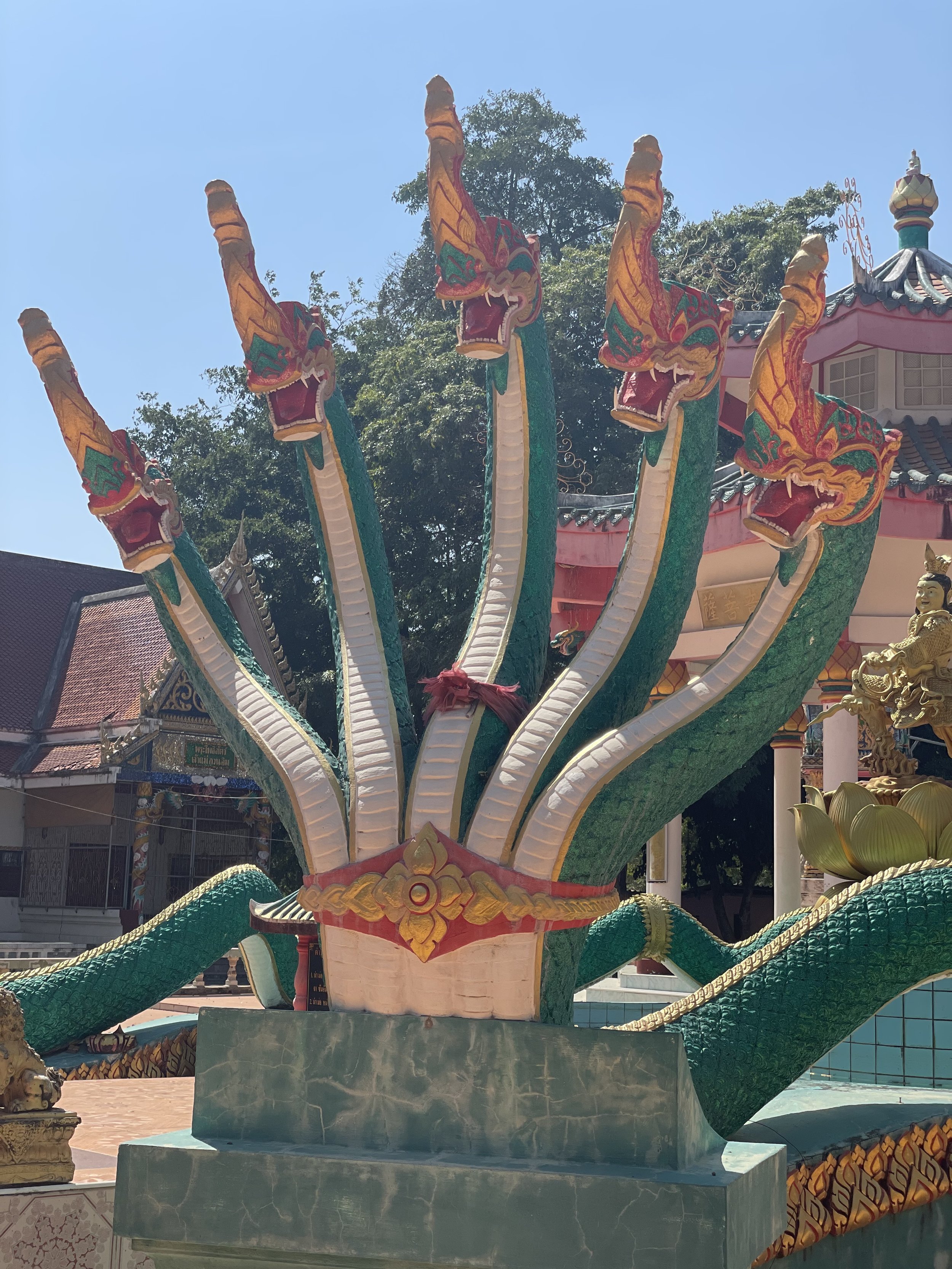
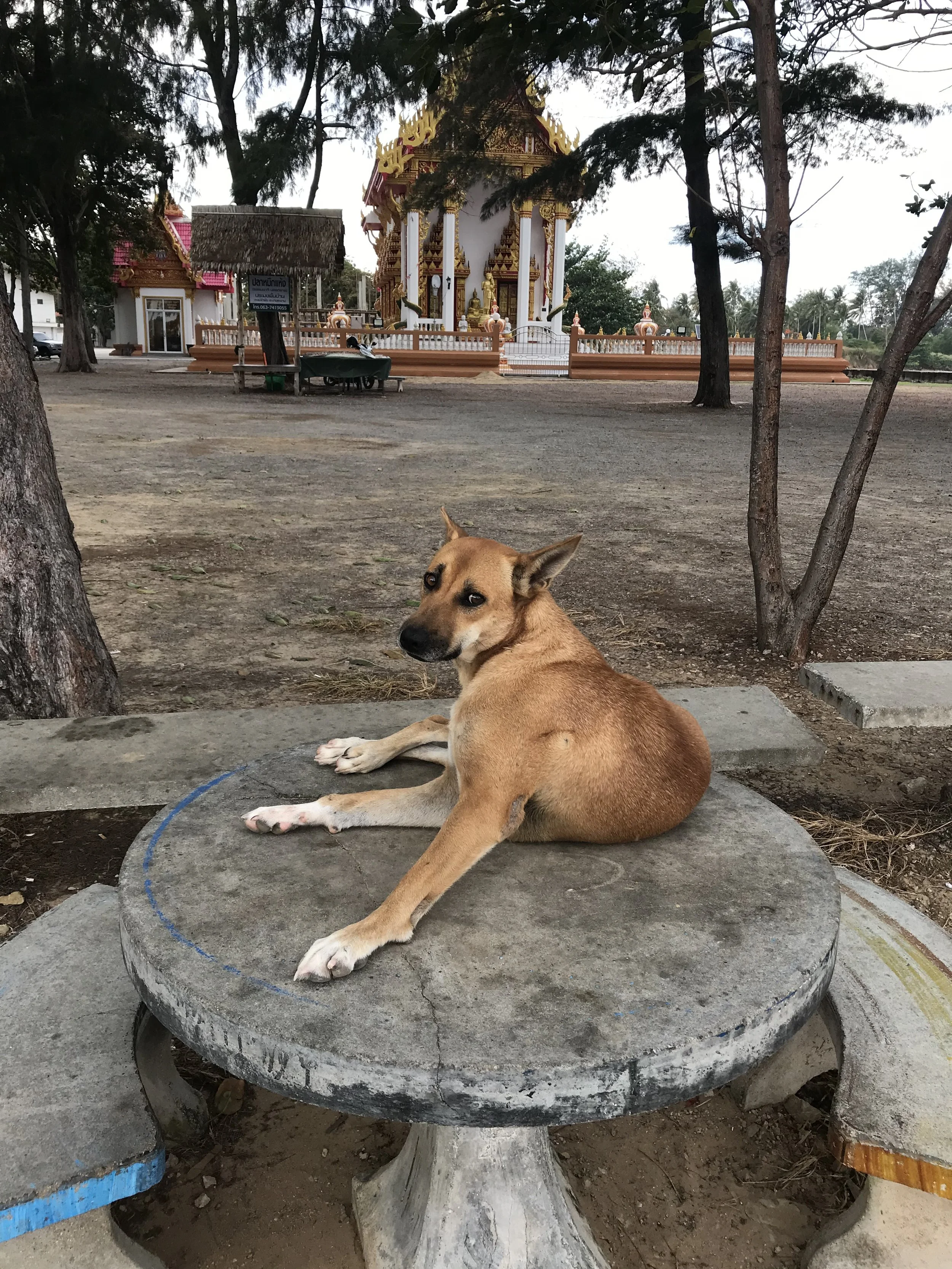
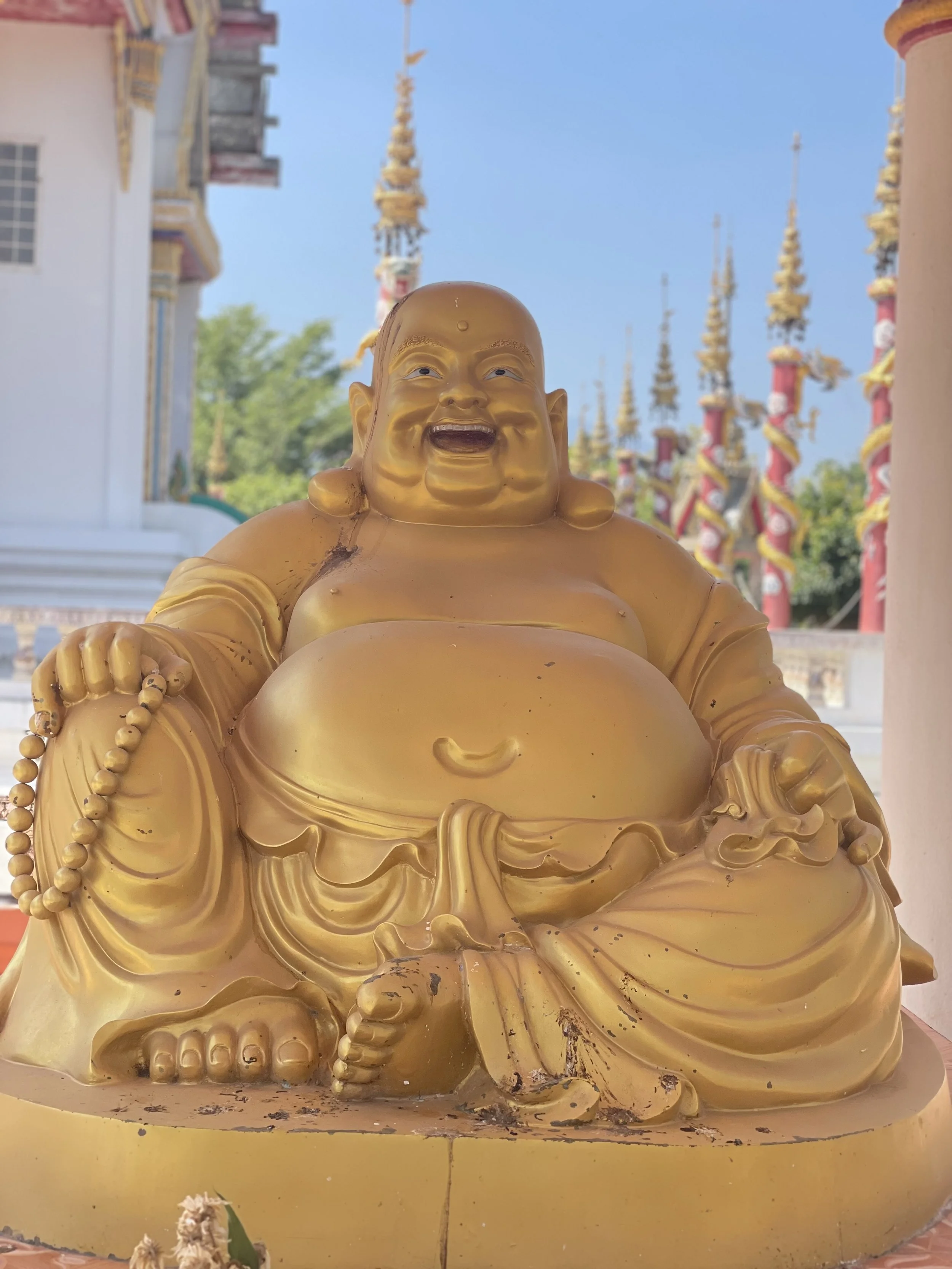
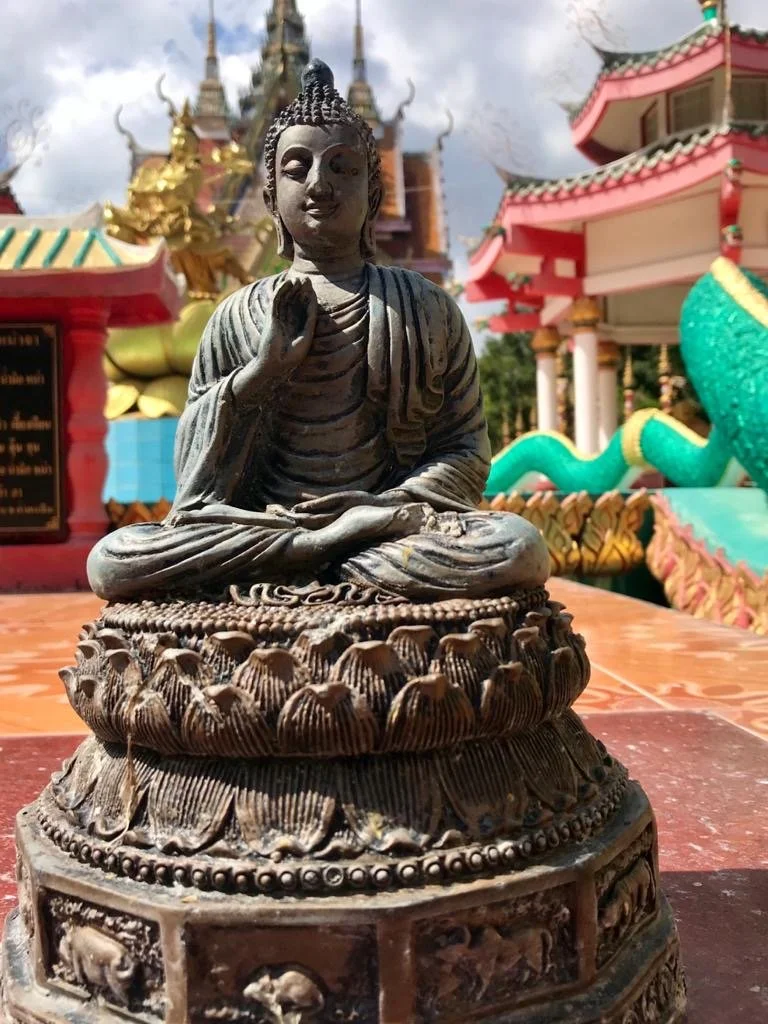
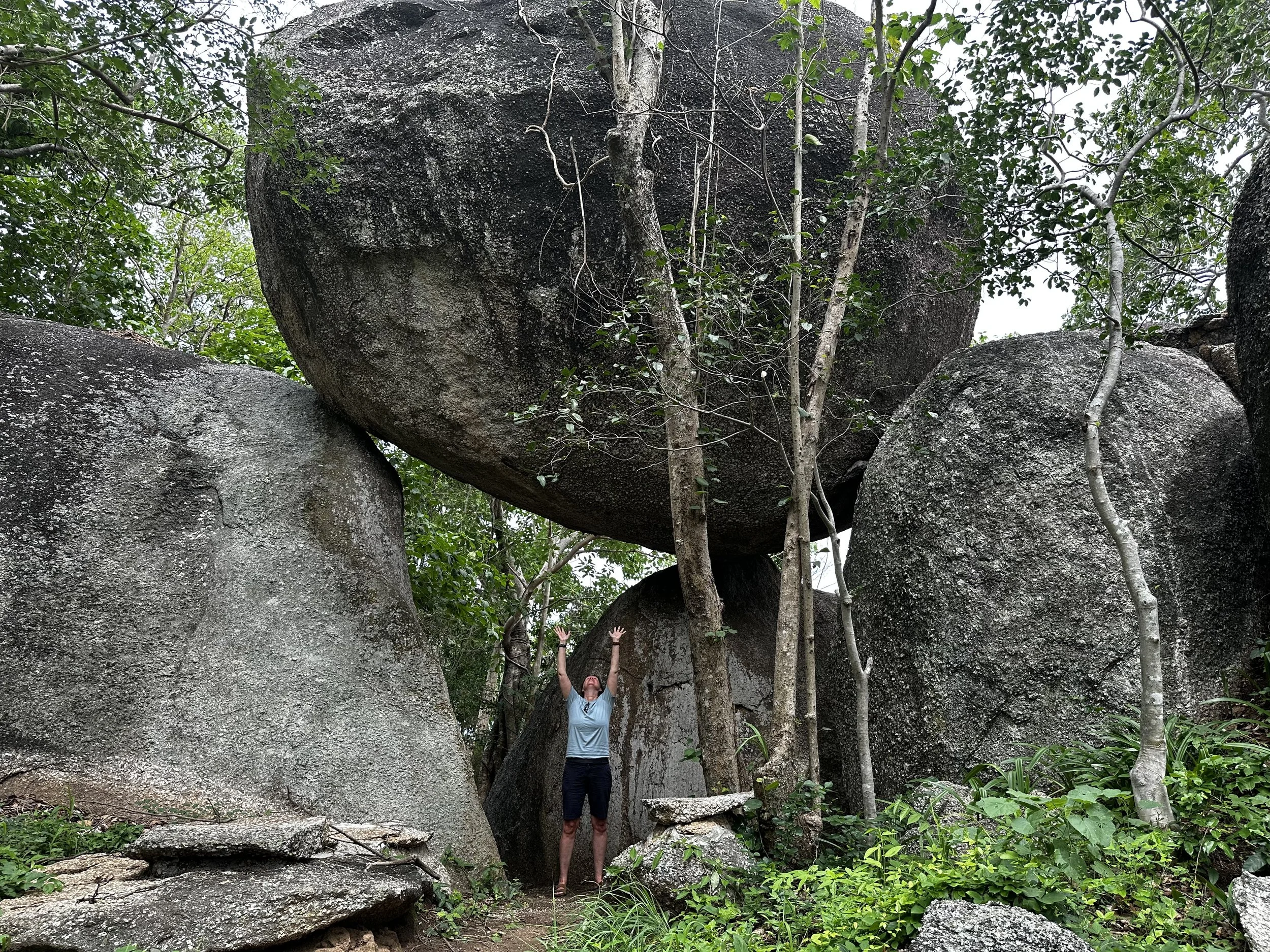
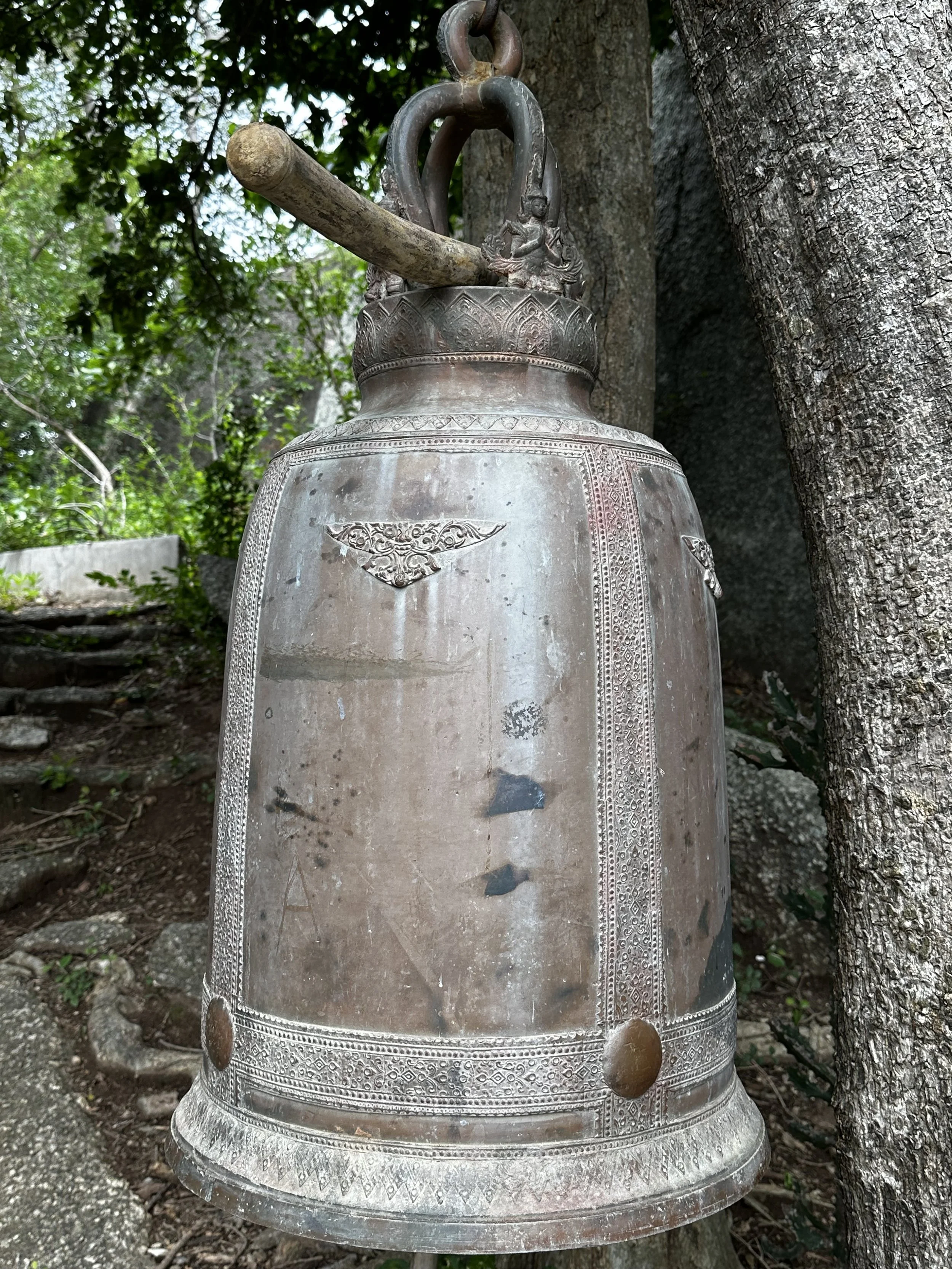
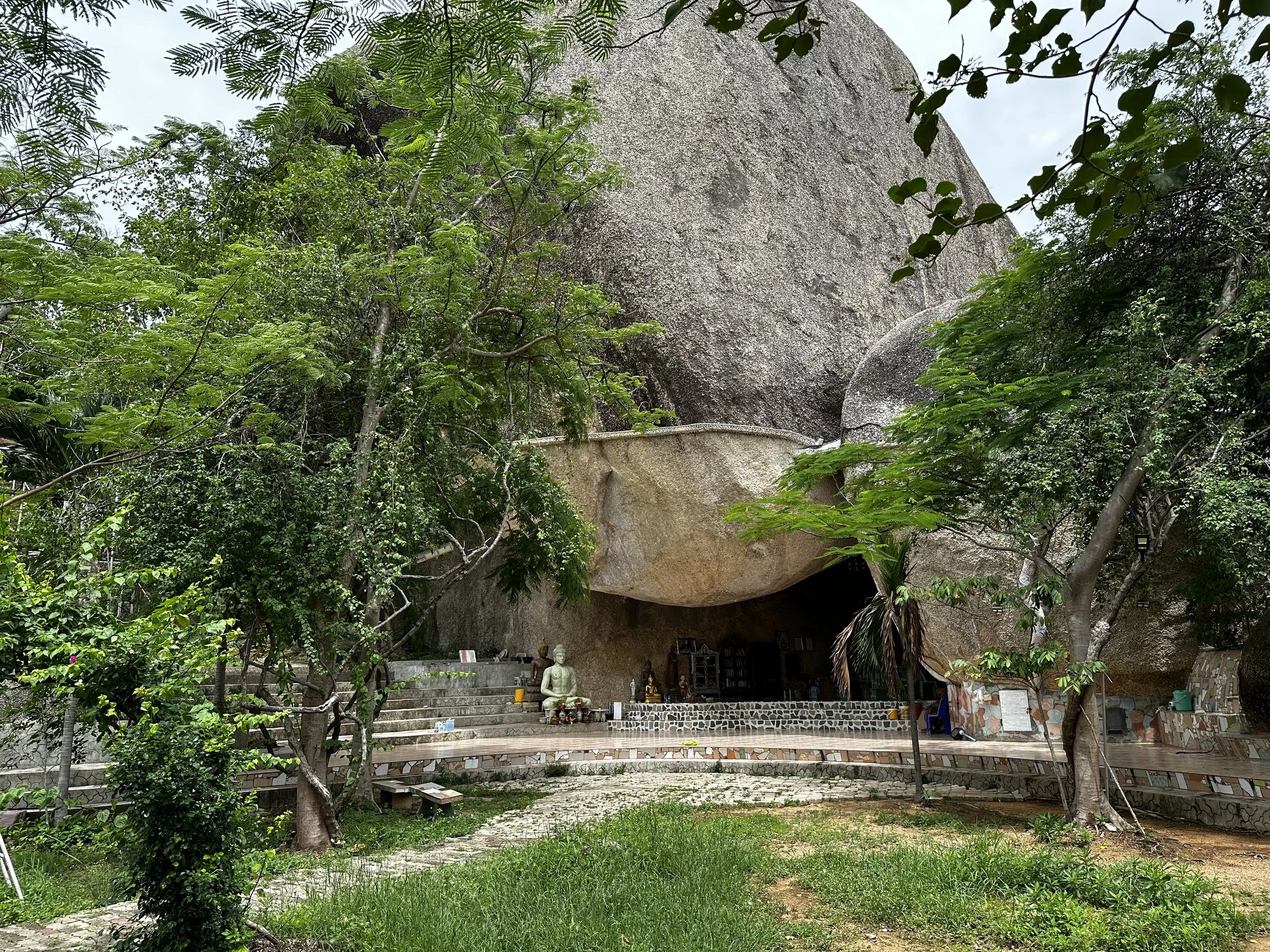
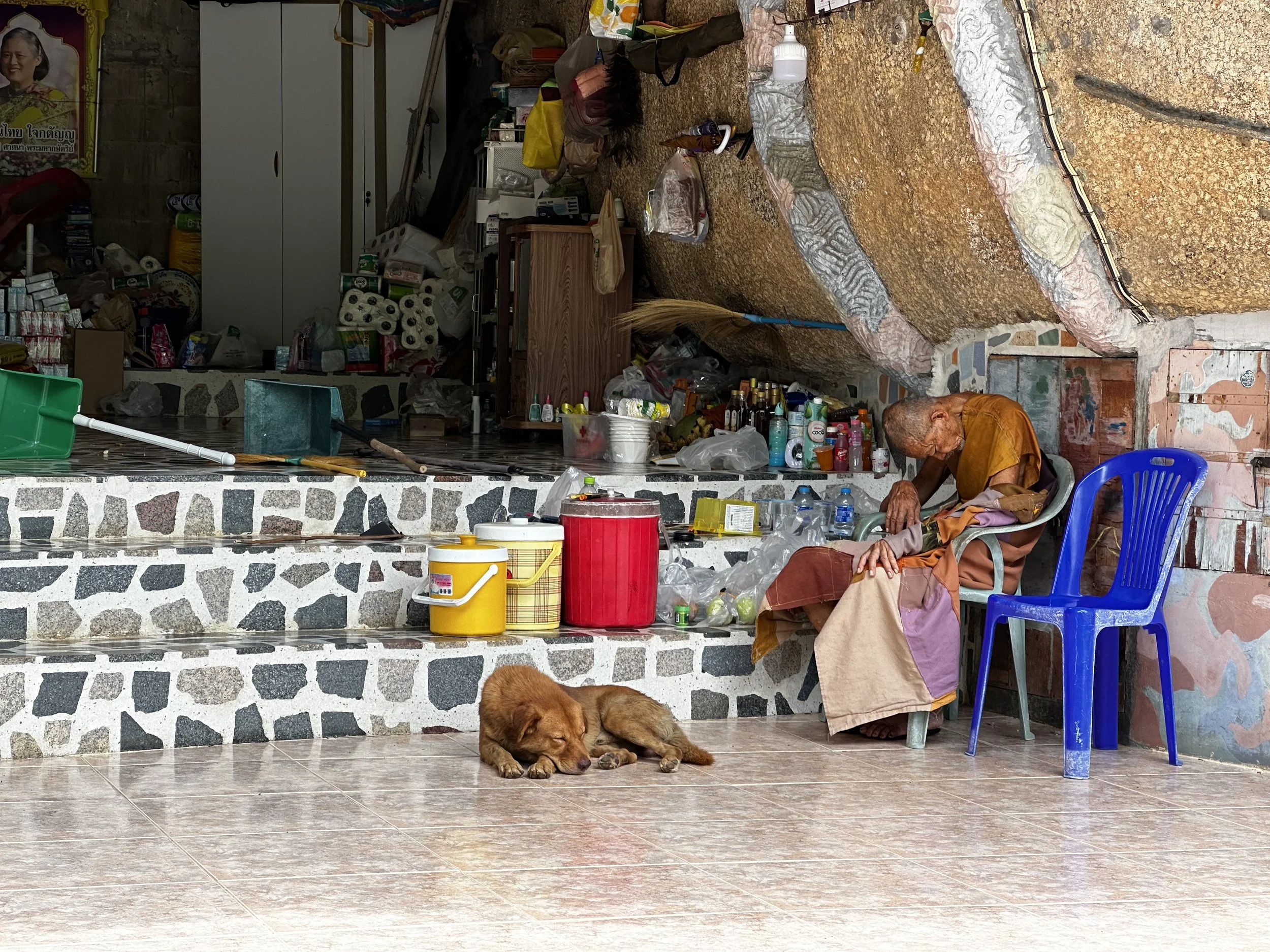
The temples around Huay Yang can feel like that too. A road turns. A roof appears. A Buddha image rises against the sky. We stop, walk around, and often we are by ourselves. No ticket queue. No guide. No crowd. Just heat, stone, silence, a dog sleeping nearby, and the feeling of being allowed to pass through respectfully.
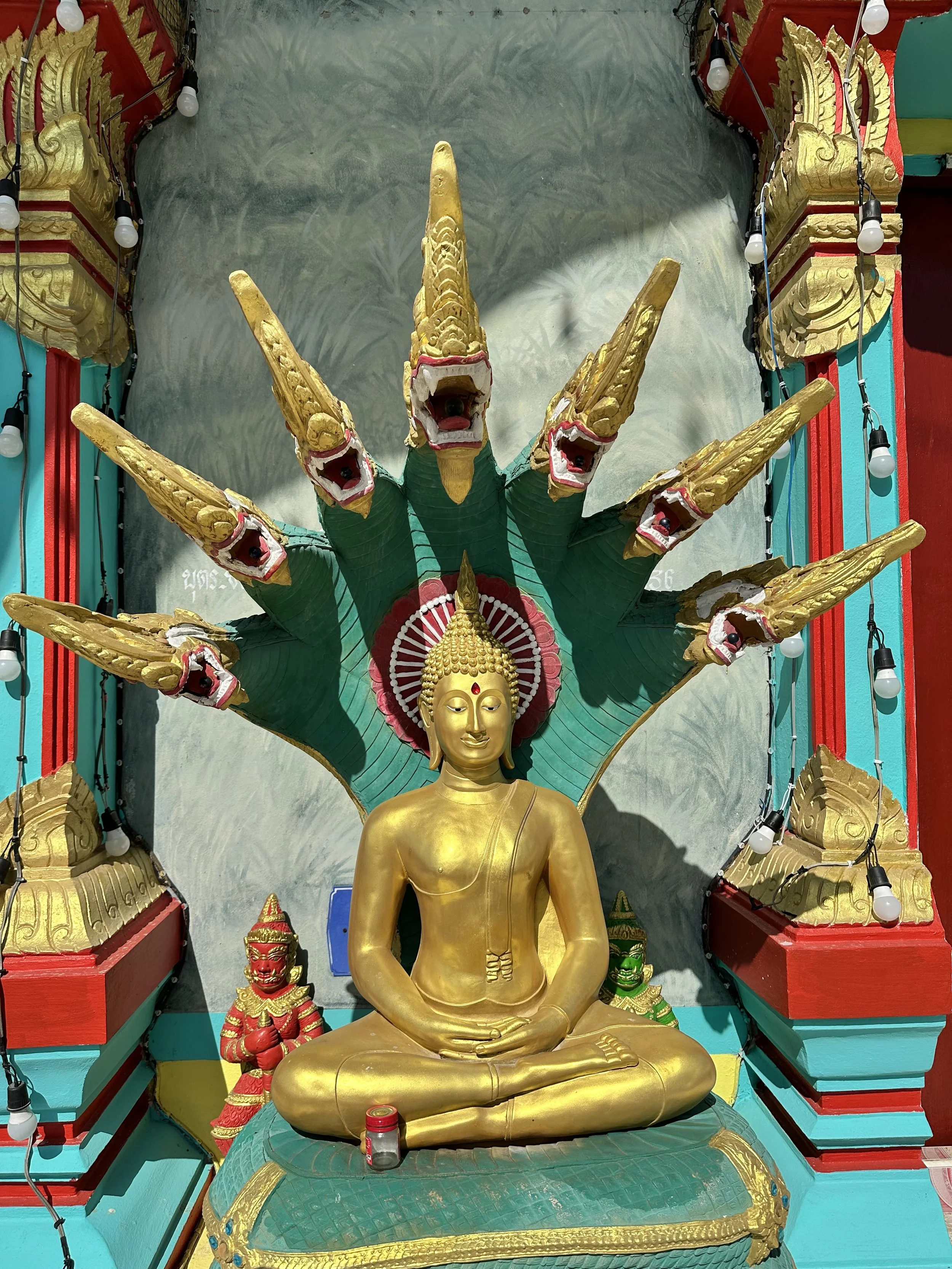
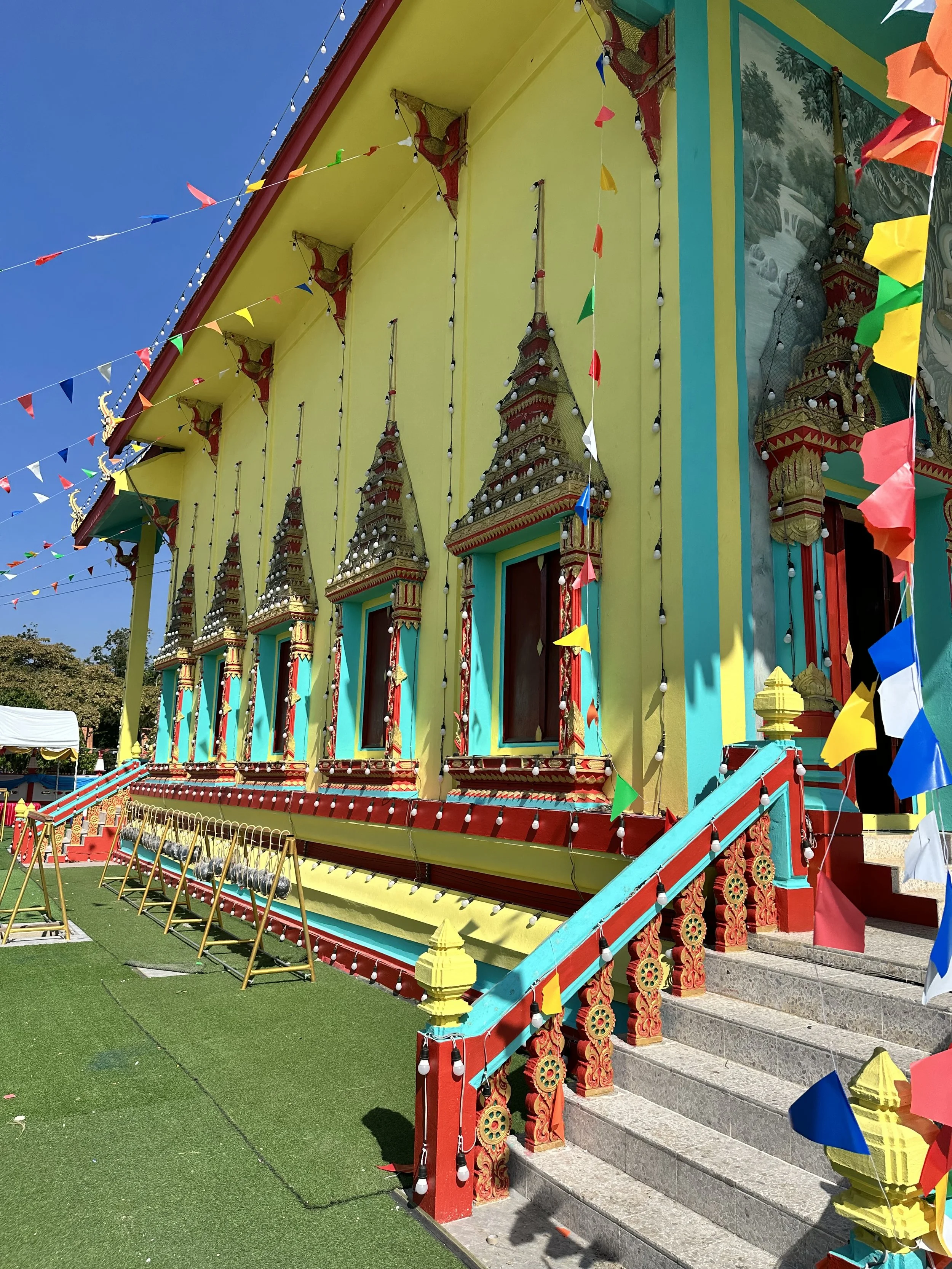
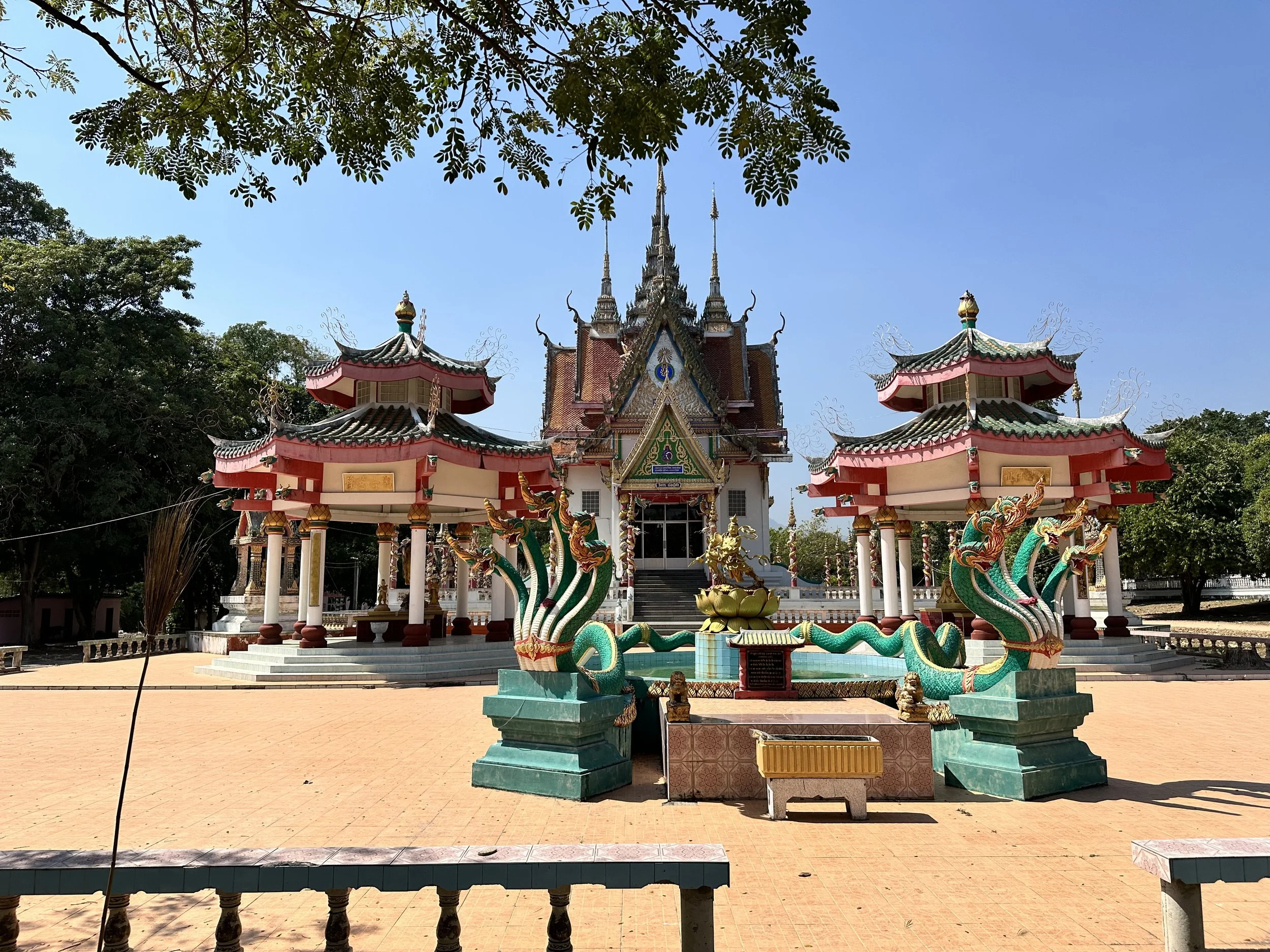
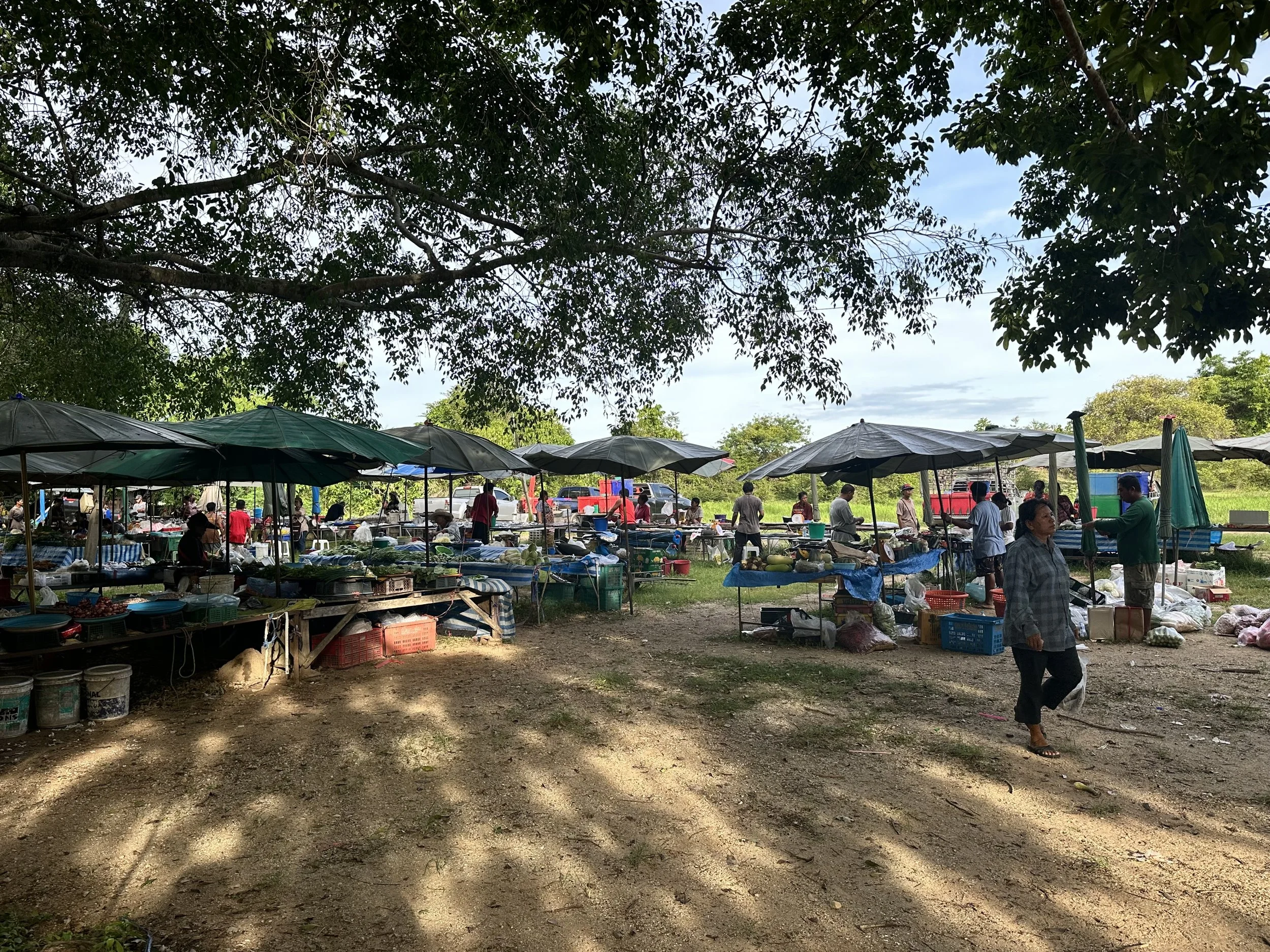
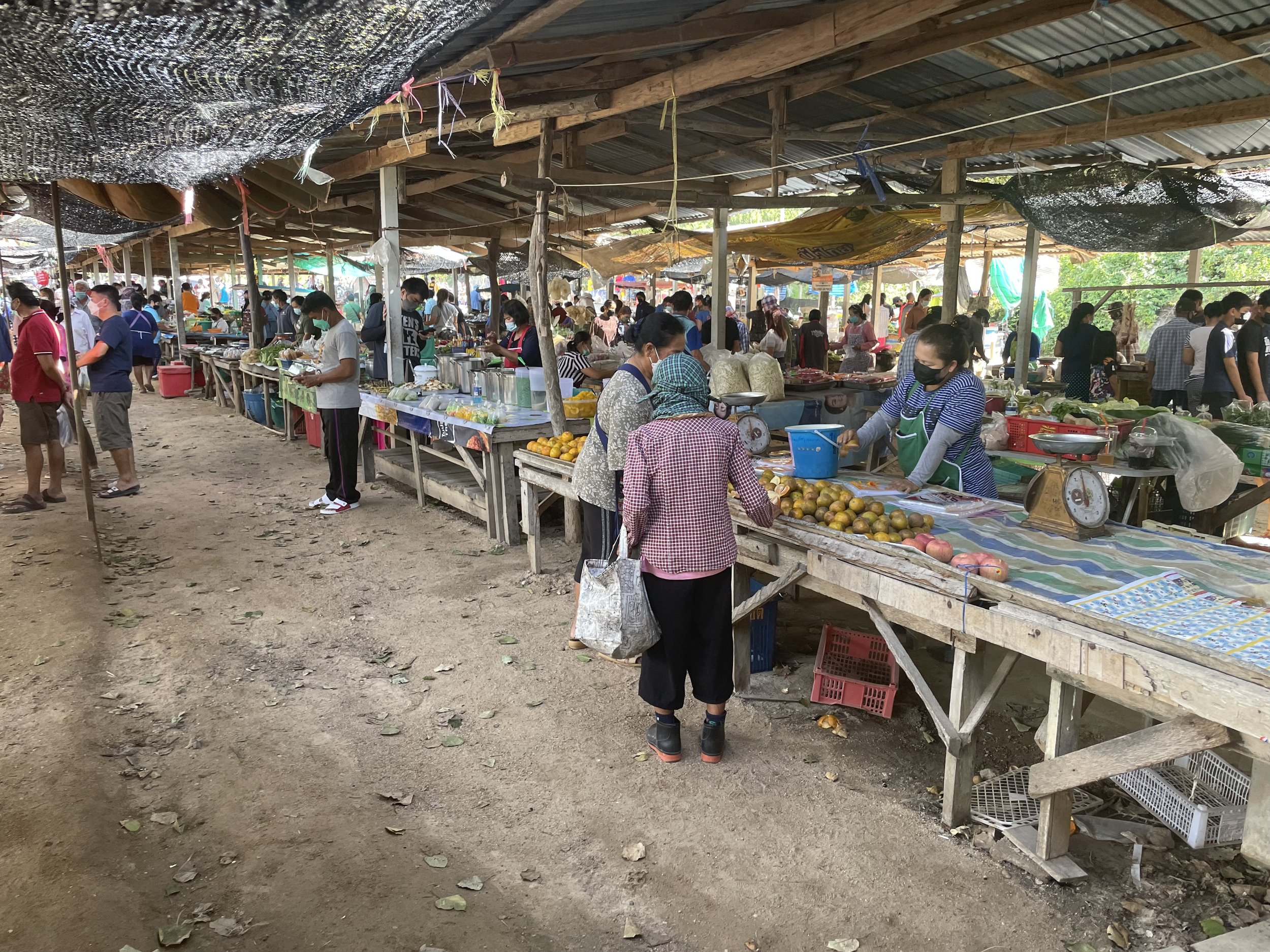
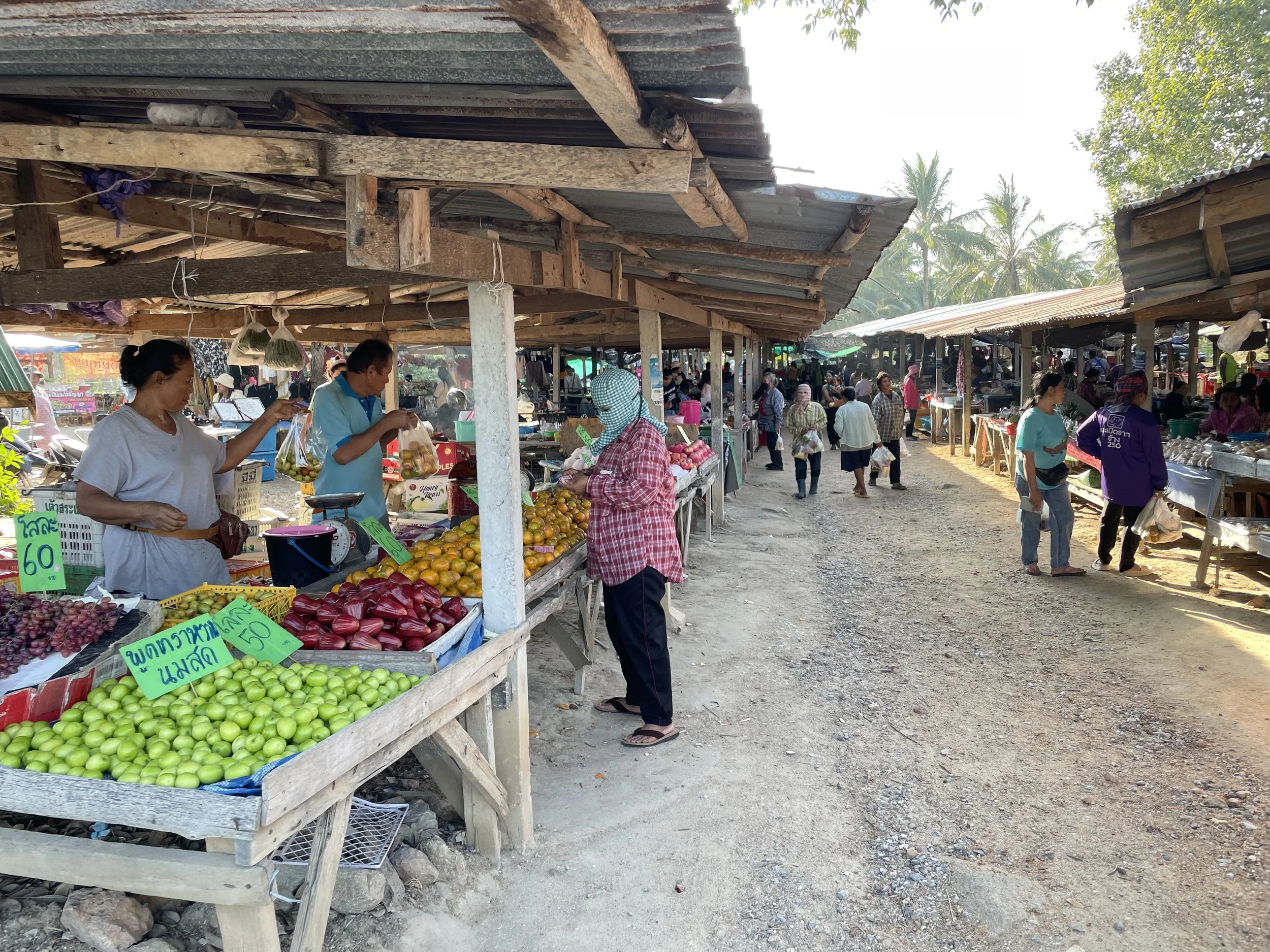
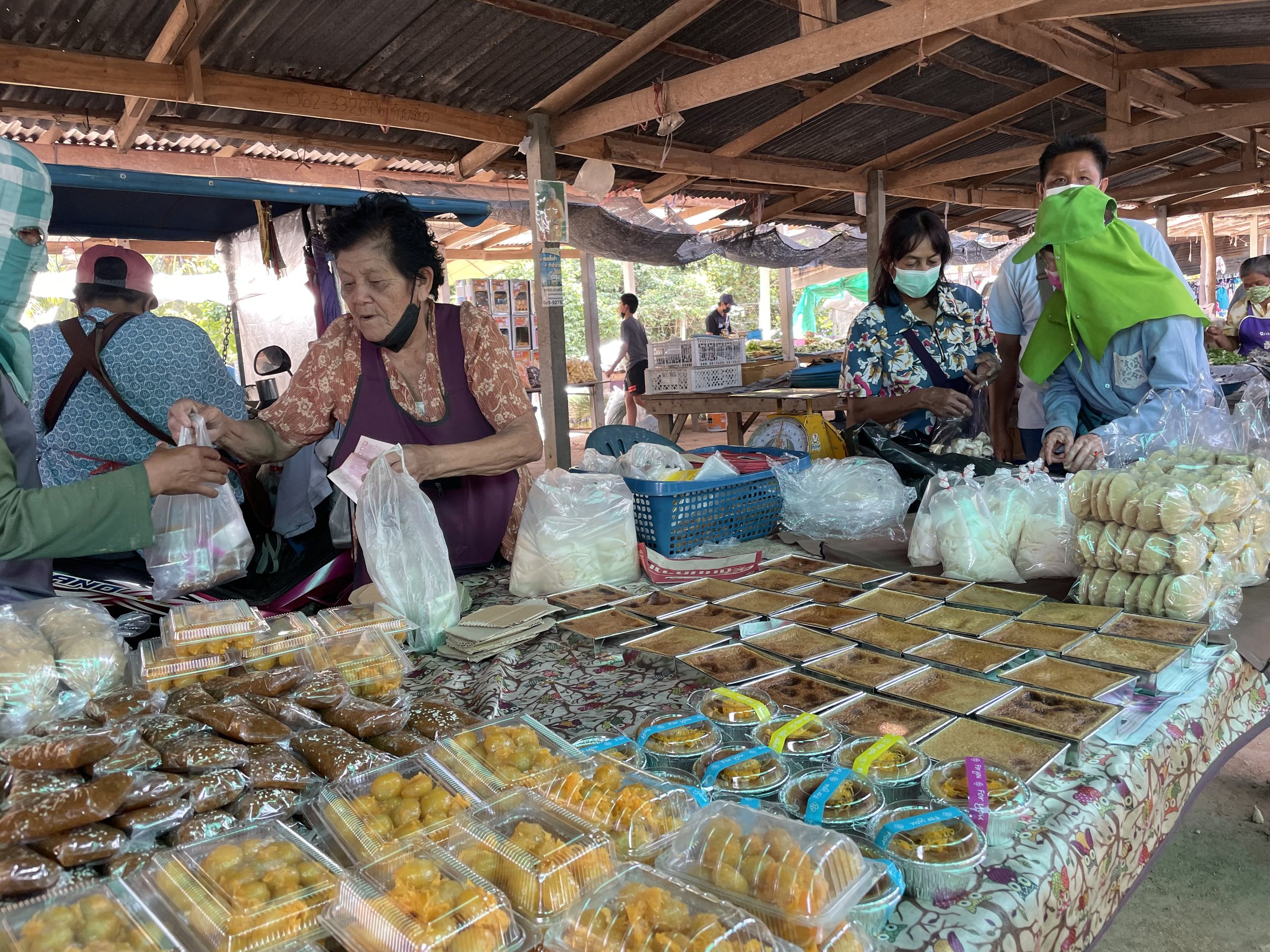
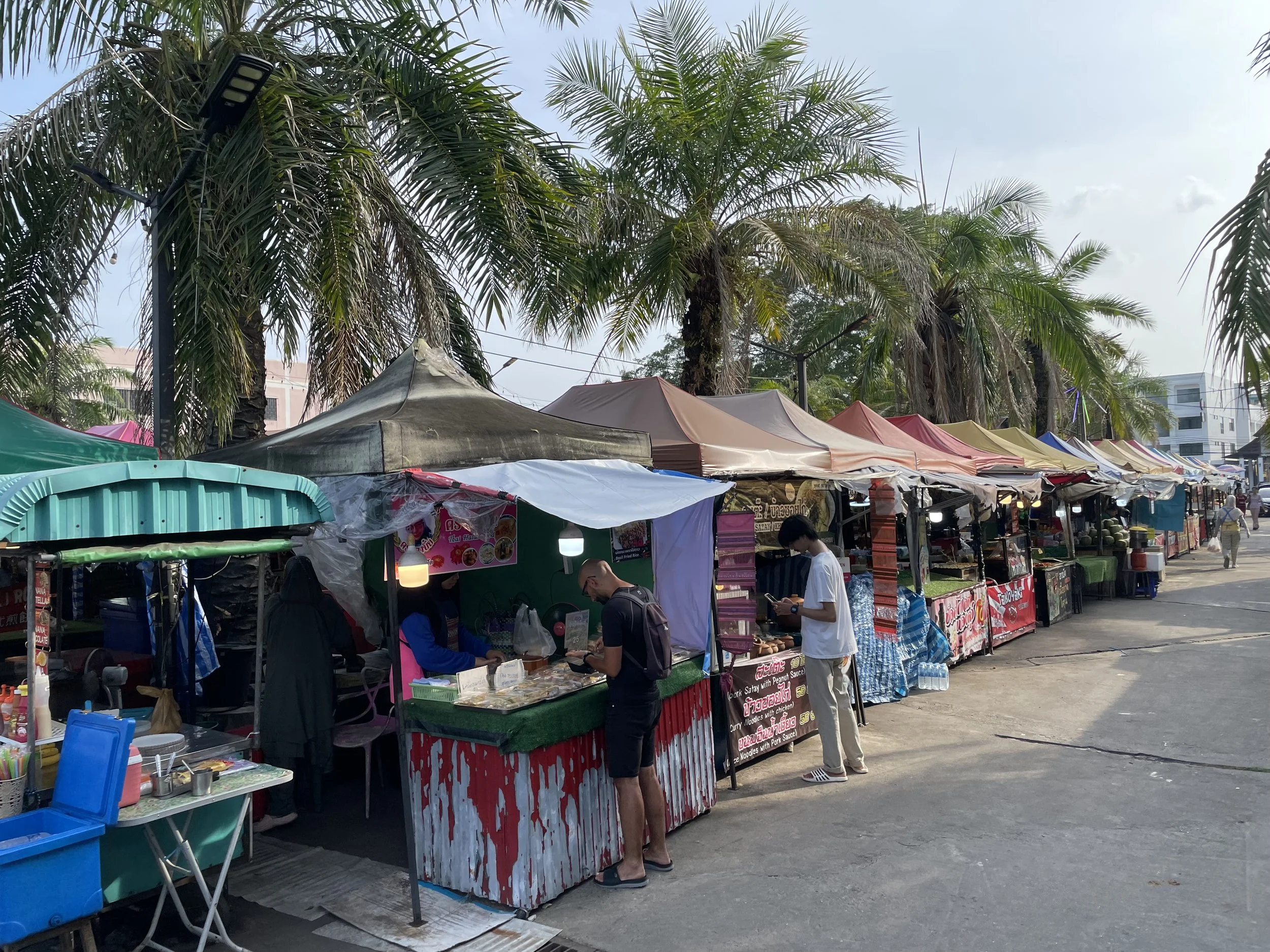
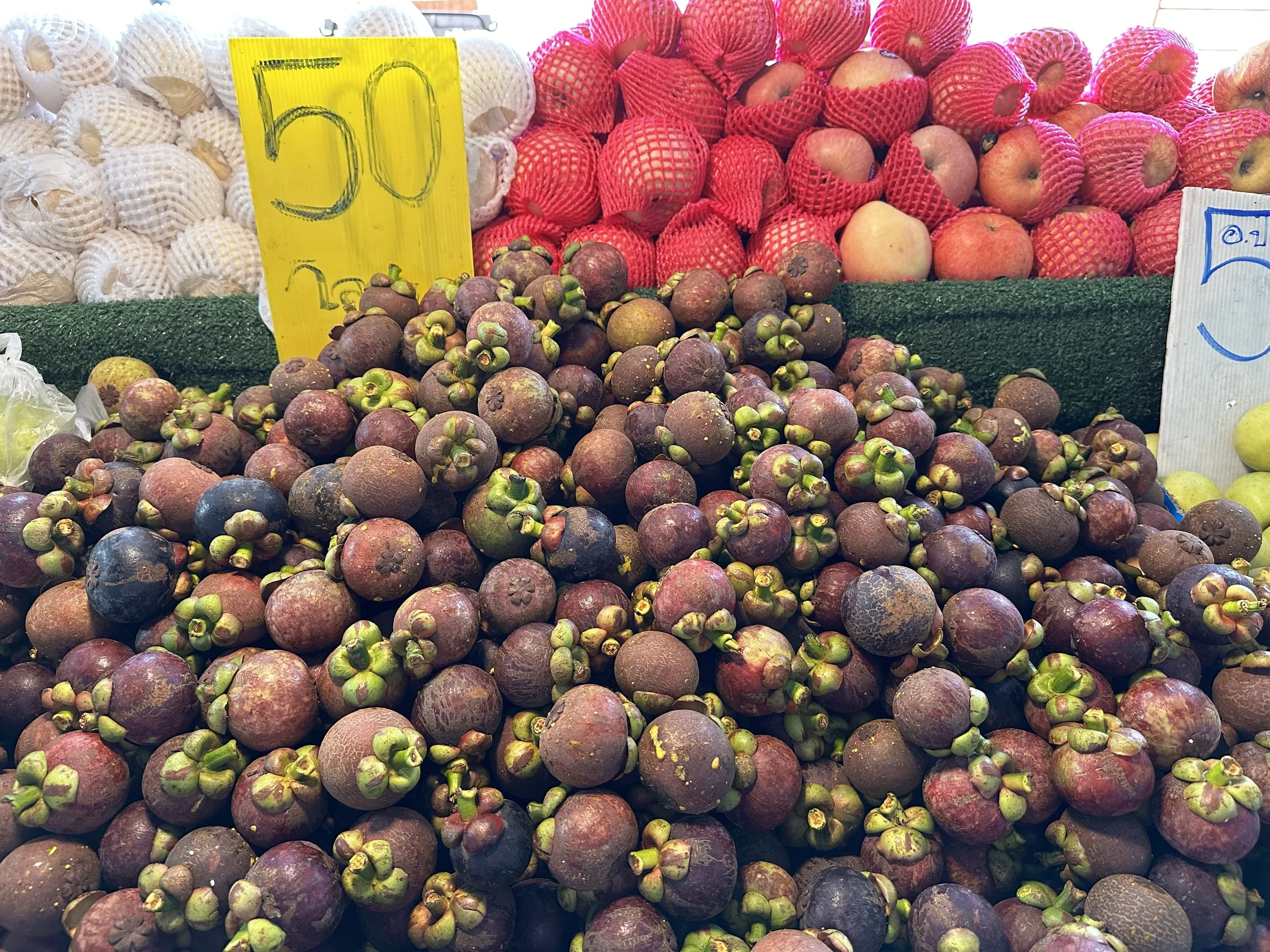
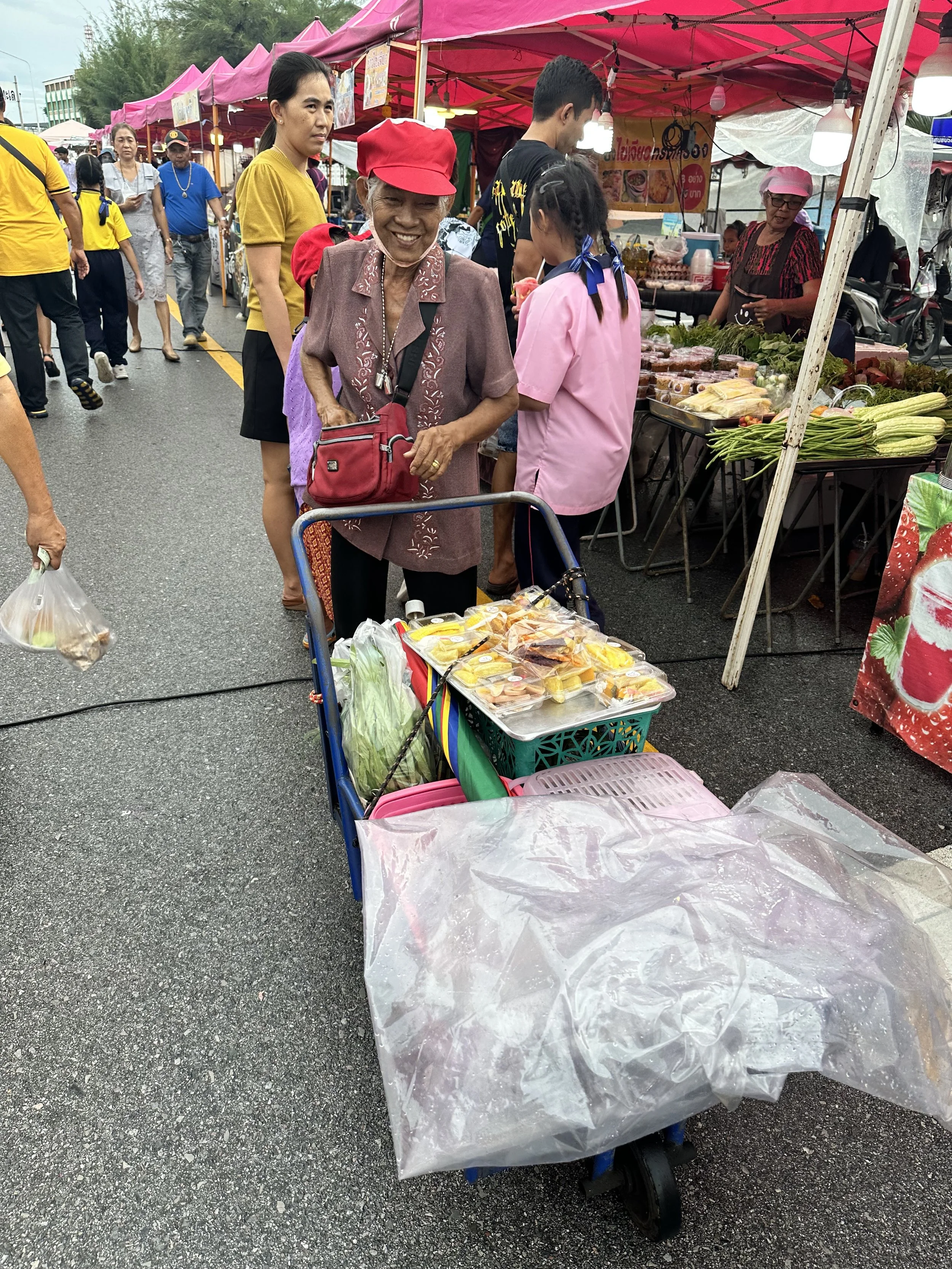
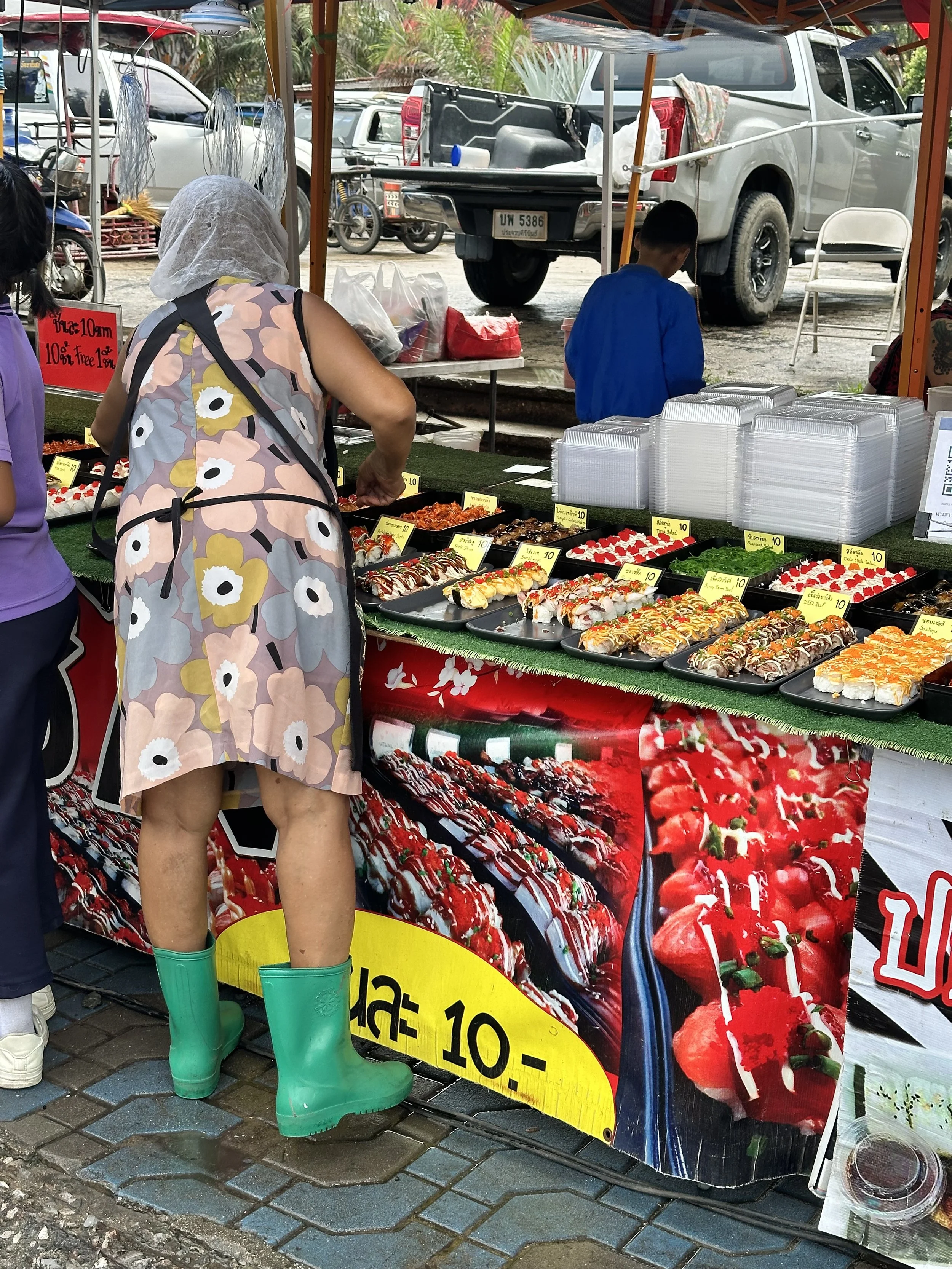
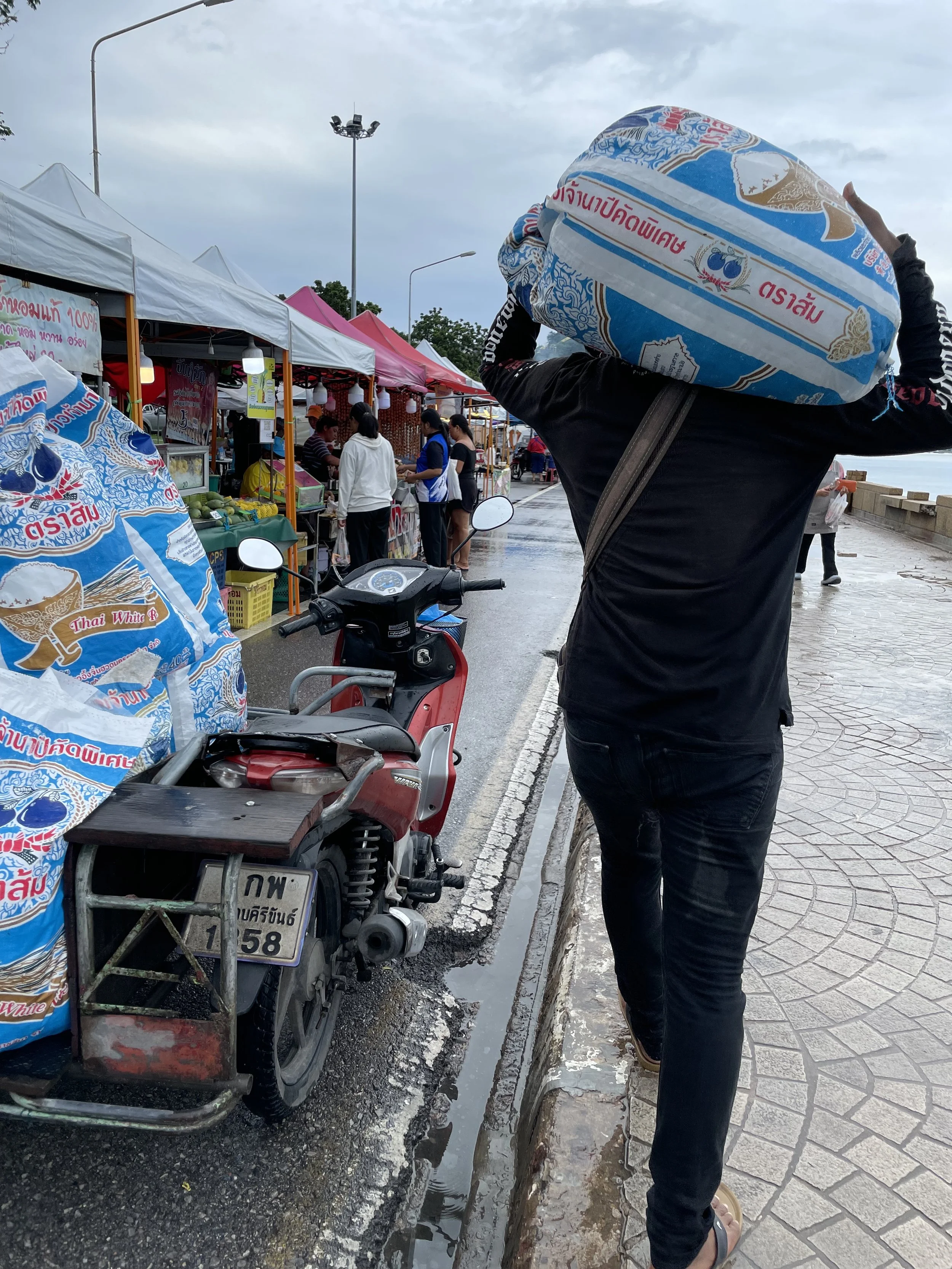
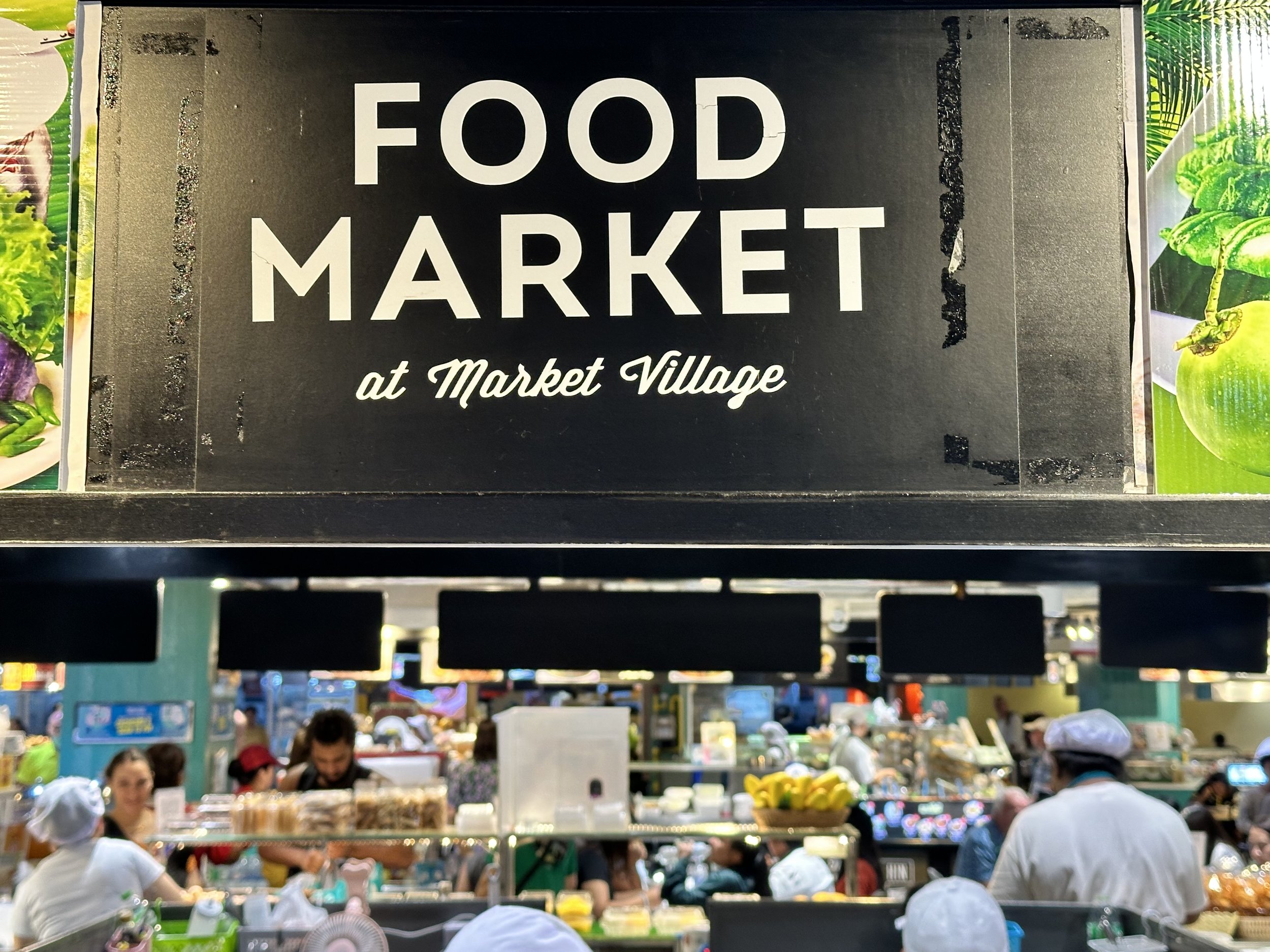
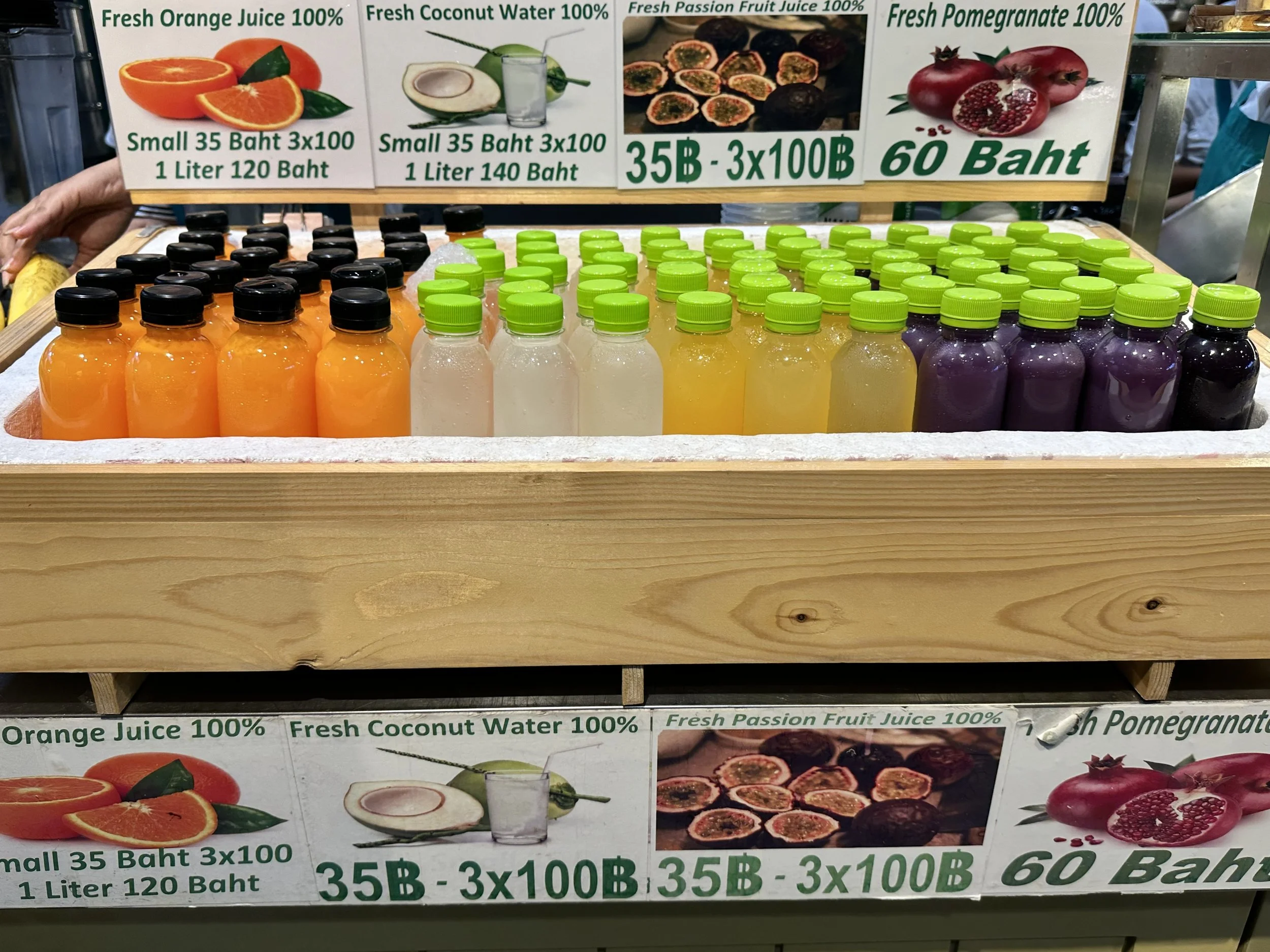
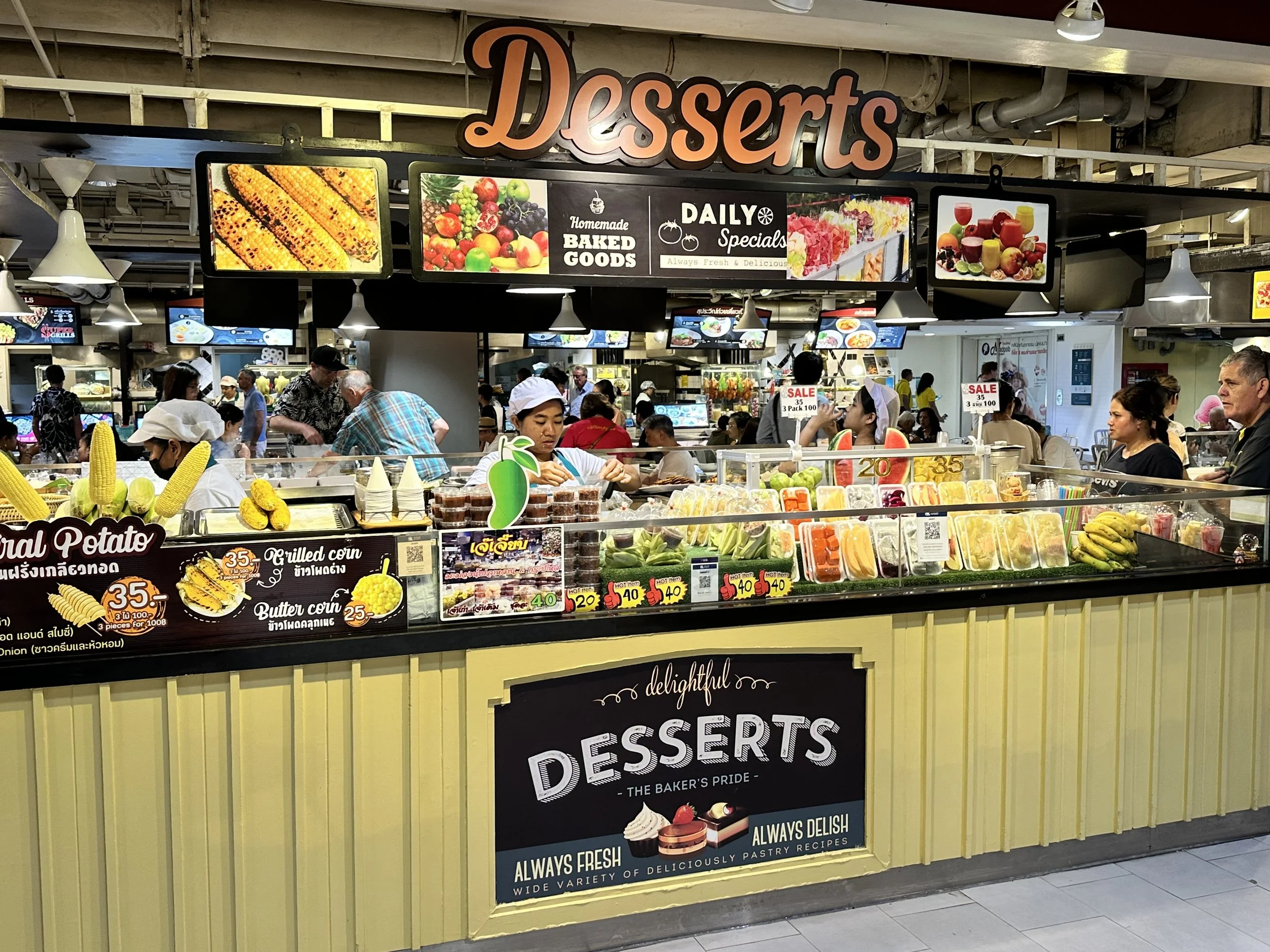
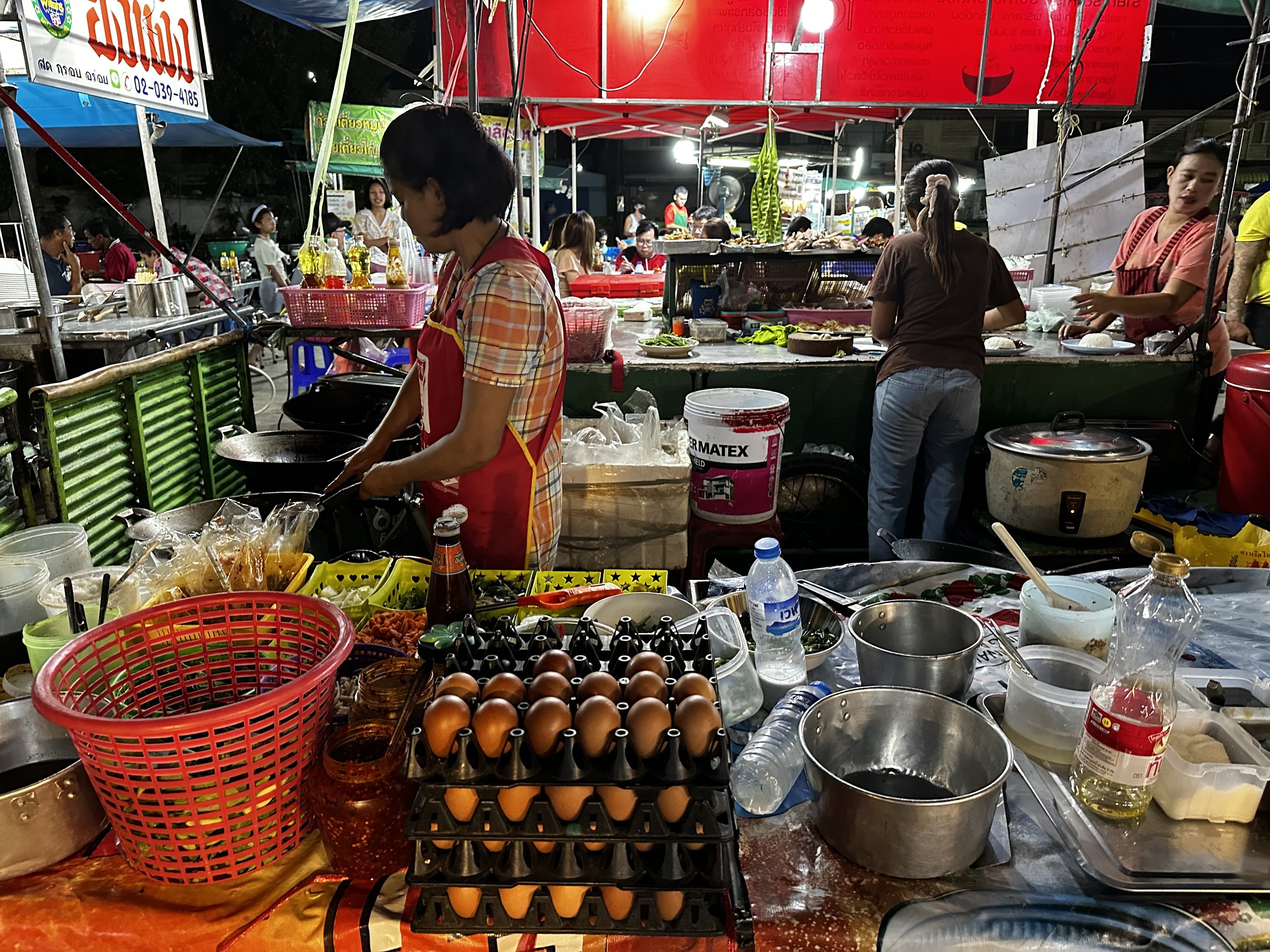
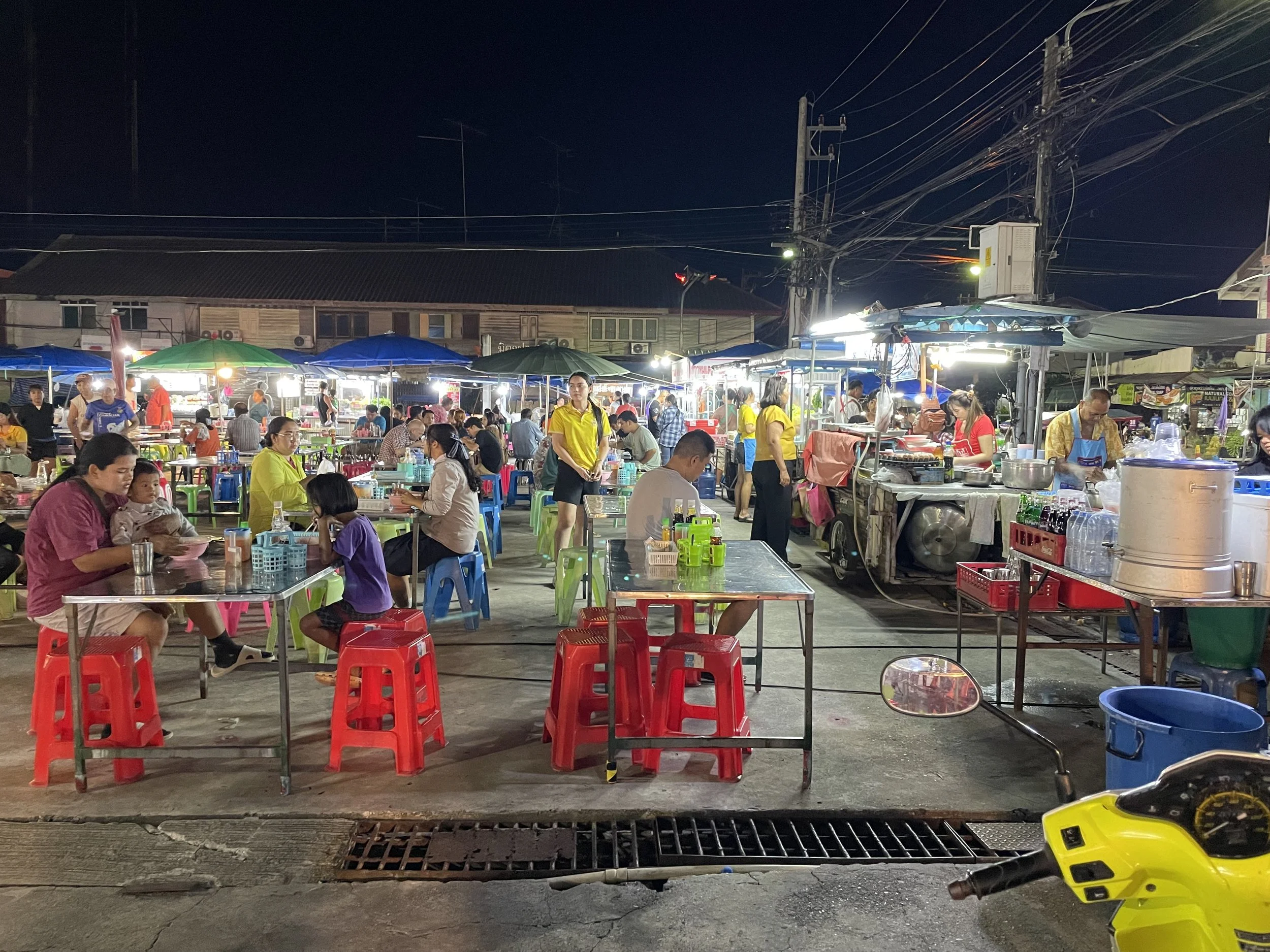
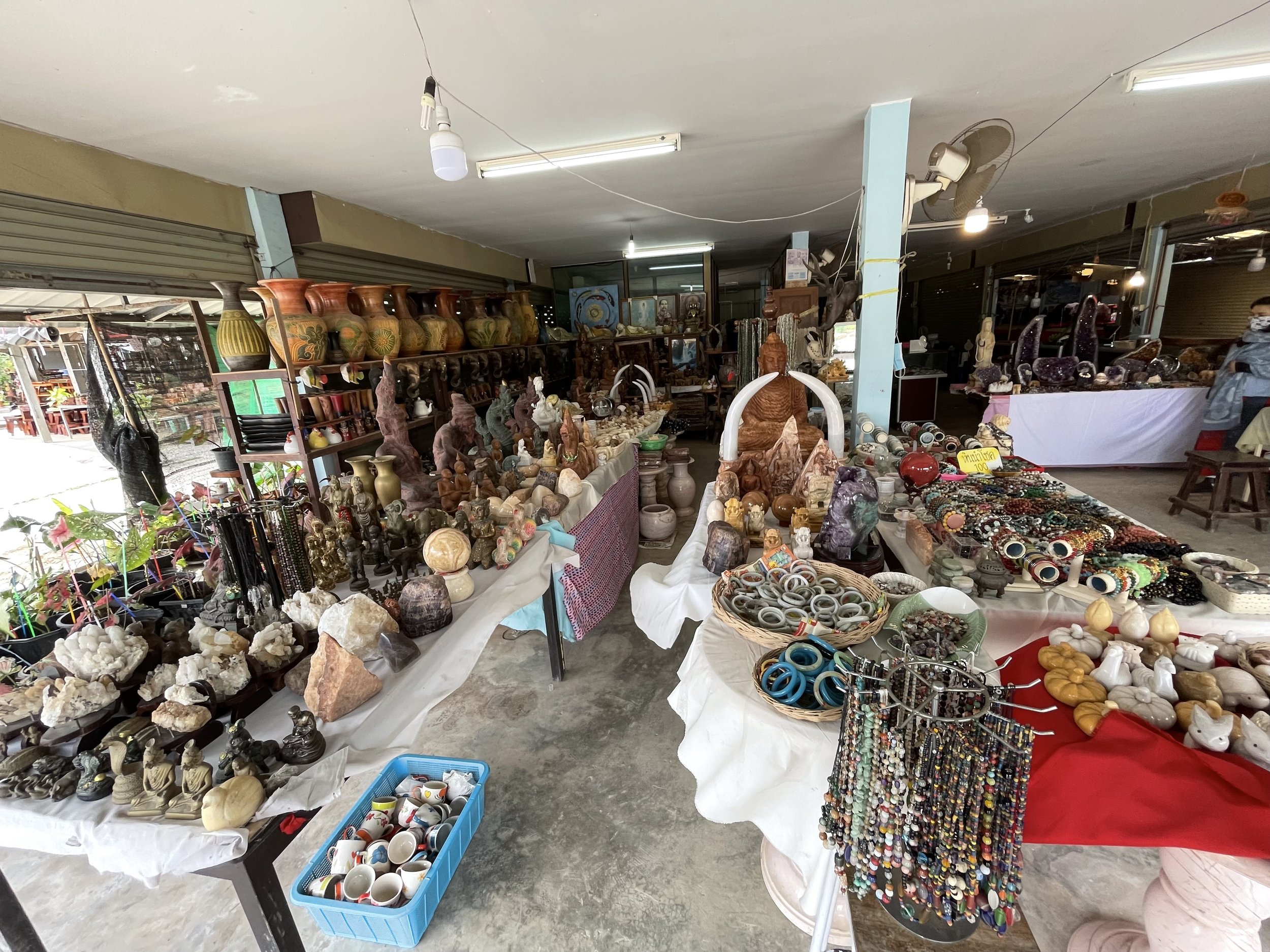
On other days we take small roads and end up at a local market where we do not really fit in. Menus are in Thai. English disappears. People buy what they came to buy, not what someone thought tourists might want. We look, try, smile, point, misunderstand a little, and leave with something we did not plan. In Thailand, visiting markets is an absolute high light. From Huay Yang we take day trips to the market in Prachuap Khiri Khan (weekend and night markets), the Talad Dan Sing Khon Border Market. It is a wonderful experience to drive the small roads to the Myanmar border and experience this market. (Open hours vary). In Hua Hin there are many markets, both indoor and outdoors. At Market Village there is an indoor food court well worth a visit.
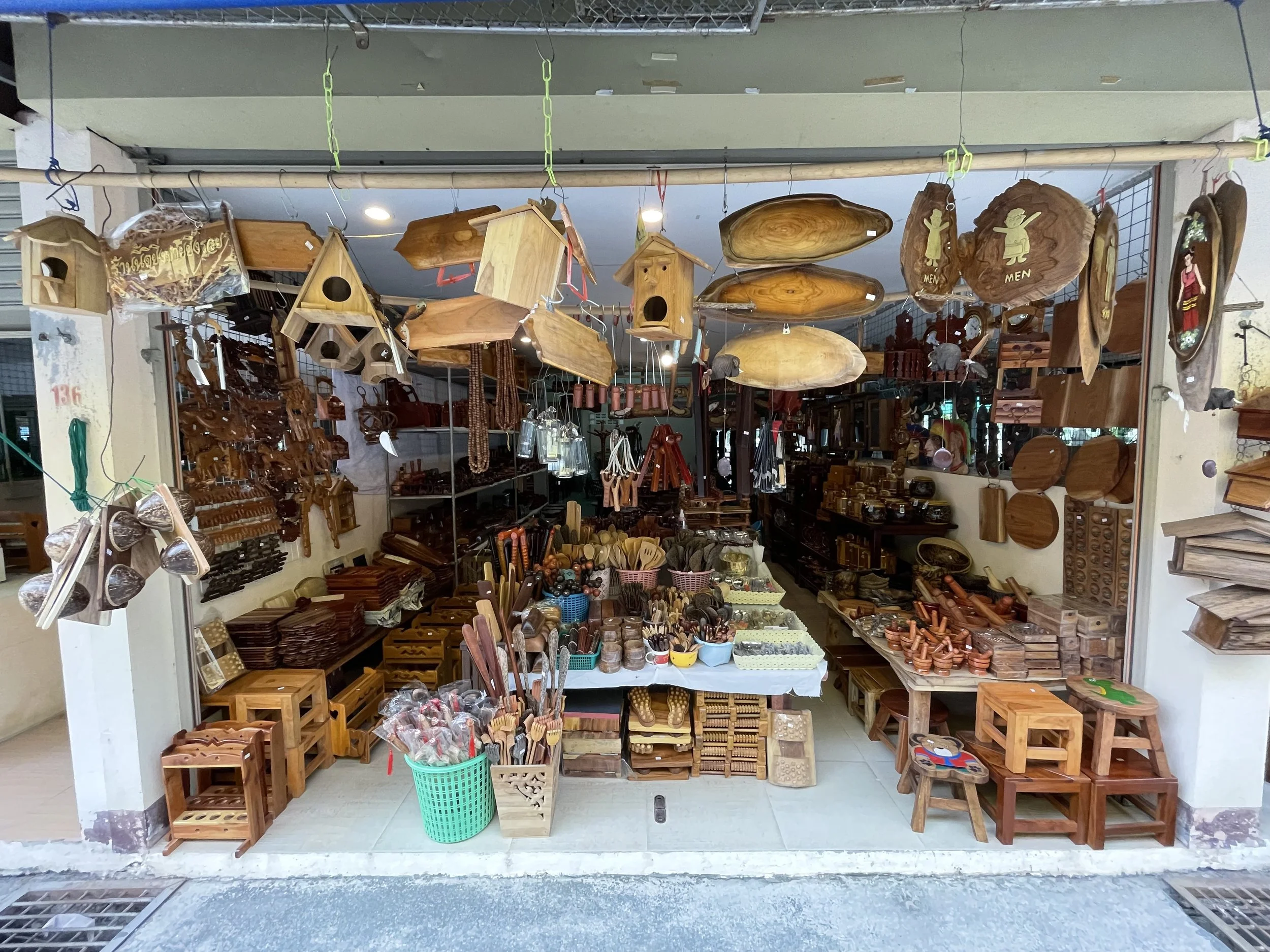
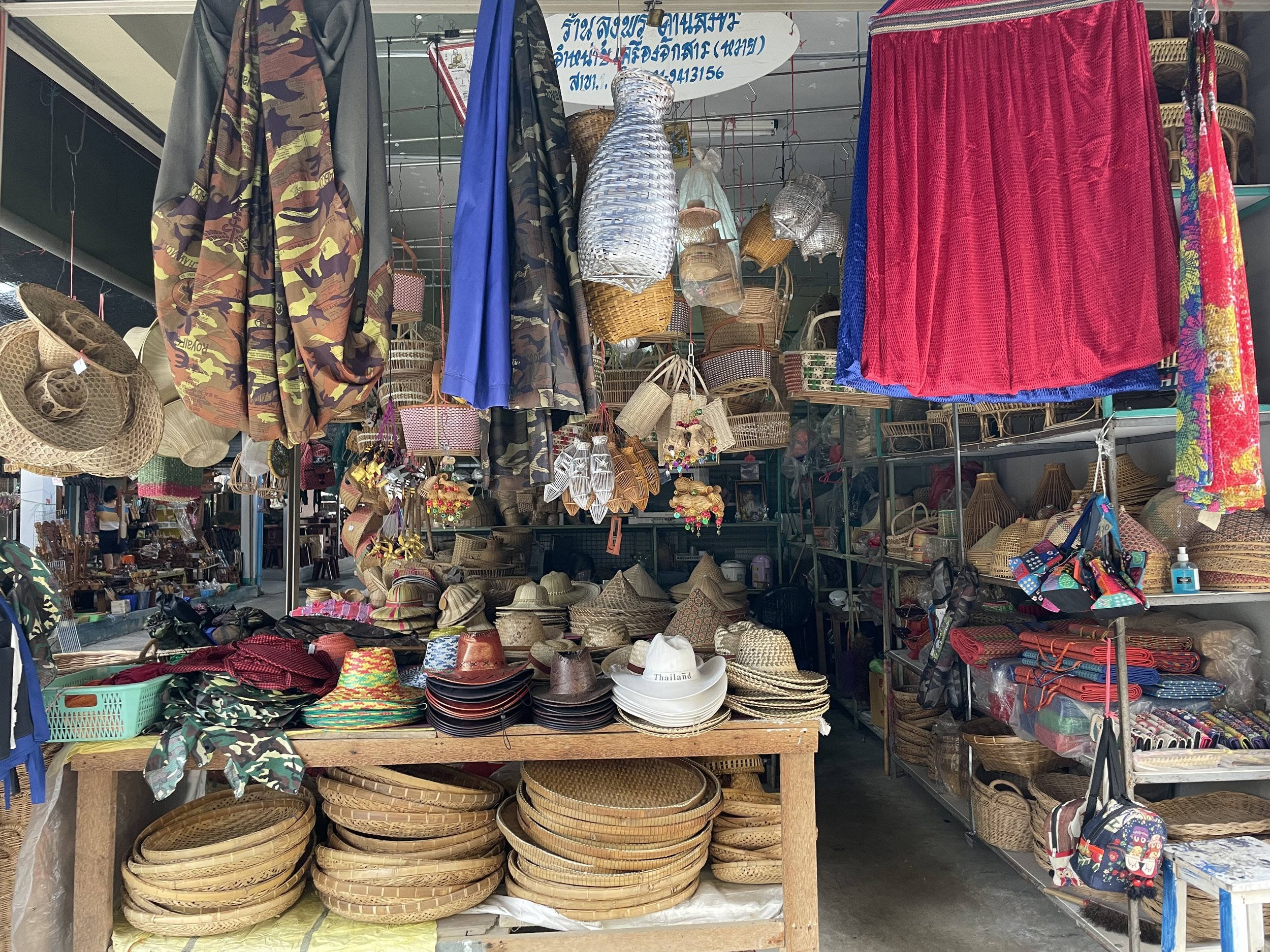
Day Trips from Huay Yang.
One reason Huay Yang works so well for us is that quiet does not mean trapped.
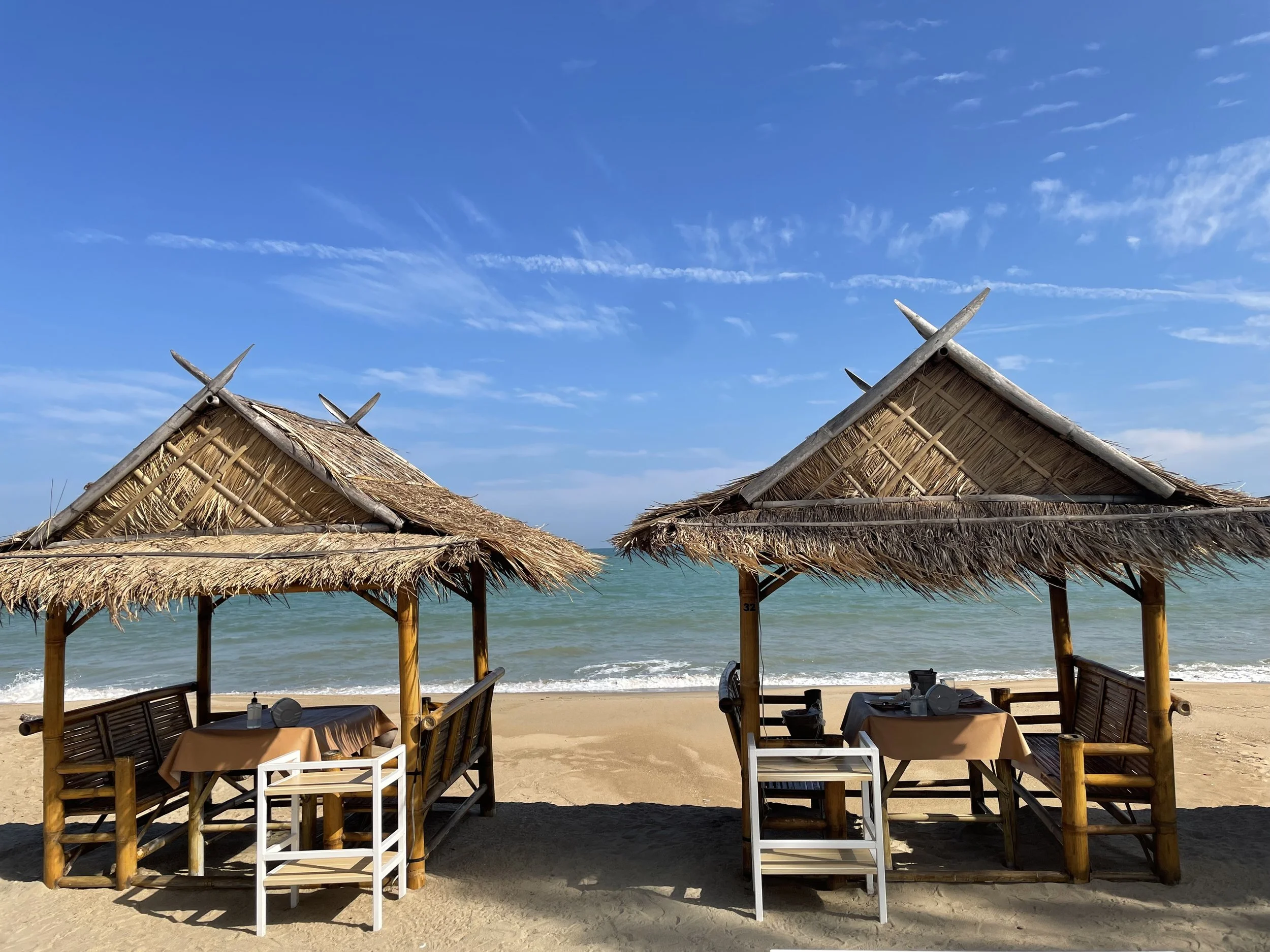
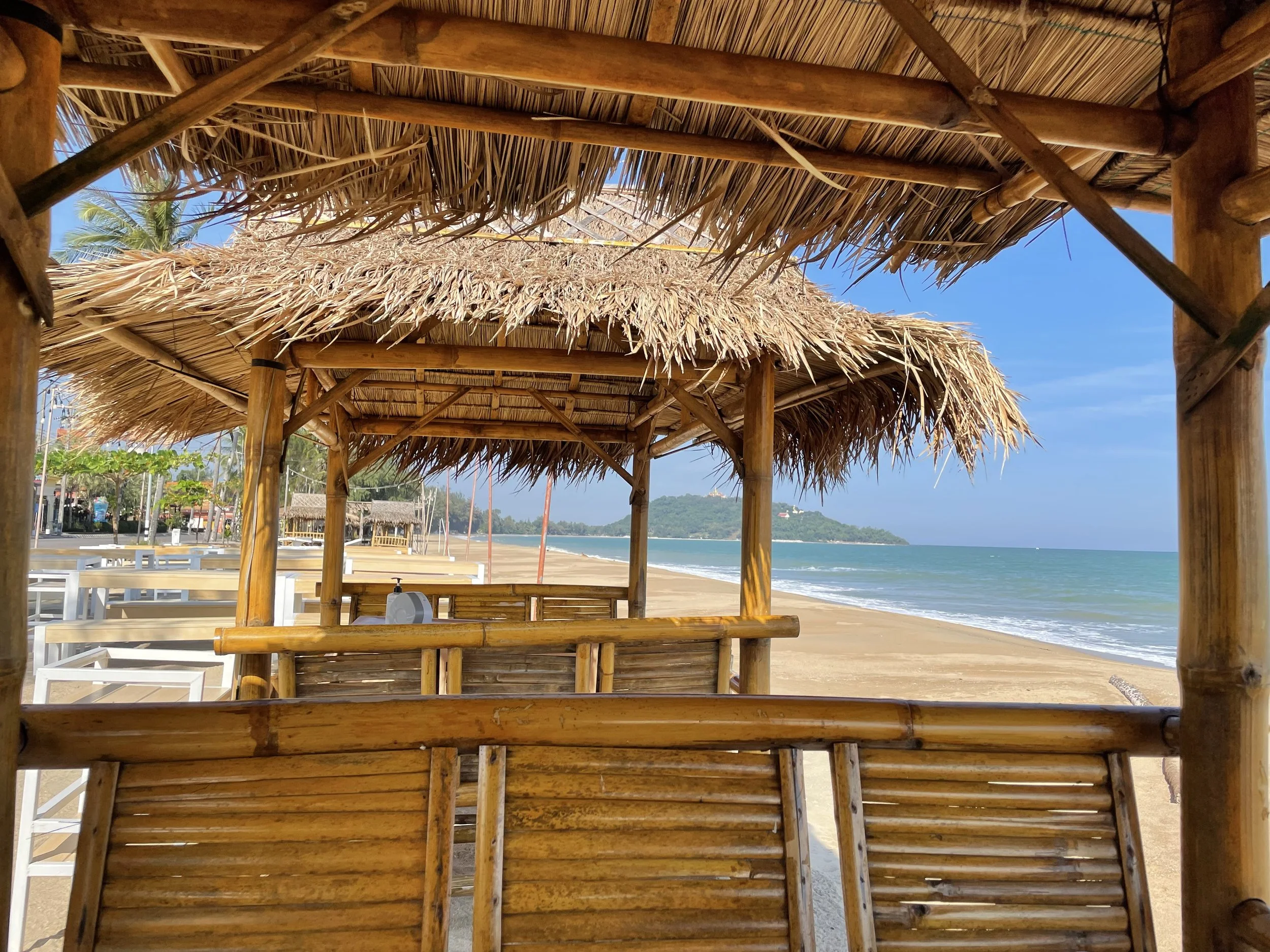
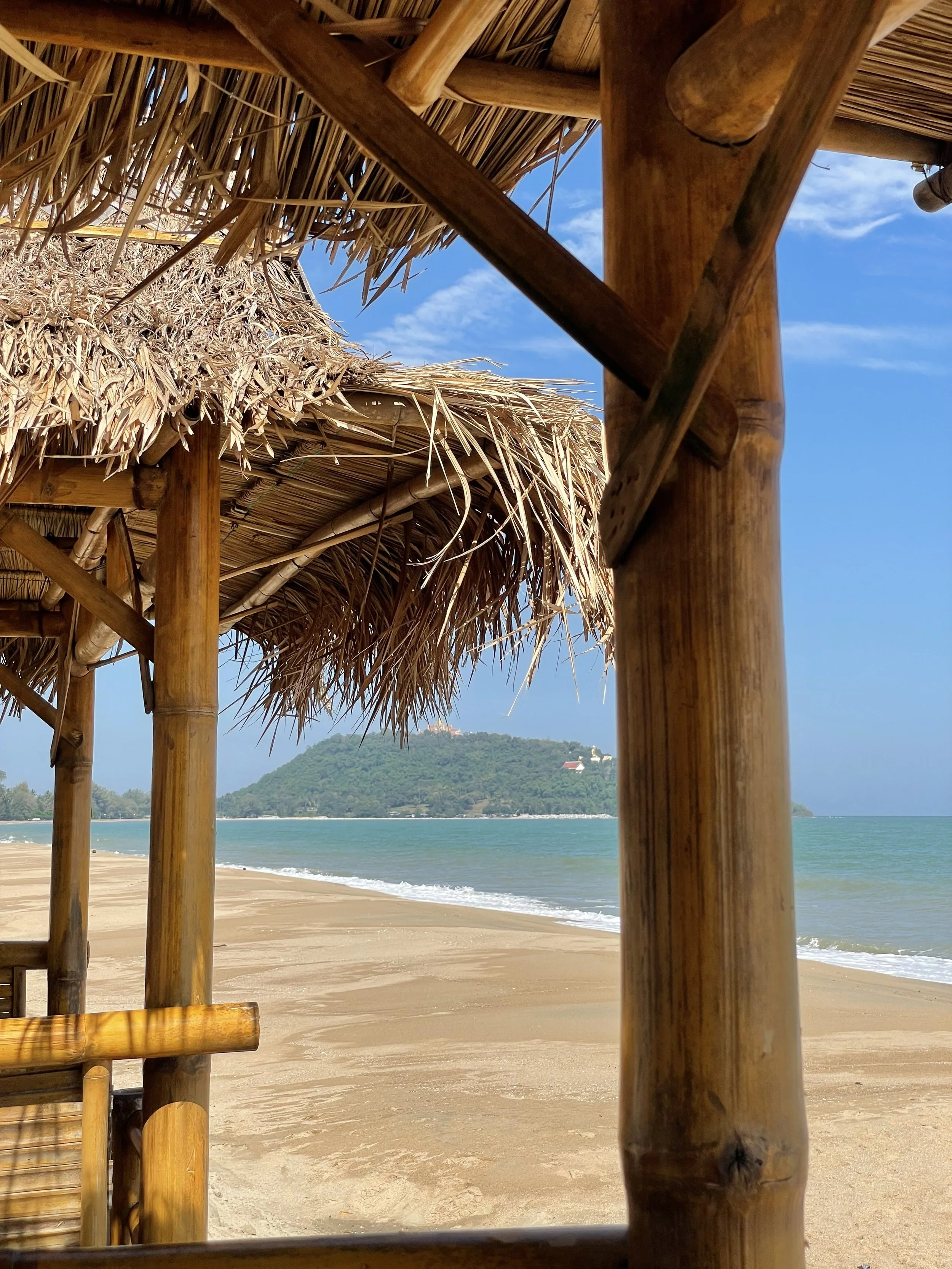
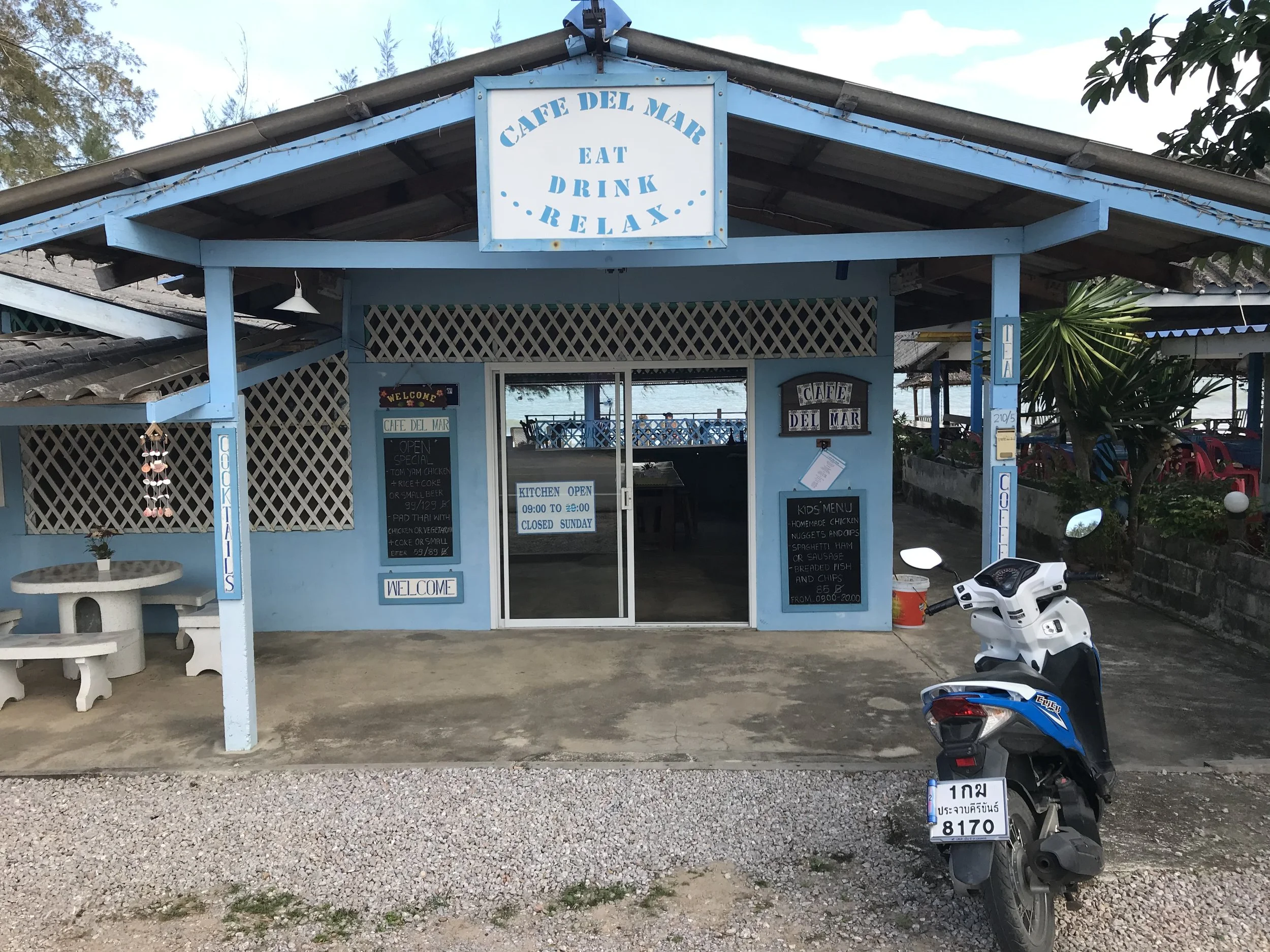
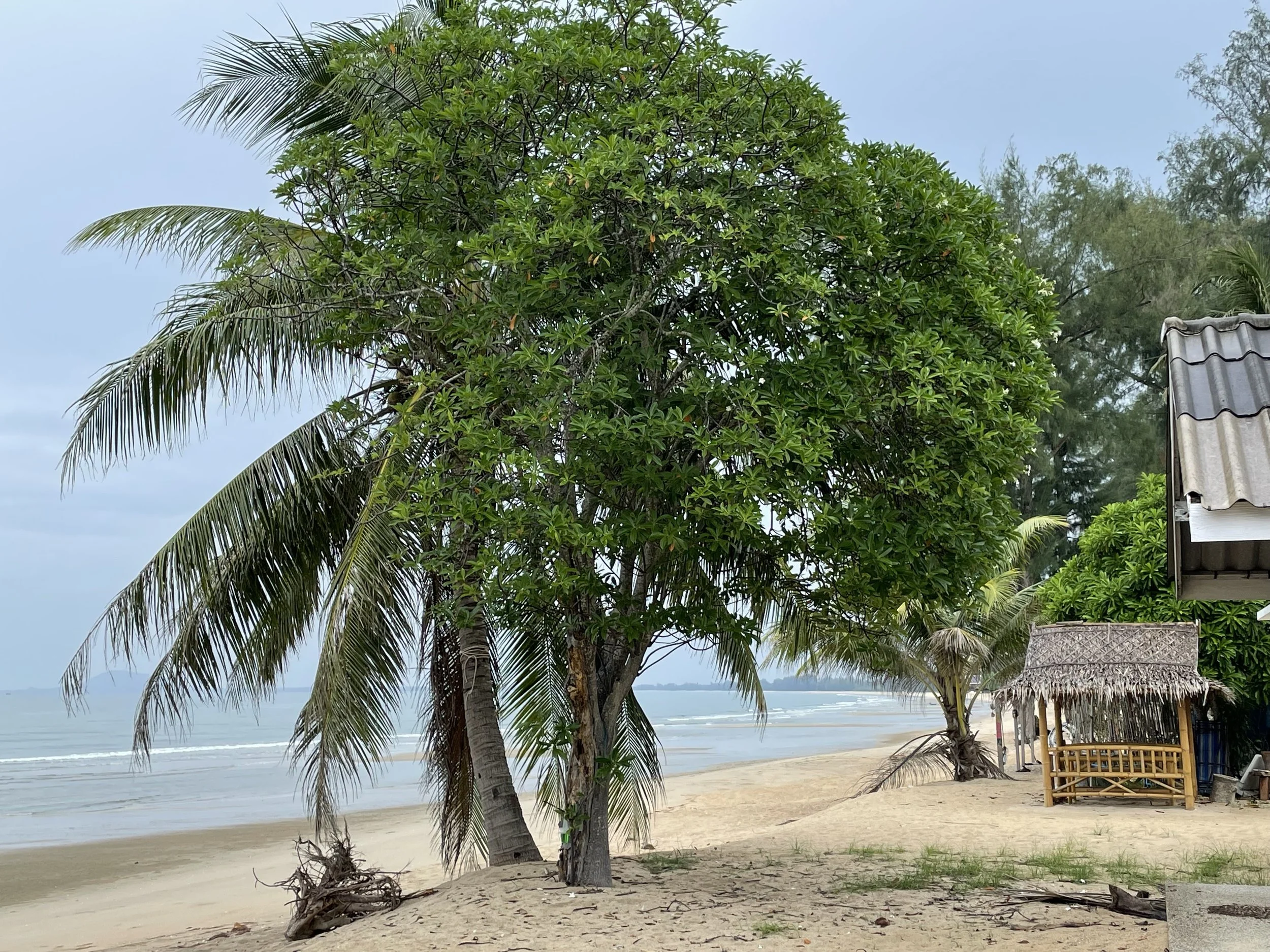
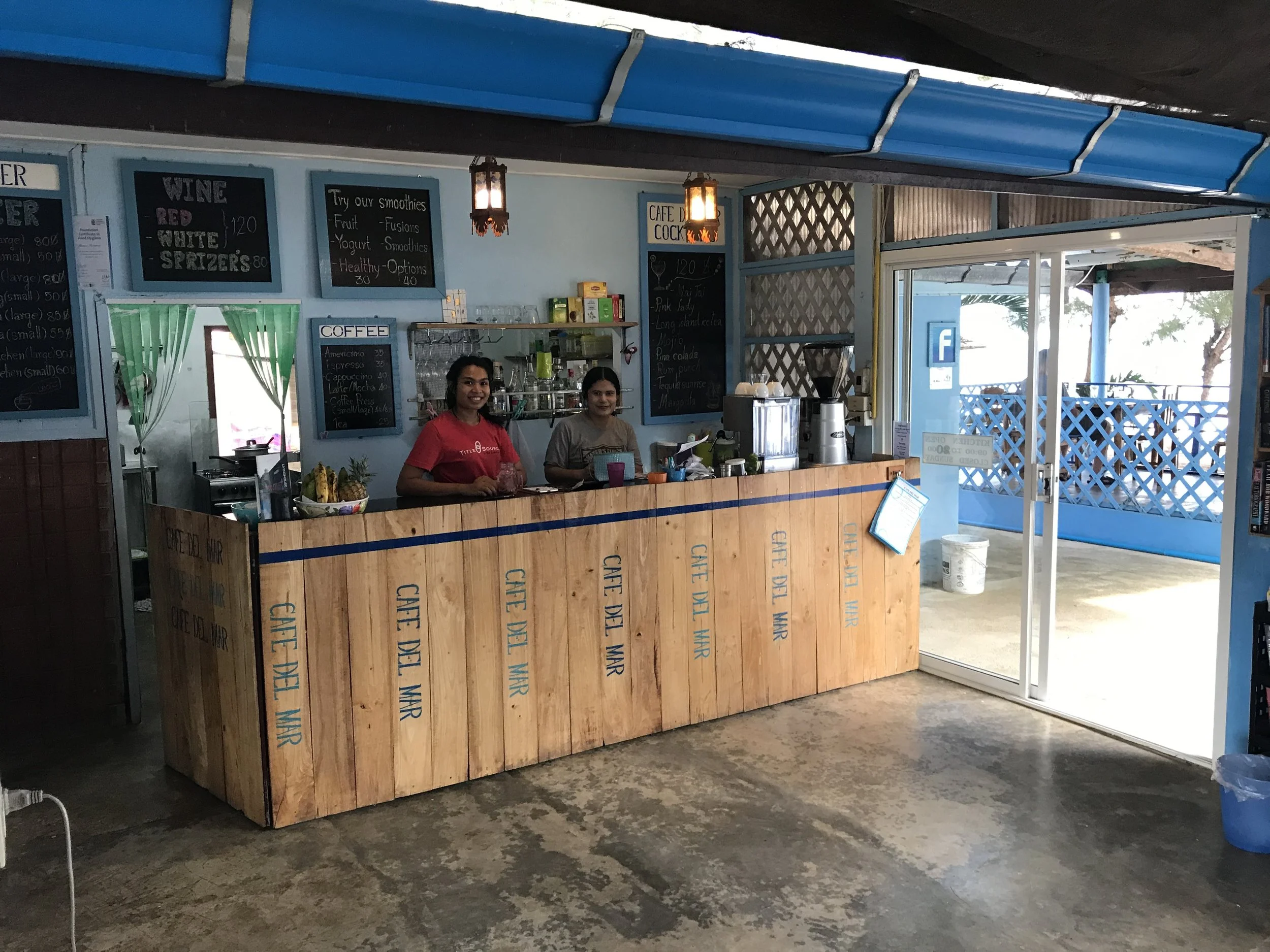
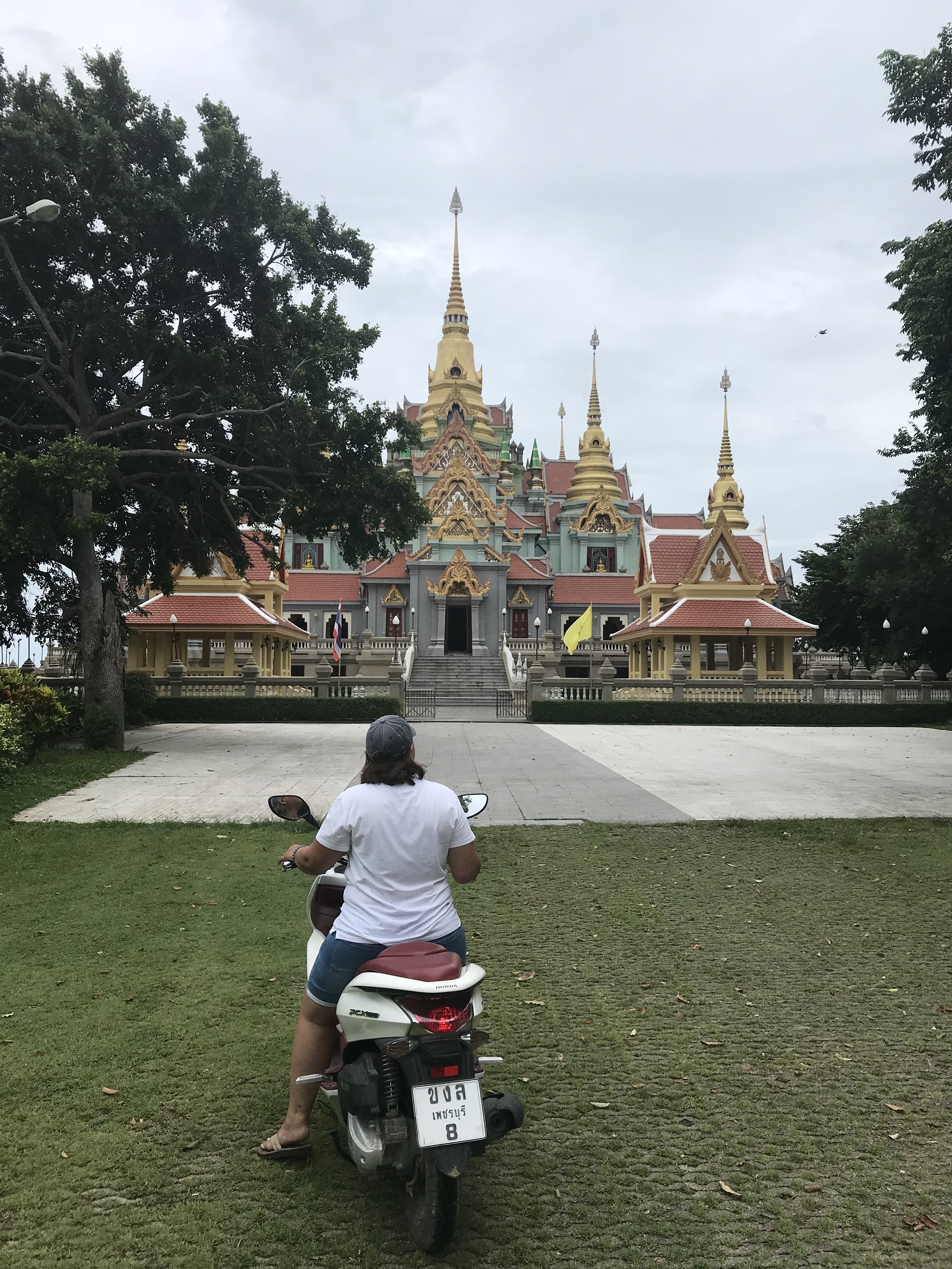
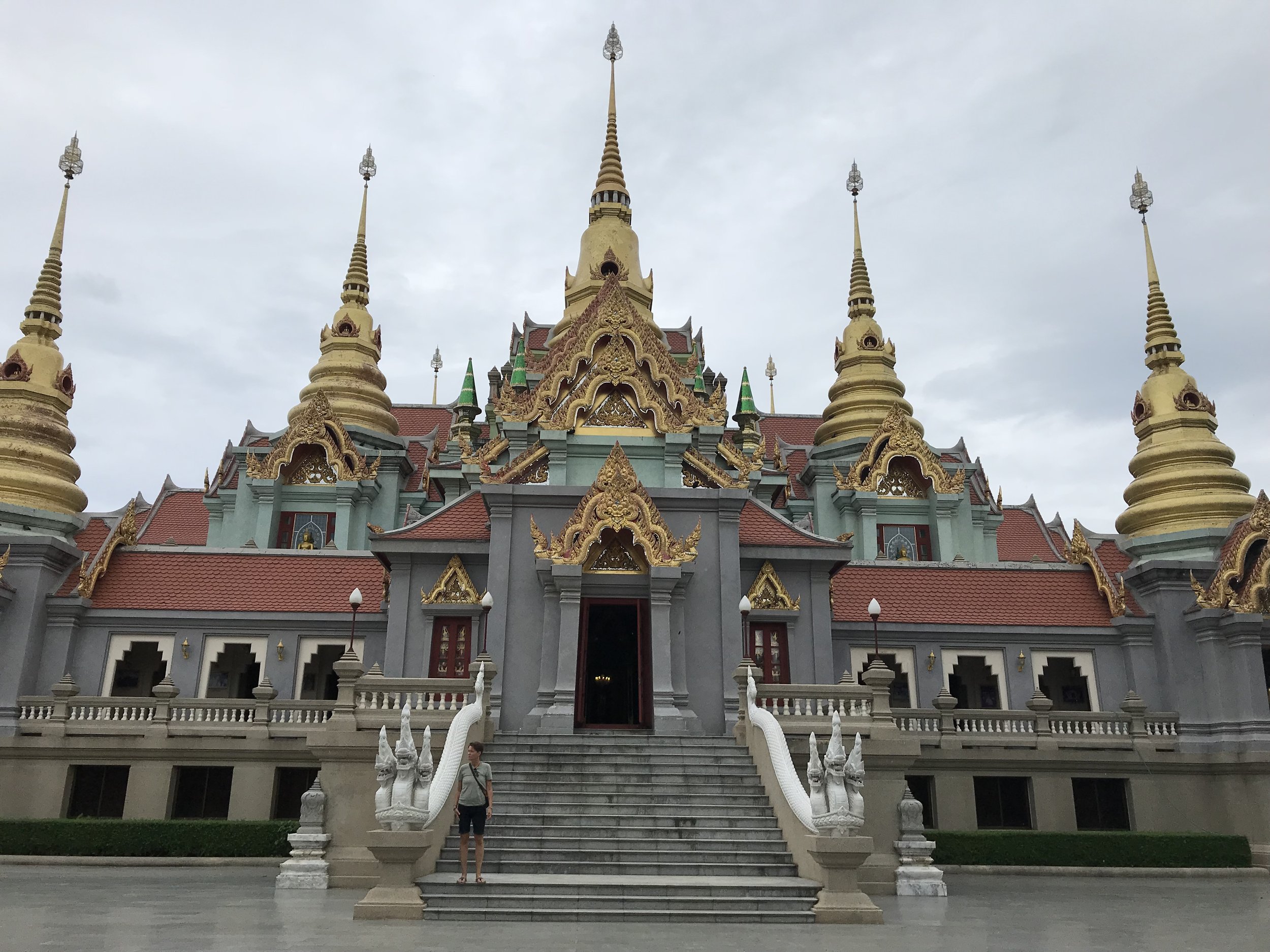
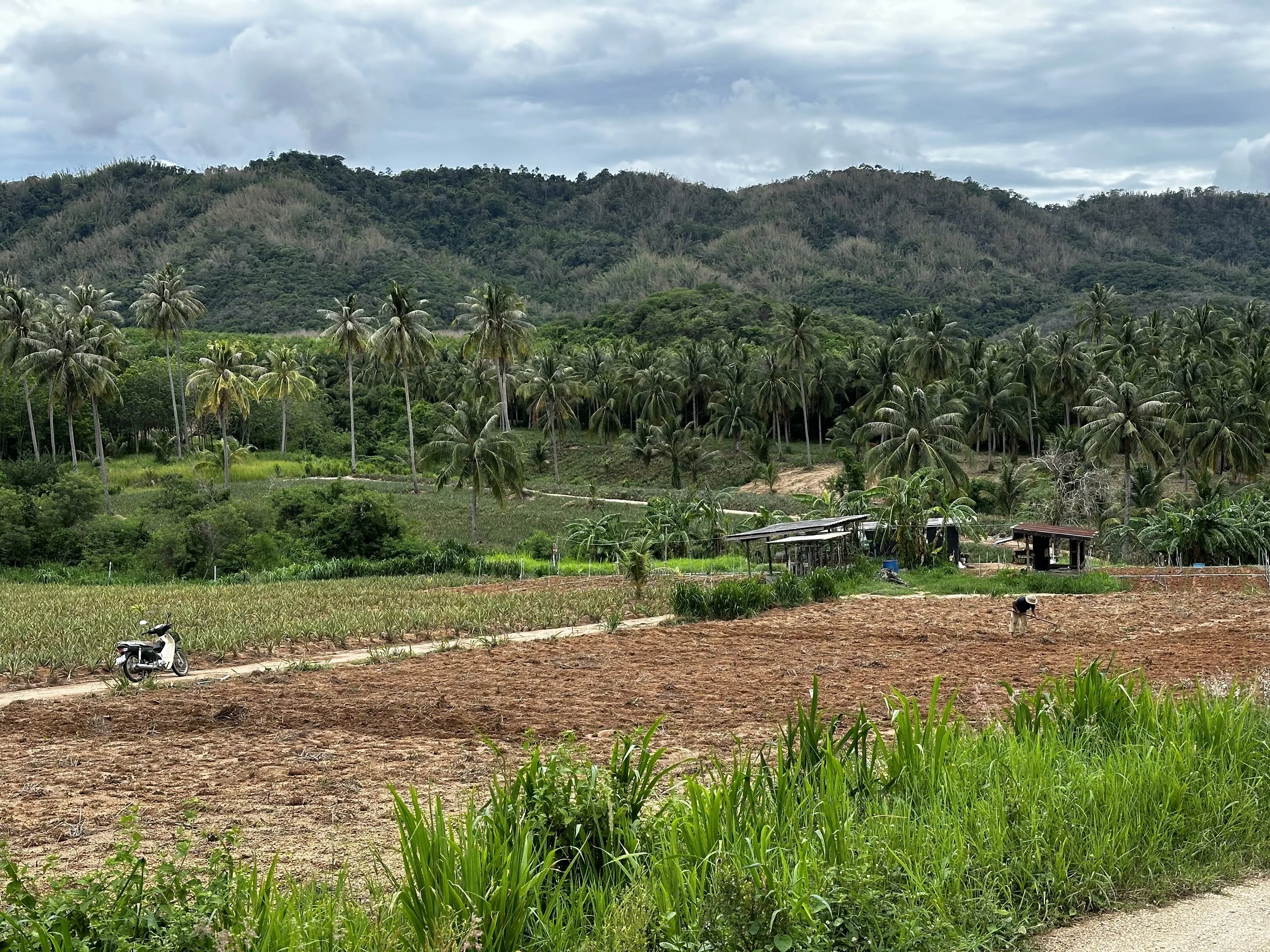
We can drive south to Thap Sakae for coffee at the same place as before. Thap Sakae is located 20 km south of Huay Yang and we always drive the small roads through the palm tree plantations. It is also possible to take the train to the south (we have not tried since we always drive by scooter and we know people that take their saleng too). Ban Krut is located roughly 40-45 km south of Huay Yang along the coastline of the Prachuap Khiri Khan province. We usually visit Cafe del Mar for lunch or stop at a simple seafood hut along the beach, where the sea is close and the menu is worth coming back for to try different types of food. We can continue along roads lined with palms, houses, small shops and the kind of everyday scenery that becomes beautiful because we are moving slowly enough to see it. We can also recommend a visit to the most famous temple in Ban Krut, Wat Tang Sai, perched atop Thong Chai Mountain. Built in 1996, it is renowned for its striking architecture, including nine golden chedis and panoramic views of the Gulf of Thailand.
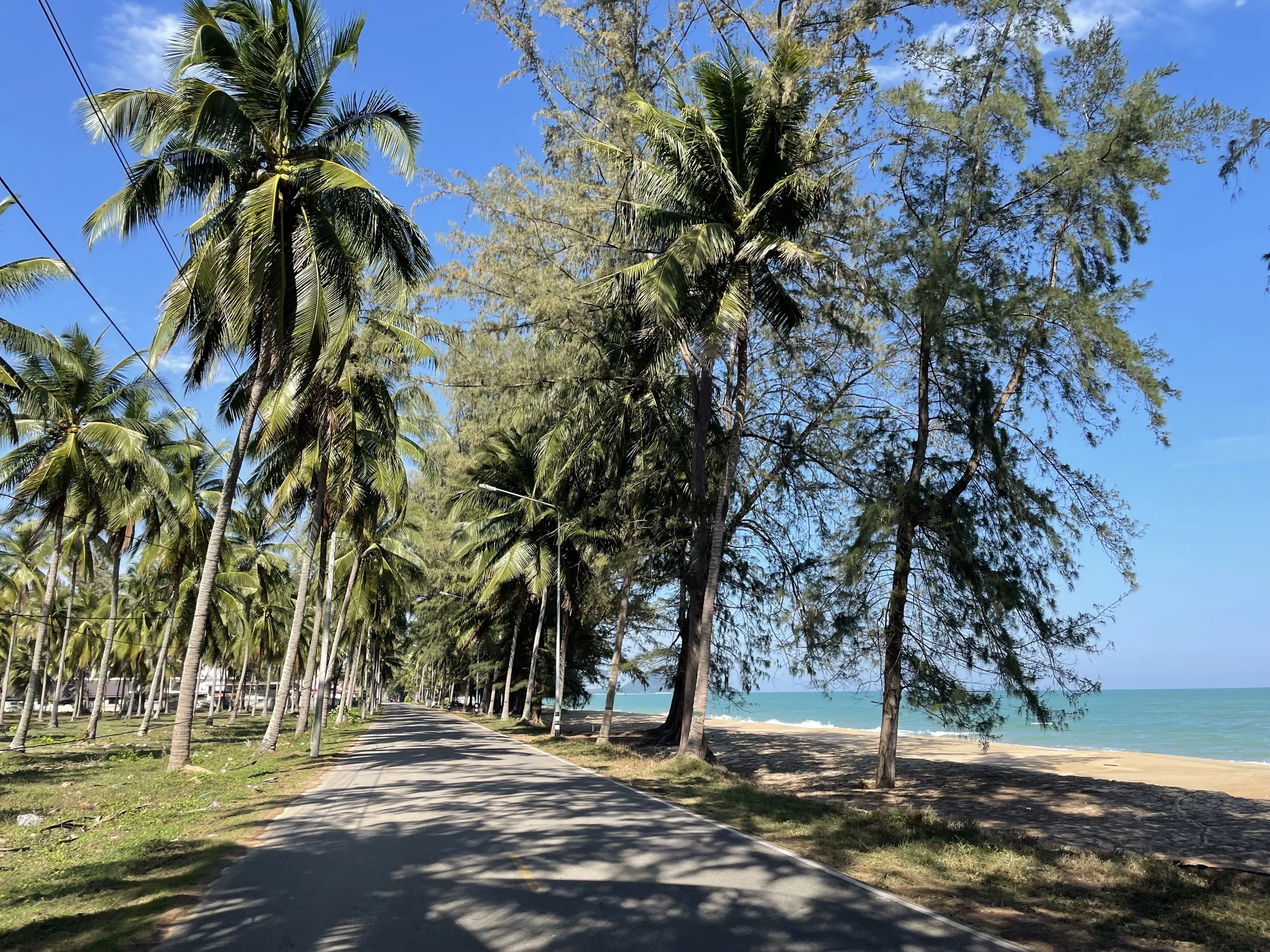
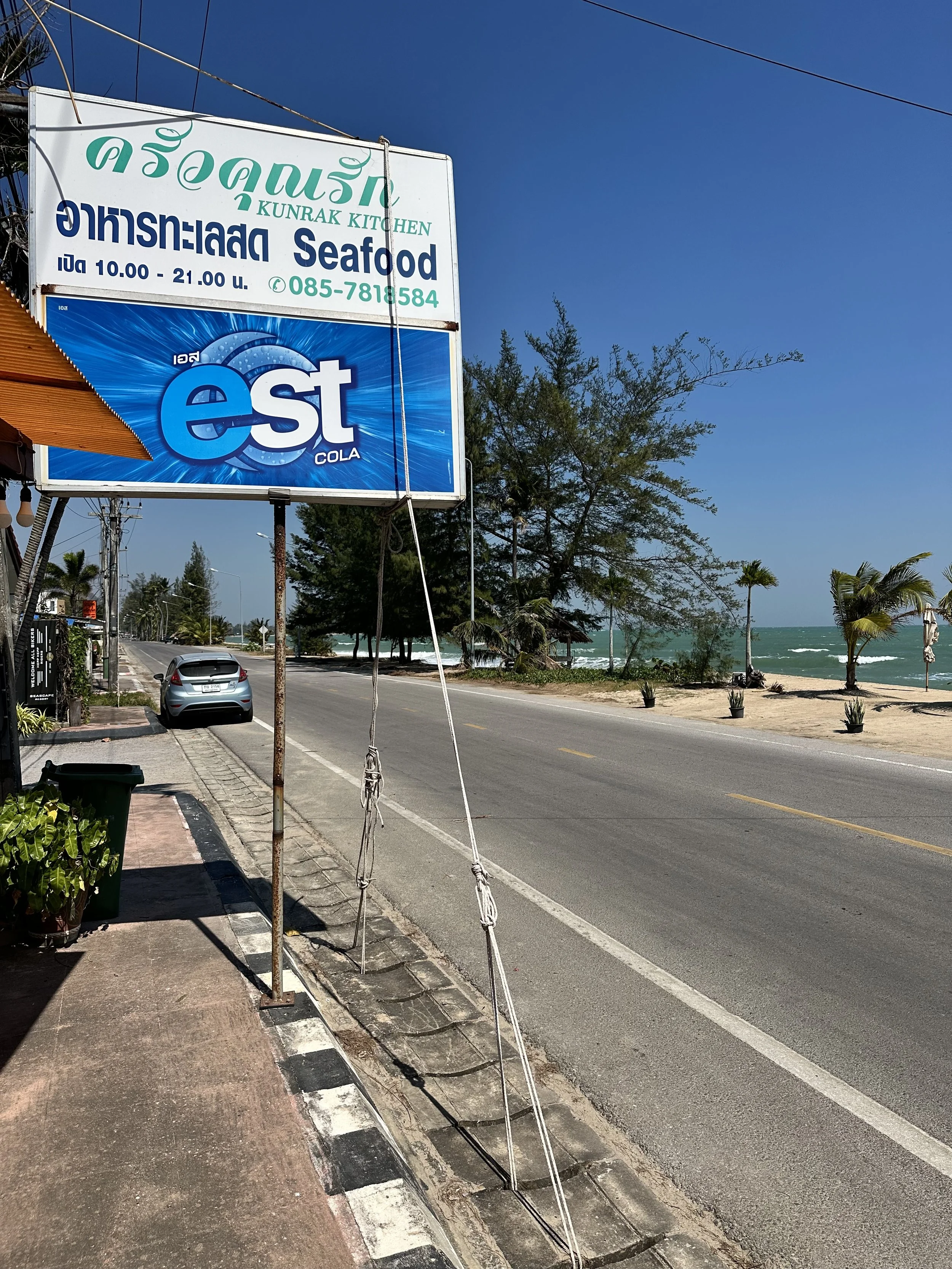
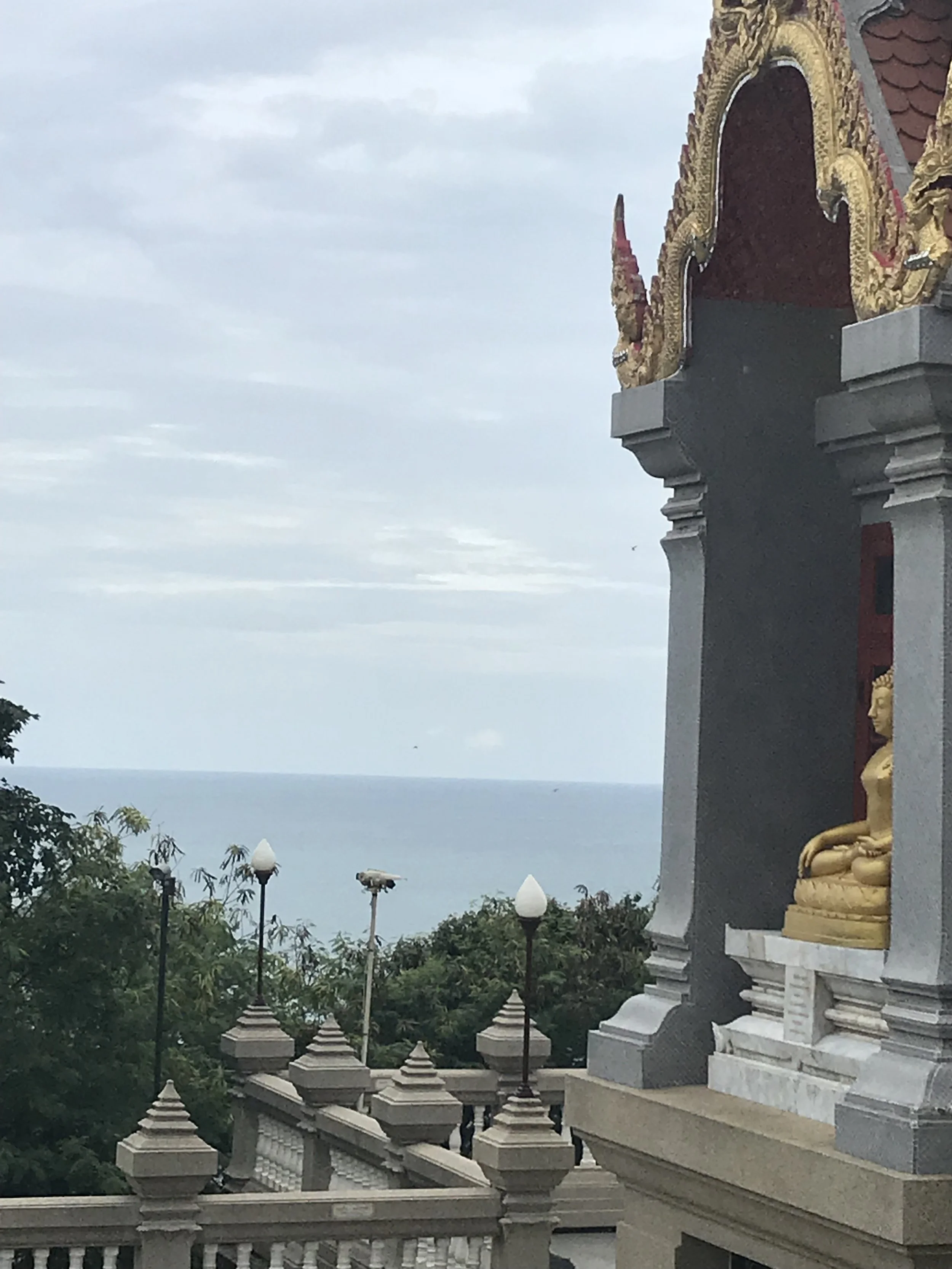
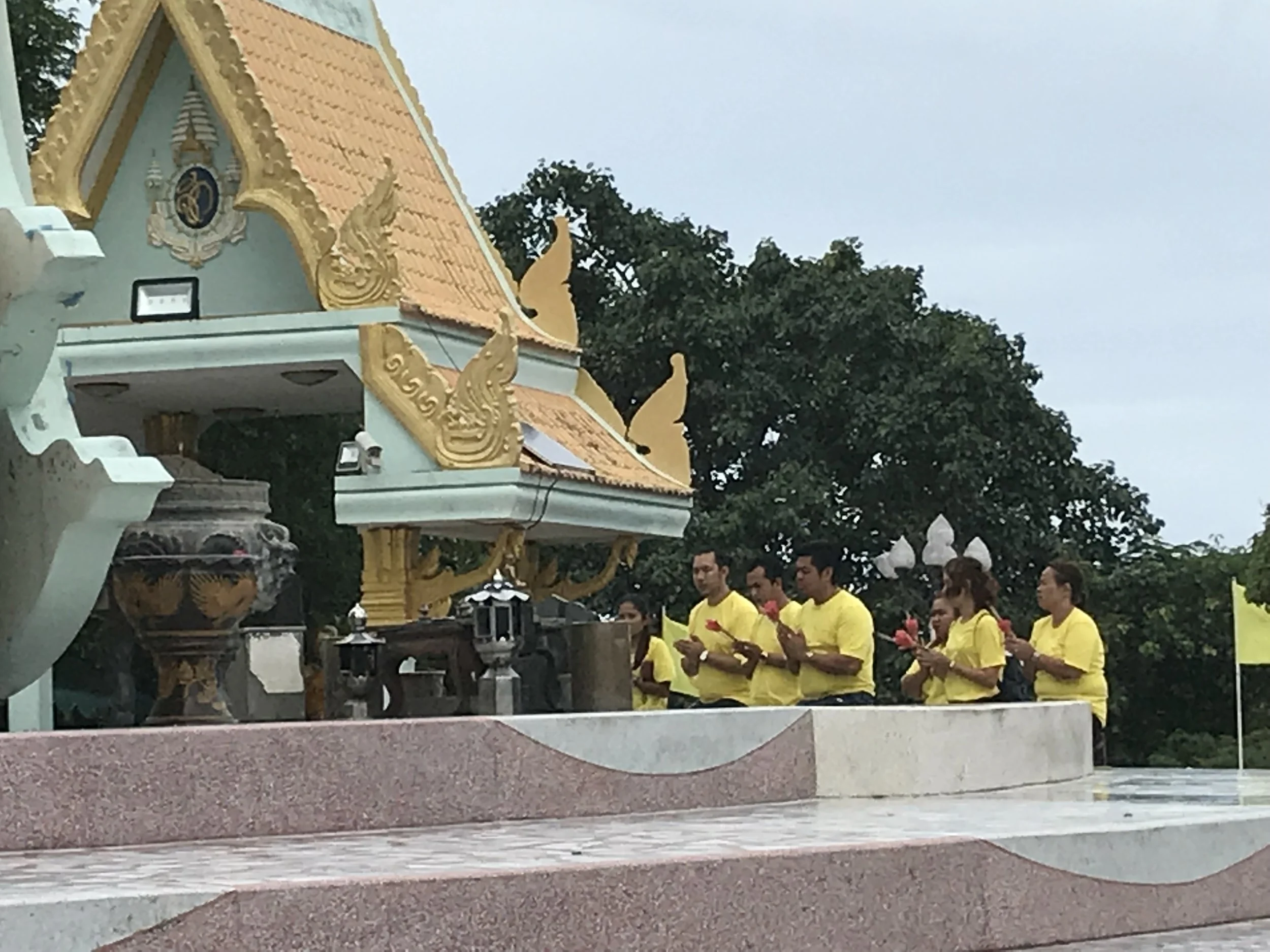
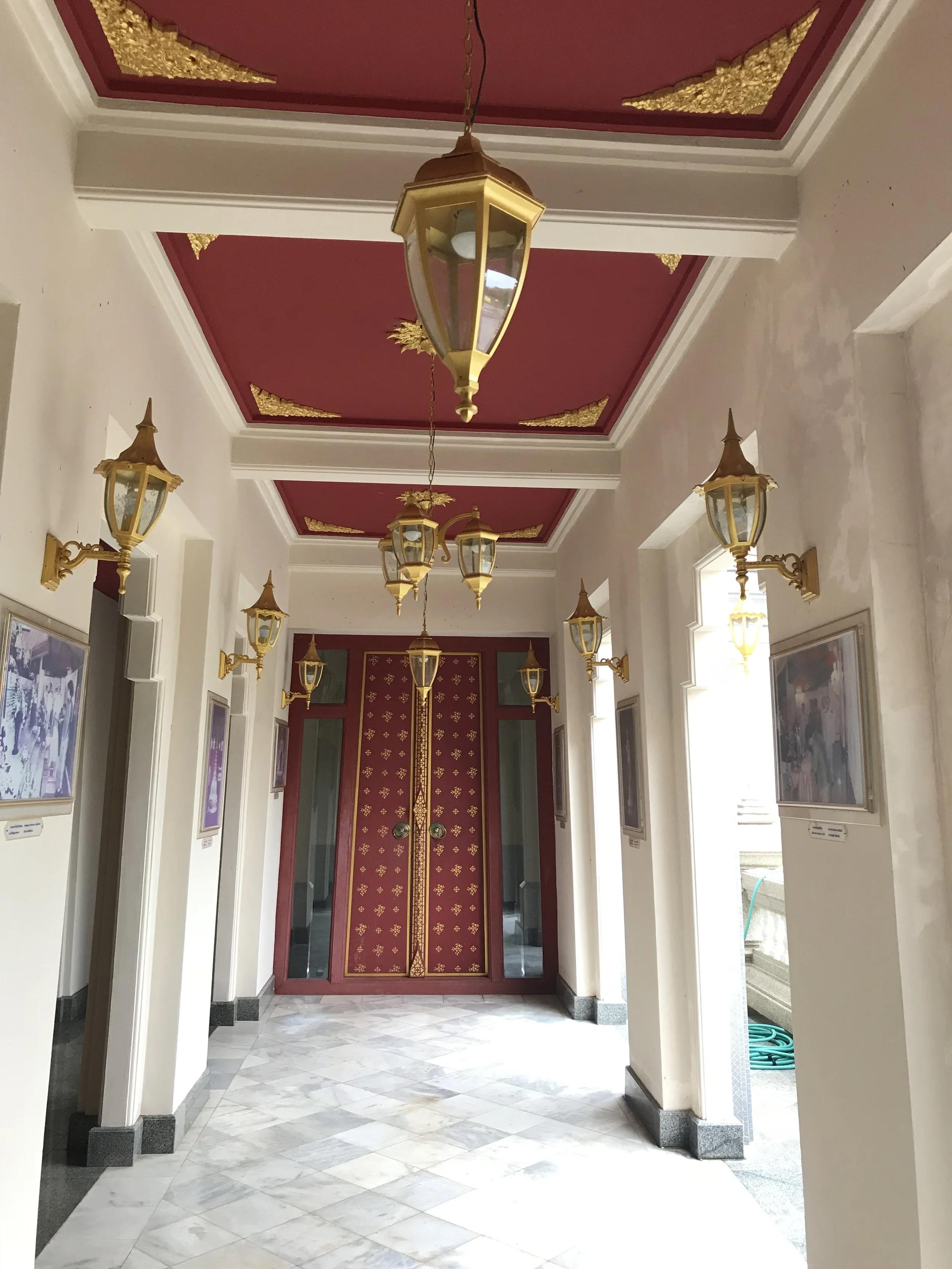
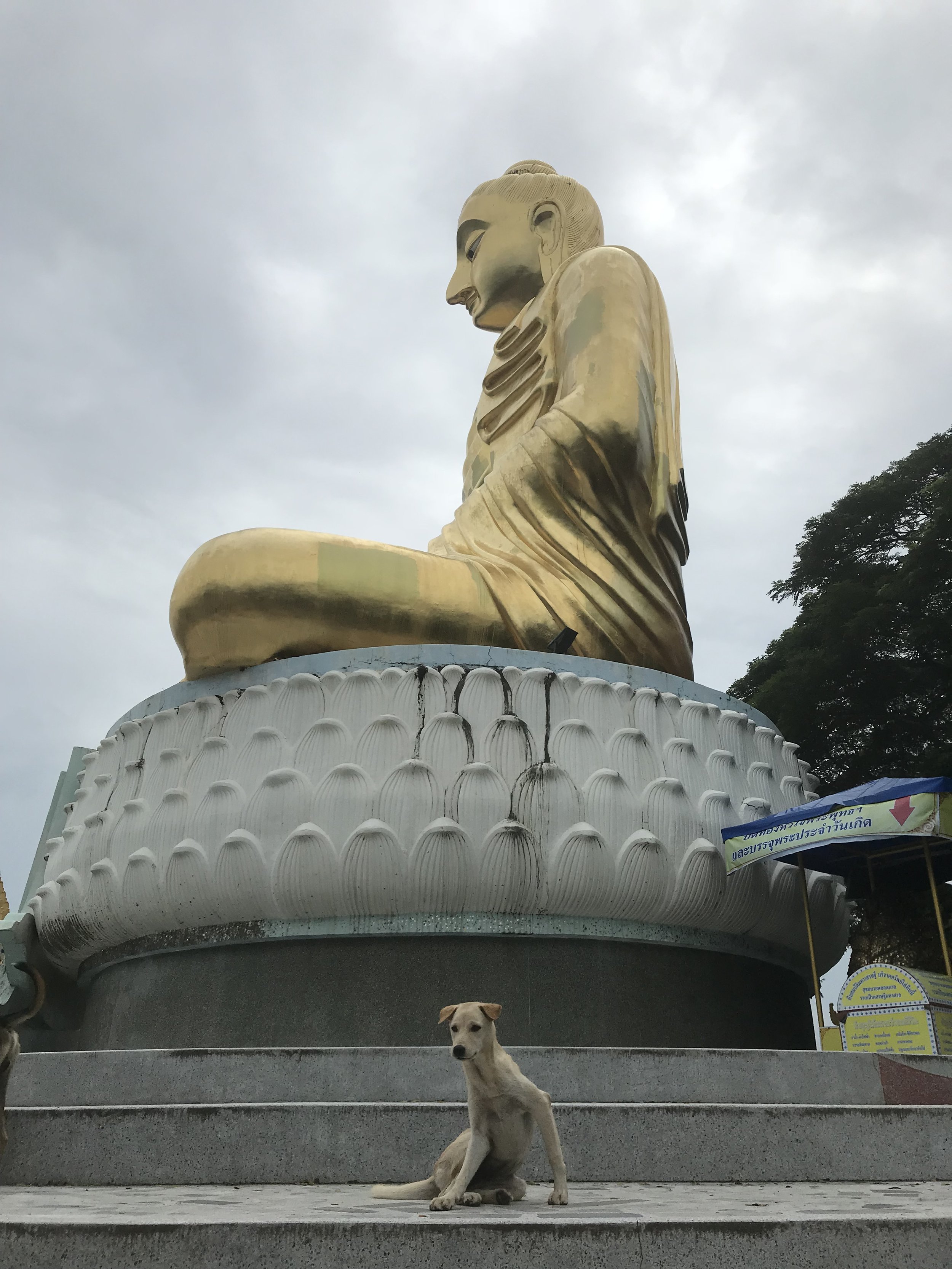
Prachuap Khiri Khan gives us another rhythm. It is located 30-35 km north of Huay Yang. We have taken the scooter several time using part of the high way and small roads.
👉👉 Please Note: when we write scooter, we are talking about a 150 cc motor which legally is a motorcycle and you need to have a valid drivers license to drive it. Many people still rent a motorcycle and use it in and around Huay Yang but we highly recommend having a valid license and real experience from the road.
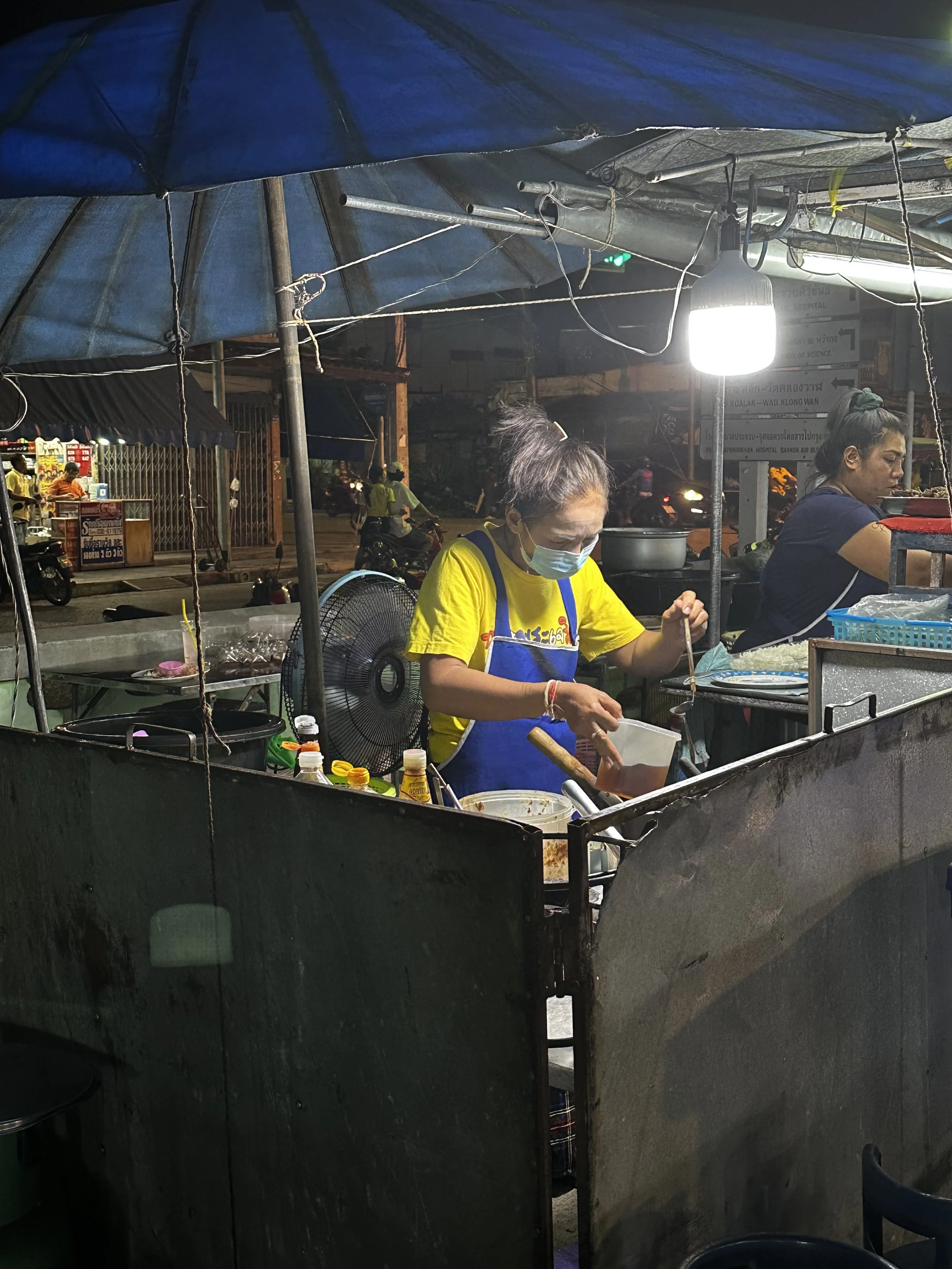
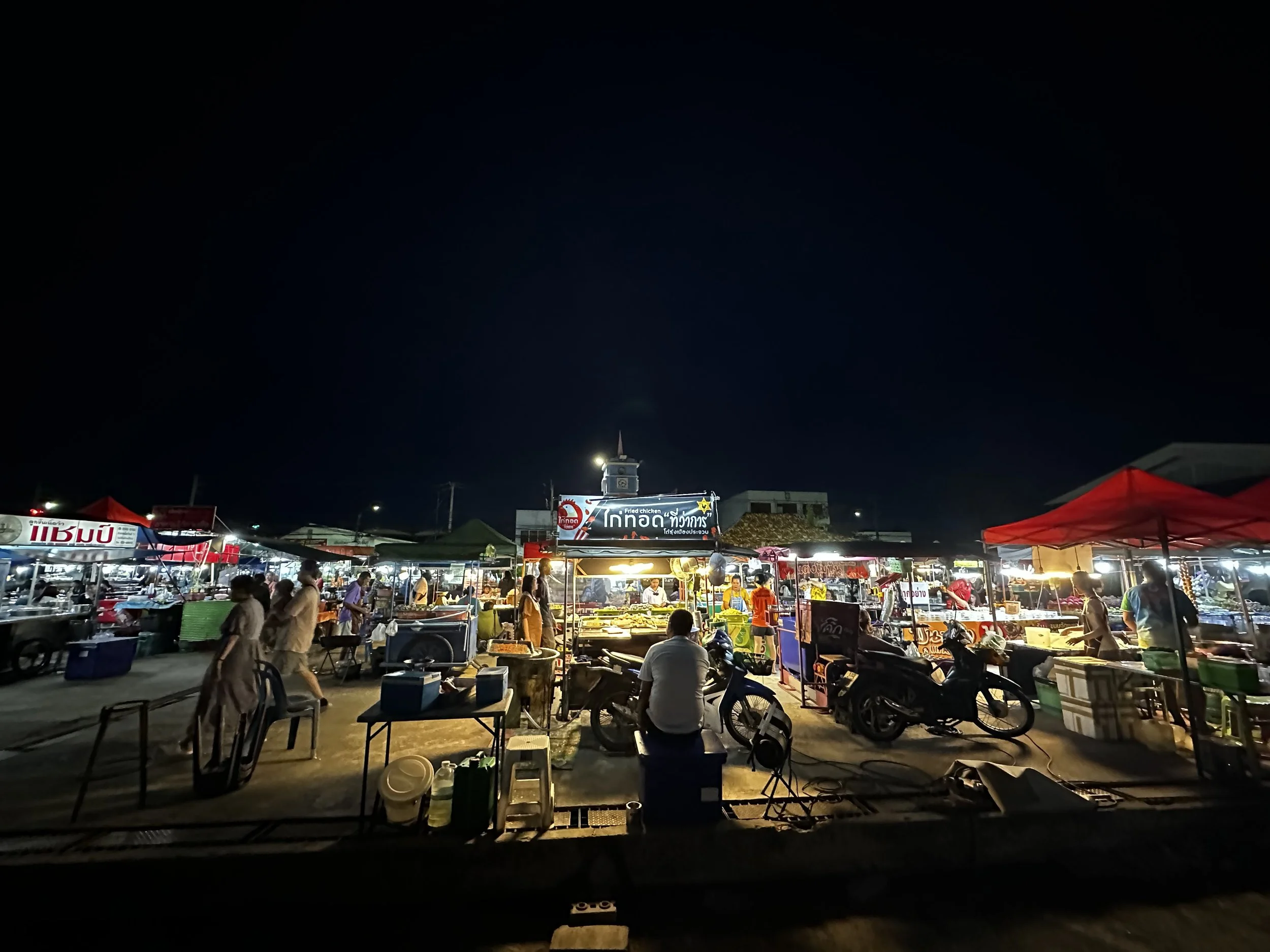
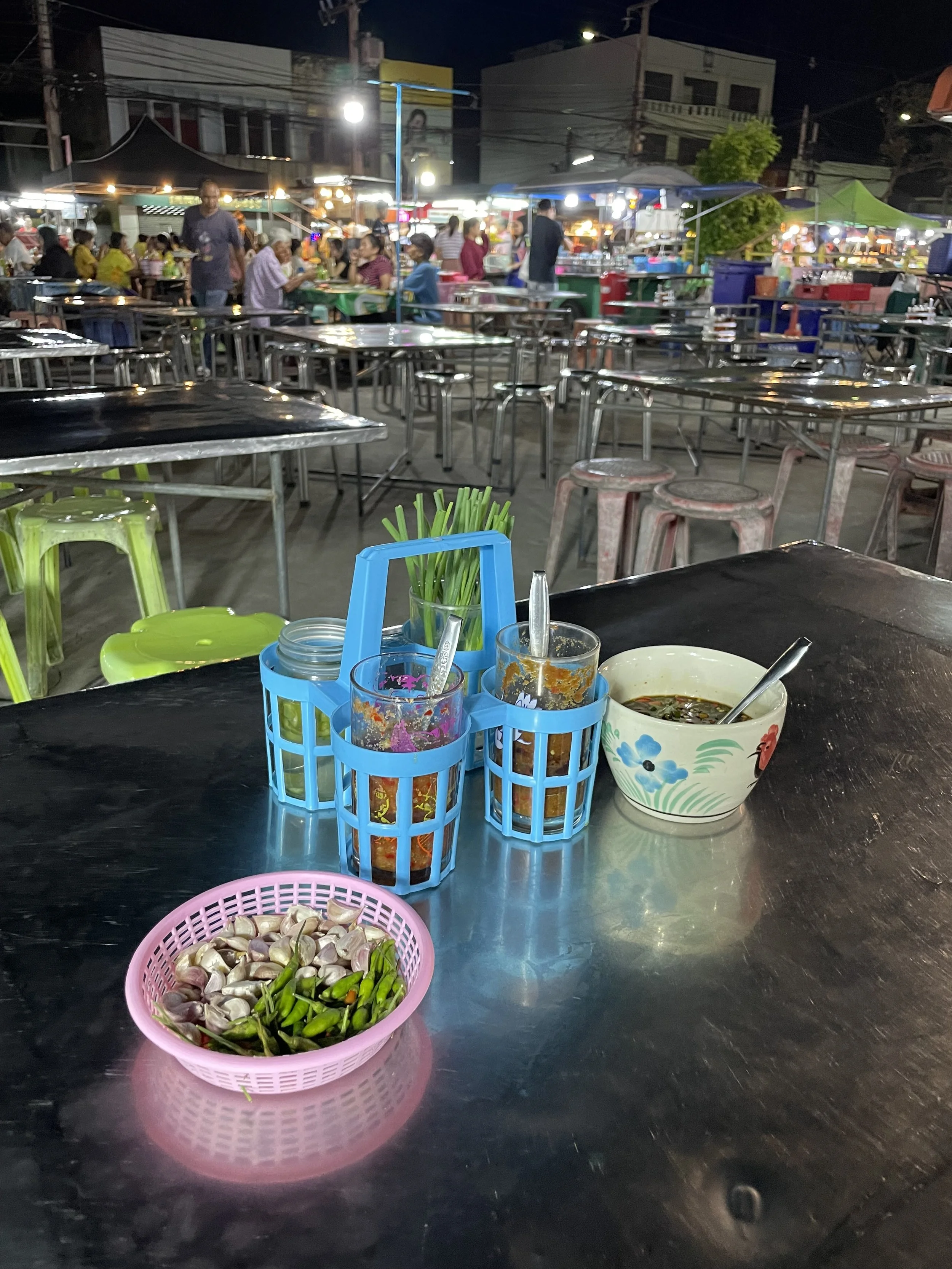
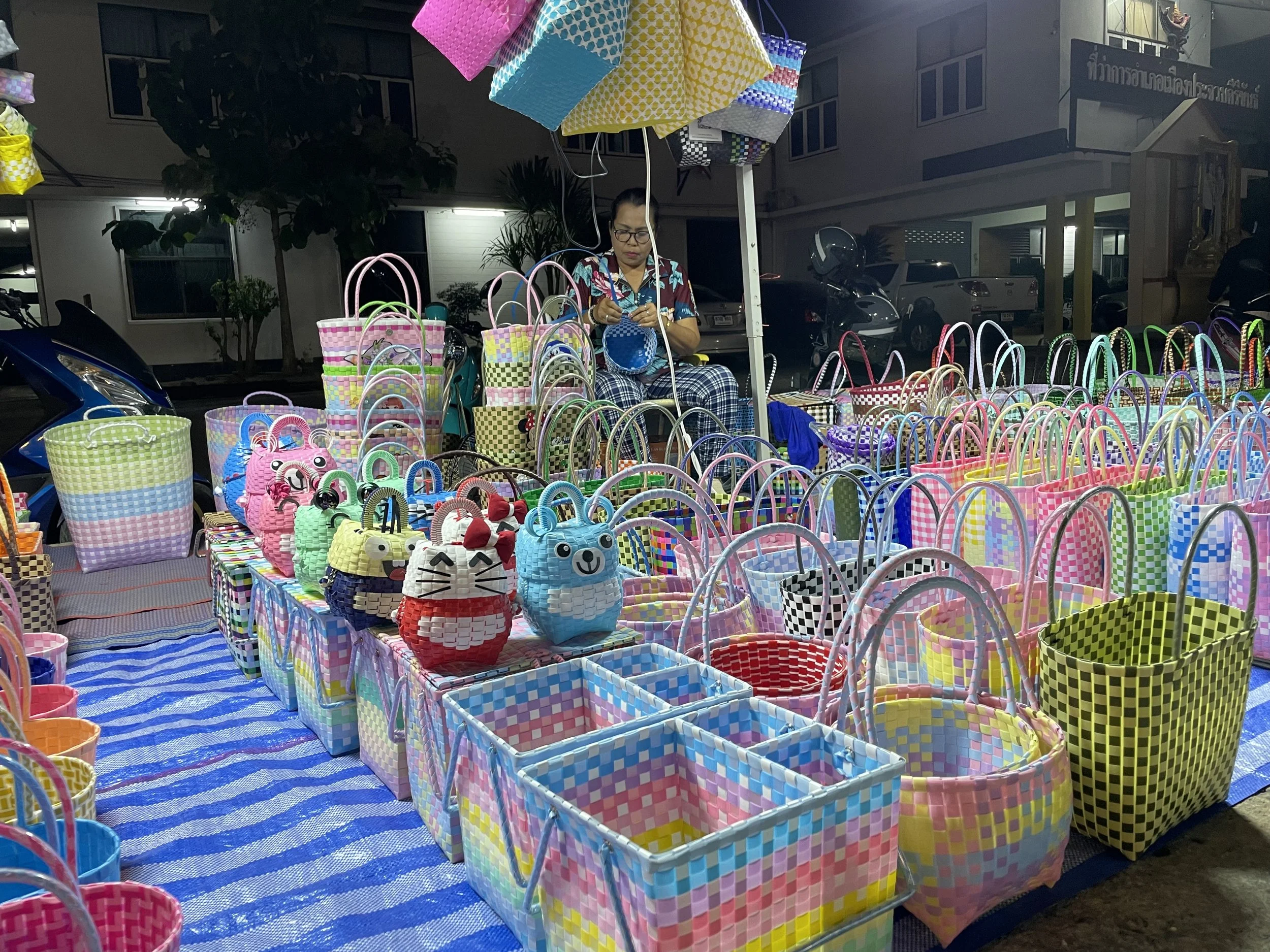
Weekend markets. Food stalls. The forest park. Hills rising near the sea. A restaurant by the river. The feeling of a town that is larger than Huay Yang but still close enough to be part of our world there. Prachuap Khiri Khan has so much to offer as well as the areas on the outskirt with long beach stretches, Cave Temple,s (some more known than others), Elta Riverside Café and Restaurant, Weekend and night markets (yes we know we mentioned it before 🫣❤️. It is a town that offers several restaurants, cafés, all kinds of shops, massage places, several temples, monkeys, street food, beautiful beaches (Ao Manao beach).
👉 Prachuap deserves a longer blog post, don’t forget to bookmark our website or subscribe for updates.
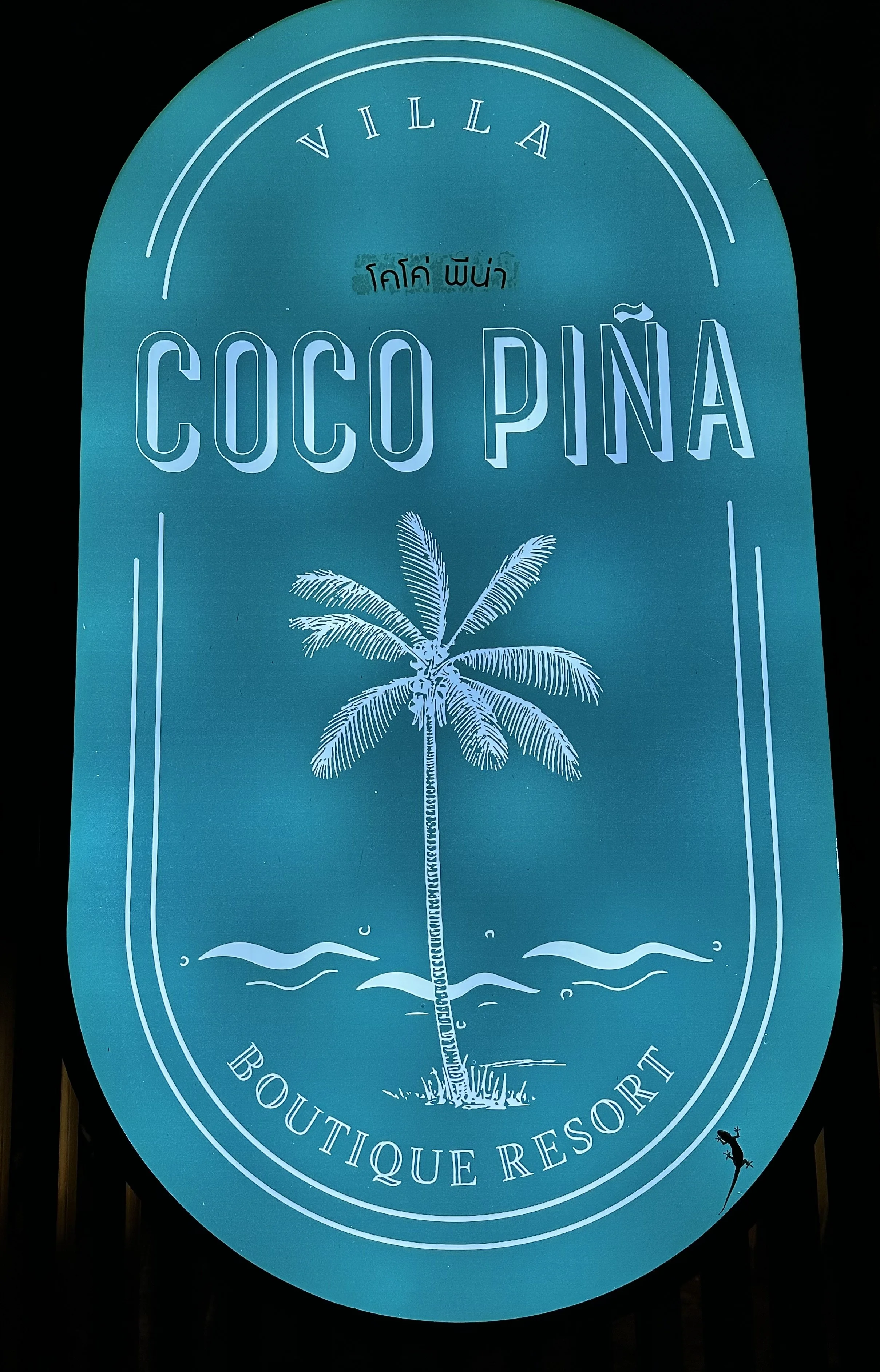
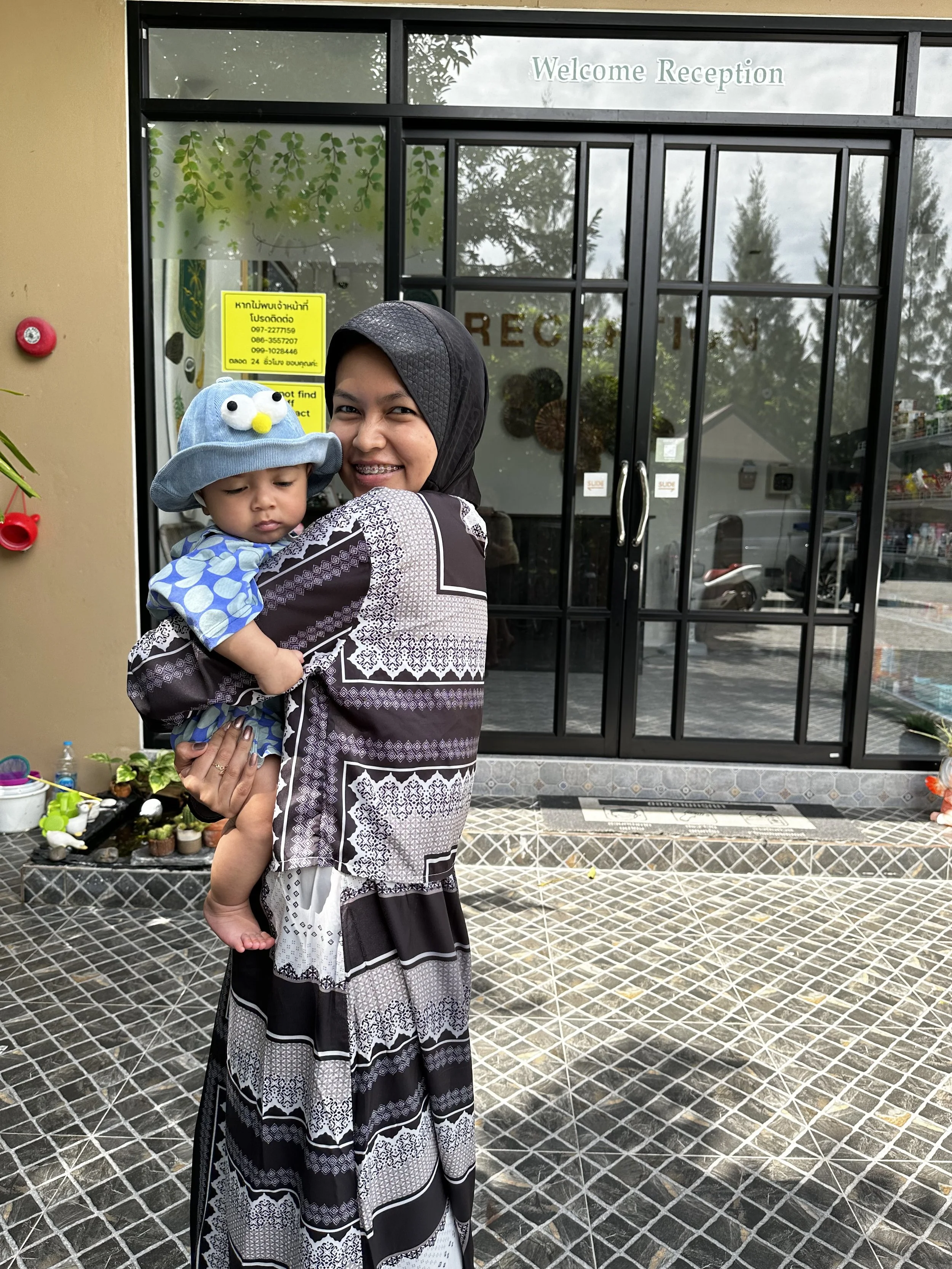
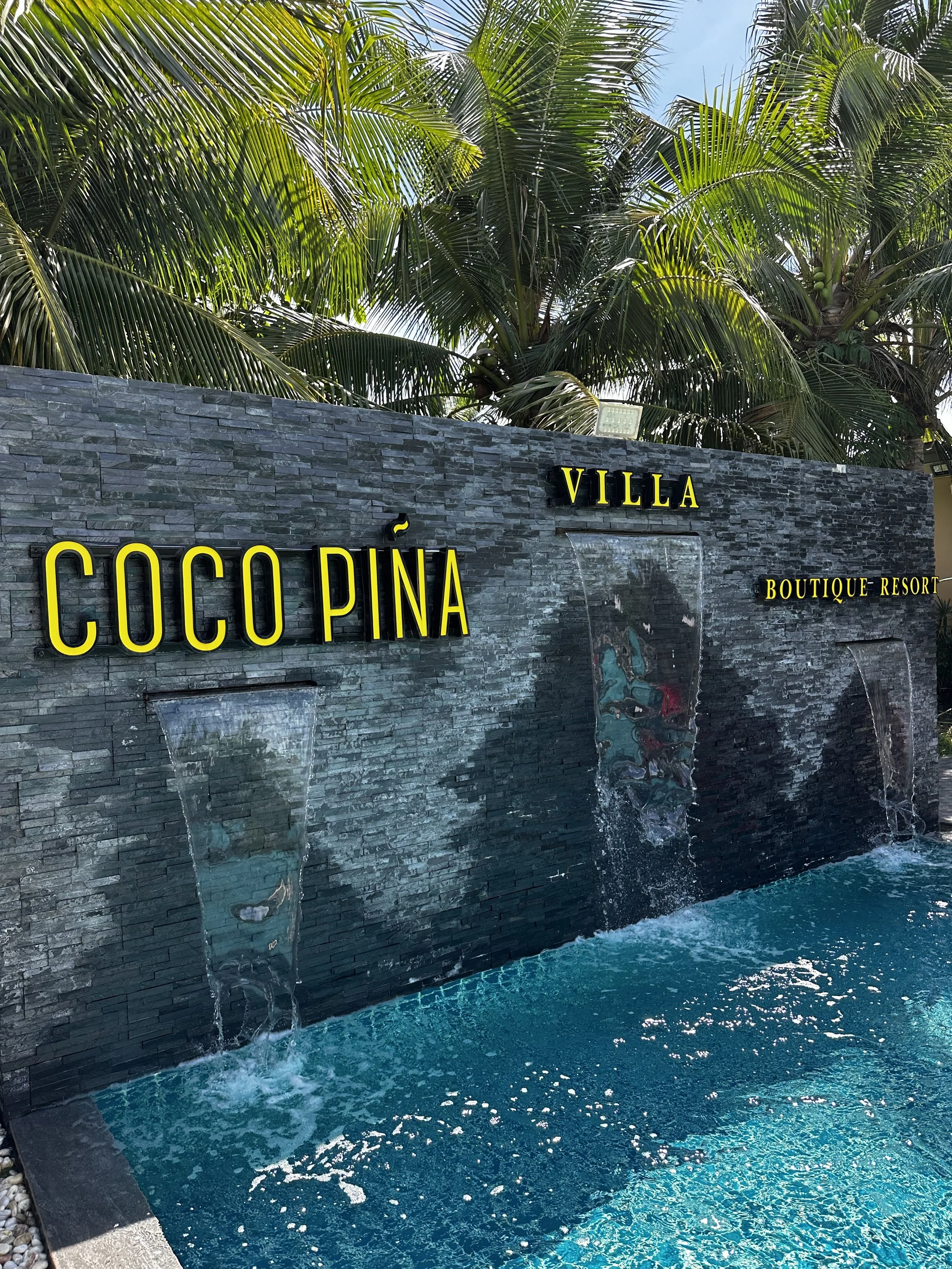
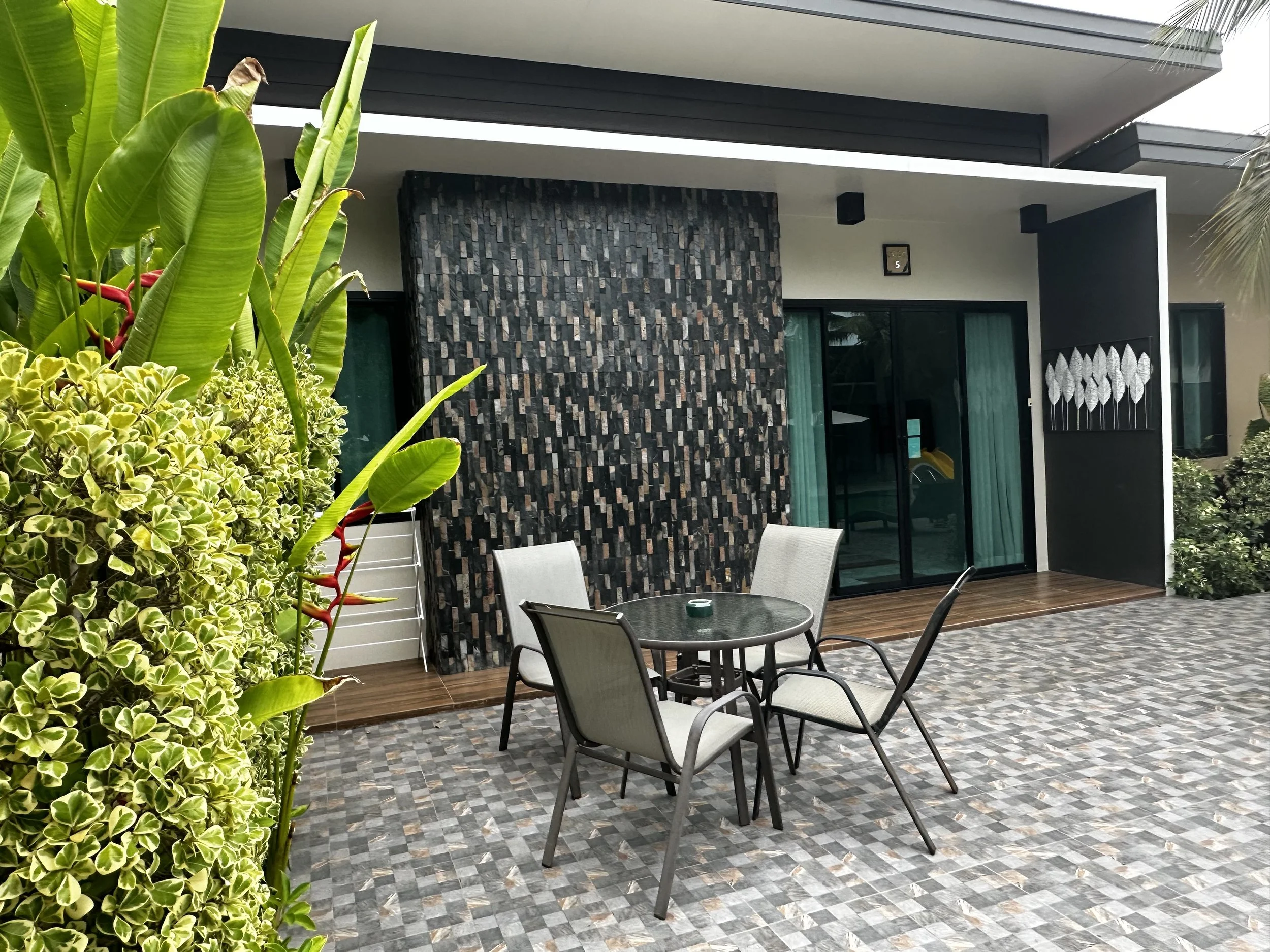
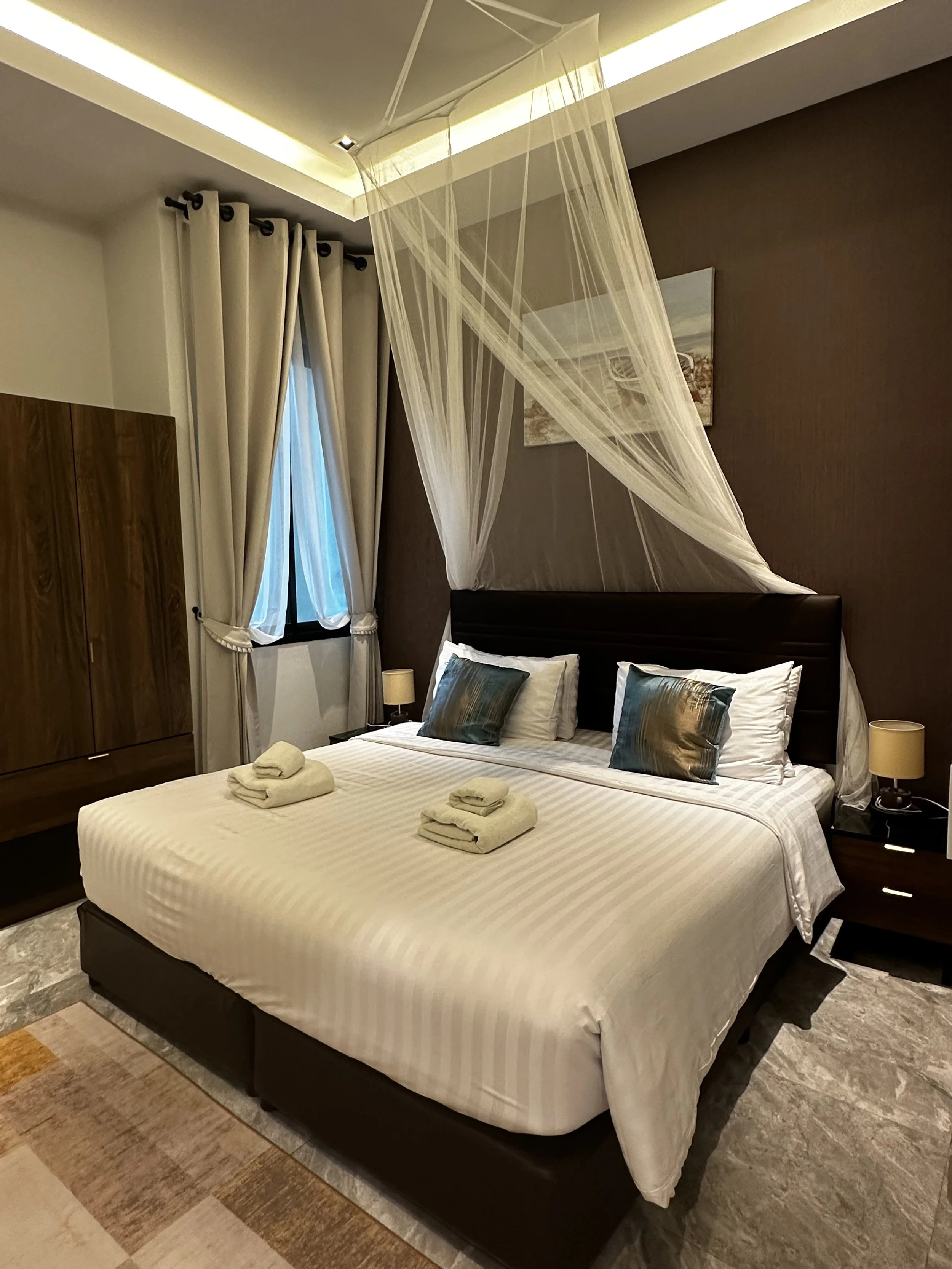
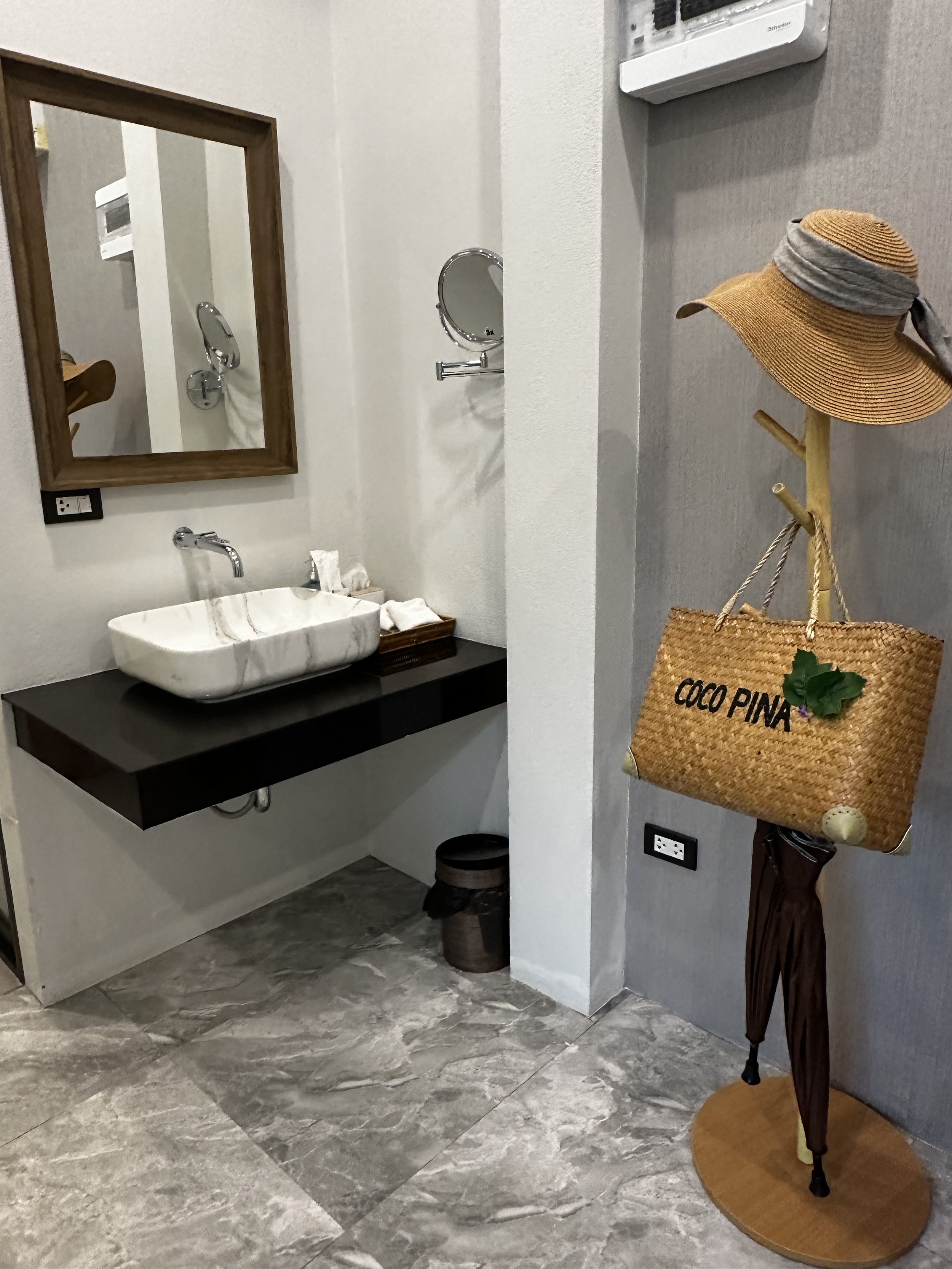
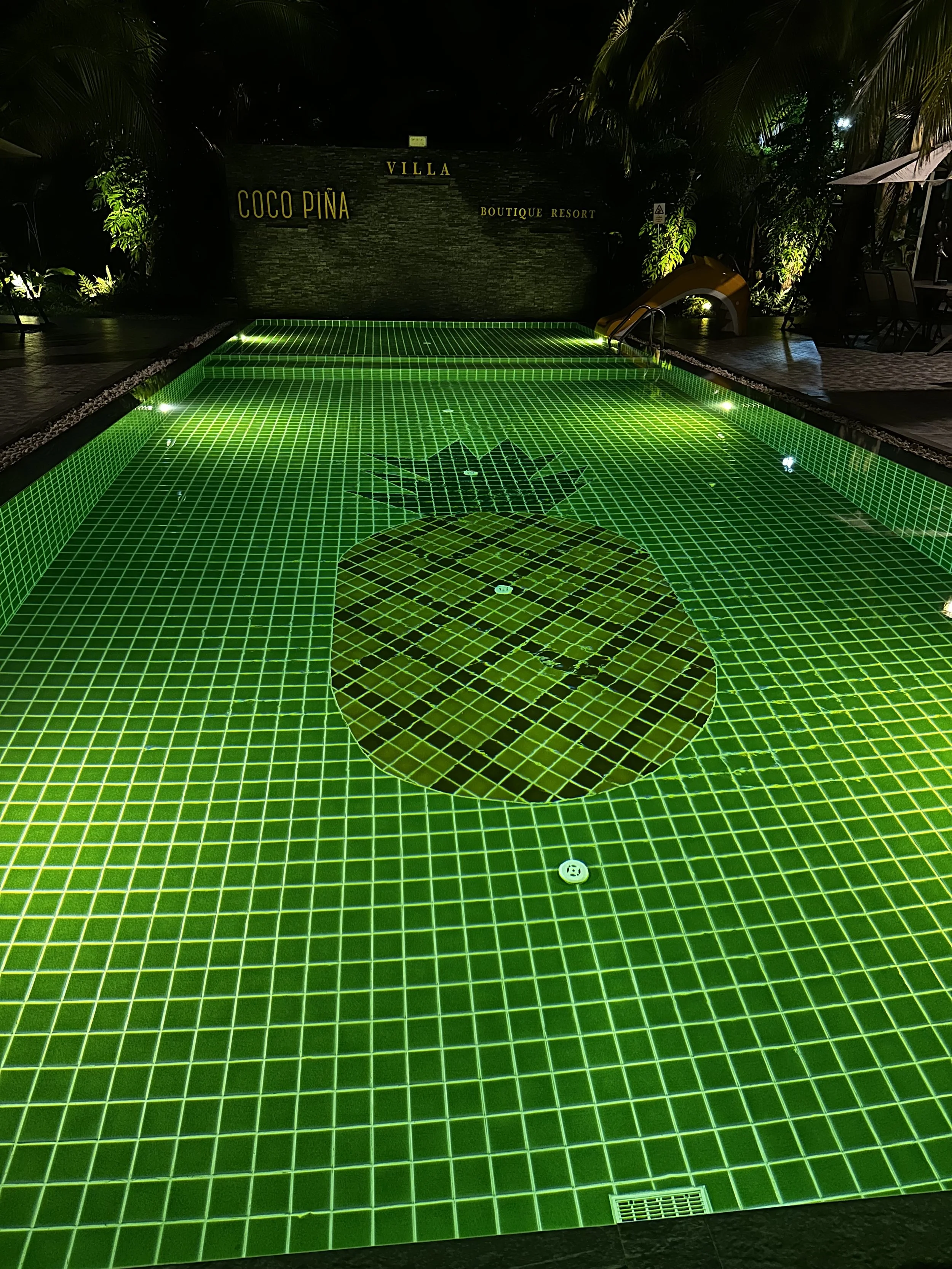
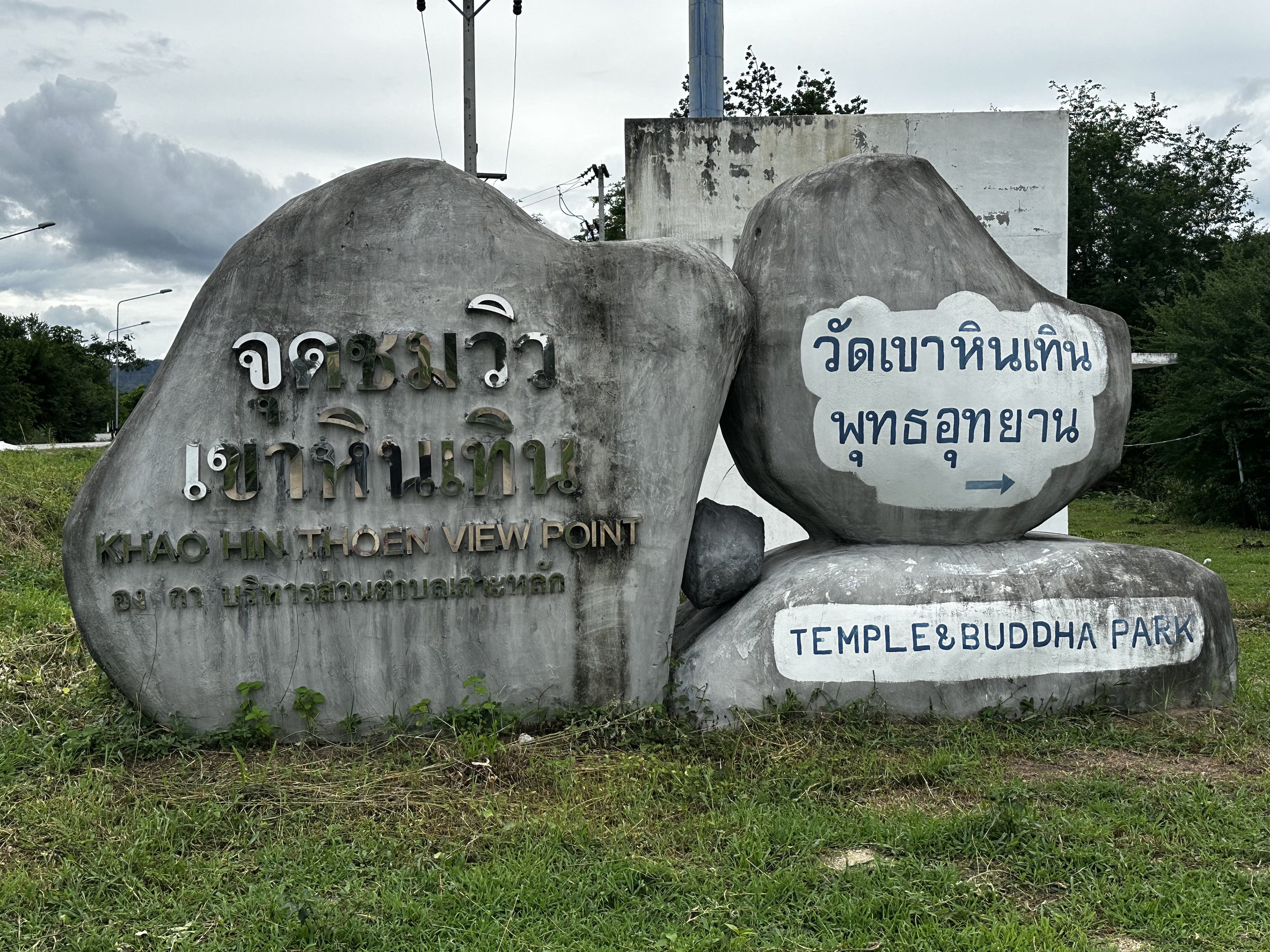
We still want to give a glimpse in this post, of our favourite spots in Thailand, when staying in Huay Yang. You can take a taxi or train to Prachuap Khiri Khan and we can recommend the Coco Pina hotel if you want to stay the night. The hotel is run by a friendly and service oriented family that speaks English. The rooms are carefully decorated, clean and we had our own little terrace and a beutiful pool!
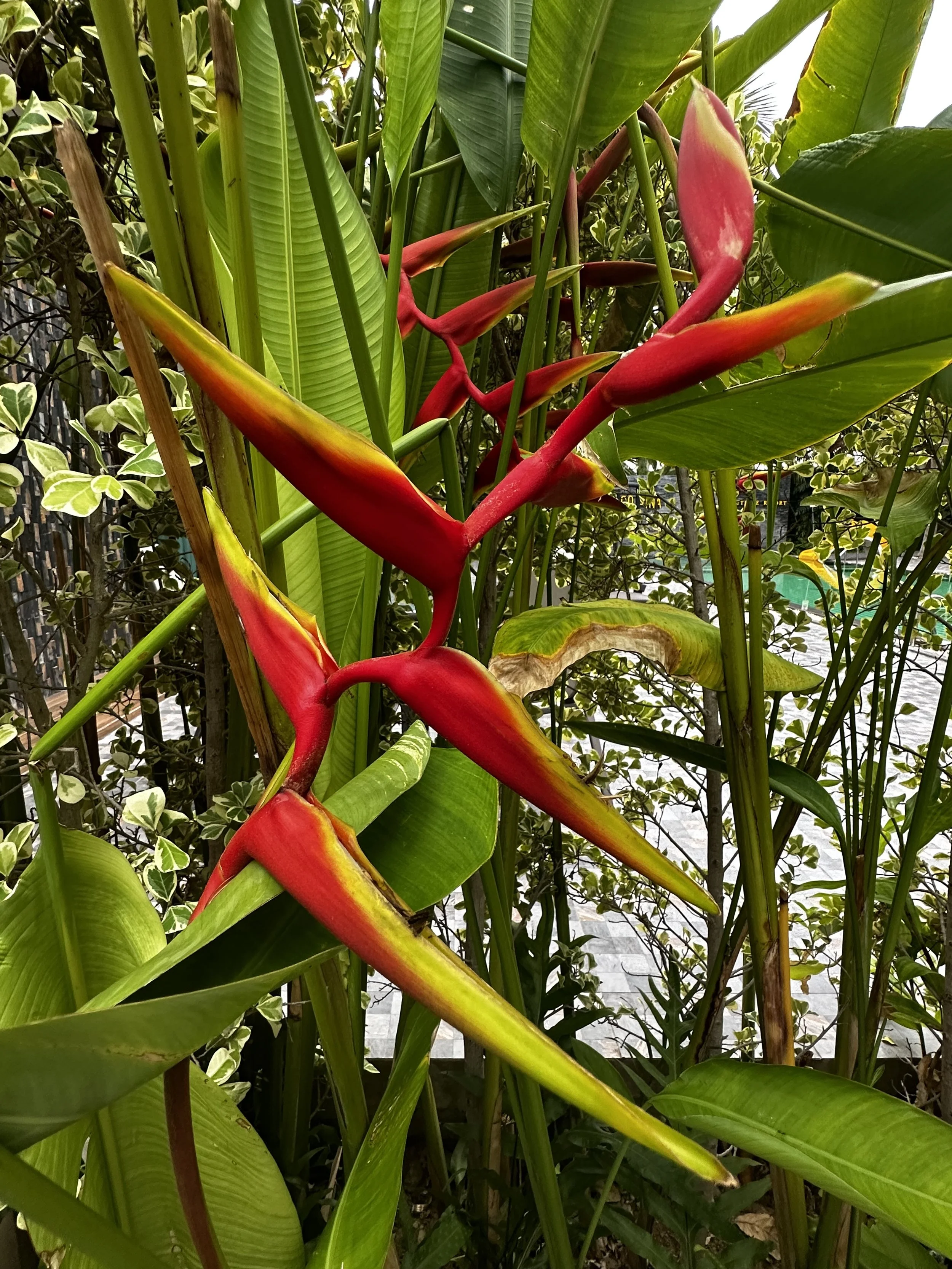
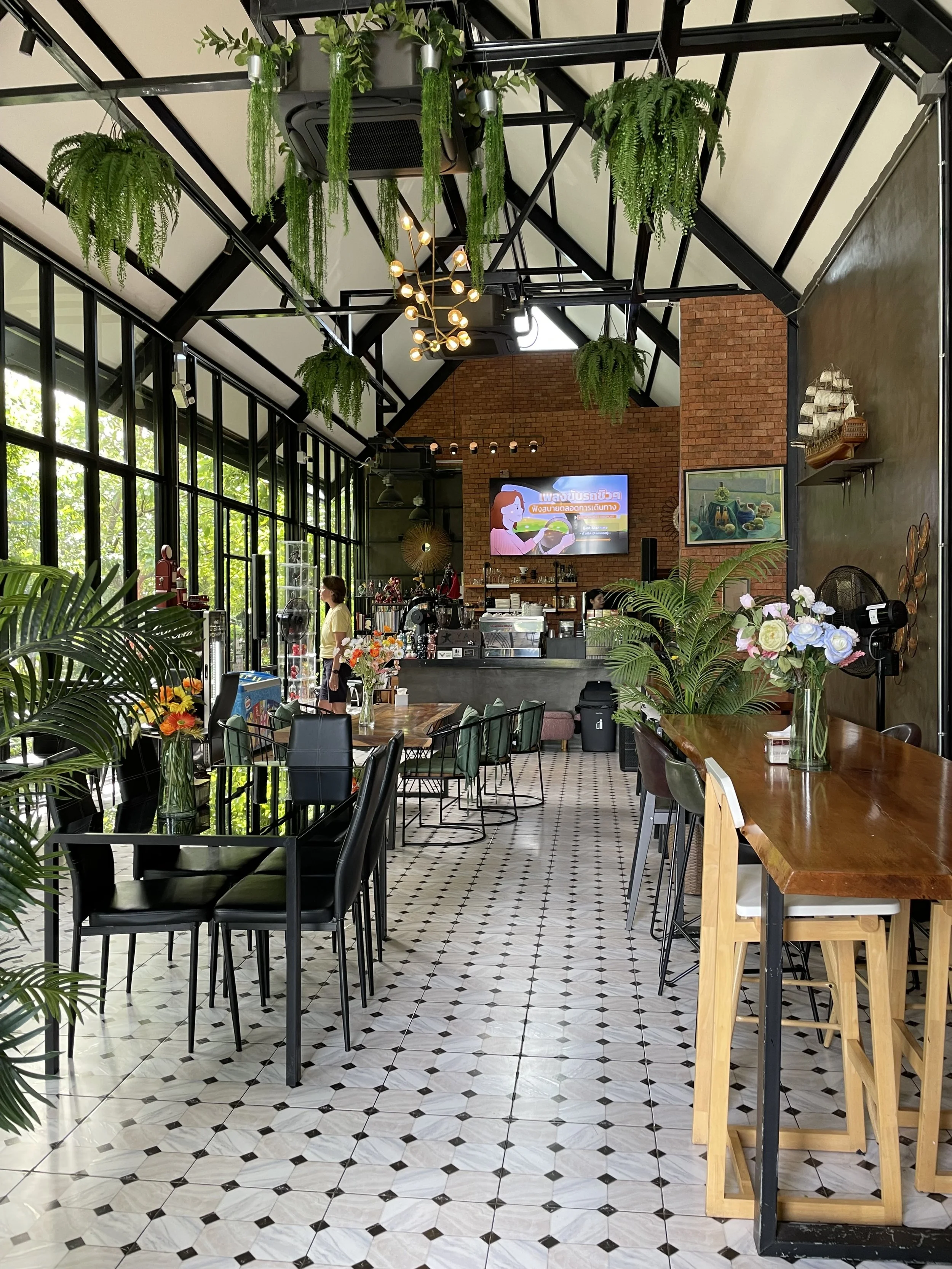
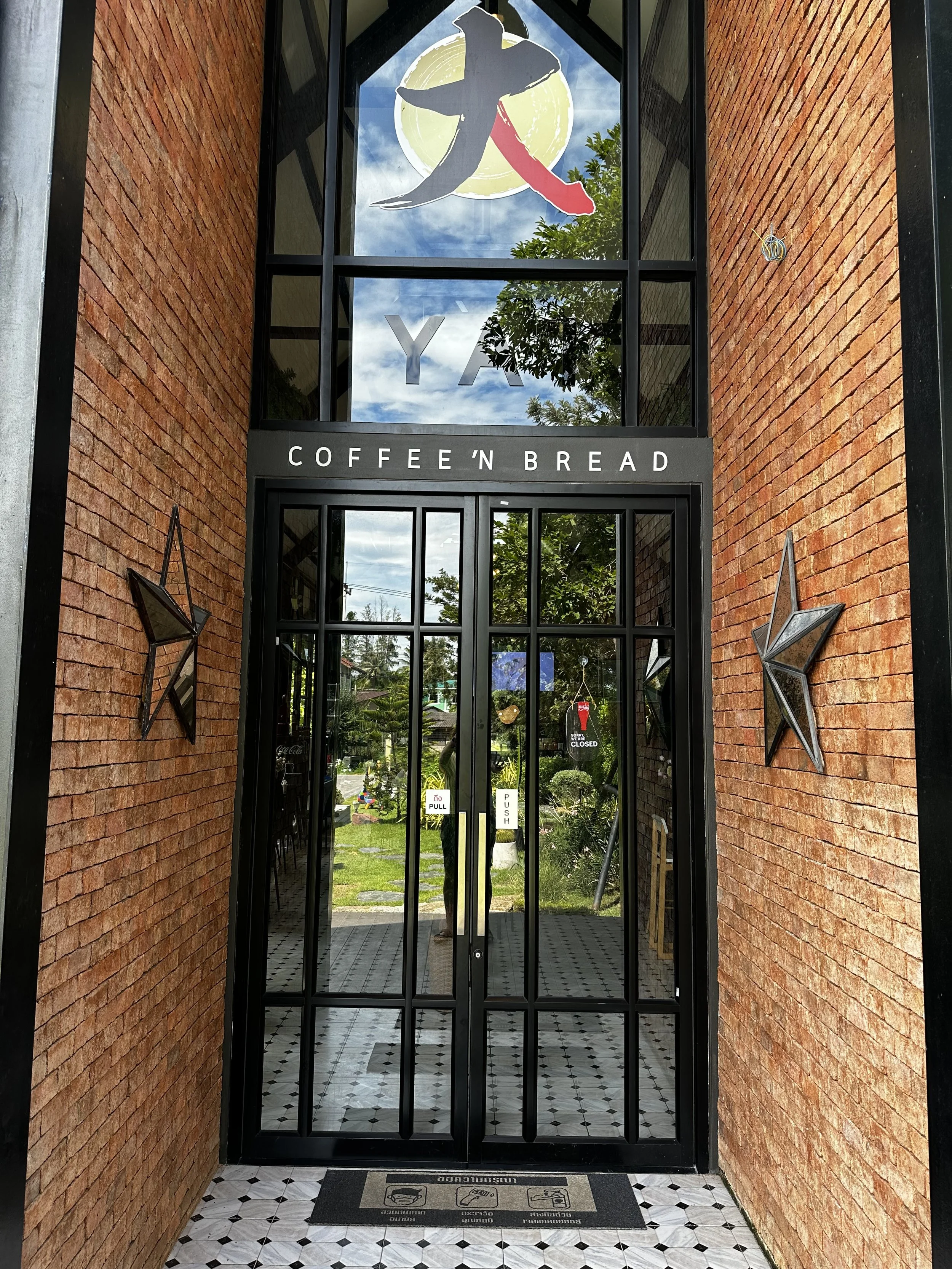
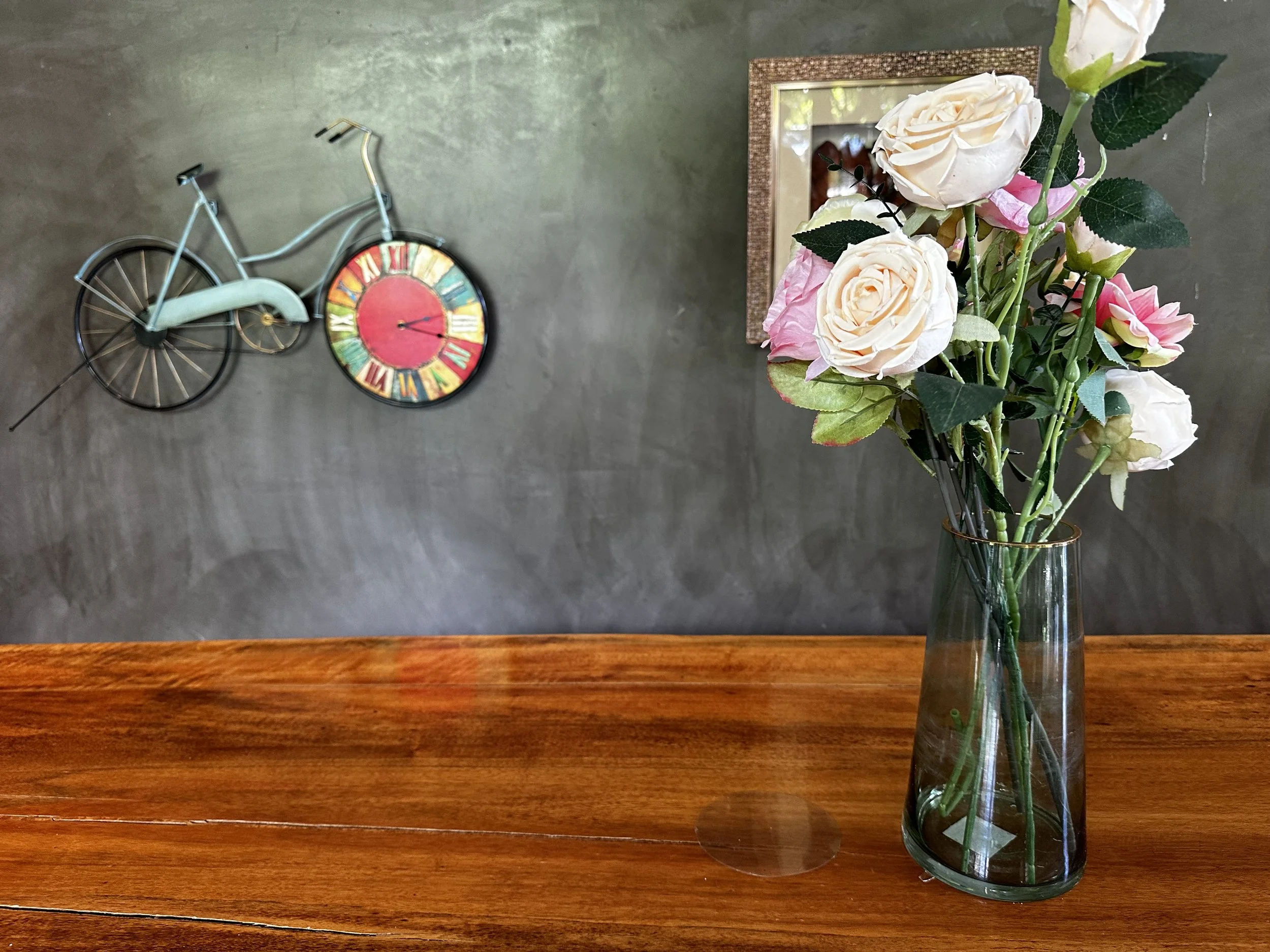
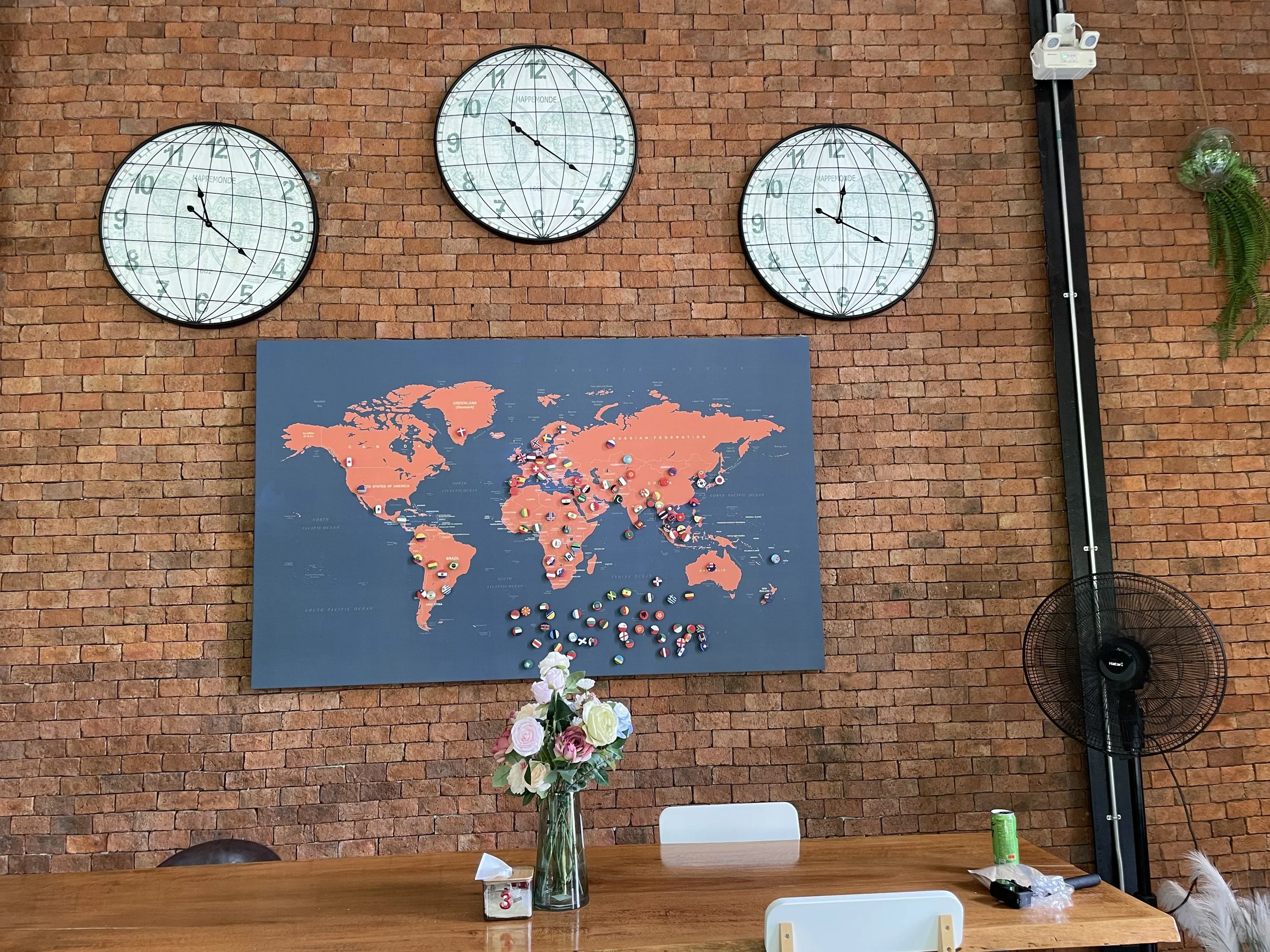
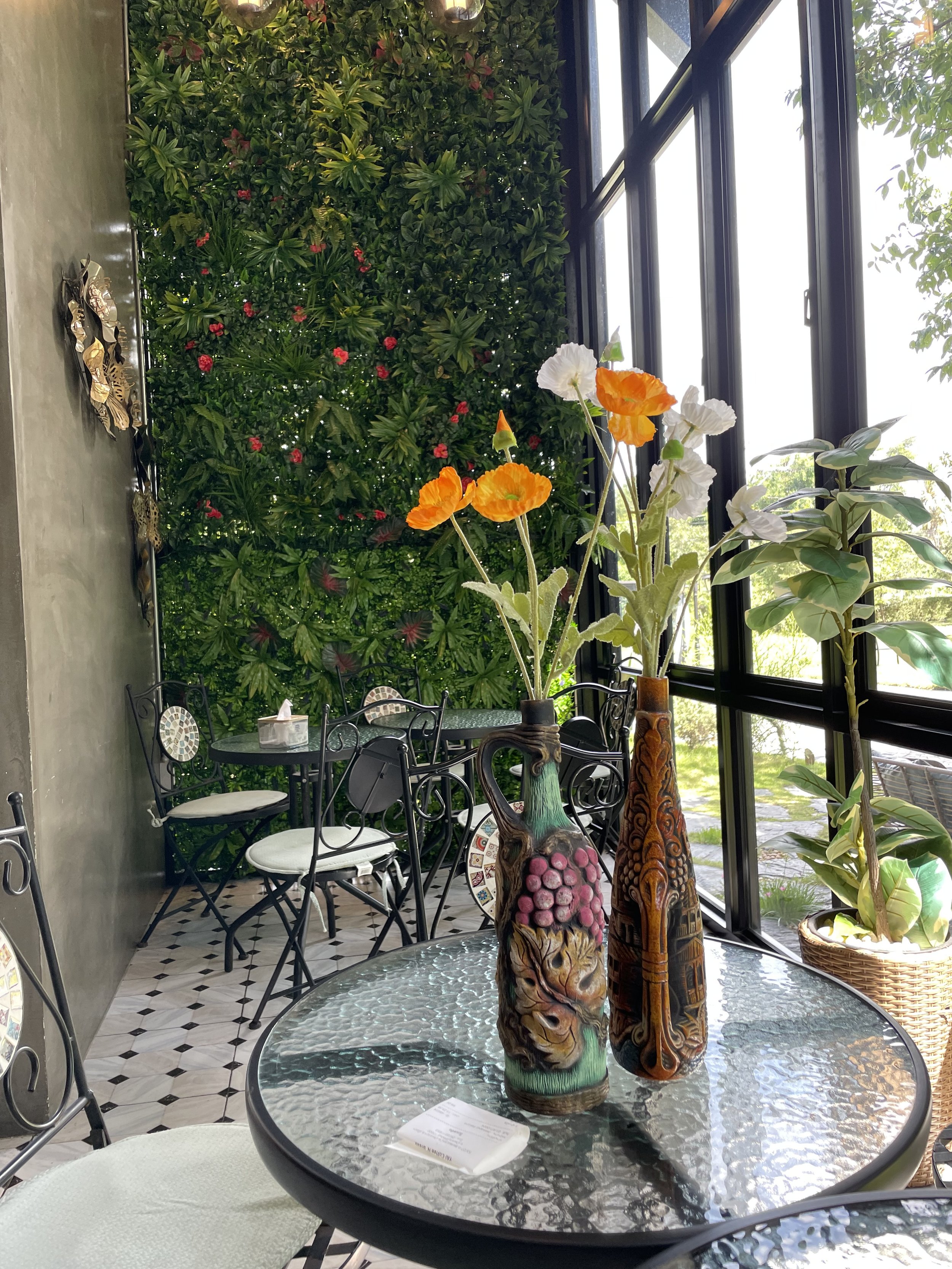
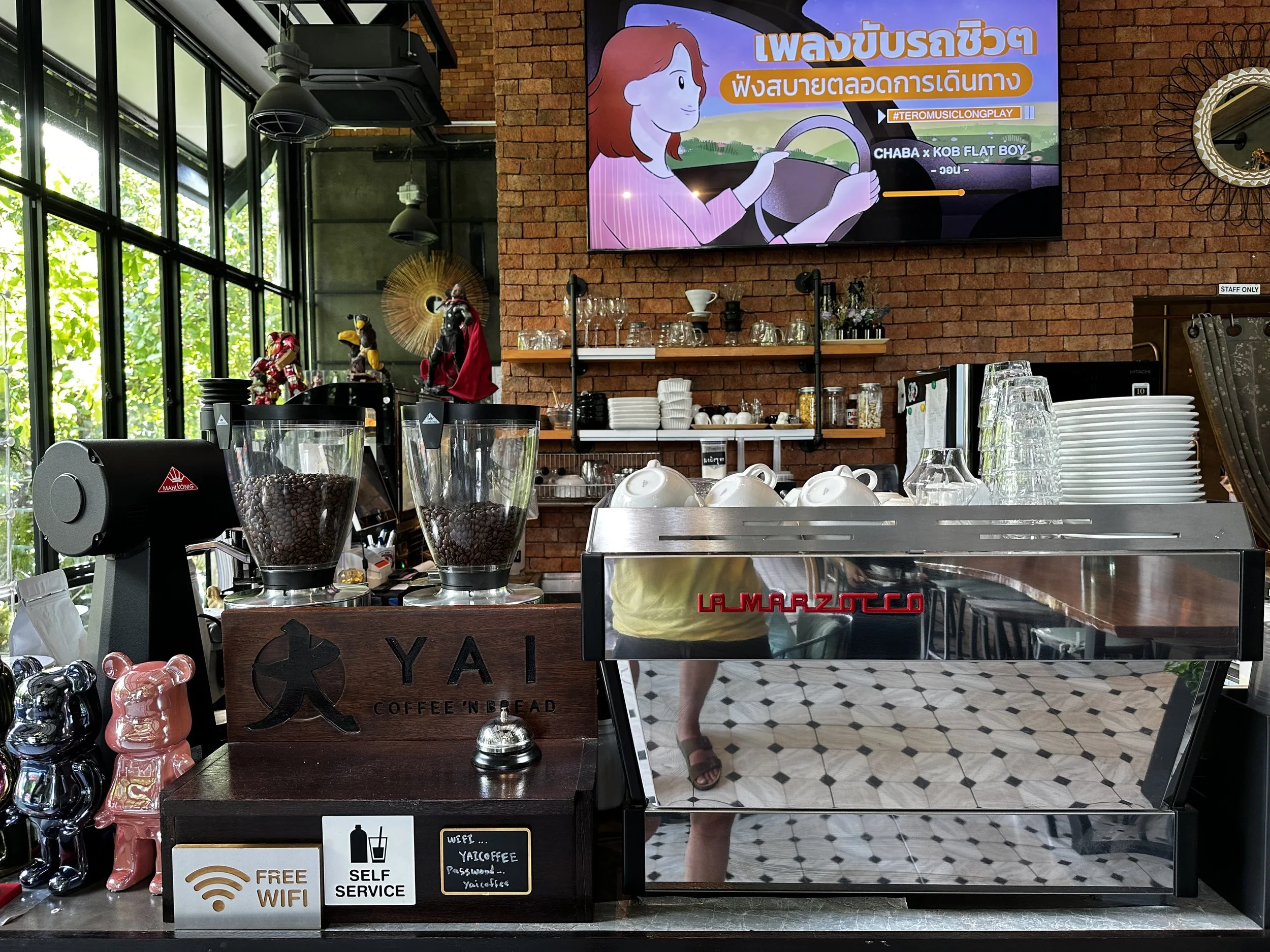
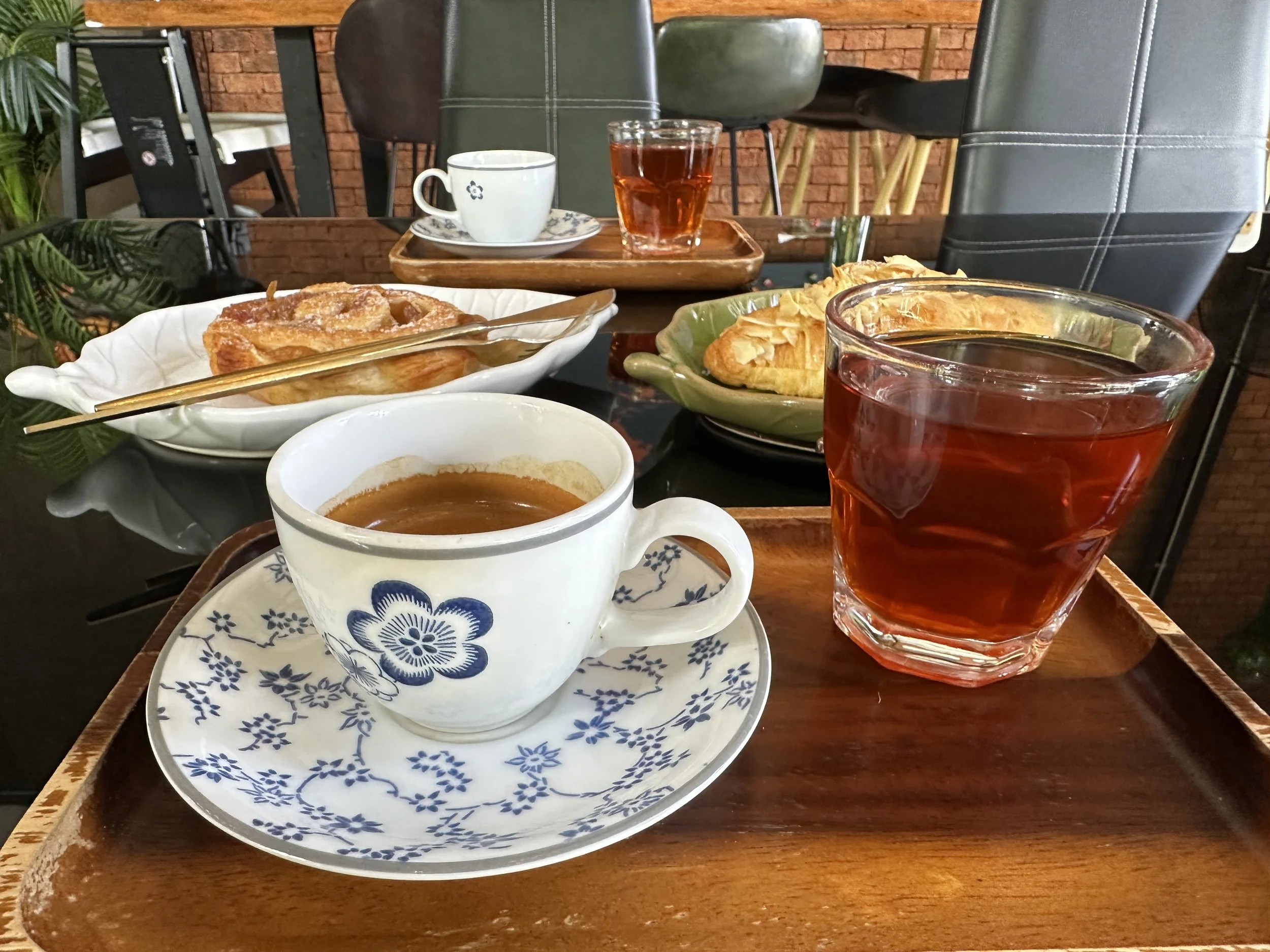
Next to the hotel is a wonderful Café and if you love photography you can spend some time here enjoying the atmosphere as well as delicous bakery and coffee. Don’t miss checking the photos below for details.
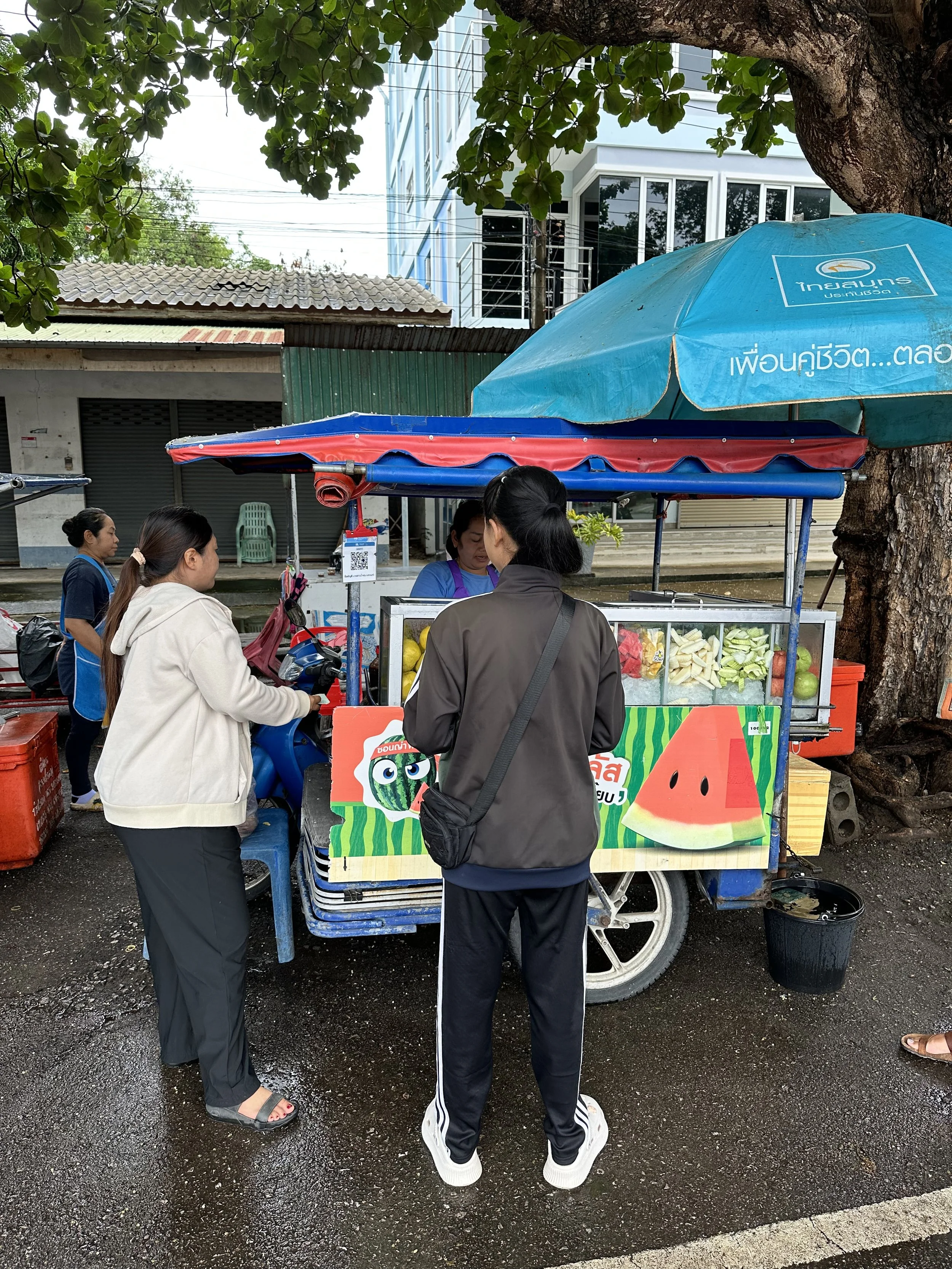
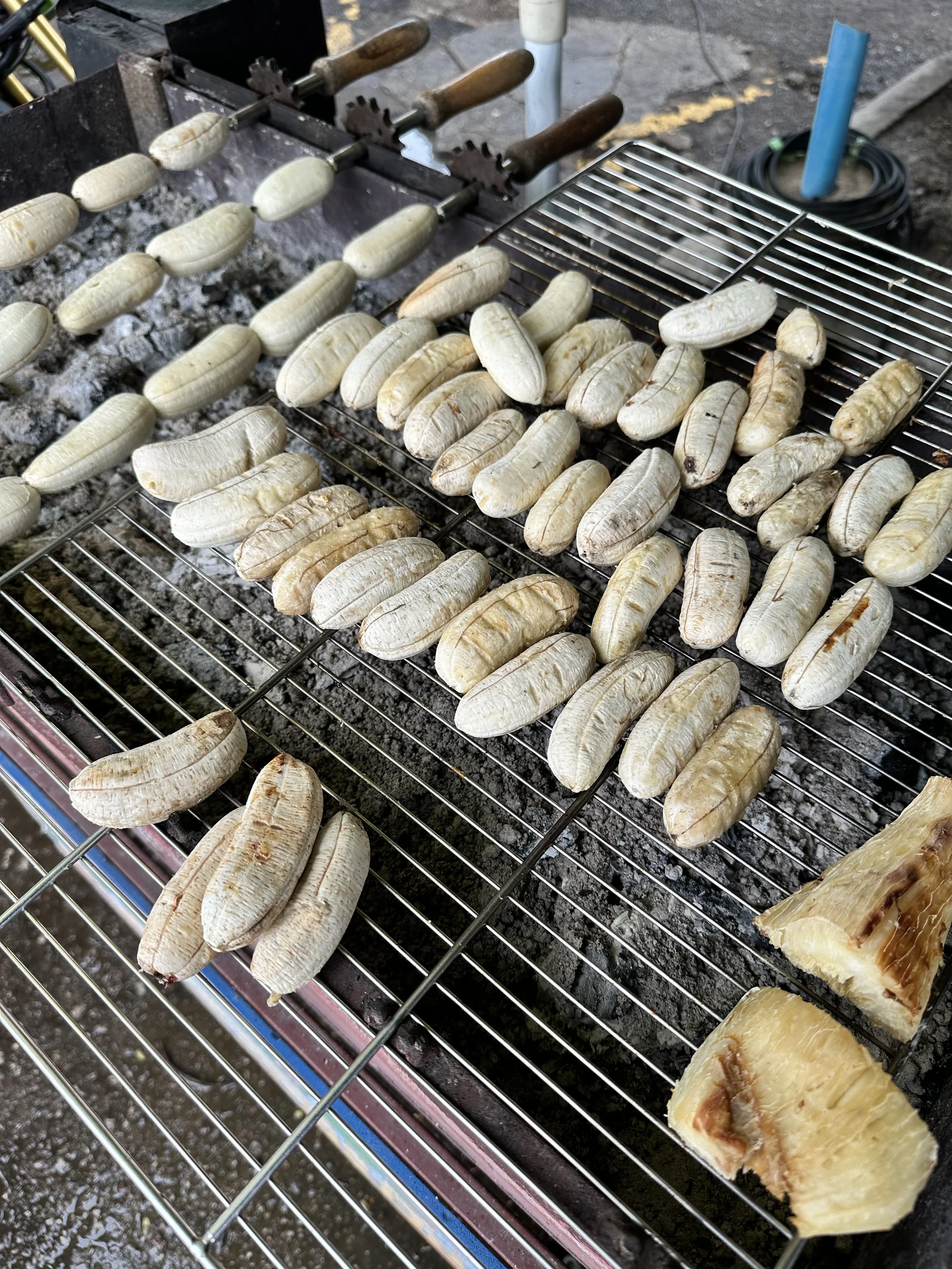
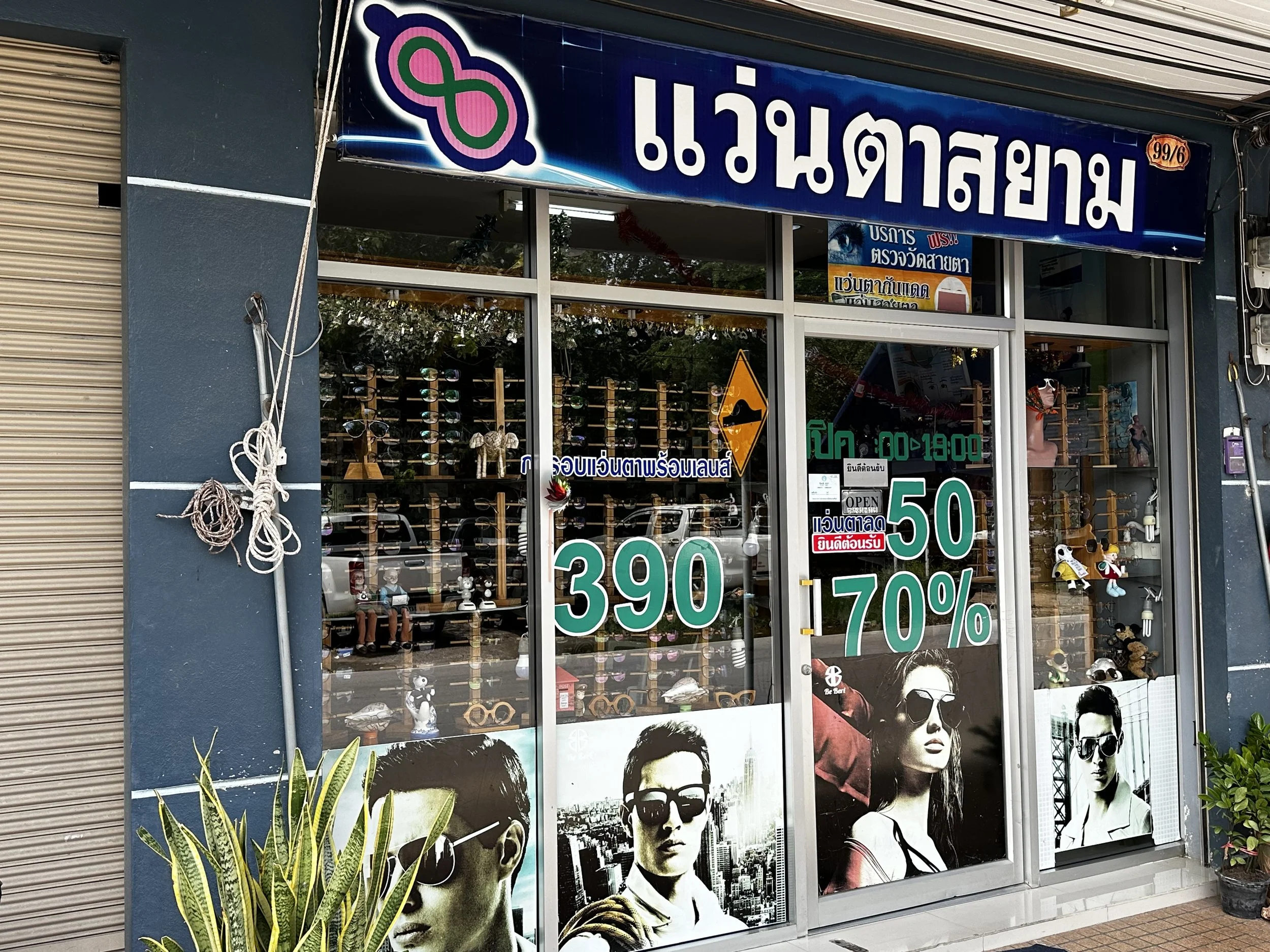
If you love street art and want a nice starting point to walk around, maybe take a break for a massage, we can recommend starting near Sue Suk Road. Check out the street art examples here. Then visit the Fujisan Restaurant for authentic Japanese food with homemade ice-cream.
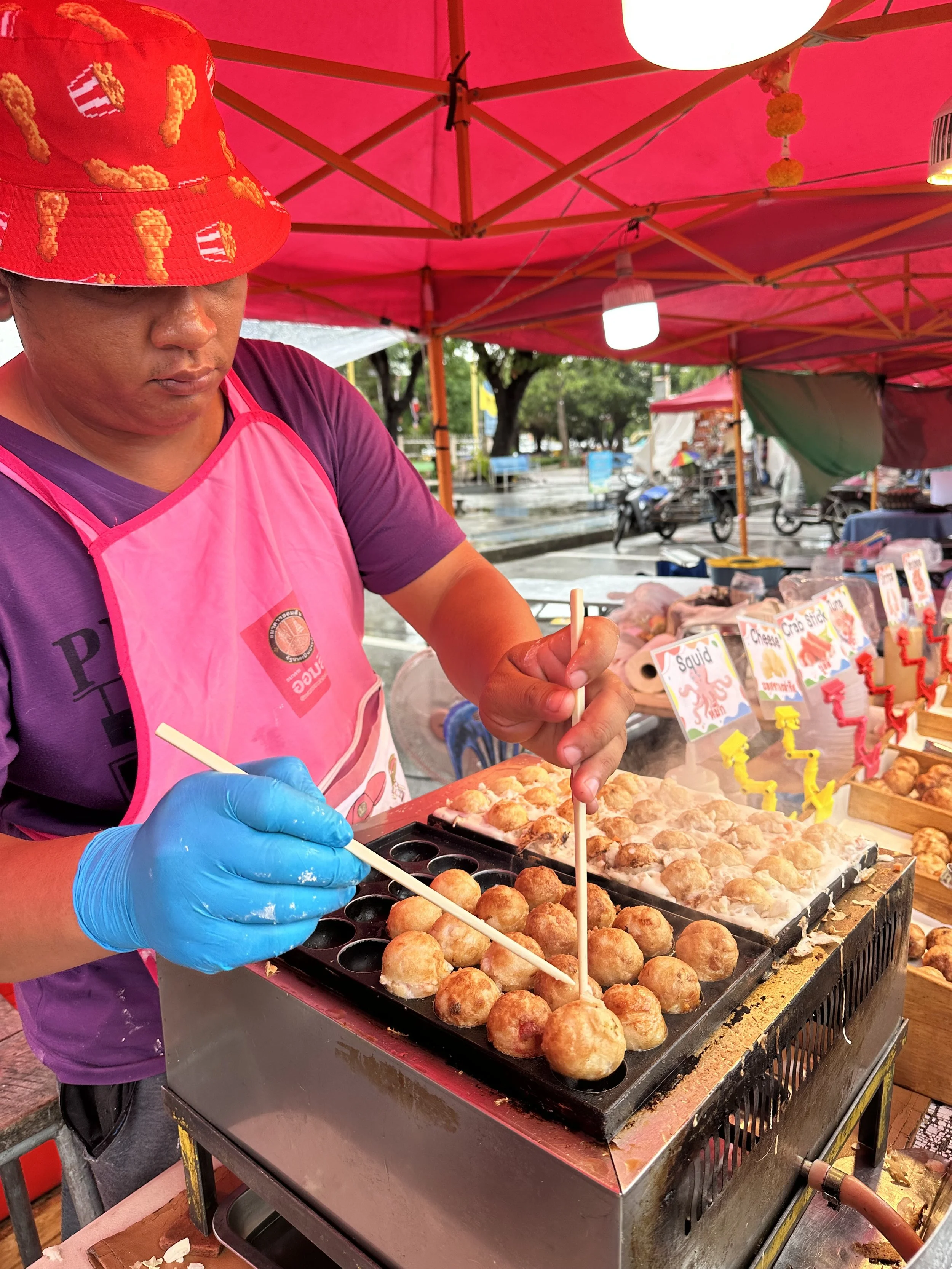
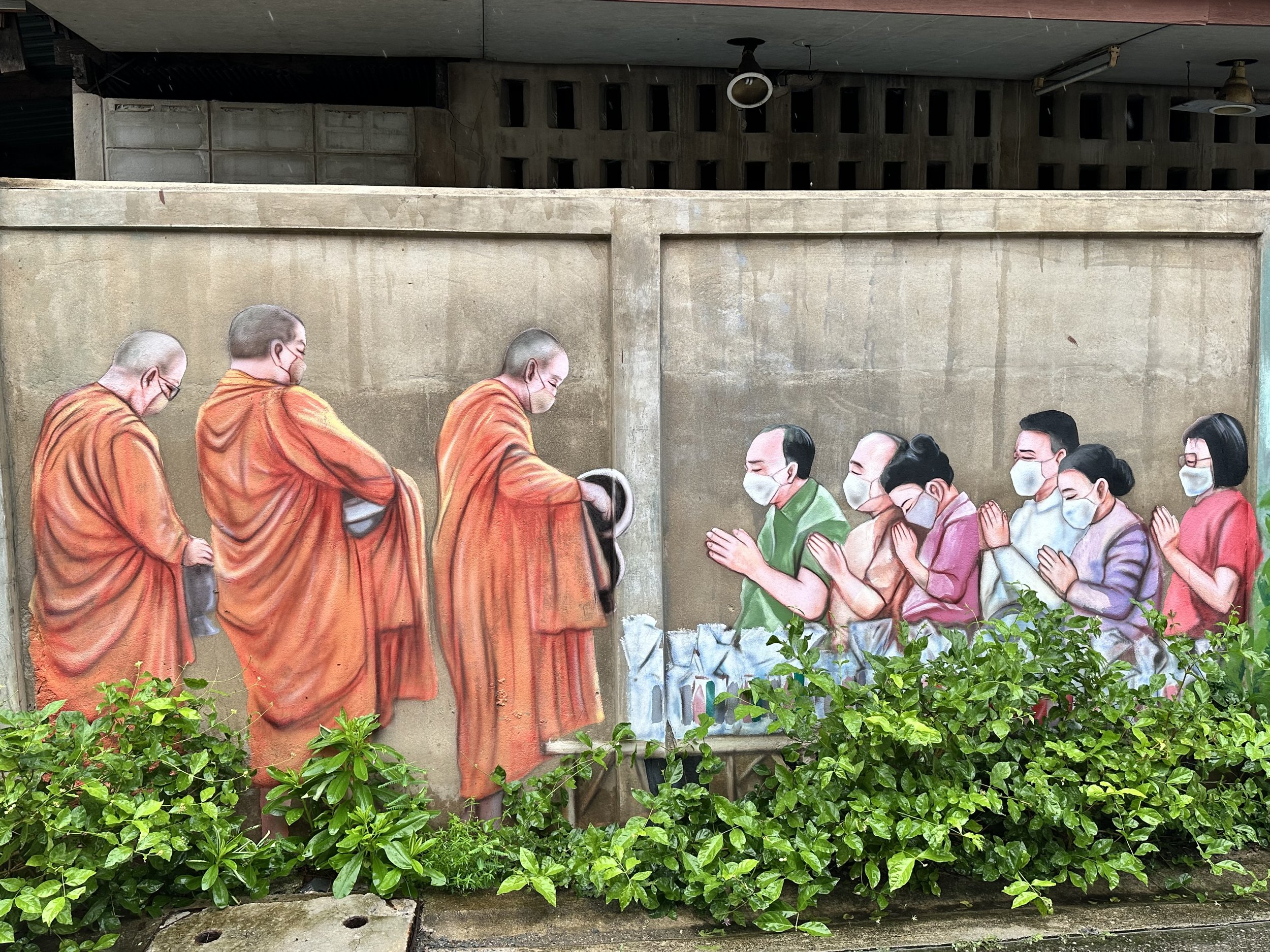
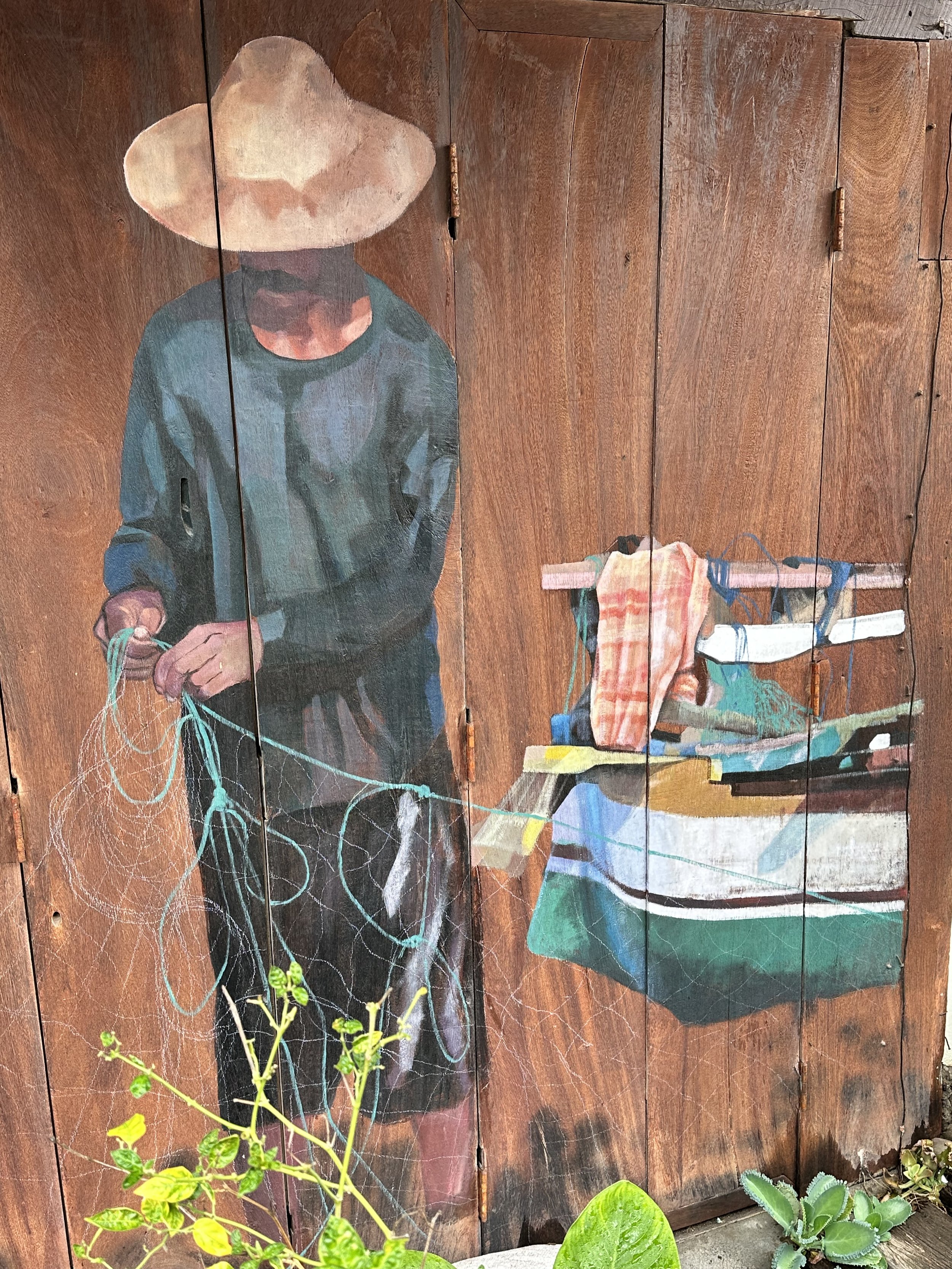
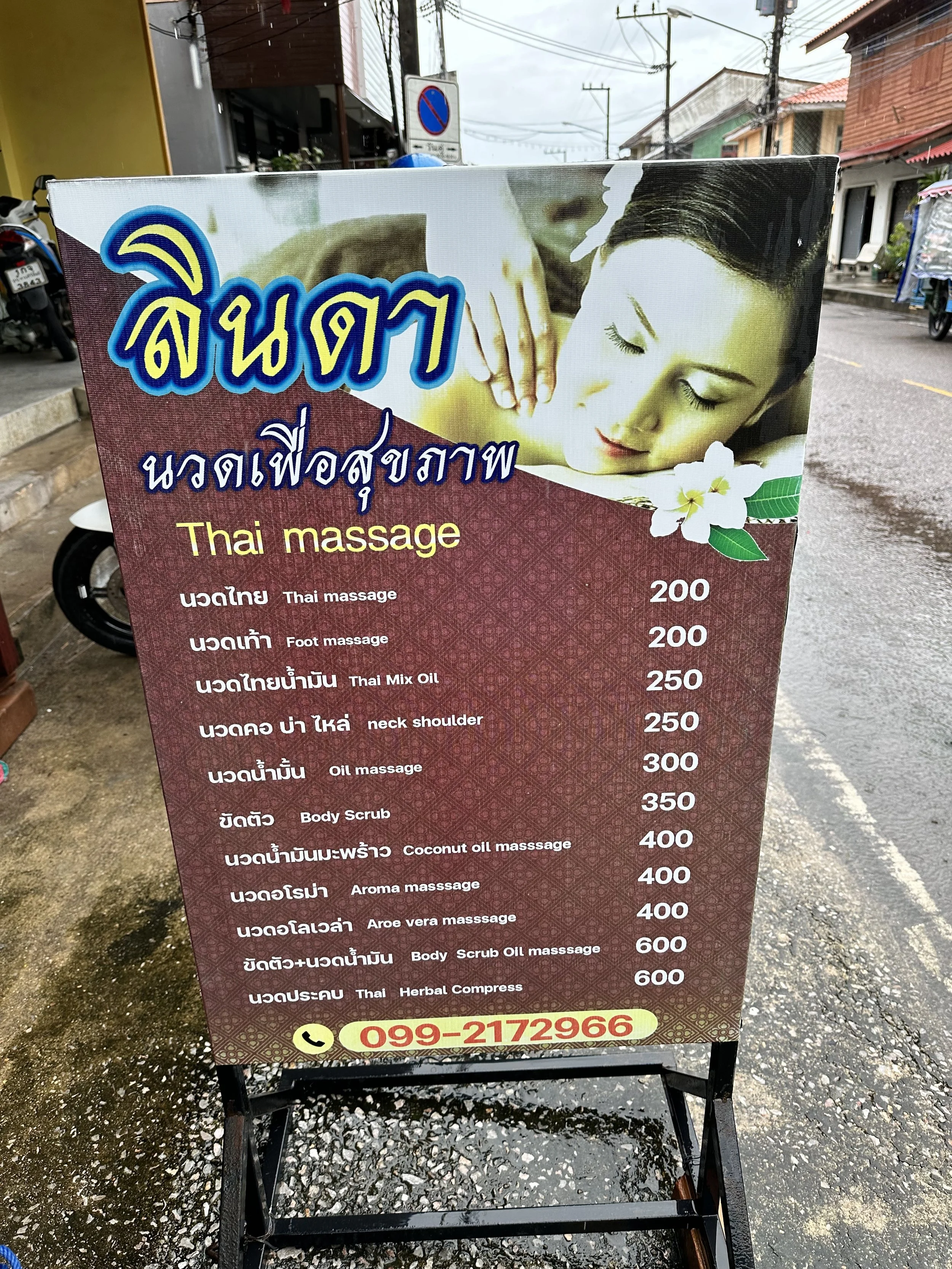
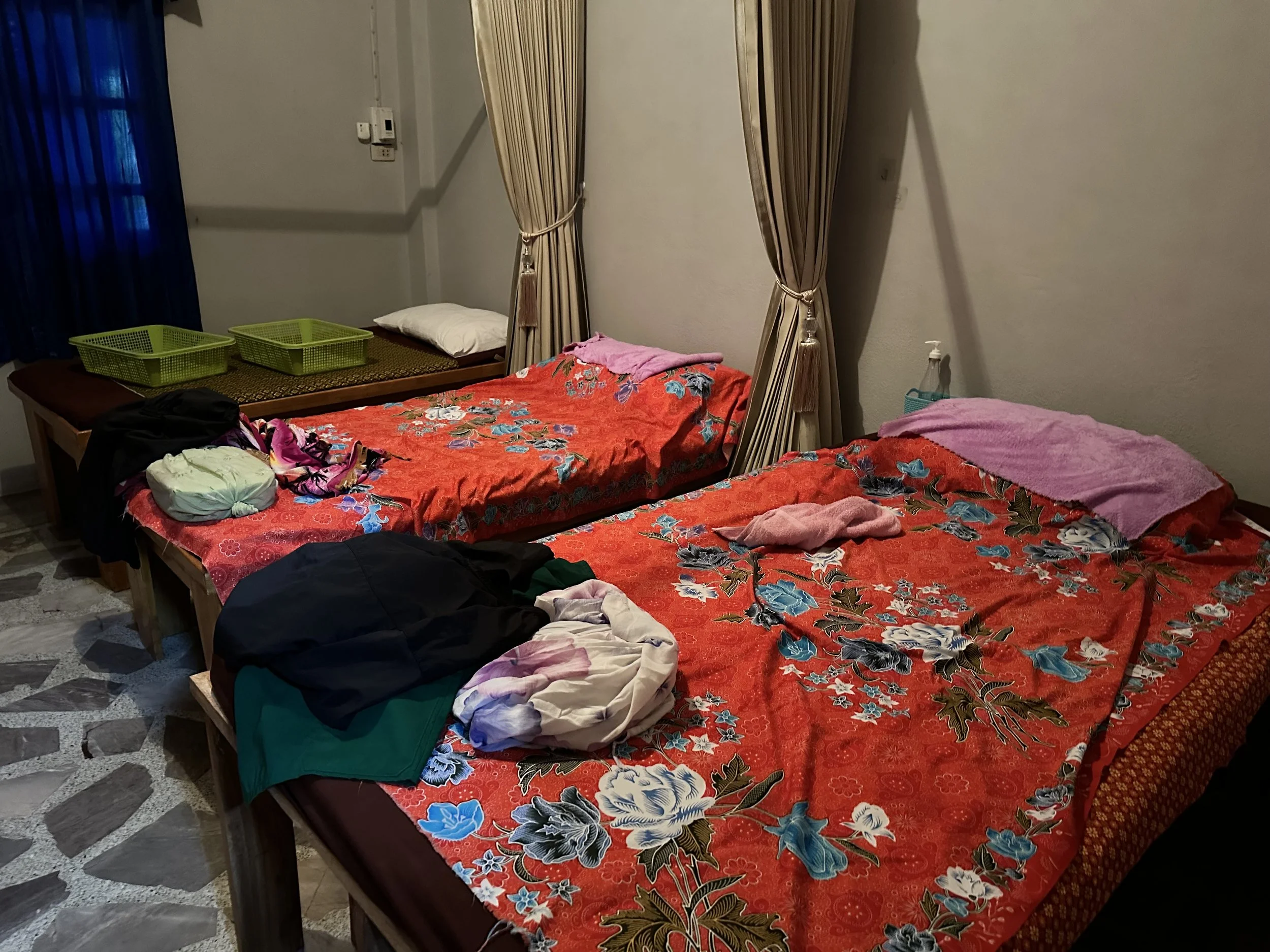
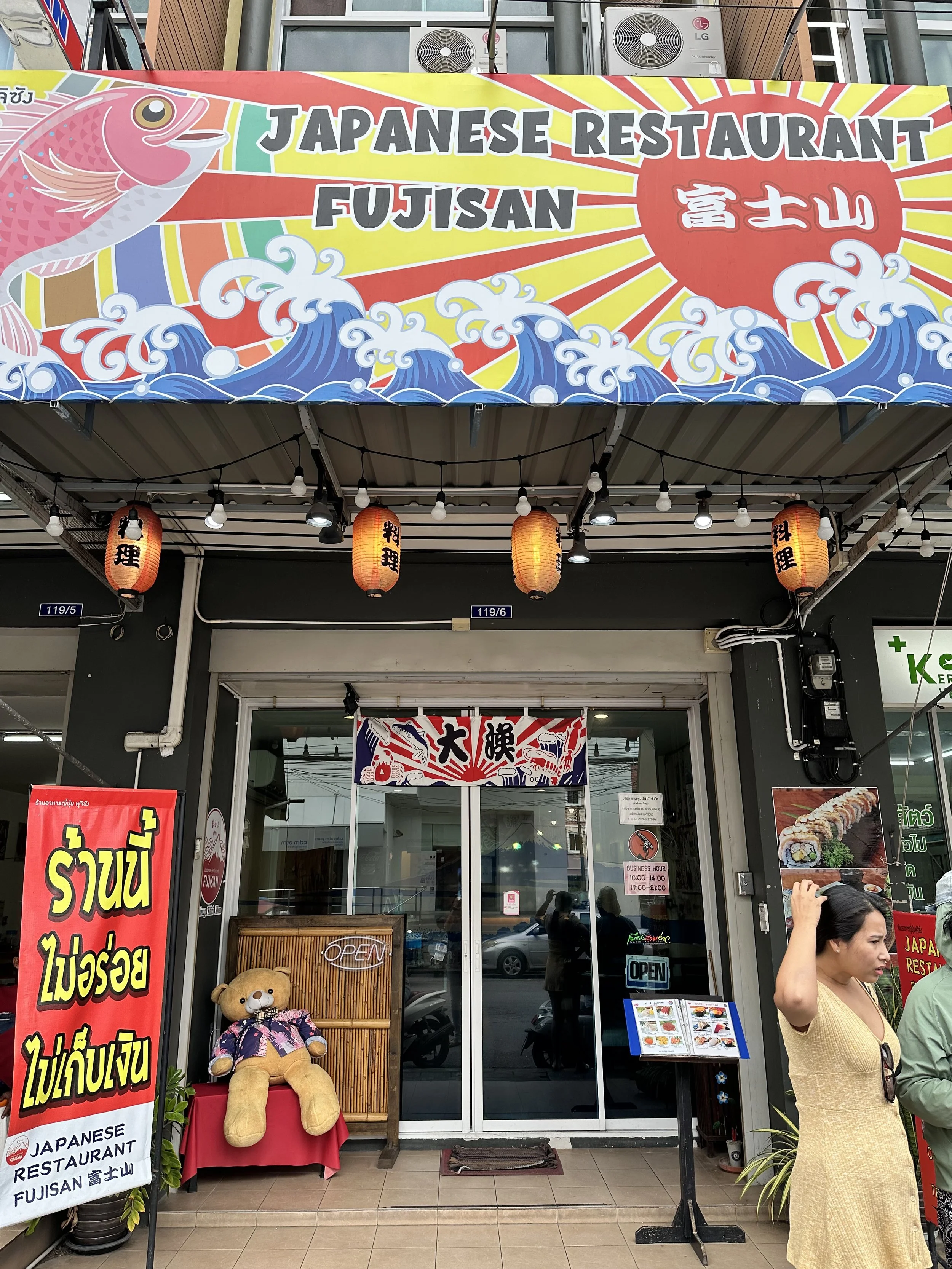
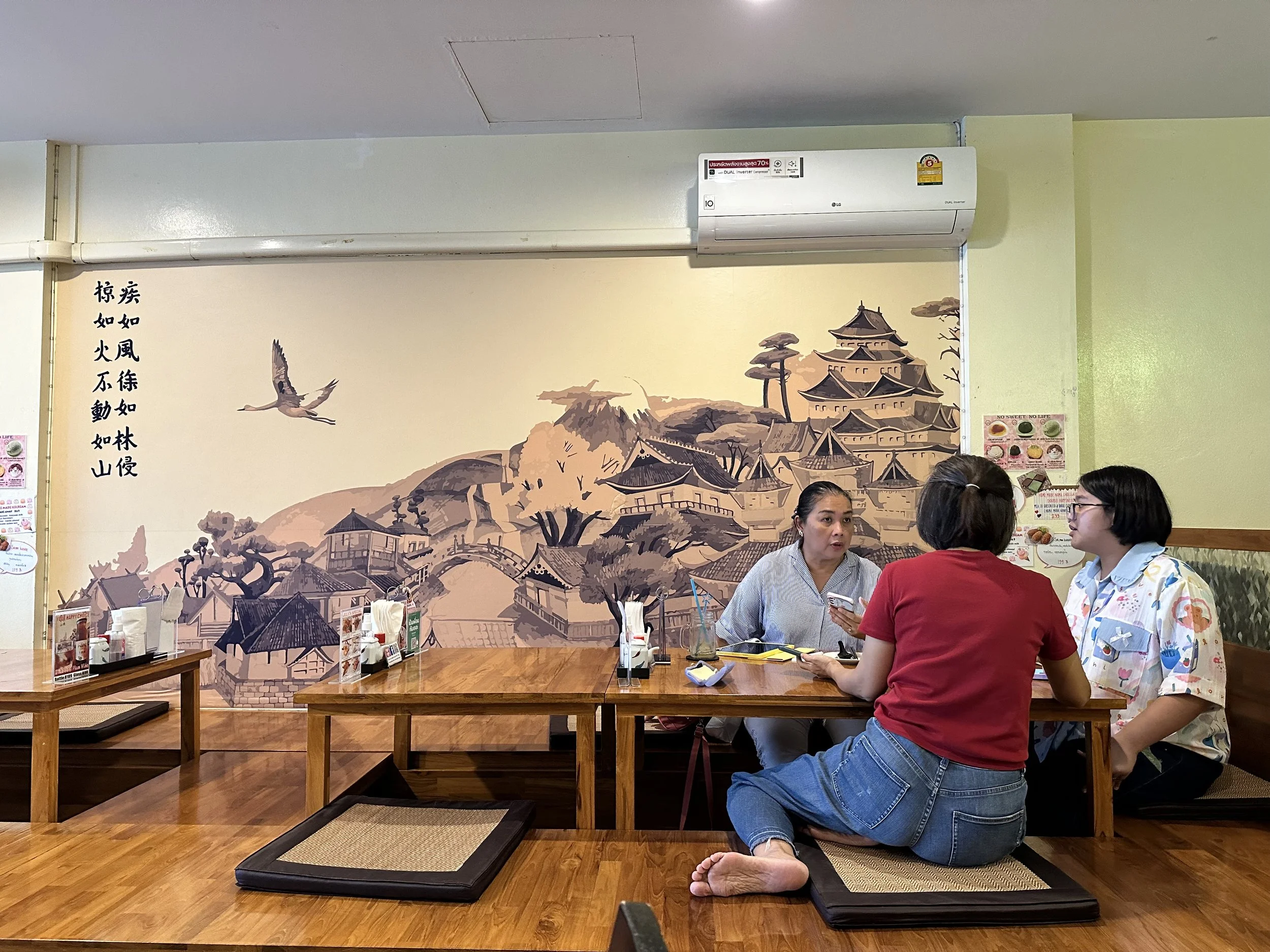
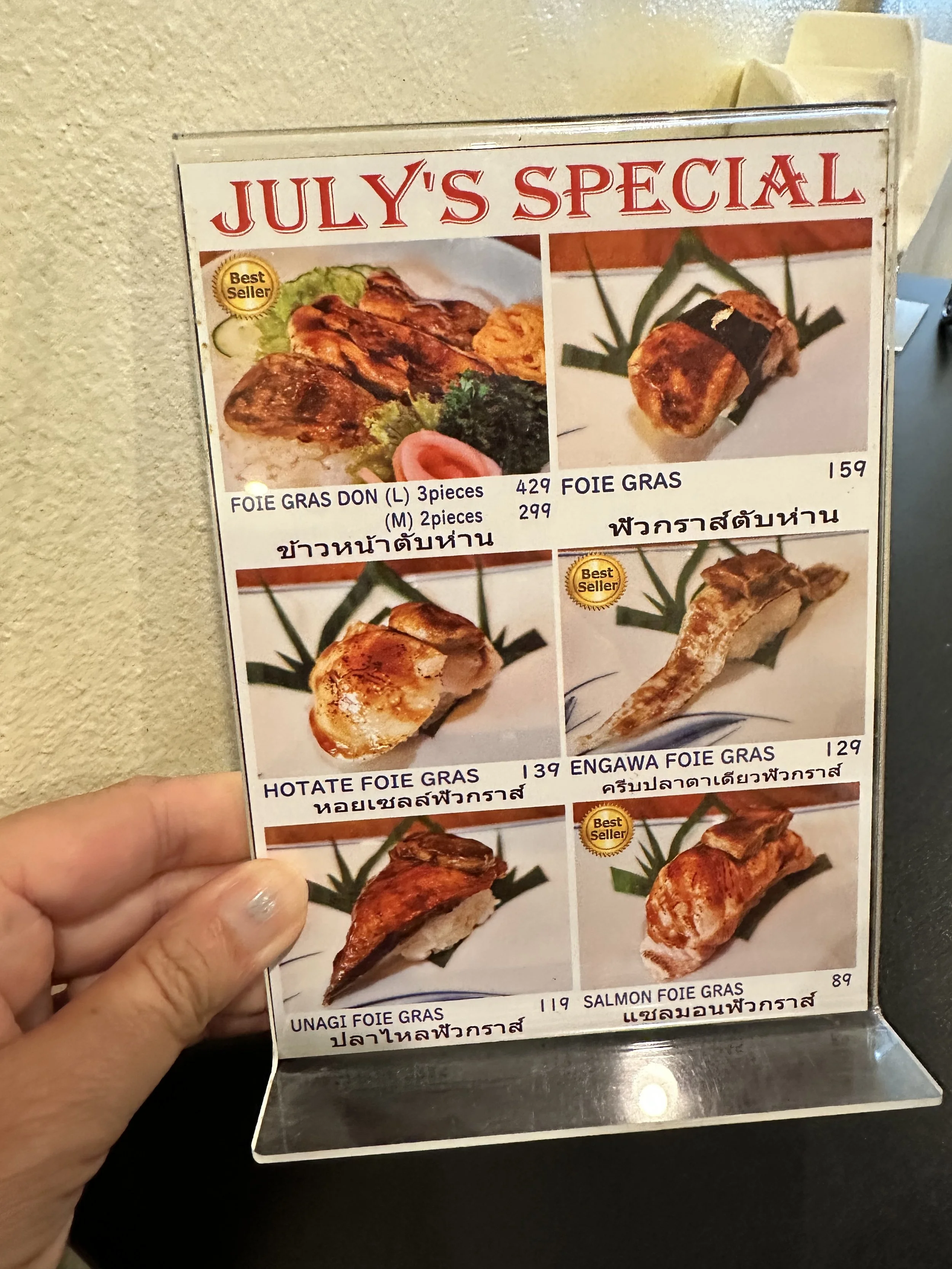
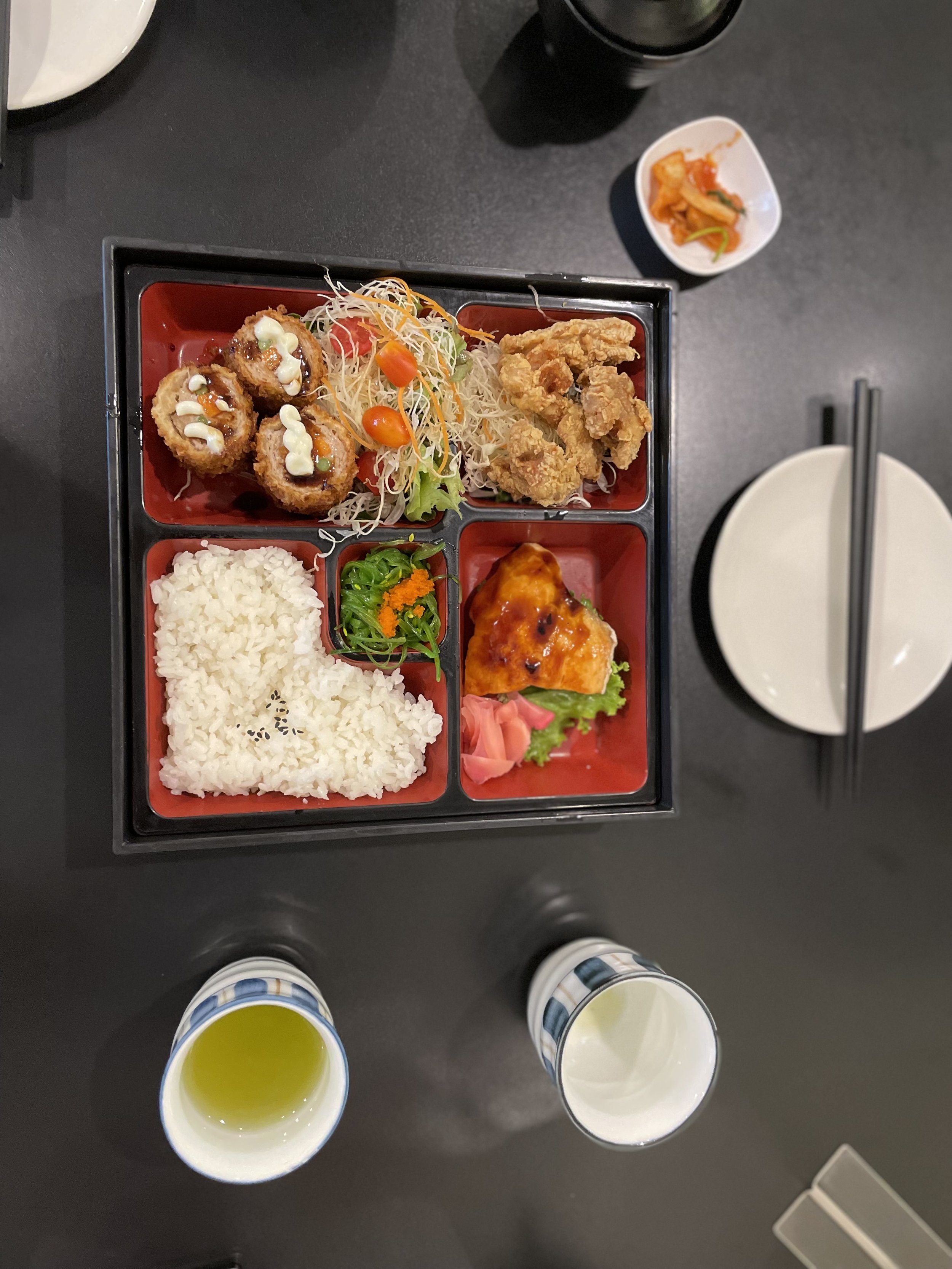
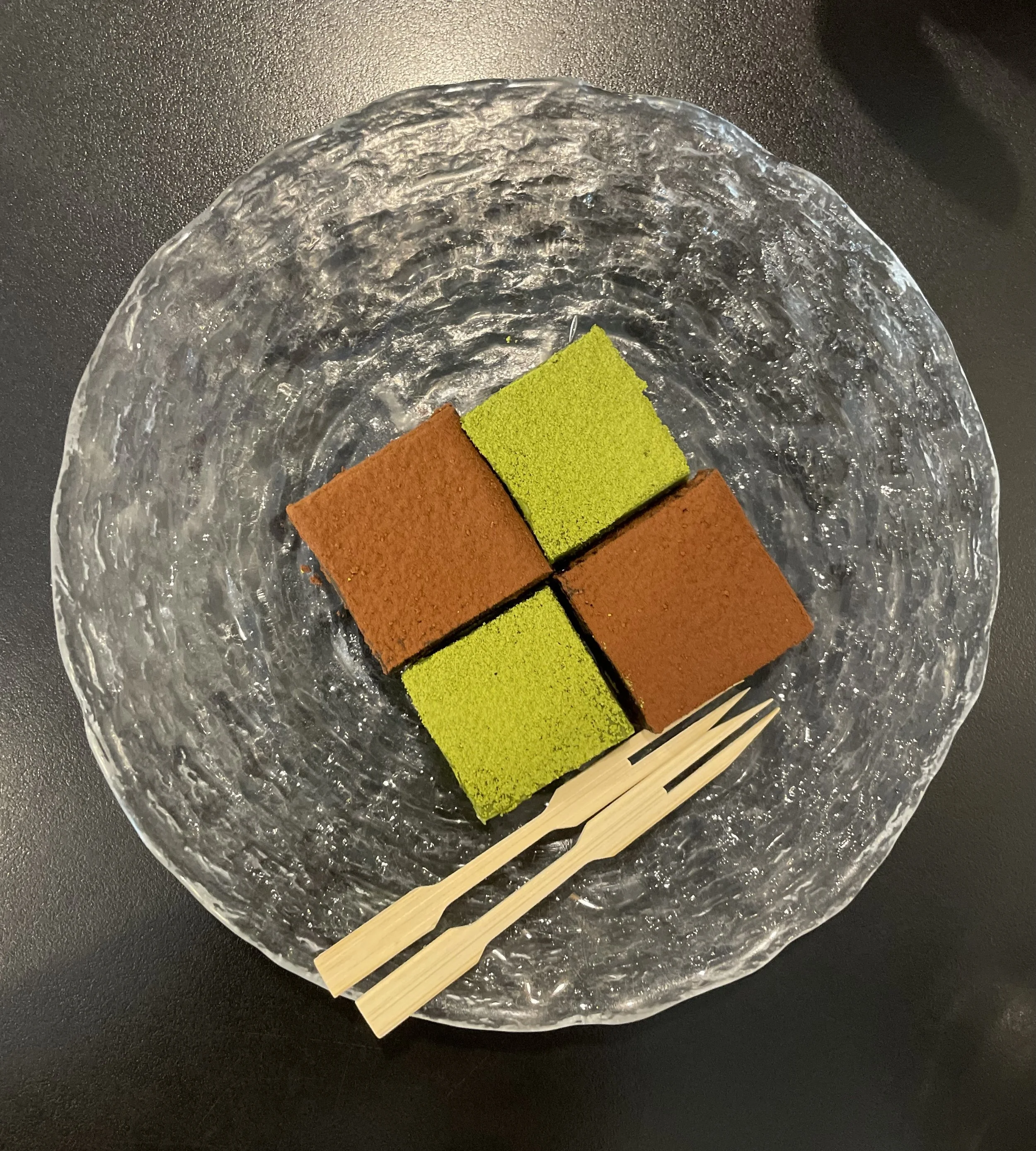
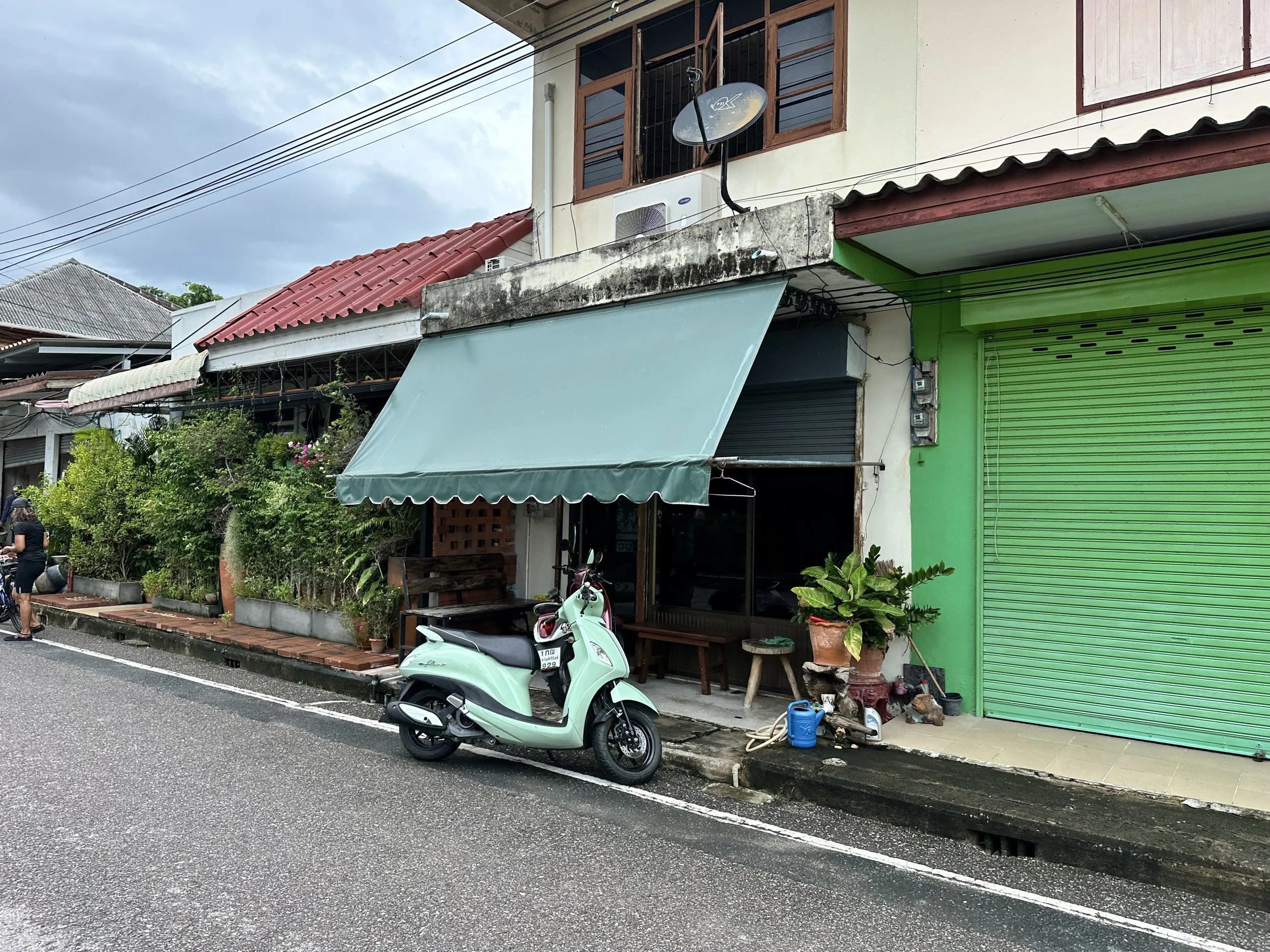
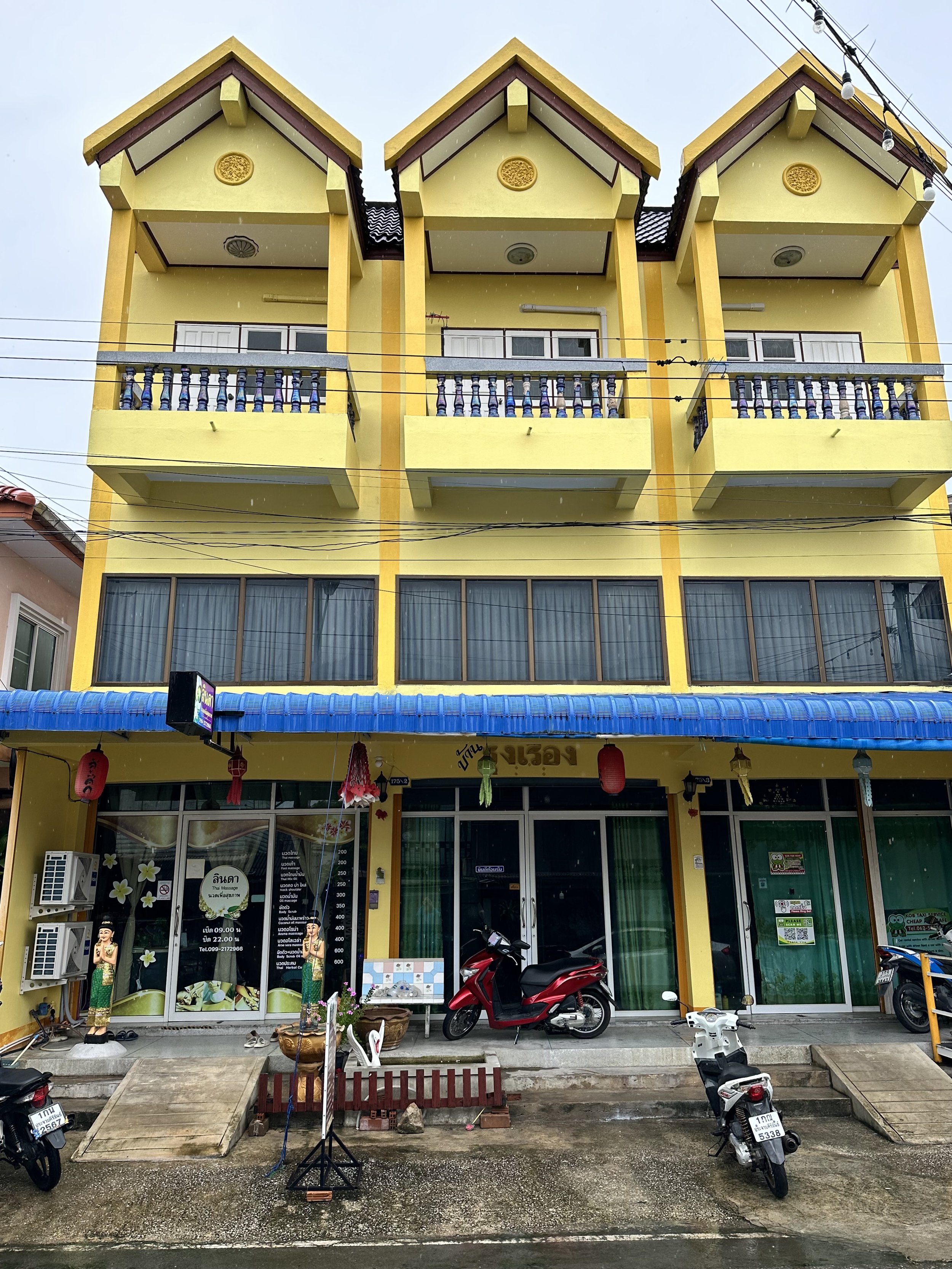

Hua Hin is the contrast we enjoy when we want a bigger town and shopping, but it is a longer drive or train ride. We will make a separate post about Hua Hin and what our experience is about this popular place in Thailand.
Shopping malls. Softer beaches. Night markets. Desserts. Drinks. Familiar brands. Noise, colour and choice. For a day or two, it is fun to step into that version of Thailand too.
Then we return. Home to Huay Yang.
The people who make a place familiar
A place becomes different when people begin to remember you.
It does not have to be dramatic. It can be as simple as a smile, a wave, a question about how long you are staying this time. A scooter rented without friction. A favourite dish made again. A conversation at a café. A familiar face in a supermarket. A Swedish neighbour seen before. A Thai friend who has become part of how the village feels. A few more words in Thai language for every time we return.
Travel often promises discovery, but there is another kind of pleasure in being recognized.
Not as someone important.
Just as someone who has returned.
The animals become part of that recognition too. Dogs and cats we stop to greet. Chickens in the road. Roosters starting the day before we are ready. Lizards moving like small prehistoric shadows. The occasional snake, never welcome exactly, but always part of the truth of the place.
Huay Yang is not cleaned of life.
That is why it feels alive.
What the senses keep
If we tried to describe Huay Yang only with places, we would miss it.
It is also fresh laundry in warm air.
Food cooking before we see the kitchen it comes from.
Coconut water.
Flowers.
Hot roads.
Rain on the terrace.
Fruit juice running down fingers.
A plastic bag of takeaway swinging from the scooter.
A towel drying over a chair.
The sound of dogs answering each other across fields.
A rooster with too much confidence.
Scooters passing in the distance.
Wind in palms.
Water in the pool.
Cutlery against plates in a beach restaurant.
A market voice calling something we do not understand.
These things are difficult to photograph, but they are often what return first in memory.
Long after a trip, you may forget the order of days. You may forget what you did on a Tuesday. But the body remembers atmosphere. The body remembers where it was allowed to soften.
Why we keep comparing everything to Huay Yang
We still want to see other places.
We talk about going back to Greece, Vietnam, Italy and Spain. We talk about going to other places for the first time: Bali, the Philippines, Peru or Turkey. We love nature, history, roads, local food, small towns, big cities, markets, temples, beaches and beautiful stays. Curiosity is not the problem.
The problem is that Huay Yang is not competing as a destination.
It is competing as a life.
A new place asks questions. Where should we stay? Is the beach good? Is it too touristy? Too quiet? Too expensive? Too crowded? Too difficult to reach? Will the weather work? Will the food be easy? Will we relax? Will the place feel right?
In Huay Yang, most of those questions have already been answered.
We know where to go for fruit. We know where to swim. We know the roads we like. We know where to get a massage. We know which day can become Hua Hin and which day can stay by the pool. We know where to eat when we are tired. We know how it feels to wake up there. We even know we enjoy doing nothing on the days the rain is falling.
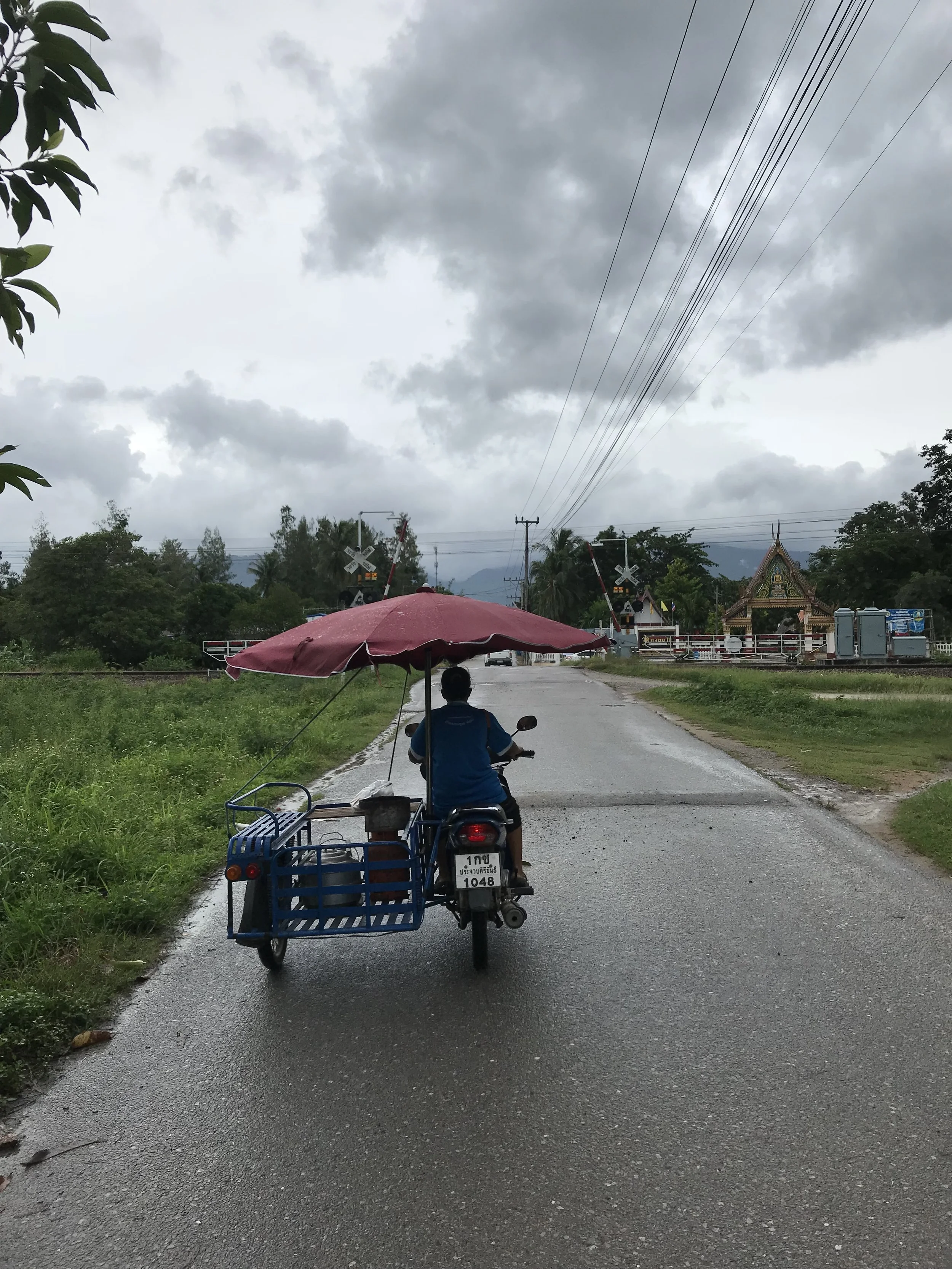
Rain is also a part of daily life. But life continues.
That knowing is not boring.
It is a kind of freedom that is hard to explain until you have found it somewhere.
Because it feels Real.
Maybe Huay Yang means so much to us because it has never tried to become perfect.
It has simply become familiar in the right way. Together with the people we recognize.
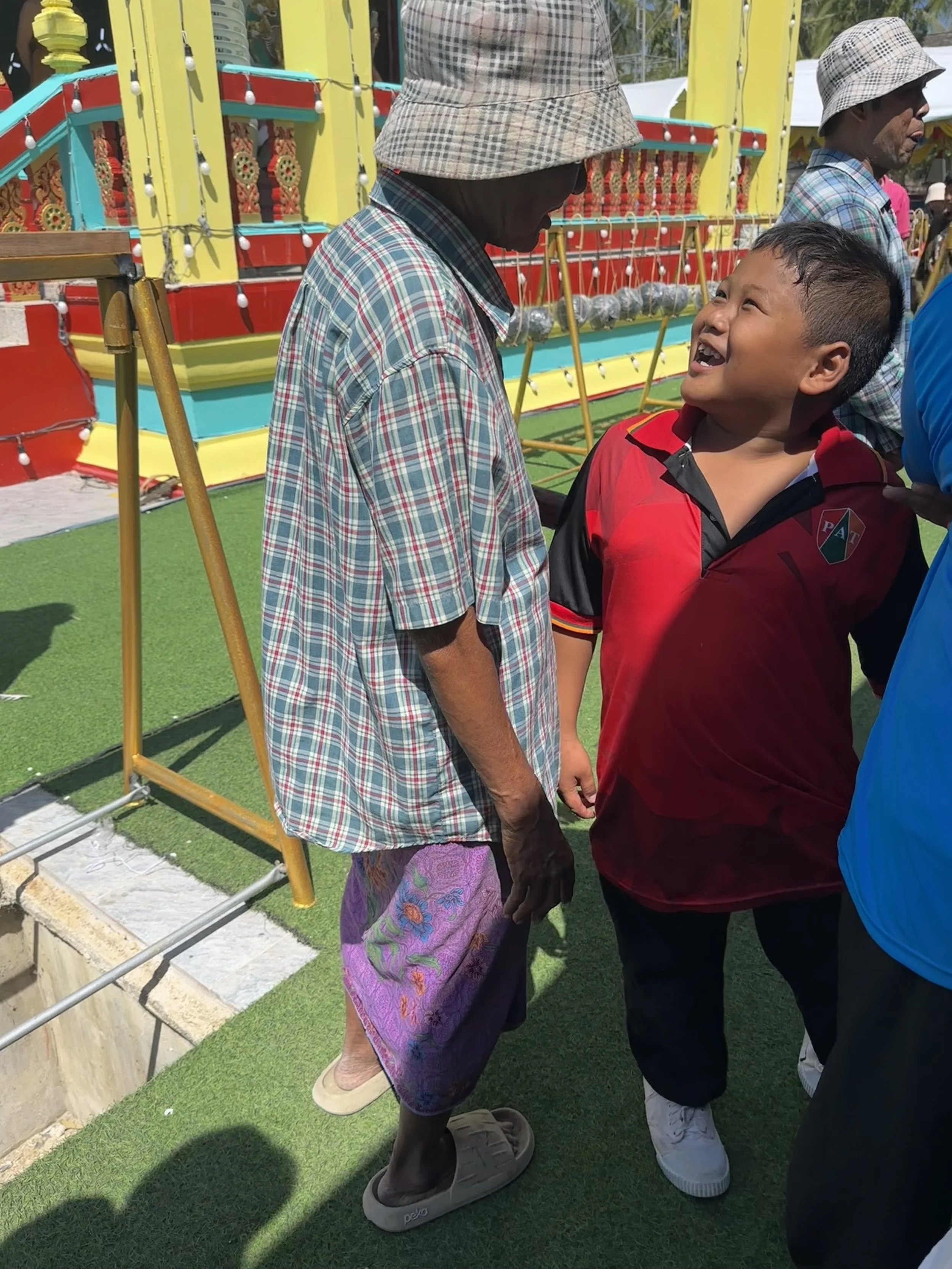
Happy celebrations at Huay Yang temple. Thailand, the land of smiles.
Somewhere between the mangoes on the highway and the first turn into Huay Yang, we are already thinking about coming back. Back to the smiles of Thailand…